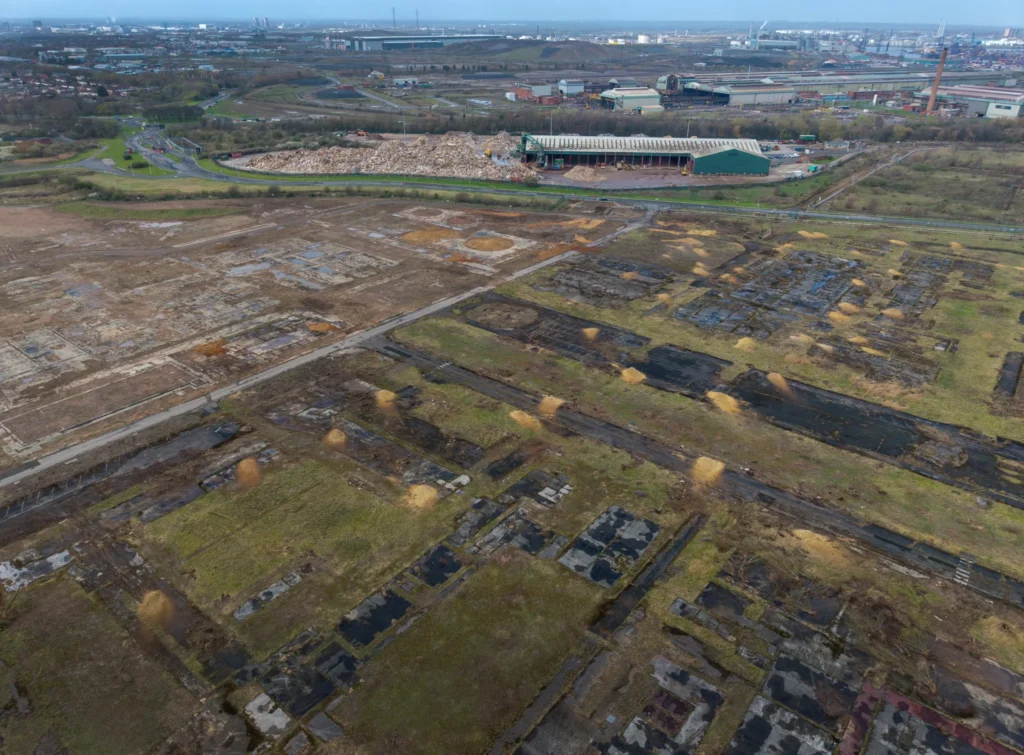
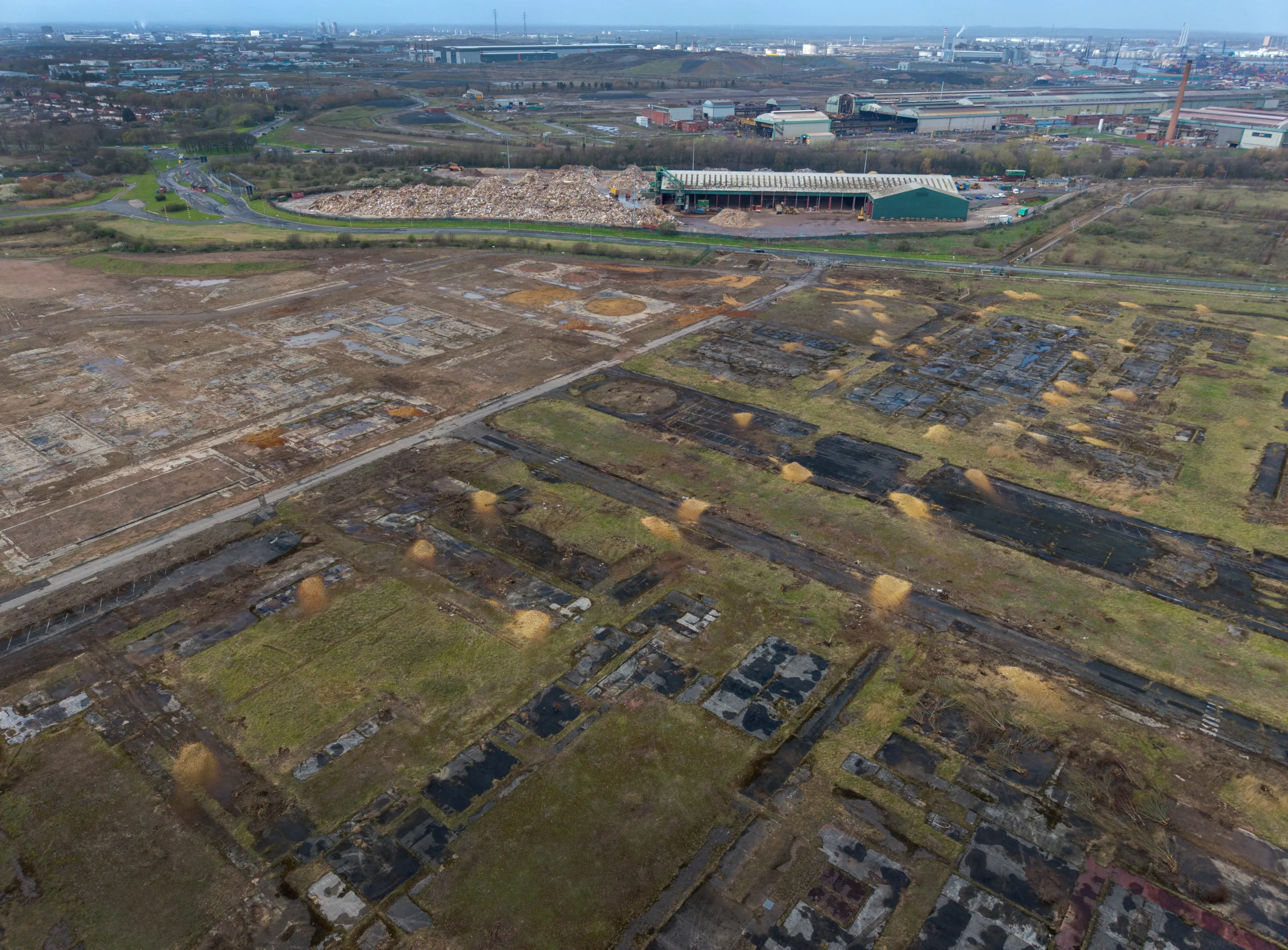
The industrial heartlands of northeastern England, long shadowed by the decline of the chemical sector, are experiencing a dramatic transformation. Vast tracts of land, once lying dormant, are now being eyed as prime real estate for the burgeoning artificial intelligence revolution. The Wilton International site in Teesside, a sprawling complex blessed with existing power infrastructure, a water supply, and crucial grid connections, exemplifies this shift. Owners of such sites, alongside speculative investors, property developers, and even agricultural landowners, are aggressively marketing their holdings to capitalize on the multi-billion-dollar investment tech giants are pouring into AI data centers.
Across the United Kingdom, this "AI gold rush" is reshaping the property landscape and spawning a new ecosystem of data center aspirations. From disused car plants and former paint factories to decommissioned hotels and retail centers near major transport hubs like Heathrow Airport, no site is deemed too unconventional. Data compiled by construction analytics group Barbour ABI reveals a significant surge, with 119 data center plans submitted for approval, underscoring the scale of ambition.
The momentum behind this development surge gained significant traction in the past year, particularly following a high-profile banquet hosted by King Charles. The event brought together prominent figures from the tech industry, including executives from global giants like Google, Microsoft, and Nvidia, who subsequently pledged substantial investments in Britain’s digital infrastructure. This wave of investment, driven by the insatiable demand for processing power to fuel artificial intelligence, has created a dynamic, and at times frenetic, market.
"The demand that’s come through in the last couple of years – really because of AI – has exploded," noted Andrew Groves, a representative from real estate advisory firm Bidwells. "Speculators and promoters have obviously seen it as an opportunity to make greater returns." This heightened interest has not only inflated land valuations but has also created significant bottlenecks in the often lengthy process of securing grid connections, a critical component for any large-scale data center operation. Interviews with over twenty data center operators, industry advisors, legal experts, and investors paint a picture of a rapidly evolving sector grappling with both immense opportunity and significant logistical challenges.
Unlike the traditional demand for data centers driven by the financial services industry, which prioritizes proximity for speed, the primary requirement for AI is sheer processing power. This fundamental difference allows AI data centers to be situated further afield, opening up opportunities for previously overlooked industrial sites and even rural landholdings. These locations, often possessing lower property prices compared to the premium commanded in areas like London, are becoming increasingly attractive. For rural landowners, the prospect of a data center development can offer a significantly more lucrative return than traditional agricultural pursuits.
"Powered Land": The New Commodity
The Wilton International site in Teesside stands as a prime example of this burgeoning trend. Sembcorp UK, the majority owner and a prominent utilities company, has a long history of servicing the petrochemical industry at the site. However, with the sector’s decline, Sembcorp finds itself with substantial spare land and, crucially, significant power generation capacity. This combination has led to the site being categorized as "powered land"—a plot that either possesses its own power generation facilities or an existing high-voltage grid connection, or ideally, both.
Working in partnership with data center developer Digital Reef, Sembcorp aims to attract a major tech firm, potentially a "hyperscaler," to establish a data center campus. Such a development promises to inject much-needed jobs, industry, and investment into one of Britain’s most economically deprived regions. Mike Patrick, CEO of Sembcorp UK, a subsidiary of Singapore-based Sembcorp Industries, expressed the company’s urgency: "We’re trying to develop something quite quickly, and bring jobs and industry and investment back."
Hyperscalers, including industry giants like Amazon, Apple, Google, Meta, and Microsoft, are crucial players in the AI ecosystem. Their business model revolves around providing vast amounts of cloud computing capacity, essential for the computationally intensive tasks involved in AI development and deployment. Consequently, these companies have an immense appetite for power.
Peter Ireton, Business Development Director at Sembcorp UK, highlighted Wilton’s unique advantage: "Wilton is almost uniquely placed in that it already has a large grid connection and on-site power assets. We think we can attract a large off-taker." This existing infrastructure significantly de-risks the development process for potential tenants, a stark contrast to many other sites that lack even basic power provisions.

The Grid Connection Bottleneck
The demand for data center development has outpaced the capacity of the national grid, creating a significant bottleneck. The number of applications for grid connections has surged dramatically, exacerbated by the need for upgrades to existing transmission circuits. This surge has pushed wait times for a connection to an unprecedented 12 to 15 years.
Official figures from the UK’s energy department underscore the scale of the problem. In the first six months of 2025, demand for grid connections leapt by an astonishing 460%. Requests to join the high-voltage network alone totaled 96 gigawatts (GW) of capacity, with an additional 29 GW of demand for local network connections. To provide context, Britain’s total generation capacity is estimated to be around 72 GW, with peak demand last year just under 46 GW.
The National Energy System Operator (NESO) reported in March that it had identified approximately 140 data centers within the main queue, representing an estimated 50 GW of capacity. This analysis suggests a significant portion of these applications may be speculative, driven by a desire to secure a place in the queue rather than by concrete development plans. NESO has indicated that this speculative activity is inflating demand far beyond what the current network can realistically support, thereby delaying viable projects and hindering the broader energy transition.
"Zombie Projects" and Speculative Land Grabs
The issue of "zombie projects"—applications from landowners who possess neither power, planning permission, nor a confirmed end-user—is now a significant concern, clogging the system and delaying legitimate developments. "You’ve been seeing an awful lot of people speculating, spending time trying to get power onto a site," commented Tom Glover, head of data centers for EMEA at U.S. real estate firm JLL.
In response to this growing problem, NESO announced in March plans to revise its application process. The aim is to better identify and filter out speculative applications, prioritizing those from strategic sectors, including data centers. This move mirrors a successful initiative last year that streamlined the queue for clean power projects seeking grid connections, resulting in a halving of those requests.

Escalating Land Values and Creative Power Solutions
The premium for land equipped with a power supply suitable for data centers has long been established, but the confluence of AI demand and grid congestion has dramatically amplified these values in recent years. According to British real estate company Savills, industrial land in London can fetch between £4.5 million and £6 million per acre. For land specifically deemed suitable for a data center, this figure can surge to between £8 million and £15 million per acre.
This trend is mirrored globally. A March report by real estate advisor Colliers highlighted that "powered land" is selling for up to two-and-a-half times the price of other industrial land. In highly sought-after locations like northern Virginia and northern California, this multiple can exceed three times.
Faced with these challenges, developers are increasingly resorting to creative solutions to secure power for their projects. One notable instance involved a developer behind a site north of London, which was subsequently acquired by U.S. data center operator Equinix. To facilitate the deal, the developer had to collaborate with a group holding an allocated connection for a battery storage project. This connection was then ingeniously repurposed into a demand connection suitable for a data center.
James Tyler, UK managing director at Equinix, emphasized the value of secured infrastructure: "Acquiring a development that has outline planning and a confirmed grid connection just effectively removes the risk." Equinix has committed a substantial £3.9 billion ($5.3 billion) to its UK development plans, its largest investment outside the United States. The company aims to commence construction in early 2027, with the operational data center expected by 2031.
However, even the promise of a guaranteed connection date does not always guarantee smooth sailing. Dawn Childs, president of data center developer and operator Pure DC, recounted an experience where a connection date for one of its London projects, initially offered two years prior, was significantly delayed. Approximately one-third of the allocated power was unexpectedly pushed back by over a decade, forcing the company to devise alternative strategies to ensure the site’s commercial viability.

Britain’s Data Center Development Lag
Despite the intense interest and investment pledges, data compiled by DC Byte for Reuters indicates that Britain is lagging behind its international rivals in actual data center construction. Of the 61 projects tracked in Britain since late 2022, only 7% are currently under construction or have been completed. This contrasts sharply with Germany, where 46% of tracked projects are in a similar stage of development, followed by France at 40% and the United States at 24%.
This lag poses a significant challenge for the UK government, businesses, and major technology firms, all of whom view large-scale data centers as instrumental in modernizing the economy and positioning Britain as a global AI superpower.
Beyond the grid connection woes, Britain also grapples with some of the world’s highest industrial electricity prices. This factor recently led OpenAI, the creator of ChatGPT, to pause plans for a large data center in northeastern England, approximately 50 miles from the Wilton site. Concerns over elevated energy costs and regulatory frameworks were cited as the primary reasons for the decision.
Despite these headwinds, the industry consensus remains that the demand for AI infrastructure is genuine and substantial. The potential for sites offering a combination of power, planning, and land is immense, presenting a significant opportunity for regions like Teesside.
The Wilton site, with its existing 240 MW grid connection and on-site generation assets including gas, biomass, and waste-to-energy plants, is well-positioned. Sembcorp anticipates integrating nearby solar and wind power into its energy mix as the data center development progresses, aiming for a total capacity of 1 GW. Piers Slater, founder of Digital Reef, estimates that achieving this scale would represent an investment of approximately £15 billion over an eight-to-ten-year period.

Discussions with potential data center operators have been described as positive by the development partners. Slater acknowledged the ongoing debate about market sustainability: "Obviously there’s a lot of talk, is it a dot com? Is it a bubble? But what we’re seeing is the adoption of AI – and it’s happening." The tangible growth of AI applications across various sectors suggests that the demand for the foundational infrastructure required to power it is not a fleeting trend, but a fundamental shift that will continue to reshape the industrial and economic landscape for years to come.