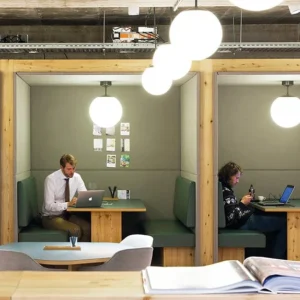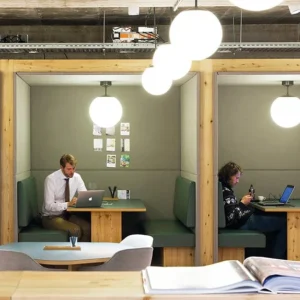
The modern workplace, once envisioned as a hub of collaboration and productivity, is increasingly becoming a source of daily frustration for many employees. The quest for a productive, collaborative day can quickly devolve into an immediate challenge: simply finding a place to sit. Upon arrival, employees are often met with a floor where desks designed for focused work are already occupied. This forces individuals to claim temporary spots, acutely aware of the potential need to relocate later. The ripple effects extend to essential professional activities; virtual meetings become an exercise in compromise, with employees resorting to hallways, crowded cafes, or even cancellations due to the lack of appropriate, private spaces.
This scenario, once an anomaly, is becoming a common experience in workplaces that have adopted unassigned seating models. The widespread shift towards flexible seating strategies, particularly in the years following the COVID-19 pandemic, was largely driven by a desire to manage real estate costs and adapt to fluctuating employee presence. The logic appeared sound: with fewer employees in the office on any given day, a reduced number of desks would suffice, presenting a seemingly straightforward financial calculation. However, the human cost and the broader impact on organizational culture and performance have begun to surface as significant, unintended consequences.
The Evolution of the Flexible Workplace
The concept of flexible work arrangements gained significant traction long before the pandemic, fueled by technological advancements and a growing desire for work-life balance. However, the global health crisis acted as a powerful accelerant, forcing organizations worldwide to rapidly adopt remote and hybrid models. This period of unprecedented disruption led many companies to re-evaluate their physical office footprint, often downsizing their real estate holdings to align with the perceived new normal of distributed workforces.
In this context, unassigned seating, often referred to as "hot-desking" or "activity-based working," emerged as a popular solution. The promise was compelling: reduced overhead costs through optimized space utilization and a more agile, adaptable work environment. Companies envisioned a dynamic space where employees could choose different settings throughout the day based on their tasks – a quiet zone for focused work, a collaborative area for team projects, or a social hub for informal interactions. The initial rationale was primarily economic, focusing on the efficient use of physical assets.

However, the implementation of these models has revealed a critical oversight: the intricate relationship between physical space, employee well-being, and overall organizational performance. What began as a cost-saving measure has, in many instances, inadvertently undermined the very elements that foster a thriving and productive work environment.
Data Reveals the Trade-offs of Unassigned Seating
While workplace design is often viewed through the lens of efficiency, its true value lies in its ability to support the diverse activities employees undertake and to accommodate future organizational growth. Flexibility is indeed a crucial component of modern work environments, but true flexibility involves creating spaces that can adapt without compromising the stability and support employees require to perform at their peak.
Emerging data from comprehensive workplace studies is shedding light on the unintended consequences of widespread unassigned seating. A significant study by Gensler, the 2026 Global Workplace Survey, indicates that a substantial majority of employees working in unassigned environments express a preference for a dedicated workspace. Nearly 60 percent of these employees stated they would rather have a desk of their own. This preference is not merely a matter of personal comfort; it reflects measurable differences in how individuals experience and interact with their work environment.
The survey’s findings highlight a stark contrast in employee perceptions. In assigned seating environments, a remarkable 80 percent of employees report that their office effectively supports deep, focused work. This level of concentration is vital for complex problem-solving, strategic thinking, and tasks requiring sustained attention. In contrast, this figure drops to 67 percent in unassigned settings. This 13-point gap underscores a critical deficiency: unassigned seating environments, while offering flexibility, can inadvertently undermine the very concentration needed for high-level performance. The constant underlying anxiety of potentially having to relocate or the inability to find a suitable space can disrupt the flow of focused work, leading to decreased productivity and increased stress.
The Erosion of Focus and Belonging
The impact of unassigned seating extends beyond individual focus to the broader sense of community and belonging within an organization. A dedicated workspace often serves as more than just a physical location; it becomes a personal anchor, a place where individuals can establish routines, build connections with colleagues, and cultivate a sense of ownership and familiarity.

Gensler’s research reveals a significant disparity in reported feelings of belonging. In environments with assigned seating, an impressive 87 percent of employees report a strong sense of belonging at work. This sense of community is a critical factor in employee engagement, retention, and overall job satisfaction. When individuals have a consistent place to call their own, surrounded by familiar faces and shared experiences, they are more likely to feel connected to their colleagues and the organization.
Conversely, in unassigned environments, this figure plummets by 13 percentage points to 74 percent. This decline suggests that when employees feel like transient visitors in their own workplace, their sense of connection and community suffers. The absence of a stable, personal space can make it more challenging to foster the informal interactions and organic relationships that form the bedrock of a strong team culture. This erosion of belonging can lead to increased feelings of isolation, reduced team cohesion, and a diminished overall employee experience.
These are not merely subjective metrics; they are direct indicators of workplace effectiveness and have tangible consequences for organizational success. Lower employee satisfaction, weaker focus, and a diminished sense of community are all precursors to decreased productivity, challenges in collaboration, and potentially higher employee turnover. The findings strongly suggest that the physical environment is intrinsically linked to how effectively individuals and teams can perform their duties and contribute to the organization’s goals.
The Domino Effect: When Stability Disappears, So Does the Team
The transience introduced by unassigned seating has a cascading effect on team dynamics and organizational cohesion. When colleagues no longer have a predictable place to find one another, the organic opportunities for spontaneous interaction diminish. The informal conversations that often spark new ideas, facilitate knowledge sharing, and strengthen interpersonal bonds become more difficult to orchestrate. What was once a shared environment for collaborative synergy can begin to feel more like a transient holding space, a place to simply "park" oneself for the duration of the workday.
This phenomenon is not a novel observation. Extensive research, including insights highlighted in publications like the Harvard Business Review on coworking and flexible workplaces, consistently reinforces this dynamic. The studies underscore that employees thrive when they experience autonomy, meaning, and a robust sense of community within their work environment. Unassigned or hot-desking arrangements, by their very nature, can weaken this sense of community. Individuals may begin to perceive themselves as temporary occupants rather than consistent, integral members of a team. The absence of regular proximity and the predictable interactions that arise from it make it significantly harder to build the trust and familiarity that are essential for effective collaboration.
The implications of this erosion of team stability are far-reaching. Collaboration becomes less fluid, requiring more deliberate planning and coordination. Innovation may suffer as the serendipitous encounters that often lead to breakthrough ideas become less frequent. Furthermore, the subtle but important signals of belonging and shared purpose can become diluted, impacting overall morale and organizational culture.
The Path Forward: Embracing Intentional Balance, Not Forced Flexibility
The challenges presented by unassigned seating do not necessitate a complete abandonment of workplace flexibility. Organizations require adaptable environments that can respond to evolving needs. However, flexibility alone is not a comprehensive strategy; it must be thoughtfully balanced with stability. The assumption that hybrid work inherently requires universal hot-desking is a flawed premise that overlooks the nuanced needs of different roles and individuals.
In practice, many forward-thinking organizations are discovering that implementing a hybrid model that provides assigned seating for employees who are in the office at least three days a week can establish a stronger foundation for performance. This approach allows for dedicated personal space, fostering focus and a sense of belonging, while still preserving flexibility for those who may work remotely more frequently or for specific project needs.
Moreover, effective workplace strategies must proactively account for future growth and change. A common pitfall is designing office spaces solely based on current headcount, with the expectation that unassigned seating will absorb future demand. Over time, this approach can inadvertently diminish company culture and reduce the overall effectiveness of the workplace as a tool for attracting and retaining talent. Designing for change requires a holistic approach that plans for scalability, adaptability, and continuity, ensuring that the workplace remains a supportive and productive environment for years to come.
Imagine an alternative morning: You arrive at the office, walk to your assigned desk, and are greeted by colleagues who are also present and settled. The workday begins seamlessly, without the stress of searching for a spot, the uncertainty of relocation, or the compromise of taking calls in inappropriate public spaces. The most effective workplaces are not characterized by a rigid adherence to forced flexibility, but by an intentional and intelligent balance between different types of spaces and work arrangements. Assigned seating can provide a stable and grounding foundation, complemented by a thoughtfully curated mix of collaboration zones, quiet areas for focused work, and accessible shared amenities that cater to a variety of needs.
Stability and flexibility are not mutually exclusive; they are complementary forces that, when harmonized, can create a truly high-performing work environment. Organizations that recognize and implement this principle are already witnessing tangible benefits in terms of enhanced performance, improved employee retention, and a stronger, more resilient organizational culture. Conversely, those that continue to view seating arrangements solely as a cost variable risk overlooking something far more valuable: the well-being, engagement, and ultimate success of their workforce. The future of work lies not in the elimination of personal space, but in its intelligent integration with dynamic and collaborative environments.