
Prime office rents in the City of London have continued their upward trajectory, narrowing the historical premium enjoyed by the West End as demand for high-quality, collaborative workspaces intensifies. This trend, which has been steadily building since 2023, underscores a significant shift in the capital’s commercial property landscape, driven by evolving occupier needs and a constrained supply pipeline. Latest figures released by global real estate advisor Savills reveal that average prime rents in the City district reached a notable £130.80 per square foot in the first quarter of 2026. This figure represents a substantial increase, bringing it into closer competition with the West End, where prime rents stood at £165 per square foot during the same period. The West End has long been recognized as one of the world’s most prestigious and expensive office markets, a status it continues to hold, albeit with a less pronounced differential than in previous years. These Savills figures are meticulously compiled, focusing on the top 10 percent of Grade A office rental transactions, thus reflecting the most sought-after and premium spaces available in each district.
The widening disparity in rental growth between the City and the West End is a key takeaway from the Savills report. While rental values in the West End have experienced more stable, incremental growth, the City has witnessed a significantly sharper escalation in occupier costs over the past few years. Savills attributes this accelerated growth primarily to a dual force: persistent, robust demand for premium office environments and a critically limited supply of newly developed, high-specification office buildings. Even in an era where hybrid working models have become deeply embedded in corporate culture, a substantial segment of businesses continues to prioritize substantial, high-quality office spaces. These spaces are increasingly viewed not just as places of work, but as crucial hubs for fostering collaboration among employees, enhancing team cohesion, and providing an impressive and conducive environment for client meetings and engagements. The emphasis has shifted from mere square footage to the quality, amenity, and overall experience offered by a workspace.
Key Leasing Transactions Underscore Market Strength
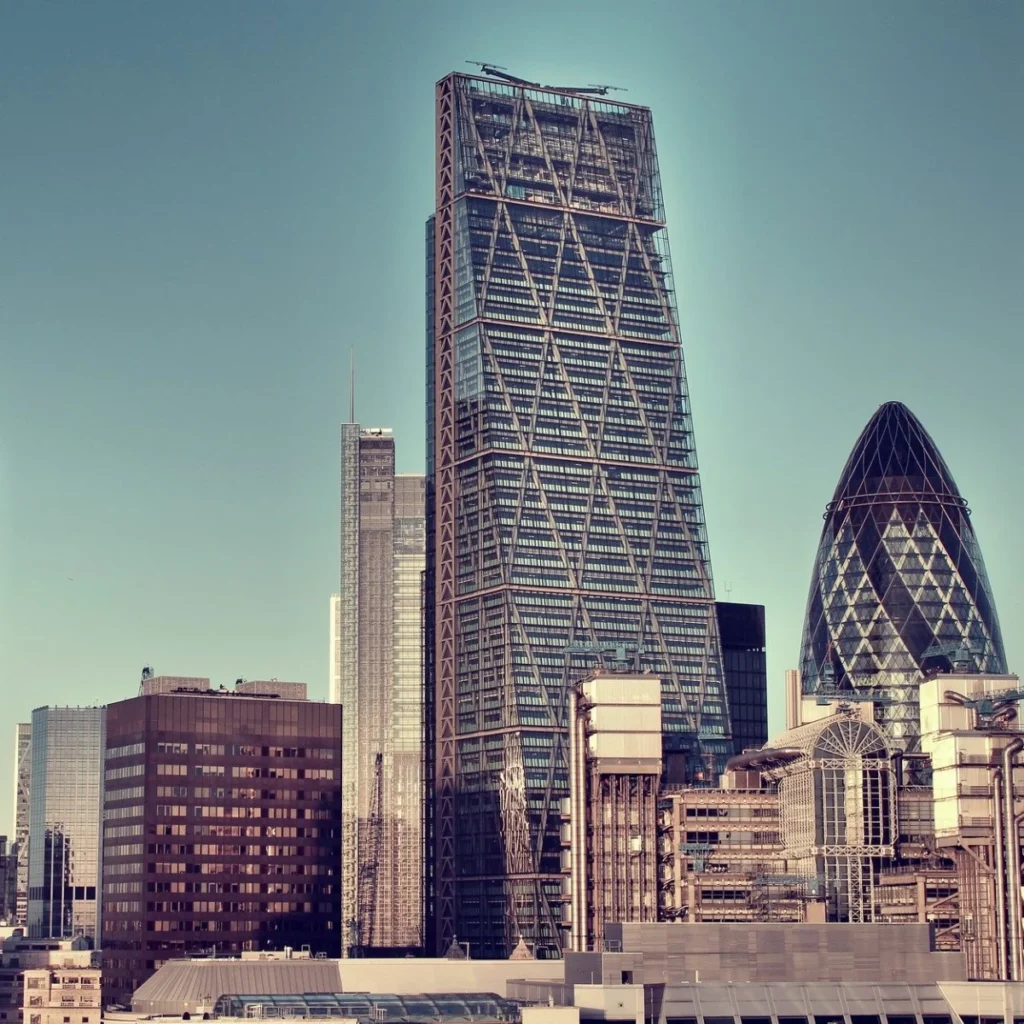
Recent high-profile leasing activities provide tangible evidence of the strong occupier appetite for prime City of London office space. Notably, US law firm Latham & Watkins has reportedly secured terms for the prestigious uppermost floor of One Leadenhall. This newly completed 32-storey office tower, strategically located in the heart of the City near the historic Leadenhall Market, offers state-of-the-art facilities and commanding views. In another significant transaction within the same building, the rapidly growing cryptocurrency firm Ripple has committed to multiple floors, signaling confidence in the City as a base for innovation and expansion.
Further reinforcing the demand narrative, another prominent US law firm, King & Spalding, has significantly expanded its footprint at the 8 Bishopsgate development. The firm has taken additional space, including the building’s top floor, a testament to the desirability of its location and amenities. This latest expansion has now brought the 8 Bishopsgate tower to full occupancy, highlighting the swift absorption of premium office stock.
The demand for high-quality office space is not solely concentrated within the traditional financial district boundaries. Illustrating the broader appeal of modern, well-appointed workspaces, software company Quantexa has recently leased space on London’s South Bank. Even in this location, the rental rates secured by Quantexa reflect the growing premium that is now attached to contemporary office environments that prioritize design, technology, and employee well-being. This expansion of demand beyond the traditional core suggests a more dispersed but equally robust appetite for quality across central London.
Supply Constraints and Future Outlook
The upward pressure on prime office rents in the City is occurring against a backdrop of growing concerns about future supply. Industry forecasts and market analysis indicate that the City district could face a significant shortage of prime office space within the next few years. This projected scarcity is largely a consequence of a noticeable slowdown in development activity, exacerbated by the combined impacts of Brexit-related uncertainties and the lingering economic repercussions of the global pandemic. While planning permissions for new schemes continue to be granted, the pipeline of large-scale, new developments expected to complete in the immediate to medium term remains considerably thin. This limited supply outlook is a critical factor underpinning the current rental escalation and is likely to sustain upward pressure on prices.
In response to these market dynamics, major occupiers are increasingly adopting a proactive strategy, seeking to secure desirable office space well in advance of their existing lease expirations. This forward-thinking approach further intensifies competition in an already constrained market. Landlords, while in a stronger negotiating position, continue to offer a range of incentives to attract and retain tenants. These incentives can include significant rent-free periods, which in some cases can extend up to two years on a typical ten-year lease agreement. Despite these concessions, the fundamental strength of demand and the scarcity of premium space have, in numerous instances, propelled headline rents to record-breaking levels within specific buildings. This dual effect of sustained demand and limited new supply is creating a complex but ultimately landlord-favorable market for prime assets.
West End Market Dynamics Contrast
In stark contrast to the vigorous activity and rising rents seen in the City, the West End office market has experienced a different pattern of performance. Recent data indicates that vacancy rates in the West End have edged upwards, exceeding those recorded in the City. This increase in available space is coupled with a comparatively lower level of overall office take-up. The result is a widening divergence in market dynamics between these two prime central London office districts. Despite the West End’s enduring reputation for prestige and its continued appeal to certain sectors, particularly luxury retail and high-end professional services, the underlying market fundamentals are currently less robust than those in the City. This difference in performance is reshaping perceptions of investment and occupational value across the capital’s core office markets.
Background and Chronology of Market Shifts
The current market conditions are the culmination of several years of evolving trends. Following a period of intense activity in the pre-pandemic years, the office market experienced significant disruption in 2020 and 2021 as lockdowns and remote working became the norm. Many businesses reassessed their space requirements, leading to a temporary dip in demand and a rise in vacant office space across London. However, as the world adapted to new working realities, a nuanced picture began to emerge. By late 2021 and into 2022, a distinct bifurcation became apparent. While some companies downsized or adopted more flexible office strategies, others recognized the enduring importance of physical office space, particularly for culture, collaboration, and employee attraction.
This period saw a renewed focus on the quality of office space. Companies began prioritizing buildings that offered superior amenities, modern technology, sustainability features, and appealing design – spaces that could genuinely entice employees back to the office. This demand for "flight to quality" disproportionately benefited newly developed or extensively refurbished Grade A office buildings.
The City of London, traditionally the domain of financial services, began to see an influx of occupiers from other sectors, including technology, media, and professional services, all seeking these high-quality environments. Simultaneously, a combination of factors began to constrain new supply. The complexities of post-Brexit planning and construction, coupled with the economic uncertainties that followed the pandemic, led to a reduction in the number of new office developments being initiated. Many planned schemes were delayed or shelved, leading to a tightening of the supply pipeline.
The period from 2023 onwards has been characterized by the confluence of this sustained demand for quality and the dwindling supply of new buildings. This has naturally driven up rents for the most desirable spaces. The West End, while always a premium market, has seen its rental growth moderate, partly due to a greater volume of available space and perhaps a more traditional occupier base that has been slower to embrace the same scale of workplace transformation seen in some City-centric businesses. The data from Savills for Q1 2026 serves as a concrete indicator of this ongoing shift, illustrating the City’s impressive climb in prime rental values.
Data-Driven Analysis and Implications
The Savills report provides crucial data points that illuminate the current state and future trajectory of London’s prime office markets. The £130.80 per square foot average prime rent in the City represents a significant milestone. To put this into historical context, prior to 2023, the gap between City and West End prime rents was typically much wider, often in the range of 30-40%. The current differential of approximately 20% suggests a significant convergence.
Supporting Data Highlights:
- City Prime Rent Growth: The sustained, sharp rise in City prime rents since 2023 indicates a fundamental shift in demand dynamics, moving beyond traditional financial occupiers.
- West End Rental Stability: The relatively stable rental growth in the West End, while still commanding higher absolute values, suggests a market that is mature and less susceptible to rapid upward adjustments.
- Vacancy Rates: The reported increase in West End vacancy rates compared to the City is a critical indicator of market health and occupier preference. A higher vacancy rate generally translates to increased landlord competition and potential for tenant concessions.
- Development Pipeline: The scarcity of new Grade A office completions in the coming years is a critical supply-side factor that will continue to support rental growth in prime locations. Industry analysis suggests that the pipeline for completions between 2027 and 2030 is significantly lower than in previous decades.
Implications of these Trends:
- Investment Opportunities: The converging rental values may prompt a reassessment of investment strategies. Investors seeking higher yields might find the City more attractive, while those prioritizing prestige and established tenant demand may continue to favor the West End, albeit with a potentially lower rental growth outlook.
- Occupier Strategy: Businesses looking for prime office space must adopt a more agile and forward-thinking approach. Securing space in desirable buildings will require earlier commitment and potentially higher expenditure. The cost-benefit analysis of different London locations is also likely to shift.
- Urban Planning and Development: The constrained supply pipeline highlights the need for efficient planning processes and incentives for new, sustainable office developments to meet future demand. The focus will likely be on delivering buildings that meet the highest environmental, social, and governance (ESG) standards.
- Hybrid Working Evolution: The continued demand for premium physical spaces, even with hybrid models, suggests that the office is evolving into a destination for collaboration, culture, and connection, rather than just a place for individual task completion.
Official and Industry Reactions (Inferred)
While direct quotes were not provided in the source material, the trends highlighted by Savills would undoubtedly elicit responses from key stakeholders within the London property market.
Developers and Landlords: Developers and landlords of prime City of London office space would likely view these figures with optimism. They would emphasize the success of their investment in high-quality buildings and the appeal of the City as a dynamic business hub. The focus would be on continuing to deliver best-in-class office environments and leveraging the strong demand to secure favorable lease terms.
Occupiers and Tenant Representatives: For occupiers, the rising rents present a challenge. Tenant advisory firms would likely highlight the importance of early strategic planning, thorough market analysis, and skillful negotiation. They would advise clients to factor in increased occupational costs and to prioritize buildings that offer long-term value through employee attraction and retention benefits. The growing premium on quality suggests that a well-designed and amenity-rich office is becoming a strategic asset, not just an overhead.
City of London Corporation and Related Bodies: The City of London Corporation, responsible for the governance and promotion of the financial district, would likely welcome the strong rental performance as a sign of economic vitality and the district’s continued attractiveness to businesses. They would likely point to initiatives aimed at enhancing the City’s appeal beyond finance, such as improvements to public spaces, transport infrastructure, and cultural offerings, as contributing factors to this success. The focus would be on ensuring a balanced ecosystem that supports businesses and residents alike.
The data presented by Savills paints a picture of a dynamic and evolving prime office market in London. The City of London’s impressive ascent in rental values, driven by a powerful combination of unmet demand and limited supply, is reshaping the competitive landscape. As businesses continue to prioritize quality and collaborative environments, and as new development faces ongoing hurdles, the trend of narrowing the rental gap with the West End is poised to continue, marking a significant chapter in the ongoing story of London’s commercial real estate. The future of office space in the capital will undoubtedly be defined by this ongoing quest for quality, flexibility, and an environment that fosters productivity and employee well-being.








