The landscape of enterprise artificial intelligence is undergoing a profound transformation, moving beyond static systems and applications to dynamic, learning entities that are becoming intrinsic to organizational operations. A key driver of this evolution is the emergence of AI Agents and Superagents, which are not merely tools but rather digital counterparts that learn, adapt, and ultimately embody the unique characteristics of a company. This paradigm shift, highlighted by recent advancements from Microsoft, promises to unlock unprecedented levels of customization, efficiency, and competitive advantage for businesses across all sectors.
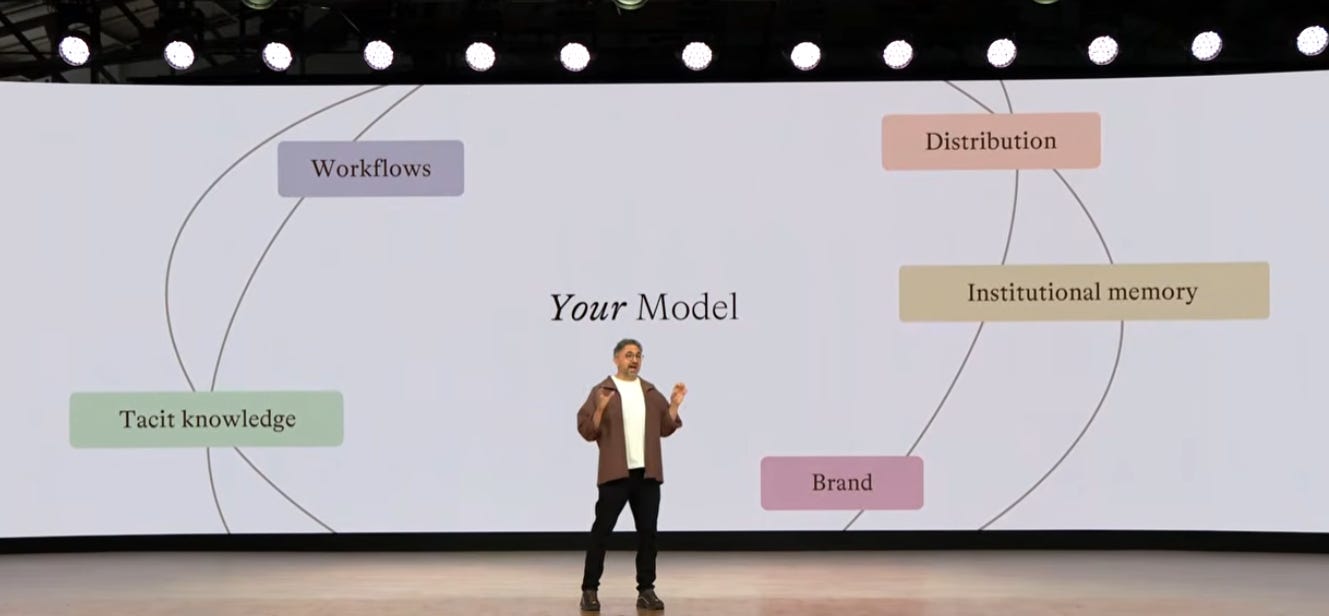
At the core of this revolution is the concept that AI agents, whether deployed for recruitment, training, or employee service delivery, continuously enhance their understanding of a company’s specific nuances. This includes not only codified policies and procedures but also the invaluable "tacit knowledge" – the accumulated historical experiences, unwritten rules, cultural behaviors, and risk management philosophies that often constitute a company’s most significant competitive differentiator.
Microsoft’s recent integration of its Galileo intelligence into MS Copilot exemplifies this new frontier. By "ingesting and retraining" on intellectual property, the system demonstrated a significantly improved ability to provide detailed, trustworthy, and contextually relevant information. This was validated by the Microsoft HR team, who found the AI to be an exceptionally capable HR business partner and consultant, capable of citing its sources and providing deep insights.
The implications of this development are far-reaching. For decades, organizations have sought to capture and leverage their institutional knowledge. Traditional methods, such as knowledge management systems and internal wikis, often fell short due to the difficulty in capturing the implicit, dynamic nature of tacit knowledge. AI agents, by learning and adapting over time, offer a more organic and effective solution.
Frontier Tuning: Personalizing AI for Enterprise Uniqueness
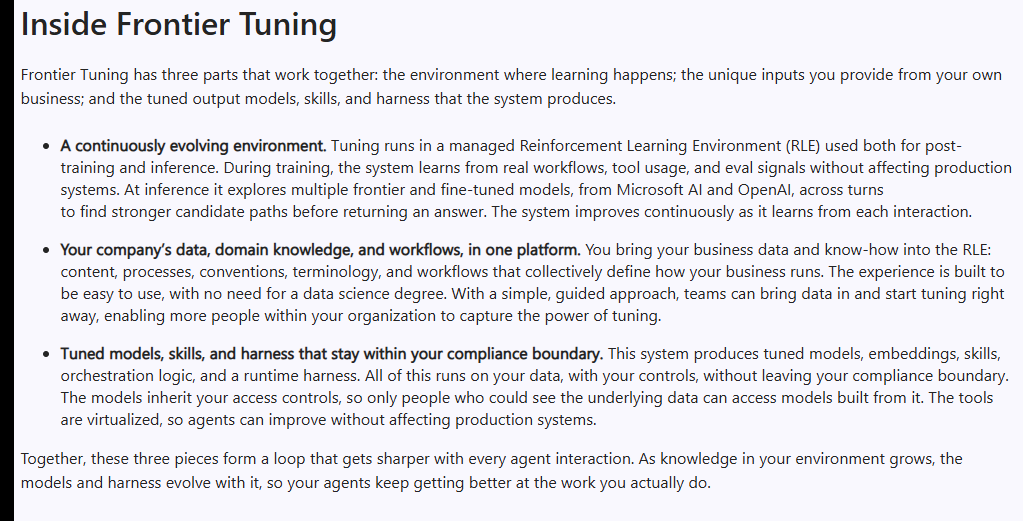
Microsoft is now making this powerful capability broadly accessible through its "Frontier Tuning" initiative, allowing organizations to fine-tune their Copilot instances. This means that IT and HR departments can now directly embed their proprietary policies, hiring guides, compensation frameworks, onboarding processes, and any other company-specific documentation into the AI. This "institutionalizes" the AI, ensuring it operates with a deep understanding of the organization’s established practices and values.
This approach marks a significant departure from simpler Retrieval Augmented Generation (RAG) implementations, which primarily augment existing knowledge without fundamentally retraining the core model. Frontier Tuning, in contrast, enables a more profound integration, allowing the AI to learn and adapt based on the specific data provided.
The technical underpinning of this enhanced learning capability lies in what Microsoft terms the "Reinforcement Learning Environment." This feature allows AI agents to learn autonomously from real-world feedback. Unlike static RAG systems, these agents can continuously update and improve their performance based on user interactions and observed outcomes.
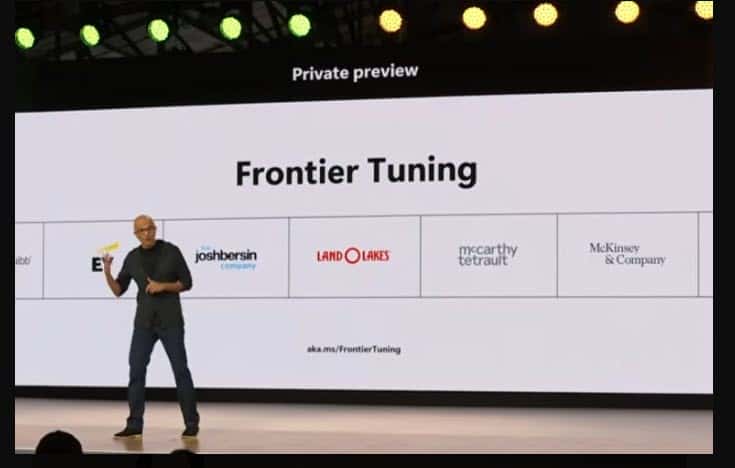
This advancement was prominently showcased at Microsoft Build 2024, where demonstrations highlighted the power of embedding not only third-party intelligence like Galileo but also an organization’s own unique operational blueprints. The potential for an AI to become a highly specialized and knowledgeable digital employee, steeped in the company’s specific operational DNA, is now a tangible reality.
Autonomous Learning: The Next Evolution of AI Agents
The ability of AI agents to learn on their own, powered by autonomous reinforcement learning, is a critical differentiator. Microsoft’s "Agent Lightning" project provides the framework for this self-improvement. By enabling users or administrators to activate reinforcement learning, the AI can analyze the utility of its actions and iteratively refine its responses and strategies. This mirrors the human learning process, where experience and feedback drive continuous development.
An illustrative example provided by Microsoft involves an internal crisis management agent. While effective in many scenarios, novel geopolitical events like the war in Ukraine and subsequent conflicts presented new challenges, such as employees facing internet outages or needing relocation assistance. The reinforcement learning feature allowed this agent to autonomously adapt and incorporate new policies and response protocols to address these evolving circumstances. This adaptive capacity is crucial for organizations operating in dynamic and unpredictable environments.
While other methods exist for "training" MS Copilot, such as leveraging Microsoft Graph Connectors to access data from SharePoint, PowerPoint, Word, Outlook, and Work IQ, these often lack the deep integration and autonomous learning capabilities of Frontier Tuning. The reinforcement learning aspect, in particular, is key to fostering truly self-improving AI agents.
Microsoft’s Strategic Push into Proprietary AI Models
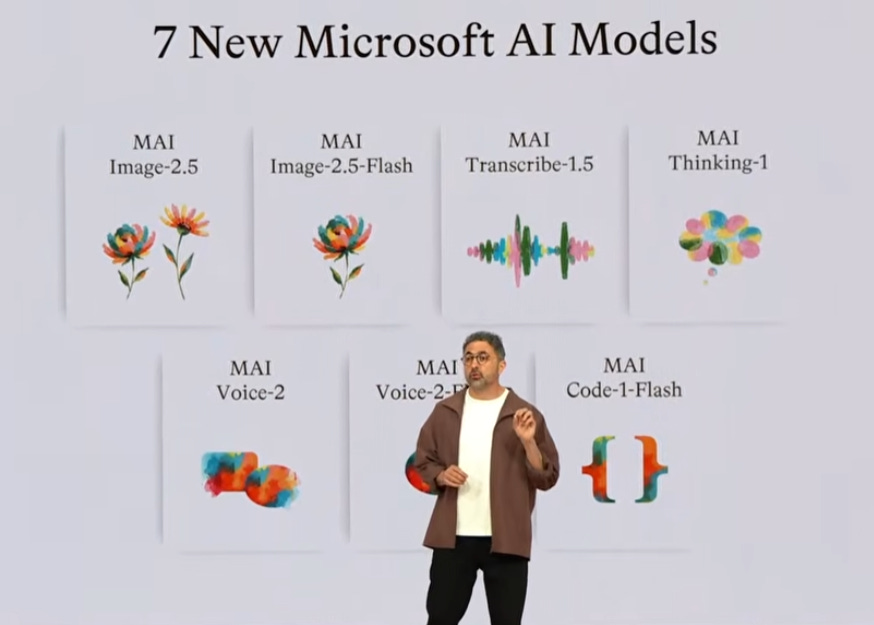
Complementing its advancements in AI customization, Microsoft has also made significant strides in developing its own suite of AI models. Under the leadership of Mustafa Suleyman, the company has announced the release of seven new models, specifically optimized for various business use cases. This strategic move addresses a previous limitation imposed by its contractual relationship with OpenAI, which had restricted Microsoft’s ability to develop cutting-edge proprietary models.
This new portfolio of Microsoft-developed models aims to compete directly with leading offerings from companies like Anthropic and OpenAI. The advantage for Microsoft lies in offering a clean, cost-effective, and licensed set of AI models that can be integrated into Copilot, further enhancing its value as an open "harness" for diverse AI capabilities.
The cost-effectiveness of these proprietary models is a significant factor. As Suleyman noted, the goal is to reduce and eventually eliminate the substantial costs associated with licensing external models like those from Anthropic. This economic advantage, coupled with enhanced control and customization, positions Microsoft favorably in the enterprise AI market.
A key benefit highlighted by Microsoft is the assurance that these proprietary models do not share intellectual property (IP) with other customers. This is a critical distinction from some third-party AI services. For instance, if the learning box for models like Anthropic’s Claude is not explicitly unchecked, user interactions can become available to the AI provider for broader use and sale. For businesses, especially those dealing with sensitive or proprietary data, the risk of inadvertent IP leakage is a significant concern. Microsoft’s approach offers a solution that prioritizes data privacy and IP protection.
Real-World Applications and Industry Adoption
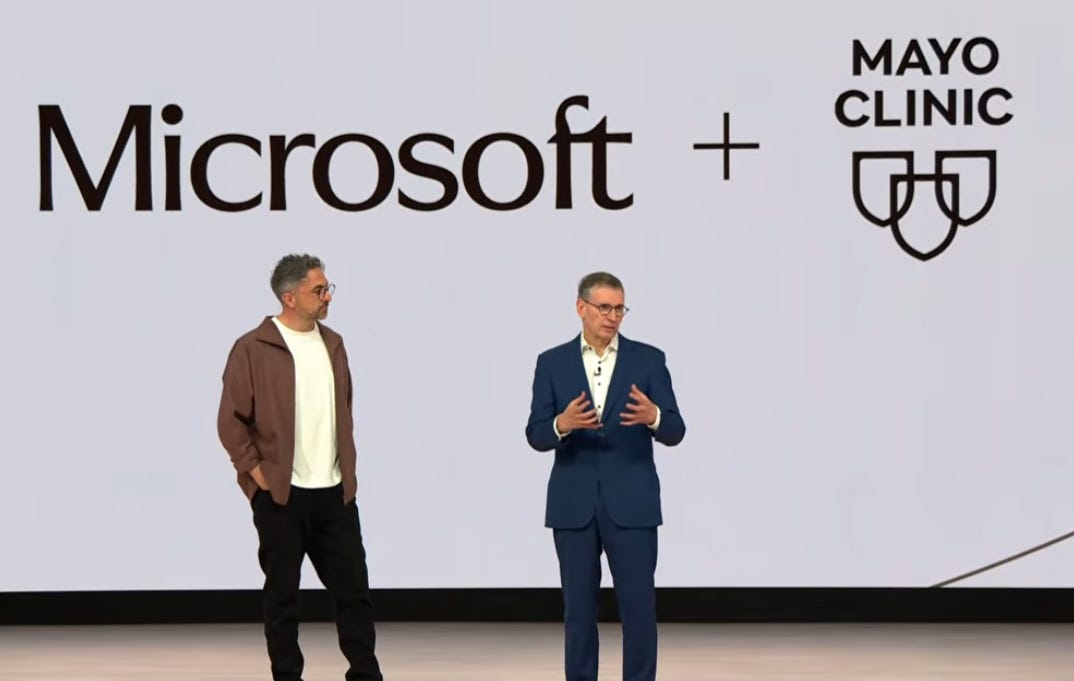
The practical applications of these advanced AI capabilities are already being explored across various industries. Mayo Clinic, a renowned healthcare institution, is collaborating with Microsoft to develop a "New Frontier Model for Healthcare." This initiative aims to create a specialized AI tool that can assist doctors and clinicians by providing insights derived from real-world clinical practices. This mirrors the approach taken in human capital management, where best practices are observed, studied, and documented.
In the agricultural sector, Land-O-Lakes has been testing Microsoft’s MAI-Thinking-1 reasoning model for automating tasks within its butter formulation processes. By fine-tuning a copy of the model with thousands of internal documents, including Teams messages and Outlook emails, the company achieved remarkable results. According to Microsoft senior product manager Tanaya Yadav, the customized MAI-Thinking-1 proved to be more accurate and ten times more cost-efficient than OpenAI’s GPT-4.5, demonstrating the significant performance and economic benefits of fine-tuned, proprietary models.
These examples underscore the transformative potential of enterprise AI when it is deeply integrated with an organization’s unique data and operational context. The ability to create specialized AI models tailored to specific industry needs and company workflows represents a significant leap forward in AI’s practical utility.
The Future of Enterprise AI: A Personalized and Adaptive Ecosystem
Microsoft’s strategic direction with its Copilot platform, coupled with its advancements in Frontier Tuning and proprietary AI model development, signals a clear commitment to shaping the future of enterprise AI. The company’s emphasis on creating an open "harness" that can accommodate various AI models, including third-party offerings and custom-tuned solutions, provides businesses with unprecedented flexibility.
The implications for the workforce are also profound. As AI agents become more sophisticated and integrated into daily operations, they have the potential to augment human capabilities, automate repetitive tasks, and provide intelligent insights, leading to increased productivity and efficiency. The challenge and opportunity lie in how organizations effectively manage this integration, ensuring that AI serves to empower employees and enhance strategic decision-making.
The ongoing development of AI, particularly in areas like reinforcement learning and fine-tuning, suggests a future where AI is not a static tool but a continuously evolving partner. This adaptive nature is crucial for businesses navigating an increasingly complex and rapidly changing global landscape.
Microsoft’s vision for enterprise AI, as articulated through its product roadmap and strategic partnerships, appears to be one of deep customization, autonomous learning, and robust data security. With significant staying power and leadership in the AI space, this approach holds immense potential to redefine how businesses operate, innovate, and compete in the digital age. The journey towards truly intelligent, company-specific AI agents has begun, and its impact is poised to be transformative.