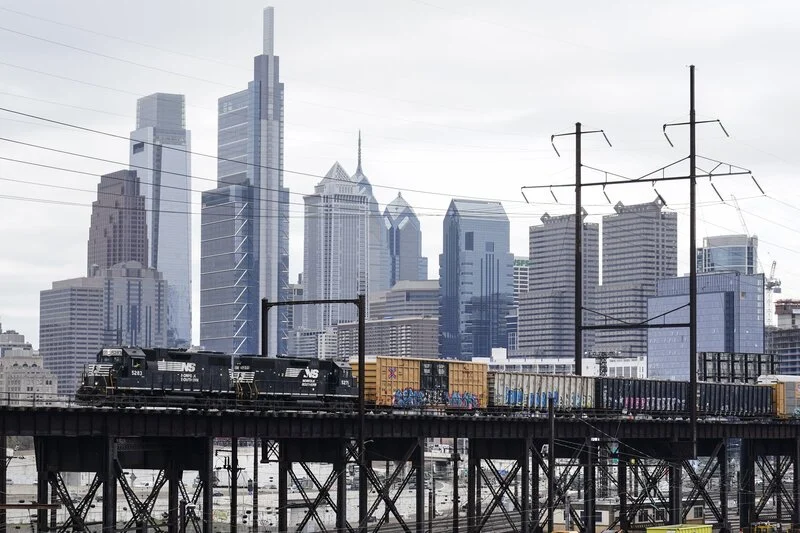
The House Transportation and Infrastructure Committee moved to reshape the future of American mobility on Friday, advancing a comprehensive $580 billion, five-year surface transportation reauthorization bill. The legislation, which passed with a bipartisan majority, serves as a successor to previous multi-year funding packages and aims to modernize the nation’s aging infrastructure while introducing a groundbreaking federal regulatory framework for autonomous commercial vehicles. This massive investment targets a wide array of sectors, including highway construction, bridge repair, public transit expansion, and rail safety enhancements, marking one of the most significant legislative efforts to address the nation’s supply chain vulnerabilities and technological evolution in a generation.
A Comprehensive Financial Blueprint for National Infrastructure
The $580 billion package represents a substantial commitment to the nation’s physical foundations. According to the committee’s summary, the funding is allocated across several critical pillars of the American transport system. Approximately $380 billion is earmarked for the Federal-aid Highway Program, which provides the primary source of funding for state departments of transportation to maintain and expand the National Highway System.
A significant portion of this highway funding—roughly $70 billion—is specifically dedicated to a new "National Bridge Resilience Program." This initiative aims to address the more than 45,000 bridges across the United States currently classified as being in "poor" condition by the Department of Transportation. By prioritizing structural integrity and seismic retrofitting, the bill seeks to prevent the types of catastrophic failures that have disrupted regional economies in recent years.
Public transit and passenger rail are also major beneficiaries of the reauthorization. The bill allocates $110 billion for transit agencies, focusing on both the maintenance of existing "legacy" systems in urban centers and the expansion of bus rapid transit (BRT) in growing suburban corridors. Furthermore, $60 billion is designated for the Federal Railroad Administration to enhance safety protocols at grade crossings and to support the continued development of high-speed rail corridors in the Northeast and the Pacific Northwest.
Establishing the First Federal Framework for Autonomous Commercial Vehicles
Perhaps the most transformative aspect of the legislation is the establishment of the first-ever federal regulatory framework for autonomous commercial vehicles (ACVs). For years, the autonomous trucking industry has operated within a patchwork of state-level regulations, creating a legal gray area for long-haul freight operations. This bill seeks to provide the certainty needed for large-scale deployment.
The framework establishes clear safety performance standards for Level 4 and Level 5 autonomous systems, as defined by the Society of Automotive Engineers (SAE). Key provisions include:
- Federal Preemption: The bill asserts federal authority over the design, construction, and performance of autonomous driving systems, preventing states from enacting conflicting technical standards while preserving state authority over traffic laws and licensing.
- Safety Certification: Manufacturers will be required to submit comprehensive Safety Evaluation Reports (SERs) to the National Highway Traffic Safety Administration (NHTSA) before deploying autonomous trucks in interstate commerce.
- Data Sharing and Cybersecurity: The legislation mandates the creation of a secure, anonymized data-sharing platform where carriers must report "disengagements" and safety incidents to help the Department of Transportation refine future safety protocols.
- Workforce Transition: Recognizing the potential impact on labor, the bill includes $2 billion for a "Trucking Workforce Transition Fund," designed to retrain drivers and technicians for roles in the emerging autonomous ecosystem.
Historical Context and the Legislative Timeline
The advancement of this bill follows nearly eighteen months of intense negotiations and dozens of field hearings held across the country. The push for a new reauthorization was catalyzed by the impending expiration of current funding authorizations and the growing realization that the Bipartisan Infrastructure Law of 2021, while historic, was a "down payment" rather than a final solution to the nation’s infrastructure deficit.
The timeline leading to Friday’s vote reflects a shift in congressional priorities:
- January 2025: The Committee on Transportation and Infrastructure launched a series of "Supply Chain Resilience" hearings, highlighting how infrastructure bottlenecks contribute to inflation.
- August 2025: A bipartisan "Blue Ribbon Panel" on autonomous technology released a report recommending immediate federal action to prevent international competitors from dominating the self-driving freight market.
- March 2026: The initial draft of the $580 billion bill was introduced, followed by a marathon "markup" session where over 150 amendments were considered.
- May 22, 2026: The committee officially voted to report the bill to the full House of Representatives.
This legislative momentum comes at a time when the Highway Trust Fund—the primary mechanism for federal transportation spending—has faced long-term solvency concerns. The new bill addresses this by authorizing a one-time general fund transfer while also directing the Treasury to study "mileage-based user fees" as a potential replacement for the federal gas tax.
Supporting Data: The Urgent Need for Investment
The necessity of this $580 billion investment is underscored by sobering data regarding the current state of American infrastructure. Reports from the American Society of Civil Engineers (ASCE) have consistently graded the nation’s infrastructure in the "D" to "C" range.
Data integrated into the bill’s justification includes:
- Economic Drag: Traffic congestion on the National Highway System costs the U.S. economy an estimated $190 billion annually in lost productivity and wasted fuel.
- Safety Trends: Highway fatalities have remained stubbornly high, with over 40,000 deaths annually. The bill’s safety programs, particularly those targeting "vulnerable road users" like pedestrians and cyclists, aim to reduce this figure by 25% over the next decade.
- Freight Volume: The Department of Transportation projects that total freight tonnage will increase by 40% by 2045. Without the rail and highway upgrades funded by this bill, the current network would likely reach a point of systemic failure.
- Transit Backlog: The "state of good repair" backlog for the nation’s transit systems is estimated at over $100 billion, leading to frequent service disruptions in major metropolitan areas.
Official Reactions and Industry Perspectives
The advancement of the bill has drawn a wide spectrum of reactions from lawmakers, industry leaders, and advocacy groups.
Committee Chairman Sam Graves (R-MO) praised the bill as a "common-sense approach to the future," stating, "We are not just pouring concrete; we are building a smarter, safer, and more efficient network that embraces the technology of tomorrow while fixing the problems of today. The autonomous vehicle framework is a vital step in ensuring America leads the world in transportation innovation."
Conversely, Ranking Member Rick Larsen (D-WA) emphasized the bill’s environmental and transit components. "While we have made compromises on certain funding levels, this bill secures the necessary investments in low-carbon transit and resilient infrastructure that will help our communities withstand the impacts of climate change," Larsen noted during the markup.
Industry groups have also weighed in. The American Trucking Associations (ATA) expressed support for the autonomous framework, noting that a single federal standard is essential for the movement of goods across state lines. However, some labor organizations, including the International Brotherhood of Teamsters, expressed caution, urging Congress to ensure that the transition to autonomous technology does not leave millions of workers behind.
Broader Impact and Long-term Implications
The implications of this $580 billion reauthorization extend far beyond simple construction projects. By codifying a federal framework for autonomous commercial vehicles, the United States is positioning itself as a global leader in "Smart Logistics." This move is expected to attract billions of dollars in private venture capital to the domestic tech and automotive sectors, as companies now have a clear regulatory roadmap for commercialization.
Furthermore, the bill’s emphasis on "resilience" marks a shift in how federal dollars are spent. Rather than simply rebuilding what was there before, the bill requires states to consider future climate risks and extreme weather events in their project designs. This forward-looking approach is intended to reduce the long-term costs of disaster recovery.
In the realm of public transit, the $110 billion allocation is expected to catalyze a "transit-oriented development" boom in several mid-sized cities. By providing stable, five-year funding, the bill allows local governments to commit to long-term urban planning projects that reduce car dependency and improve air quality.
As the bill moves to the House floor, it faces a complex path through the Senate, where debates over the total price tag and the specifics of the autonomous vehicle preemption clauses are expected to intensify. Nevertheless, the House Committee’s action on Friday represents a definitive statement of intent: the United States is ready to invest in a more connected, automated, and resilient future.
The coming months will determine whether the spirit of bipartisanship seen in the committee room can survive the broader political environment of 2026. If passed into law, this $580 billion package will serve as the backbone of American commerce and mobility well into the 2030s, defining how people and goods move across the continent for decades to come.