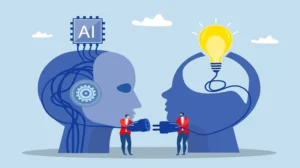
The Chief Learning Officer (CLO) March 2026 Breakfast Club recently convened a distinguished panel of experts to address one of the most pressing challenges facing modern organizations: the design of leadership development programs that foster stability within an era of unprecedented global instability. Moderated by Kimo Kippen, founder of Aloha Learning Advisors and a recognized leader in the talent development space, the discussion centered on the theme of "Human-Centered Leadership in a Tech-Driven World." The session provided a deep dive into how executive education must evolve to meet the demands of the BANI framework—an acronym representing environments that are Brittle, Anxious, Nonlinear, and Incomprehensible.
As organizations grapple with the rapid integration of generative artificial intelligence, fluctuating global markets, and a workforce increasingly prone to burnout, the panelists offered a roadmap for transitioning from traditional management styles to a more resilient, human-centric approach. The panel featured Michelle Baker, Chief People Officer at FORUM Credit Union; Dr. Rayne Bozeman, Director of Culture and Leadership Development at Georgia Tech Human Resources; and Ryan Heinl, CEO at SIY Global. Together, they explored the intersection of technological advancement and the fundamental human need for connection, clarity, and purpose.
The Shift from VUCA to BANI: A New Framework for 2026
For decades, leadership development was governed by the VUCA framework (Volatility, Uncertainty, Complexity, and Ambiguity), a concept originating from the U.S. Army War College in the late 1980s. However, the panelists noted that the events of the early 2020s—including the global pandemic, the explosion of large language models, and geopolitical shifts—have rendered VUCA insufficient. In its place, the BANI framework has emerged as a more accurate descriptor of the current business climate.
Ryan Heinl of SIY Global emphasized that "Brittle" refers to systems that appear strong on the surface but are prone to sudden, catastrophic failure. In a corporate context, this manifests as rigid hierarchies that cannot withstand the pressure of rapid market shifts. The "Anxious" component reflects the emotional state of a workforce constantly fearing obsolescence in the face of automation. "Nonlinear" describes the breakdown of cause-and-effect relationships, where small decisions lead to disproportionately large consequences. Finally, "Incomprehensible" highlights the paradox of the information age: having more data than ever before, yet less clarity on how to act upon it.
The transition to BANI requires a fundamental shift in leadership training. While VUCA called for vision and understanding, BANI demands resilience, empathy, context, and intuition. The panel argued that stability can no longer be found in external structures or five-year plans; instead, it must be cultivated internally within the leadership and the organizational culture.
Perspectives from the Front Lines: Finance, Academia, and Corporate Strategy
Michelle Baker, representing FORUM Credit Union, highlighted the unique challenges of the financial sector, where trust is the primary currency. In an era where fintech and AI-driven banking are the norms, Baker argued that the "human touch" is the ultimate competitive advantage. She noted that leadership development at FORUM focuses on "emotional agility," ensuring that managers can support their teams through the anxiety of digital transformation while maintaining operational excellence.
From the perspective of higher education, Dr. Rayne Bozeman of Georgia Tech discussed the complexities of fostering culture in a massive, decentralized institution. Dr. Bozeman pointed out that academic and research environments are particularly susceptible to the "Incomprehensible" pillar of BANI. She emphasized the need for "relational leadership," where leaders are trained to build psychological safety. According to Bozeman, when the world is incomprehensible, the only thing employees can rely on is the quality of their relationships with their peers and supervisors.
Ryan Heinl provided a strategic overview, noting that SIY Global (born out of Google’s "Search Inside Yourself" program) has seen a massive surge in demand for "mindful leadership" since 2024. Heinl argued that in a tech-driven world, the most valuable skill a leader can possess is the ability to manage their own attention and emotional state. He presented the idea that "stability in an era of instability" is not about stopping the change, but about developing the "inner steadiness" to navigate it.
Supporting Data: The Cost of Instability and the ROI of Human-Centricity
The urgency of the Breakfast Club’s topic is supported by emerging data from the 2024-2025 fiscal years. According to a 2025 Global Leadership Forecast, organizations that prioritize "human-centric" skills—such as empathy, conflict resolution, and cognitive flexibility—report 2.5 times higher employee retention rates compared to those focusing solely on technical or "hard" management skills.
Furthermore, a study conducted by the International Talent Development Association in late 2025 revealed that 68% of C-suite executives believe their current leadership pipeline is "insufficiently prepared" for the BANI environment. The study also found that "Anxiety" in the workplace has led to a 15% decrease in overall productivity across the Fortune 500, primarily due to "change fatigue" resulting from continuous technological pivots.
Data from the 2026 Workplace Wellbeing Report indicates that companies investing at least 20% of their L&D budget into "soft skills" and mental health resilience training have seen a 30% increase in innovation output. This suggests that when employees feel emotionally secure and supported by human-centered leaders, they are more willing to take the risks necessary for technological breakthrough.
A Chronology of Leadership Evolution (2020–2026)
To understand the current state of leadership development, the panel looked back at the timeline of the last six years:
- 2020–2021: The Crisis Management Phase. Leadership development was reactive, focusing on remote work logistics and immediate crisis communication.
- 2022–2023: The Hybrid Struggle. Organizations focused on "The Great Resignation" and "Quiet Quitting," attempting to balance flexible work schedules with the need for corporate cohesion.
- 2024: The AI Integration Pivot. As Generative AI became ubiquitous, the focus shifted to technical upskilling. However, many organizations realized that technical skills without ethical or emotional oversight led to a "Brittle" culture.
- 2025: The Rise of BANI. Intellectuals and HR leaders began adopting the BANI framework to explain the pervasive sense of overwhelm in the workforce.
- 2026: The Human-Centered Resurgence. Current leadership development strategies, as discussed at the Breakfast Club, have returned to the "human" element as the core stabilizer.
Official Responses and Strategic Implications
The consensus among the panelists was that the role of the Chief Learning Officer (CLO) has transformed from a support function to a central strategic pillar. Kimo Kippen noted that in 2026, the CLO is often the "architect of resilience" within the organization.
The implications for the future of work are significant. First, leadership development is no longer a "one-and-done" workshop but a continuous practice of "micro-learning" and peer coaching. Second, the metrics of success for leaders are shifting. Instead of purely looking at KPIs and quarterly targets, organizations are increasingly using "culture health scores" and "psychological safety metrics" to evaluate executive performance.
Dr. Bozeman emphasized that this shift requires a "unlearning" of old habits. "We were taught that leaders must have all the answers," she said. "In a BANI world, that is impossible. The new leader is one who can say, ‘I don’t know the answer, but we have the collective intelligence to find it together.’"
Conclusion: Building the "Human-Tech" Synergy
The March 2026 Breakfast Club concluded with a call to action for organizations to stop viewing technology and humanity as opposing forces. Instead, the panelists argued that technology should be used to automate the "incomprehensible" data processing, freeing up human leaders to focus on the "relational" and "emotional" aspects of the business.
As Michelle Baker noted in her closing remarks, "Stability is not a destination; it is a capacity." By designing leadership development programs that acknowledge the brittleness and anxiety of the modern world, organizations can build a leadership core that is not only capable of surviving the BANI era but thriving within it.
The full discussion from the March 2026 Breakfast Club remains available on-demand for CLO members, providing a blueprint for any organization looking to recalibrate its leadership strategy for the challenges of the late 2020s. With the 2026 series of Breakfast Clubs now open for registration, the dialogue regarding the intersection of human empathy and technological prowess is expected to remain the focal point of the global L&D community.