The return to traditional office environments is raising significant concerns about employee health and wellbeing, with new data revealing that office-based workers are spending more time sedentary and taking fewer breaks than their remote counterparts. This trend, deeply ingrained in the design and culture of many UK workplaces, poses a substantial risk to physical and mental health, prompting a critical re-evaluation of how we structure our working lives.
The Sedentary Office Landscape: A Growing Concern
Recent studies highlight a stark reality: UK office workers are among the most sedentary occupational groups globally. According to the British Medical Bulletin, individuals in office settings can spend up to three-quarters of their workday seated. More precise figures from Scientific Reports indicate this proportion can range from a staggering 68% to 82% of the working day. This prolonged inactivity is not merely an inconvenience; it is a recognized contributor to a range of chronic health issues, including cardiovascular disease, type 2 diabetes, and certain types of cancer, as well as exacerbating mental health challenges.
The return to office mandates, implemented by numerous organizations following periods of widespread remote and hybrid work, appears to be intensifying this sedentary trend. A comprehensive survey of 2,015 UK desk workers, conducted by AJ Products, revealed a surprising finding: office-based employees are less likely to take regular breaks than those who continue to work entirely from home. Despite the perceived benefits of workplace integration and the often larger physical footprint of an office compared to a home setup, only 41.4% of office workers reported taking at least one break per hour, a figure that rises to 44.9% among remote workers.
This discrepancy suggests that the physical environment and the ingrained cultural norms of traditional offices are actively working against the promotion of movement and regular activity. Most conventional offices were historically designed with a focus on maximizing occupant density, minimizing overhead costs, and ensuring functional utility for technology, rather than prioritizing employee wellbeing and physical health. The typical office layout, characterized by rows of desks facing screens and formal, segregated meeting rooms, inherently reinforces sedentary behaviour. For many, the daily commute, often by car as indicated by ONS data, and the subsequent walk from parking to desk, represents the entirety of their physical exertion before settling in for an extended period of sitting. The office environment, in its current prevalent form, offers little to no intrinsic encouragement for regular movement, and the pressures of workload often lead employees to forgo any voluntary breaks.
The Psychological Toll of Prolonged Sitting
The implications of this sedentary lifestyle extend beyond physical health, significantly impacting mental wellbeing. The 2024 ASICS Global State of Mind study provided alarming insights into the detrimental effects of uninterrupted desk time. The study found that as little as two hours of continuous desk work can lead to a measurable decline in mental health. This decline is amplified with longer durations; four continuous hours of sitting were associated with an 18% increase in stress levels. Given that the majority of UK office workers routinely exceed these thresholds on a typical workday, the cumulative effect on stress, anxiety, and overall job satisfaction is likely substantial.
The survey data further reveals that nearly a third of workers endure three or more hours without a break, a statistic that health professionals are increasingly concerned about. This prolonged inactivity is a direct contributor to the elevated risks of chronic diseases and mental health issues. The patterns of behaviour observed in today’s workforce are, to a significant extent, a direct reflection of the environments in which they work and the expectations these environments foster. Traditional office layouts, prioritizing headcount and space efficiency, have inadvertently created ecosystems that encourage and normalize prolonged periods of sitting.
Unpacking the Reasons: Why Office Workers Move Less
The underlying reasons for this reduced activity among office-based workers are multifaceted and deeply embedded in the fabric of office life. Workplace culture often plays the most significant role. In many organizations, physical presence at a desk is still implicitly equated with productivity and commitment. Taking a break, especially in open-plan environments where an individual’s absence is readily noticeable, can carry an unspoken social cost. Employees may feel scrutinized or perceived as less dedicated if they are not constantly visible at their workstations.
In contrast, remote workers are typically judged more on their output and delivered results rather than their constant presence. This shift in performance metrics makes taking a break a more natural and less guilt-ridden act. The pressure to appear busy and engaged by remaining at one’s desk is a powerful deterrent to movement in the traditional office setting.
Furthermore, longer working hours often compound the problem. Data consistently shows that office-based workers tend to log more hours than their remote counterparts, leaving less time and mental energy available for intentional physical activity. The convenience factor within a well-equipped office also works against spontaneous movement. When all necessary resources are within arm’s reach, and amenities like food delivery services are readily accessible, there is minimal inherent physical impetus to leave one’s workspace.
Demographic Deep Dive: Who is Sitting the Longest?
Examining the survey data provides crucial insights into which demographics are most affected by sedentary work habits. Workers aged between 25 and 34 years old are the least likely of any age group to take hourly breaks, with only 31.6% adhering to this practice. This demographic is precisely the one that many workplaces are actively trying to attract and retain, investing heavily in modern amenities, collaborative zones, and flexible layouts. While the physical environments are evolving, the deeply ingrained movement habits of this generation appear to be lagging behind, suggesting that architectural changes alone are insufficient.
Looking at specific professions, travel agents emerged as the most likely to incorporate regular breaks into their workday, with 66.7% reporting doing so. This is attributed to the inherent nature of their roles, which are often customer-facing and task-based, naturally building in interruptions and periods away from a screen. This contrasts sharply with the average open-plan, screen-centric role, which offers fewer organic opportunities for movement.
Identifying Effective Solutions: What Works?
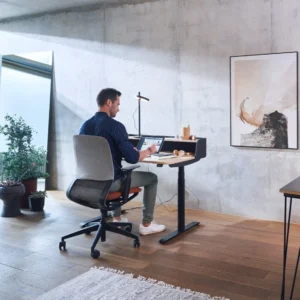
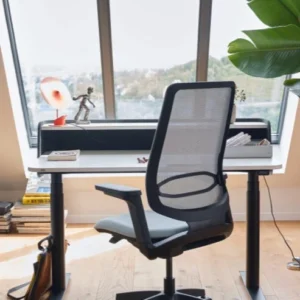
The evidence points towards interventions that are integrated into the environment rather than relying solely on individual willpower or choice. A significant study by the National Institute for Health Research (NIHR) involving 756 office workers found that providing sit-stand desks dramatically reduced sitting time by over an hour per day compared to a control group. This demonstrates the power of simple, accessible ergonomic solutions.
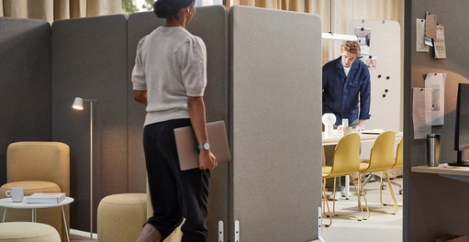
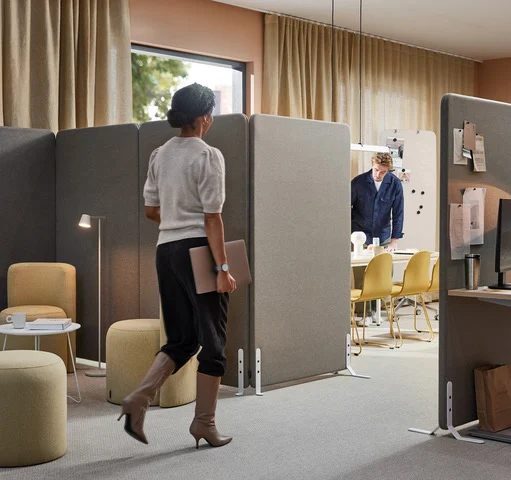
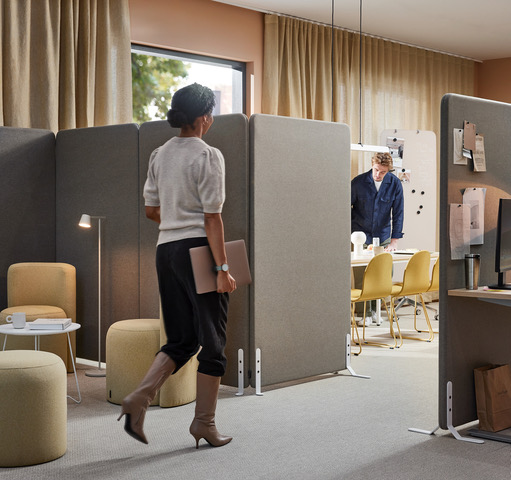
Beyond individual workstations, broader environmental design principles can significantly influence movement patterns. Floor plans that strategically place shared facilities, such as kitchens, printers, or break-out areas, away from primary workstations can encourage incidental walking. Making staircases an attractive and accessible alternative to lifts, and incorporating furniture that naturally promotes posture changes throughout the day, are other effective strategies that reduce sitting time without demanding conscious effort from employees.
The core principle for improving workplace health is to ensure that movement is regularly dispersed throughout the day. While frequent desk breaks are a vital component and arguably the easiest to implement, their benefits extend far beyond mere physical activity, positively impacting mental clarity and overall efficacy.
Culture plays an equally critical role, acting in concert with the physical environment. The Scandinavian tradition of "fika," a designated daily break where an entire team steps away from their desks collectively, exemplifies how to embed movement into the organizational rhythm. When movement is a shared, timetabled activity, it removes the burden of individual initiative and fosters a sense of collective wellbeing. This approach transforms movement from a personal choice into a normalized and encouraged aspect of the workday.
The Imperative for Change: Redefining the Modern Workplace
The ongoing debate surrounding office attendance has predominantly focused on metrics like productivity, collaboration, and company culture. However, the mounting evidence on sedentary behaviour introduces a critical, yet often overlooked, dimension: the fundamental impact of the office environment on the health of its occupants. The question is no longer solely about whether the office is conducive to work, but whether it is conducive to the health and wellbeing of the people who spend their days within its walls.
Workplace interventions designed to mitigate sedentary behaviour have been proven to be cost-effective. The aforementioned NIHR survey indicated that these initiatives not only yield significant health gains but also contribute to measurable improvements in productivity. The scientific and anecdotal evidence supporting the need for change is robust and well-established. Yet, the physical design and operational management of many UK workplaces have yet to fully adapt to this growing body of evidence, perpetuating an environment that, unintentionally, undermines the health of its workforce.
The shift towards more active workplaces is not merely a trend; it is an essential evolution driven by a growing understanding of the interconnectedness between physical health, mental wellbeing, and professional performance. As organizations navigate the future of work, prioritizing environments that encourage movement and break up prolonged sitting will be paramount to fostering a truly healthy, engaged, and productive workforce. The data is clear, and the time for a design and cultural revolution in our offices is now.