The return to traditional office environments following a period of widespread remote work has inadvertently ushered in a new era of sedentary behaviour for a significant portion of the UK workforce. While the exact figures are still being collated and analysed across various studies, emerging data suggests that office-based employees are spending more time seated than their remote counterparts, raising concerns about the long-term health and wellbeing implications. The fundamental design and cultural norms prevalent in many UK offices appear to be actively discouraging movement, creating environments that inadvertently promote prolonged sitting.
According to a comprehensive survey conducted by AJ Products UK, involving 2,015 UK desk workers, a stark contrast has emerged when comparing office-based routines with those of individuals working exclusively from home. Despite the renewed emphasis on workplace integration and the generally larger physical footprint of an office compared to a typical home office setup, the findings indicate a subtle yet significant shift. A mere 41.4% of office workers report taking at least one break per hour, a figure that is surpassed by the 44.9% of remote workers who engage in similar hourly breaks. This suggests that the perceived benefits of being physically present in the office are not translating into increased physical activity throughout the workday.
The architecture of most contemporary offices is a primary contributor to this sedentary trend. Historically, office design has prioritised maximizing headcount within a given space, optimizing overhead costs, and ensuring essential amenities like power outlets for electronic devices. Movement and physical well-being were rarely central considerations. This design philosophy has resulted in layouts characterized by rows of desks facing computer screens, with formal meeting rooms often situated away from the primary work areas. The daily commute itself, for many UK workers, predominantly involves driving to the office, as indicated by data from the Office for National Statistics (ONS). The journey from a parking space to a desk often represents the extent of physical exertion for a substantial portion of the day, with little within the office environment actively prompting or encouraging regular movement.
The consequences of such prolonged sitting are becoming increasingly evident and are supported by scientific research. The 2024 ASICS Global State of Mind study, for instance, highlighted a direct correlation between uninterrupted desk time and declining mental health. The study found that as little as two hours of continuous sitting can lead to a measurable deterioration in mental well-being. This decline is exacerbated with longer periods of immobility, with four continuous hours of sitting associated with an 18% increase in reported stress levels. Given that a significant proportion of UK office workers routinely exceed these thresholds on a typical workday, the implications for mental health are considerable.
Alarmingly, nearly a third of surveyed workers admitted to going for three hours or more without taking a break. This statistic is particularly concerning when viewed through the lens of public health. Inactivity is a well-established risk factor for a range of chronic diseases, including cardiovascular conditions, type 2 diabetes, and certain types of cancer. Furthermore, the link between sedentary behaviour and mental health issues, such as anxiety and depression, is increasingly being recognized. These figures paint a picture of a workforce whose daily routines are largely dictated by the very environments in which they work, environments that, by their conventional design, seem to expect and accommodate prolonged periods of sitting.
The Deep-Rooted Reasons for Reduced Movement in Offices
The reasons behind the observed decrease in movement among office workers compared to their home-based counterparts are multifaceted and deeply ingrained in the prevailing office culture and operational dynamics. One of the most significant factors is the pervasive workplace culture that often equates physical presence at a desk with productivity. In many organizations, particularly those with open-plan layouts, stepping away from one’s workstation can be perceived negatively, carrying an unspoken social cost. This pressure to appear constantly engaged and busy can deter individuals from taking necessary breaks, even when they recognize the benefits. Remote workers, on the other hand, are more likely to be evaluated based on their output and deliverables rather than their constant physical presence, making the act of taking a break a more natural and less scrutinized part of their workday.
The issue of longer working hours further compounds the problem. Evidence consistently suggests that office-based workers tend to log more hours than those who work remotely. This extended time spent at work leaves less discretionary time and energy available for physical activity. Moreover, the convenience factor within a traditional office setting can inadvertently work against increased movement. When all necessary resources and amenities are readily accessible within a small radius, and when services like lunch delivery are commonplace, the immediate physical impetus to get up and move is significantly diminished.
Identifying the Demographics Most Affected by Sedentary Work
The survey data from AJ Products UK provides granular insights into which segments of the workforce are most susceptible to prolonged sitting habits. Notably, workers aged between 25 and 34 years old emerged as the least likely demographic to take hourly breaks, with only 31.6% reporting such habits. This is a particularly striking finding, as this age group represents a significant portion of the workforce that many companies are actively trying to attract and retain. Organizations are investing heavily in redesigning their workplaces with collaboration zones, modern amenities, and flexible layouts, aiming to create an appealing environment. However, the data suggests that while the physical environment may be evolving, the ingrained movement habits of this demographic are not yet adapting in parallel.
On a professional basis, travel agents were identified as the demographic most likely to take regular breaks, with 66.7% reporting doing so. This observation can be attributed to the inherent nature of their roles. Customer-facing positions and task-based responsibilities often build natural interruptions and periods of activity into the workday, a rhythm that is less common in average open-plan, screen-centric roles. This highlights how the very structure and demands of different professions can influence physical activity levels within the workplace.
What Constitutes Effective Interventions for Reducing Sedentary Behaviour?
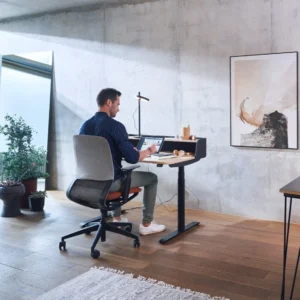
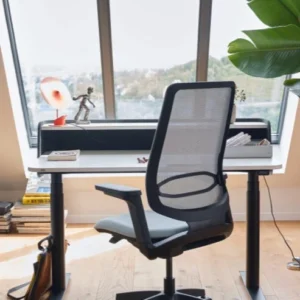
The research points towards interventions that are integrated into the physical environment as being significantly more effective than those relying solely on individual choice. A study conducted by the National Institute for Health Research (NIHR) involving 756 office workers found that the provision of sit-stand desks led to a reduction in sitting time of over an hour per day compared to a control group. This demonstrates the tangible impact of providing adaptable furniture solutions.
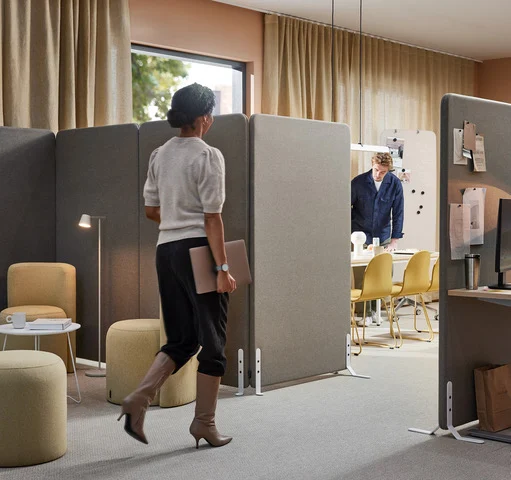
Beyond individual workstations, broader environmental design principles can play a crucial role. Floor plans that strategically place shared facilities, such as kitchens or printing stations, away from individual workstations can encourage incidental movement. Similarly, making staircases an attractive and convenient alternative to lifts can prompt more frequent use. The incorporation of furniture that supports and encourages posture changes throughout the day can also contribute to reducing prolonged static seating. These types of interventions reduce sitting time without requiring individuals to consciously make a decision to move, thereby overcoming behavioural inertia.
The key to fostering better workplace health lies in ensuring that movement is regularly dispersed throughout the day. While frequent desk breaks are a vital component and often the easiest to implement, they are part of a larger ecosystem of physical activity. The benefits extend beyond physical health, significantly impacting mental well-being and overall efficacy.
Workplace culture plays an equally critical role alongside the physical environment. In the UK office of AJ Products, for example, the Scandinavian tradition of "fika" – a scheduled, daily break where the entire team steps away from their desks together – is actively practiced. This collective and timetabled approach to movement removes the reliance on individual willpower and fosters a sense of shared responsibility for well-being. When movement is normalized and integrated into the daily schedule, it becomes a more sustainable practice.
The Imperative for Change in Workplace Design and Management
The ongoing debate surrounding office attendance has largely focused on aspects like productivity, collaboration, and the re-establishment of company culture. However, the accumulating data on sedentary behaviour introduces a critical dimension that has received comparatively less attention: the fundamental impact of the office environment, as currently designed and managed, on the health of its occupants.
The evidence from the NIHR survey underscores that workplace interventions aimed at reducing sedentary behaviour are not only cost-effective but also yield significant health gains alongside measurable improvements in productivity. The scientific basis for these interventions is well-established. The challenge now lies in bridging the gap between this established evidence and its widespread implementation across the UK’s diverse workplace environments. The current design and operational paradigms of many offices appear to be lagging behind the evolving understanding of how to create healthier and more dynamic work settings.
The implications of this sedentary trend extend beyond individual health. A workforce that is less physically active may experience higher rates of absenteeism due to illness, reduced energy levels, and diminished cognitive function, all of which can negatively impact overall organizational performance. Investing in healthier workplace design and promoting more active work routines is therefore not just a matter of employee welfare but also a strategic imperative for businesses seeking to optimize their workforce’s potential. As the understanding of the link between sedentary behaviour and health continues to grow, it is becoming increasingly clear that a fundamental re-evaluation of traditional office design and management practices is urgently required. The future of work necessitates environments that actively support, rather than inadvertently hinder, the physical and mental well-being of employees.
Helen Beebe, MD at AJ Products UK and Ambassador for Happiness at Work, commented on the findings, stating, "The data clearly shows that the traditional office setup, while facilitating collaboration, can inadvertently contribute to a more sedentary lifestyle than working from home. We need to move beyond simply providing desks and chairs and start thinking about how our physical spaces can actively encourage movement and support the holistic well-being of our employees. This isn’t just about avoiding illness; it’s about creating environments where people can thrive, be more creative, and ultimately, be more productive."
The insights from the AJ Products survey and supporting research from bodies like the NIHR and ASICS highlight a critical juncture in the evolution of the modern workplace. As companies navigate the post-pandemic landscape, a renewed focus on the health-promoting aspects of office design and culture is not merely a trend but a necessity for fostering a sustainable, productive, and healthy workforce. The challenge for businesses and policymakers alike is to translate this growing body of evidence into tangible changes that benefit the millions of individuals who spend their working lives within office walls.