
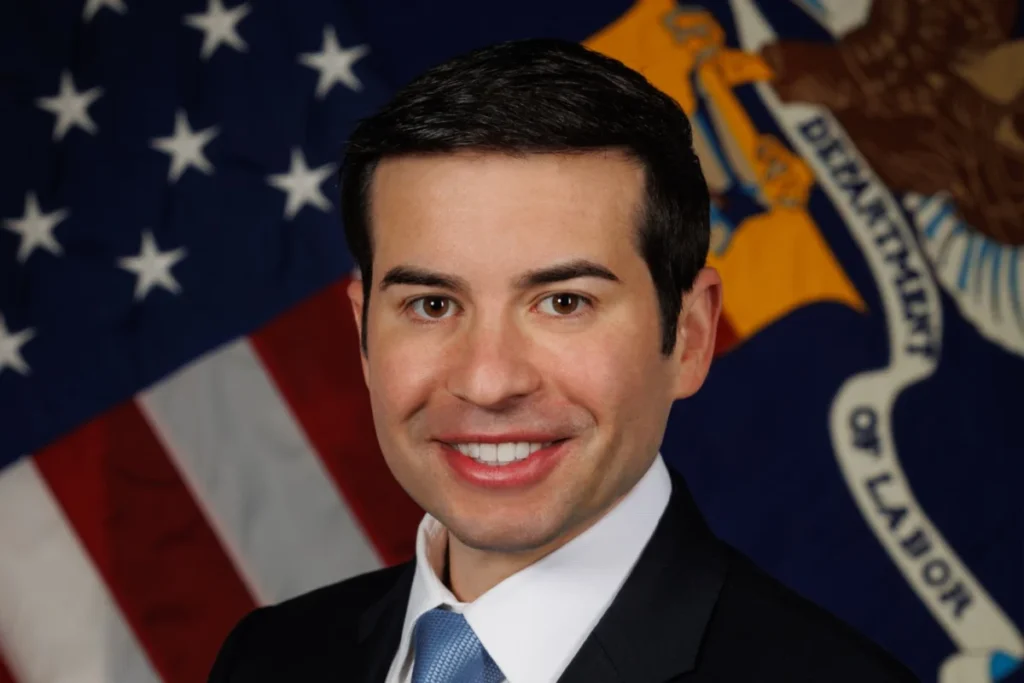
Washington, D.C. – Keith Sonderling, formerly the Deputy Secretary of the U.S. Department of Labor (DOL), has officially stepped into the role of Acting Secretary, effective Monday, following the abrupt departure of Secretary Lori Chavez-DeRemer. Her resignation comes amidst serious allegations of misusing official government resources for personal travel and other expenses, a development confirmed by the department and widely reported by leading news outlets, including The New York Times and the Associated Press. The transition places Sonderling, a seasoned labor law expert with a distinct policy philosophy, at the helm of an agency crucial to the nation’s workforce and economic stability.
The Departure of Secretary Chavez-DeRemer and Its Ramifications
Lori Chavez-DeRemer, who previously represented a district in the U.S. House of Representatives before her appointment to the cabinet post, resigned from her position as Secretary of Labor under a cloud of controversy. The allegations, which surfaced recently, suggest a pattern of using office resources to cover personal travel and various other private expenses. Such accusations against a high-ranking government official are typically met with intense scrutiny, as they touch upon fundamental issues of public trust, ethical conduct, and the responsible stewardship of taxpayer funds.
The specific details surrounding the alleged misuse of resources have not been fully disclosed by the Department of Labor beyond acknowledging her departure. However, reports indicate that the allegations were serious enough to prompt her resignation, rather than facing a protracted investigation or potential impeachment proceedings. For any cabinet member, maintaining an impeccable ethical standard is paramount, and even the appearance of impropriety can undermine public confidence in government institutions. Chavez-DeRemer’s short tenure as Labor Secretary, having been confirmed by the Senate in late 2024, has now concluded under circumstances that will undoubtedly spark further discussion about accountability in public service. Her prior experience in the legislative branch, where she was subject to congressional ethics rules, makes the nature of these allegations particularly noteworthy. The rapid succession of events leading to her resignation underscores the heightened sensitivity surrounding financial integrity within federal agencies.
Keith Sonderling: A Profile of the New Acting Secretary
Keith Sonderling’s ascent to Acting Secretary brings a familiar face to the Department of Labor, given his extensive background within the agency and his recent tenure as Deputy Secretary. Born in New York and raised in Boca Raton, Florida, Sonderling embarked on his career as a labor and employment lawyer, a foundation that has informed his policy perspectives throughout his public service. His educational background includes a bachelor’s degree in broadcast journalism from the University of Florida and a law degree from Nova Southeastern University, providing him with a unique blend of communication skills and legal expertise.
Sonderling’s journey through federal service began in 2017 when he joined the Labor Department’s Wage and Hour Division. His commitment and expertise quickly saw him rise through the ranks, culminating in his appointment as the division’s acting administrator in 2019. This period was particularly formative, allowing him to directly engage with the complex issues surrounding wage laws, overtime regulations, and the classification of workers. From 2019 to 2024, Sonderling transitioned to the Equal Employment Opportunity Commission (EEOC), serving as one of its commissioners. His time at the EEOC provided him with a broader perspective on anti-discrimination laws, workplace equity, and the challenges of ensuring fair employment practices across various industries.
In March 2025, Sonderling returned to the Department of Labor in a more senior capacity, confirmed by the Senate as Deputy Secretary with a party-line vote. This confirmation, achieved through a politically divided vote, highlighted both his recognized qualifications and the ideological fault lines that often characterize appointments to significant federal agencies. As Deputy Secretary, he quickly became a visible and vocal proponent of specific policy initiatives, signaling a clear direction he believes the DOL should pursue. His extensive experience across different facets of labor law and policy positions him as a steady hand during this unexpected leadership transition.
Sonderling’s Policy Agenda: A Shift Towards Benefits and Alternative Approaches
Under Sonderling’s leadership, even in an acting capacity, the Department of Labor is anticipated to intensify its focus on benefits issues and adopt a more collaborative approach to employer compliance. His public statements and past actions offer a clear roadmap of his policy priorities, many of which aim to provide greater flexibility and clarity for employers while safeguarding worker interests through different mechanisms.
One of his most prominent policy positions involves easing restrictions on the use of alternative assets within 401(k) plans. Sonderling has frequently advocated for an end to rules that he views as "picking winners and losers" in investment options, arguing for the inclusion of assets such as cryptocurrency and private credit funds on retirement plan investment menus. This stance aligns with a broader movement within the financial industry to diversify retirement portfolios beyond traditional stocks and bonds, potentially offering higher returns but also introducing new layers of risk and complexity. His perspective is that plan fiduciaries, through a prudent process, should be empowered to evaluate any and all potential product offerings, as mandated by law. In a March statement regarding a proposed regulation on evaluating alternative assets, he emphasized the department’s neutrality, stating, “Our rule clearly spells out that managers must evaluate any and all potential product offerings by following a prudent process. This proposal is decidedly neutral and refrains from saying that any asset class is any better or worse than other investment types, as the law requires.” This approach aims to provide fiduciaries with more latitude, a significant shift from previous administrations that often adopted a more cautious stance on less traditional investment vehicles in defined contribution plans.
Beyond alternative assets, Sonderling has championed several other key initiatives:
- Healthcare Price Transparency: He has consistently spoken about the critical need for workers to have clear and accessible information about healthcare prices. This initiative aligns with federal efforts to empower consumers to make more informed healthcare decisions, potentially driving down costs through increased competition and transparency. The DOL, alongside other agencies, plays a vital role in enforcing and promoting regulations designed to make healthcare pricing more understandable for plan participants.
- Regulation of Pharmacy Benefit Managers (PBMs): Sonderling has backed efforts to regulate PBMs, which act as intermediaries between drug manufacturers, insurers, and pharmacies. Concerns have been raised about PBM practices contributing to rising prescription drug costs and a lack of transparency in their pricing models. Increased regulation in this area seeks to ensure fair pricing and greater accountability, ultimately benefiting both employers offering health plans and their employees.
- Pension Risk Transfers (PRTs): He has also voiced strong support for defined benefit pension plan sponsors’ efforts to use group annuities to protect pension benefits through PRTs. PRTs involve transferring the obligation to pay future pension benefits to an insurance company, a strategy often employed by companies seeking to de-risk their pension plans. Sonderling sees this as a mechanism to enhance the security of promised benefits for retirees, a complex area requiring careful regulatory oversight.
- Employer Self-Audits: A significant aspect of Sonderling’s enforcement philosophy is his preference for employer self-audits over punitive measures like criminal investigations or litigation. He advocates for the Labor Department to support employers in conducting their own compliance assessments, believing this can foster a more cooperative regulatory environment and proactively address issues before they escalate. This approach suggests a move towards preventative compliance rather than solely reactive enforcement.
The Gig Economy and Worker Classification: A Recurring Debate
Sonderling’s tenure at the Wage and Hour Division provided a clear insight into his perspective on the contentious issue of worker classification, particularly concerning the gig economy. While running the division, he famously ruled that gig workers are independent contractors, not employees, of the entities that oversee their work. This ruling had profound implications, as classifying workers as independent contractors typically exempts companies from providing benefits like minimum wage, overtime pay, and employer-sponsored health insurance, which are standard for employees.
This stance, however, has been subject to considerable political and legal flux. During the Biden administration, the Labor Department withdrew Sonderling’s opinion, signaling a preference for classifying more gig workers as employees to extend them greater protections. Following Donald Trump’s return to the White House, the department reinstated the opinion, underscoring the deep ideological divide on this issue. Sonderling’s consistent support for the independent contractor classification indicates that under his leadership, the DOL is likely to maintain a policy framework that favors this interpretation, potentially influencing future regulatory guidance and enforcement actions. This ongoing debate significantly impacts business models for tech companies and ride-sharing platforms, as well as the economic security and benefits landscape for millions of contingent workers across the nation.
Worker Safety: A Core Mandate
Despite his emphasis on employer flexibility and benefits, Sonderling has not shied away from the Department of Labor’s fundamental mandate to protect worker safety. In a recent incident following a serious injury to a worker who fell through a residential skylight in Florida, Sonderling highlighted the DOL’s move to propose substantial penalties—$700,000—against a roofing contractor for alleged safety violations. This action demonstrates a commitment to holding employers accountable for hazardous workplace conditions. His accompanying statement, “Our workers are the backbone of this country, and we strive every day to ensure they never pay the ultimate price for a paycheck,” reinforces the agency’s dedication to robust safety enforcement, even while exploring new approaches to compliance in other areas. This dual focus suggests a pragmatic approach to governance, balancing regulatory flexibility with an unwavering commitment to fundamental worker protections.
Navigating the Future of Work: Artificial Intelligence and Employment
Beyond immediate policy concerns, Sonderling has also delved into the long-term implications of technological advancements, particularly artificial intelligence (AI), on the future of employment. He is the lead author of a significant 2022 law review article that meticulously explores both the potential benefits and inherent dangers of using AI in connection with employment practices.
The article posits that AI holds immense promise, stating, “AI promises to help workers find their most rewarding jobs, match companies with their most valuable and productive employees, and advance diversity, inclusion and accessibility in the workplace.” This optimistic view highlights AI’s potential to streamline recruitment, optimize workforce management, and reduce human bias in hiring decisions, thereby fostering more equitable workplaces.
However, Sonderling and his co-authors also issue a stark warning about the perils of AI, particularly concerning employer discrimination. They note, “Notwithstanding its positive impacts, however, AI poses new perils for employer discrimination, especially when designed or used improperly.” They specifically point to the risks associated with social media background checks, where AI systems could inadvertently collect and process protected characteristics such as race, sex, sexual identity, disability, pregnancy, or health status—information that employers are legally prohibited from considering during the hiring process. The authors further elaborate on the critical issue of data integrity, referencing an article in BenefitsPRO from 2021, which suggested that errors or biases in the data used to train AI systems could significantly compromise the fairness and accuracy of AI-driven decisions. This insight underscores the importance of ethical AI development and deployment, a growing area of concern for labor regulators worldwide. Sonderling’s engagement with this complex topic positions him as a forward-thinking leader capable of addressing emerging challenges in the evolving landscape of work.
Implications for the Department of Labor and the Workforce
Keith Sonderling’s appointment as Acting Secretary, while temporary, signals a clear direction for the Department of Labor, at least in the immediate future. His known policy leanings suggest a period where the DOL will likely prioritize initiatives that foster employer engagement, promote flexibility in investment choices for retirement plans, and address the nuanced challenges of the gig economy. The emphasis on employer self-audits and less formal engagement could lead to a more collaborative relationship between the DOL and businesses, potentially reducing the adversarial nature of some regulatory enforcement.
However, this approach will also face scrutiny from labor unions and worker advocacy groups, who may view some of these policies, particularly on worker classification and alternative assets, as potentially undermining worker protections or increasing financial risks for retirees. The party-line vote during his confirmation as Deputy Secretary illustrates the political polarization surrounding labor policy, and Sonderling’s continued leadership will undoubtedly be subject to intense observation from all stakeholders.
The unexpected nature of Chavez-DeRemer’s resignation means that the Biden administration will likely move to nominate a permanent successor. This nomination process, requiring Senate confirmation, could become a significant political battle, especially in a divided Congress. In the interim, Sonderling’s actions and pronouncements will set the tone for the DOL and could influence the priorities of any future permanent secretary. His extensive background, clear policy preferences, and willingness to engage with complex, evolving issues like AI in employment position him as a pivotal figure during this period of transition and beyond. The American workforce, employers, and benefits providers will be closely watching the Department of Labor’s trajectory under his leadership.







