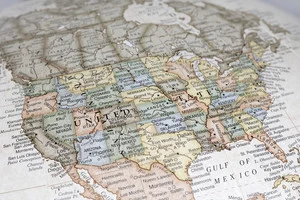
The first quarter of 2026 has emerged as a transformative period for employment law across the United States, as state and local legislatures moved with unprecedented speed to address the evolving realities of the modern workplace. While federal gridlock has often slowed nationwide labor reform, individual states have stepped into the vacuum, passing a flurry of ordinances and statutes that redefine the relationship between employers and employees. From the rolling hills of Alabama to the tech hubs of Washington state, the legislative landscape is shifting toward a more localized, nuanced approach to labor regulation. The primary drivers of this legislative surge include the continued integration of artificial intelligence in HR processes, a nationwide debate over youth labor participation, and an intensifying crackdown on restrictive covenants such as noncompete agreements.
As of March 31, 2026, over 17 states have enacted significant modifications to their labor codes. These changes represent a complex patchwork of protections and deregulations that businesses operating across state lines must now navigate. The focus of these new laws generally falls into three categories: the expansion of youth employment opportunities to combat labor shortages, the regulation of electronic monitoring and AI-driven surveillance in the workplace, and the strengthening of employee mobility through the prohibition of noncompete clauses.
The Resurgence of Youth Employment Legislation
A significant trend observed in the first three months of 2026 is the legislative push to integrate younger workers into the labor force. States like Florida, Alabama, and Indiana have led this movement, citing persistent vacancies in the hospitality, construction, and manufacturing sectors.
In Florida, the legislature passed a landmark bill in February 2026 that eases restrictions on the hours 16- and 17-year-olds can work during the school year. Proponents of the bill argue that providing youth with more flexibility to work helps build a robust vocational pipeline and provides essential income for families facing inflationary pressures. However, labor advocates have expressed concern that these changes could undermine educational outcomes. Similar measures in Indiana and Kentucky have focused on expanding the types of hazardous occupations—such as light roofing or warehouse operation—that older minors can participate in under specific apprenticeship guidelines.
Data from the Bureau of Labor Statistics (BLS) suggests that as of early 2026, the labor force participation rate for teenagers aged 16 to 19 has seen a 2.5% uptick compared to the same period in 2024. Legislators in these states are capitalizing on this trend, arguing that modern safety standards make older restrictions obsolete.
Electronic Monitoring and the AI Frontier
As remote and hybrid work models become permanent fixtures of the American economy, the focus on workplace privacy has intensified. In the first quarter of 2026, Washington and New York enacted some of the nation’s most stringent electronic monitoring laws. These statutes require employers to provide "clear and conspicuous" notice to employees regarding the use of any software that tracks keystrokes, camera usage, or location data.
The Washington "Workplace Privacy and Algorithmic Accountability Act," signed into law in March 2026, goes a step further by prohibiting the use of AI-driven "emotion recognition" software in hiring and performance reviews. This move follows a series of reports indicating that such software often displays racial and gender biases. In New York, new ordinances now mandate annual "bias audits" for any automated employment decision tools (AEDT) used by companies with more than 50 employees.
The implications for the tech sector and corporate HR departments are profound. Companies must now audit their entire software stack to ensure compliance with a growing list of "Right to Know" transparency requirements. Failure to comply can result in significant statutory damages, which in New York are currently set at $500 for a first violation and up to $1,500 for subsequent infractions.
The Continued Erosion of Noncompete Agreements
The battle over restrictive covenants reached a fever pitch in Q1 2026. Following the legal challenges that hampered the Federal Trade Commission’s (FTC) earlier attempts at a nationwide ban, states have taken up the mantle. Colorado and Maine introduced new income thresholds that effectively ban noncompete agreements for any worker earning less than $100,000 annually.
In Colorado, the legislative intent was clear: to foster a more competitive environment for the state’s burgeoning renewable energy and aerospace sectors. By allowing talent to move freely between firms, Colorado officials hope to accelerate innovation. Conversely, business groups such as the Chamber of Commerce have voiced opposition, arguing that these laws jeopardize trade secrets and devalue the investments companies make in specialized training.
State-by-State Legislative Chronology: Q1 2026
The chronological progression of these laws reveals a rapid-fire sequence of approvals that occurred primarily between January 15 and March 10, 2026.
January 2026: The Kickoff
The year began with Virginia and New Jersey passing "Fair Scheduling" ordinances. These laws require employers in the retail and food service industries to provide workers with at least 14 days’ notice of their shifts. This movement reflects a broader push for "predictive scheduling" to support the gig economy’s transition toward more stable employment structures.
February 2026: The Expansion
In mid-February, Oklahoma and West Virginia focused on tax incentives for remote workers, but also updated their labor codes to clarify "independent contractor" status. This was largely a response to the Department of Labor’s shifting definitions, aiming to provide local businesses with a "safe harbor" against federal misclassification audits.
March 2026: The Regulatory Peak
March saw the highest volume of activity. Utah and Tennessee passed laws regarding "Religious Expression in the Workplace," providing employees with broader protections for displaying religious symbols or taking time off for observance. Meanwhile, Oregon updated its paid family leave statutes to include a broader definition of "family member," reflecting the changing demographics of the American household.
Supporting Data and Economic Context
The legislative activity of 2026 is not occurring in a vacuum. Economic data shows that the "Great Reshuffle" of the mid-2020s has left a permanent mark on expectations. According to a 2026 Q1 survey of HR professionals, 68% of companies reported that "compliance with varying state laws" is their number one operational challenge.
Furthermore, data regarding noncompete agreements suggests that nearly 28 million American workers were covered by such clauses at the start of 2025. With the new laws passed in Maine, Washington, and Colorado in early 2026, it is estimated that approximately 4.5 million of those workers are now legally exempt from those restrictions, potentially triggering a surge in mid-level management mobility by the end of the year.
Official Responses and Stakeholder Reactions
The reactions to this legislative wave have been sharply divided along ideological and sectoral lines.
The American Federation of Labor and Congress of Industrial Organizations (AFL-CIO) issued a statement in late March praising the developments in Washington and New York: "The 2026 legislative session proves that when we protect the privacy and mobility of workers, we strengthen the economy for everyone. The era of secret surveillance and restrictive ‘handcuff’ contracts is coming to an end."
On the other hand, the National Federation of Independent Business (NFIB) expressed concern over the "regulatory burden" placed on small enterprises. "The patchwork of 50 different sets of rules for youth employment and electronic monitoring makes it nearly impossible for a small business to expand across state lines," said a spokesperson for the NFIB. "We are seeing a ‘compliance tax’ that will eventually be passed on to the consumer."
Broader Impact and Implications for the Future
The implications of the Q1 2026 legislative activity extend far beyond the immediate legal requirements. We are witnessing the birth of a "bifurcated labor market" where worker rights and employer flexibilities vary dramatically based on geography.
For legal departments and HR professionals, the "compliance calendar" for 2026 is now densely packed. Many of the laws passed in the first quarter have "effective dates" set for July 1 or September 1, 2026. This gives organizations a narrow window to update employee handbooks, revise offer letters, and recalibrate their surveillance and data collection technologies.
Moreover, the focus on AI and electronic monitoring suggests that the next frontier of employment law will be "Data Dignity." As states like Washington set the precedent, it is highly likely that California and Massachusetts will follow suit in Q2 and Q3, potentially creating a "West Coast Block" of digital labor protections that could force a de facto national standard for tech companies.
As the first quarter concludes, the message from state legislatures is clear: the workplace is no longer just a physical location or a remote connection; it is a highly regulated environment where the balance of power is being actively renegotiated. Employers who fail to monitor these state-level shifts do so at significant legal and reputational risk. The momentum established in these first three months of 2026 suggests that the remainder of the year will be equally active, as more states look to the Q1 pioneers as blueprints for their own labor reforms.