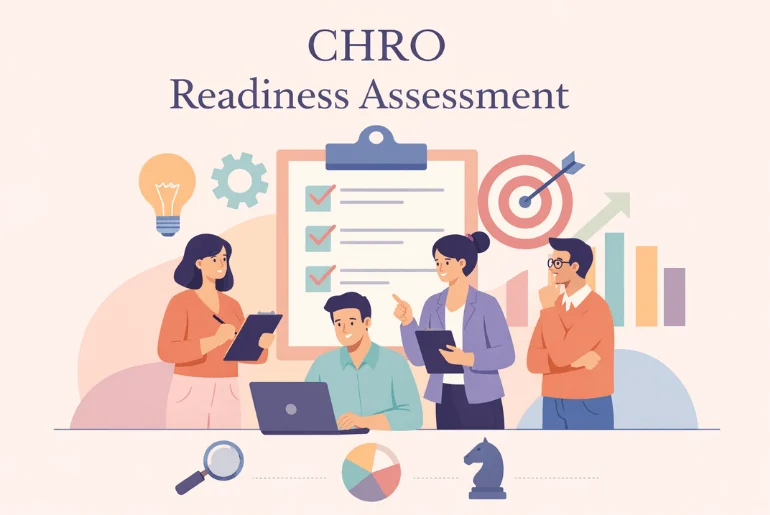
The journey to becoming a Chief Human Resources Officer (CHRO) is often perceived as an arduous and opaque path, with aspiring professionals frequently grappling with an unclear roadmap to the executive suite. Recognizing this significant challenge within the human resources profession, Anjani B. Kuumar, a seasoned global CHRO with an illustrious career spanning prominent organizations such as Sony, GE, and Amazon MX Player, has introduced a groundbreaking diagnostic instrument: the Future CHRO Readiness Index. This innovative online assessment tool is meticulously designed to empower HR professionals by providing a structured framework to evaluate their current preparedness for the pinnacle HR leadership role.
The Evolving Landscape of the CHRO Role
The modern CHRO position has undergone a profound transformation over the past two decades, evolving far beyond its traditional administrative and compliance-focused roots. Once primarily concerned with payroll, benefits, and employee relations, the CHRO of today is a critical strategic partner, integral to the executive leadership team and directly contributing to business strategy, organizational design, talent management, and cultural stewardship. This evolution reflects a broader recognition that human capital is a primary driver of competitive advantage in the 21st-century economy.
Industry reports consistently highlight the increasing strategic importance of the CHRO. A recent study by Deloitte, for instance, indicated that over 70% of CEOs now view their CHROs as crucial contributors to business strategy, a significant jump from prior years. The scope of responsibilities for a CHRO now encompasses navigating complex global talent markets, championing diversity, equity, and inclusion (DEI) initiatives, integrating advanced HR technologies like AI and machine learning, fostering resilient organizational cultures, and leading change management efforts during periods of rapid disruption. This expanded mandate necessitates a leadership profile that transcends mere HR functional expertise, demanding a blend of commercial acumen, strategic foresight, and exceptional influence.
Anjani B. Kuumar’s Vision and Distinguished Background
The genesis of the Future CHRO Readiness Index lies in Anjani B. Kuumar’s extensive and varied experience at the forefront of global human resources. With more than three decades dedicated to HR leadership across diverse industries and multinational corporations, Kuumar developed a unique perspective on the qualities that differentiate successful CHROs from those who struggle to transition from functional expertise to enterprise leadership. His career trajectory provides a rich tapestry of experiences, from navigating the complexities of a technology giant like Sony, known for its innovation and global reach, to optimizing human capital within a vast industrial conglomerate such as GE, famed for its operational excellence and leadership development pipeline. His more recent tenure at Amazon MX Player further immersed him in the fast-paced, digital-first environment of the e-commerce and entertainment sectors, underscoring the need for agile and technologically astute HR leadership.
"Throughout my career, I’ve observed a recurring pattern: incredibly talented HR professionals often hit a ceiling not because of a lack of HR knowledge, but due to underdeveloped broader leadership capabilities," Kuumar explains, reflecting on the motivations behind the index’s creation. "They excel in their specific HR domains – be it compensation, talent acquisition, or employee relations – but struggle when the expectation shifts to influencing enterprise-wide strategy, understanding market dynamics, or leading cross-functional initiatives. The goal of this index is to demystify that transition and provide a clear, actionable diagnostic for growth." This deep understanding, honed through years of recruiting, mentoring, and developing HR leaders globally, served as the foundational insight for the development of the Readiness Index.
Dissecting the Future CHRO Readiness Index
The Future CHRO Readiness Index distinguishes itself from conventional HR competency frameworks by deliberately shifting its focus from specific HR technical skills to the broader leadership capabilities essential for executive-level impact. Traditional frameworks often delineate proficiencies in areas like workforce planning, HR analytics, or labor law, which, while vital, are considered foundational. Kuumar’s index, however, probes deeper into dimensions that define true strategic leadership within a complex organizational ecosystem.
The online assessment evaluates participants across a comprehensive range of critical leadership dimensions. Upon completion, individuals receive a detailed readiness score, providing a quantitative measure of their current standing. More importantly, the index furnishes personalized insights that highlight specific areas requiring further development. This diagnostic precision allows aspiring CHROs to pinpoint their growth opportunities, moving beyond generic advice to targeted self-improvement strategies. The tool’s design emphasizes a forward-looking perspective, anticipating the future demands of the CHRO role rather than merely assessing current proficiencies.
Key Skill Gaps Identified for Aspiring CHROs
Kuumar’s extensive experience revealed that the most significant impediments to ascending to the CHRO role are frequently external to core HR expertise. Instead, critical gaps typically manifest in four interconnected domains:
-
Business Acumen: This extends beyond understanding an organization’s internal HR metrics to grasping its entire value chain, market position, competitive landscape, financial drivers, and customer base. A CHRO with strong business acumen can articulate how HR strategies directly contribute to revenue generation, cost efficiency, and market share, effectively speaking the language of the C-suite. For instance, understanding supply chain disruptions, shifts in consumer behavior, or the implications of new regulatory frameworks on product development allows HR leaders to proactively shape talent strategies that support broader organizational objectives.
-
Enterprise-Wide Thinking: This capability involves moving beyond a functional HR perspective to consider the holistic impact of decisions across all departments and business units. It’s about seeing the organization as an interconnected system, where HR interventions in one area can have ripple effects elsewhere. This requires a systems-thinking approach, understanding interdependencies, and designing solutions that optimize for the entire enterprise rather than just the HR function. An enterprise-minded CHRO might advocate for cross-functional rotations not just for leadership development, but to break down silos and foster a more integrated corporate culture.
-
Strategic Influence: While HR expertise provides authority, strategic influence is about the ability to persuade, negotiate, and inspire action without direct hierarchical power. It involves building credibility with peers, senior leadership, and board members, effectively articulating HR’s strategic value, and driving consensus on critical talent and organizational initiatives. This often requires exceptional communication skills, political savvy, and the ability to frame HR initiatives in terms of their tangible business impact. For example, advocating for a significant investment in a new talent development program requires not just presenting the HR benefits, but demonstrating its link to future market competitiveness and innovation.
-
Leadership Positioning: This refers to how an HR professional is perceived within the organization – are they seen as a reactive service provider, or as a proactive strategic partner and thought leader? Leadership positioning involves consciously shaping one’s brand, actively participating in broader business discussions, and demonstrating a clear understanding of organizational priorities. It’s about earning a seat at the table and being viewed as an indispensable contributor to critical business decisions, not just HR-related matters. This might involve taking on special projects outside the direct HR remit or consistently offering insights on overall business challenges.
The Strategic Shift in HR Leadership
The emphasis on these broader leadership capabilities signifies a fundamental shift in expectations for top HR executives. As organizations grapple with unprecedented levels of disruption—from technological advancements like artificial intelligence and automation to evolving workforce demographics and global economic volatility—the CHRO’s role has become increasingly complex and central to organizational resilience and agility.
The World Economic Forum’s Future of Jobs Report consistently highlights that skills like critical thinking, complex problem-solving, leadership, social influence, and resilience are becoming paramount across all industries. For a CHRO, these are not merely desirable traits but essential competencies. The ability to anticipate future talent needs, design organizations capable of rapid adaptation, and cultivate a culture of innovation directly impacts an organization’s ability to thrive in a dynamic environment. Therefore, a diagnostic tool that explicitly assesses these dimensions offers significant value to both individual professionals and the organizations they serve.
Implications for HR Professionals and Organizations
For individual HR professionals, the Future CHRO Readiness Index offers an invaluable self-assessment tool. In a competitive professional landscape, understanding one’s strengths and weaknesses against the benchmarks of top-tier leadership is crucial for targeted development. It empowers individuals to take ownership of their career trajectory, guiding them towards specific learning opportunities, mentorship relationships, or experiential assignments that will build the requisite capabilities. Instead of guessing what’s needed for the next level, they receive a data-driven blueprint for advancement.
For organizations, the implications are equally profound. The index can serve as a vital component of succession planning for senior HR roles, enabling companies to proactively identify high-potential individuals within their HR functions and invest in their targeted development. By understanding the collective readiness of their HR leadership pipeline, organizations can mitigate risks associated with critical leadership gaps, ensuring a continuous supply of strategic HR talent. Furthermore, it can inform the design of internal leadership development programs, ensuring that training initiatives are aligned with the actual demands of future executive roles, thereby maximizing ROI on talent development investments.
The Broader Landscape of Leadership Development Tools
The introduction of the Future CHRO Readiness Index also reflects a broader trend in the leadership development market: a move towards specialized, diagnostic, and data-driven tools. While general leadership assessments have existed for decades, there is an increasing demand for instruments tailored to the unique complexities of specific C-suite functions. The CHRO role, with its distinct blend of strategic, operational, and human-centric responsibilities, is particularly ripe for such specialized evaluation.
Other leadership development platforms and consulting firms also offer various forms of 360-degree feedback, psychometric assessments, and competency models. However, Kuumar’s index stands out due to its explicit focus on the CHRO role’s unique requirements and its grounding in the practical, real-world experience of a global CHRO. Its free availability online further democratizes access to high-quality career guidance, removing financial barriers that might prevent many aspiring leaders from utilizing such specialized tools.
Accessibility and Future Outlook
A cornerstone of Kuumar’s initiative is the commitment to accessibility: the Future CHRO Readiness Index is available online completely free of charge. This decision underscores Kuumar’s broader mission to foster leadership development and mentor HR professionals, particularly those striving to transition from functional expertise to enterprise leadership roles. By making the tool freely available, he aims to cast a wide net, ensuring that financial constraints do not impede any ambitious HR professional from gaining valuable insights into their readiness for top-tier leadership.
The Future CHRO Readiness Index is not merely a standalone assessment; it forms an integral part of Anjani B. Kuumar’s wider ecosystem of leadership development and mentoring. Through various platforms and engagements, he continues to guide and support HR professionals, sharing insights derived from his extensive career. This comprehensive approach suggests a commitment to not just identifying gaps but also providing ongoing resources and guidance for their remediation. The index serves as an entry point, inviting professionals into a broader community focused on elevating HR leadership globally. Its launch marks a significant step towards providing clarity and actionable pathways for the next generation of Chief Human Resources Officers, ensuring that the strategic importance of human capital continues to be championed by leaders equipped with the broadest possible range of capabilities.