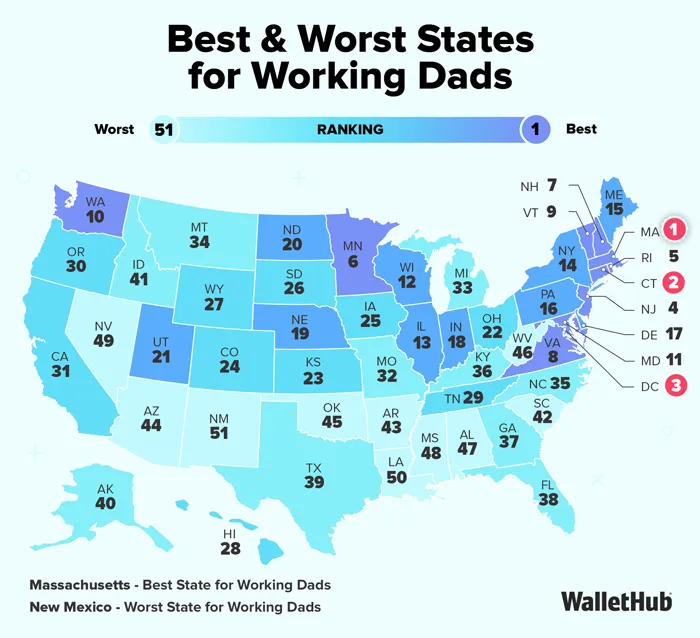
The landscape of fatherhood in the United States has undergone a profound transformation over the past few decades, shifting from a traditional model of a sole breadwinner father and a stay-at-home mother to a prevalent reality of dual-income households. This evolution has redefined the role of the modern working dad, who increasingly juggles paid employment with active caregiving responsibilities, a trend further amplified by the rise of remote and hybrid work arrangements. However, the extent of support available to these fathers remains highly dependent on their geographic location. A comprehensive new analysis by WalletHub, evaluating all 50 states and Washington, D.C., has identified Massachusetts as the leading state for working fathers, citing its robust financial conditions and extensive family support systems.
The Evolving Role of the Modern Father
Historically, the societal expectation for fathers was primarily centered around financial provision. The post-World War II era saw a significant number of households where the father was the sole wage earner, while the mother managed the home and childcare. This arrangement, often referred to as the "traditional family model," was a dominant structure for several decades. However, economic shifts, changing societal norms, and increased educational and career opportunities for women have led to a dramatic increase in maternal labor force participation. Today, the vast majority of married mothers are in the workforce, mirroring the near-universal participation of married fathers.
This demographic shift has necessitated a recalibration of parental roles. Fathers are no longer solely defined by their professional achievements but are increasingly recognized for their active involvement in raising children. This "involved fatherhood" encompasses not only providing financial support but also engaging in daily childcare, emotional support, and household management. The COVID-19 pandemic and the subsequent widespread adoption of remote and hybrid work models have further accelerated this trend. For many fathers, working from home has offered greater flexibility to integrate professional duties with family responsibilities, blurring the lines between work and home life. This increased presence has, for many, fostered deeper connections with their children and a more equitable distribution of domestic labor.
WalletHub’s Comprehensive Analysis of Working Father Support
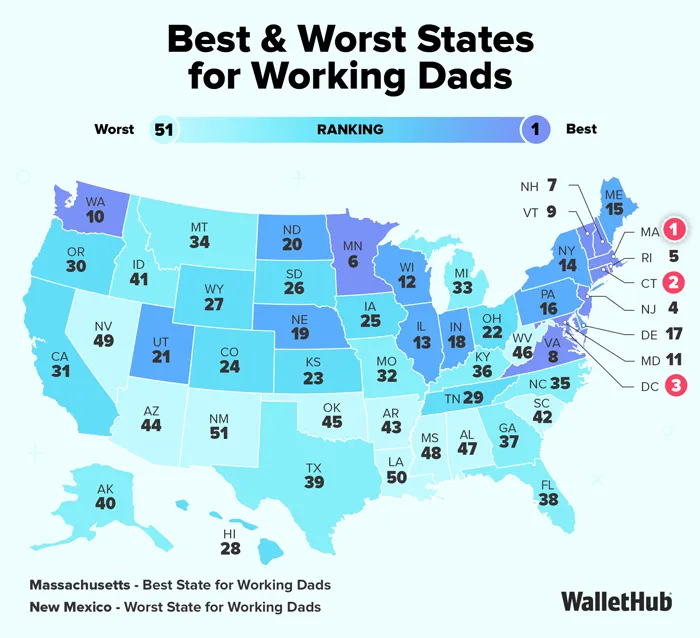
In response to these evolving dynamics, WalletHub conducted an in-depth study to assess the best and worst states for working dads. The analysis, released recently, meticulously examined 22 distinct metrics across all 50 states and the District of Columbia. These metrics were carefully chosen to provide a holistic view of the support structures and opportunities available to fathers who are also engaged in the workforce. Key areas of evaluation included:
- Economic Factors: This encompassed income potential, adjusted for the cost of living, as well as job opportunities and overall economic stability for families.
- Childcare Access and Affordability: The availability, quality, and cost of childcare services were crucial components, recognizing the significant burden this places on working parents.
- Workplace Flexibility and Parental Leave: Policies and cultural norms that allow for flexible work arrangements and paid parental leave were assessed to understand how states support fathers in balancing work and family.
- Health and Wellness: This included factors related to fathers’ health, access to healthcare services for both parents and children, and overall community well-being.
- Education and Family Well-being: The quality of educational institutions for children and broader indicators of family support and low child poverty rates were also considered.
The study’s methodology aimed to provide a nuanced understanding, moving beyond simplistic rankings to identify states that truly foster an environment where fathers can thrive both professionally and personally.

Massachusetts: A Benchmark for Working Father Support
At the forefront of WalletHub’s rankings, Massachusetts emerged as a leader, distinguished by its robust financial landscape and comprehensive family support networks. The state consistently demonstrates high median incomes for families with fathers present, even after accounting for the elevated cost of living prevalent in many parts of the state. This financial strength is complemented by one of the nation’s lowest child poverty rates within this demographic, indicating a strong economic foundation for families.
Furthermore, Massachusetts stands out for its progressive parental leave policies. While the specifics of federal and state paid family leave can vary, Massachusetts has been a pioneer in expanding access to paid leave for new parents, including fathers. These policies, coupled with a strong emphasis on work-life balance, provide fathers with crucial time to bond with their newborns and support their partners during the critical postpartum period. The state’s commitment to supporting working families is further evidenced by its high-quality public education system and a generally strong social safety net.
Connecticut and the District of Columbia: Strong Contenders
Following closely behind Massachusetts, Connecticut secured a high ranking, driven by several key factors. The state offers a high degree of economic security for its working male population and boasts a well-developed childcare infrastructure. This includes a significant proportion of nationally accredited childcare centers, ensuring a higher standard of care for young children. Connecticut also ranks among the top states for school quality, which can alleviate some of the pressure on working parents to supplement educational experiences outside of school hours. The state’s economic base, which includes a strong presence in industries like finance and healthcare, often offers competitive salaries and benefits, contributing to overall family financial stability.
The District of Columbia, despite being a unique federal district rather than a state, also ranked highly, occupying the third position. Its strong performance is attributed to high household incomes for families with fathers present and excellent access to childcare services. The D.C. area often benefits from federal initiatives and a concentration of well-funded organizations that prioritize family services. Moreover, the District leads in several health-related measures, including positive outcomes for men’s health, high levels of physical activity, and readily available pediatric care. This comprehensive approach to well-being, combined with economic advantages, positions D.C. as a supportive environment for working fathers.
Key Differentiating Factors for Top-Ranking States
A consistent theme emerging from the analysis of the top-ranking states is the critical importance of accessible and affordable childcare. For working parents, particularly those in dual-income households, reliable childcare is not a luxury but a necessity. States that offer a greater number of high-quality childcare options, often with subsidies or tax credits to offset costs, significantly ease the burden on fathers who are actively involved in daily caregiving.
Another significant differentiator is the availability and generosity of parental leave policies. While the U.S. lags behind many developed nations in providing comprehensive paid family leave, states that have enacted stronger policies allowing fathers to take extended time off after the birth or adoption of a child are demonstrably more supportive. This not only benefits the father-child bond but also supports maternal recovery and promotes a more equitable distribution of early parenting responsibilities.

Workplace flexibility, including options for remote work, hybrid schedules, and flexible hours, also plays a crucial role. As the nature of work continues to evolve, states and companies that embrace these flexible arrangements empower fathers to better manage their professional obligations alongside their family commitments. This can reduce stress, improve job satisfaction, and ultimately contribute to a more sustainable work-life integration.
Broader Implications and Future Outlook
The WalletHub study underscores a vital point: geography continues to exert a significant influence on the lived experiences of working fathers. While national policies and societal attitudes are evolving, the concrete support structures available at the state and local levels can make a substantial difference in a father’s ability to balance career aspirations with active parenting.
The findings suggest a clear path forward for states aiming to become more supportive of working fathers. Investments in affordable, high-quality childcare infrastructure, expansion of paid family leave programs that specifically include fathers, and the promotion of workplace flexibility are crucial. Beyond policy, fostering a cultural shift that actively values and supports involved fatherhood is equally important. This includes challenging traditional gender stereotypes and recognizing the vital role fathers play in child development and family well-being.

The increasing participation of fathers in caregiving is not merely a trend but a fundamental redefinition of family life in the 21st century. As more fathers embrace these roles, their needs and the support they require will continue to be a critical area of focus for policymakers, employers, and society at large. The states leading the way in this regard offer a blueprint for creating environments where fathers can not only succeed in their careers but also be fully present and engaged in their families’ lives, ultimately contributing to stronger families and healthier communities across the nation. The ongoing dialogue and data-driven analysis, such as that provided by WalletHub, will be instrumental in driving further progress and ensuring that all fathers have the opportunity to thrive.