In the rapidly evolving landscape of talent acquisition, companies that fail to ensure their job listings are prominently displayed in Google for Jobs and across major job boards risk missing out on a crucial pool of top-tier candidates. The year 2026 marks a pivotal moment where the convergence of advanced search engine algorithms and pervasive artificial intelligence (AI) necessitates a fundamental shift in how organizations craft and disseminate their recruitment advertisements. Forward-thinking recruiters are now embracing search-engine-optimized (SEO) and AI-friendly methodologies, ensuring their postings are not only discoverable by machines but also resonate genuinely with human applicants. This comprehensive guide delves into the transformative strategies required to navigate this new era of recruitment marketing.
The Evolving Digital Search Landscape and AI’s Ascendancy
The foundation of modern job search has undergone a profound transformation. Gone are the days when simple keyword stuffing guaranteed visibility. By 2026, job board algorithms, Google for Jobs, and a burgeoning array of AI-driven recruitment platforms and hiring tools leverage sophisticated semantic analysis to scan, interpret, and rank listings. This technological evolution signifies a departure from superficial keyword matching towards a deeper understanding of content. Algorithms now prioritize clarity, comprehensiveness, and the relevance of a role’s description, scrutinizing the data included and its alignment with actual candidate needs and search intent. Consequently, if a job opening struggles to gain traction, the root cause often lies in its structure and textual composition. While keywords remain important, their integration must be natural, contextually relevant, and serve to enhance clarity rather than merely for repetition.
AI Overviews and Search Generative Experience (SGE): The New Frontline
Google’s integration of AI Overviews, which directly surface answers within search results, has fundamentally altered how information, including job listings, is consumed. For job postings, this means content must be exceptionally clear and structured to enable AI systems to accurately parse and cite them. The broader Search Generative Experience (SGE) further amplifies the need for structured, specific content. Vague or ambiguous listings are increasingly bypassed by generative AI, which favors natural language, complete sentences, and detailed role descriptions for inclusion in its summaries.
A critical component in this new environment is the meticulous application of Schema markup, specifically the JobPosting schema. This structured data provides AI systems with a clean, machine-readable signal, allowing for precise interpretation and categorization of job details. The consequence of neglecting this is significant: duplicate or "thin" content listings are now more heavily penalized, as AI systems have become highly adept at detecting low-effort or redundant information. The practical implication for recruiters is clear: job listings should be crafted as if directly answering the question, "What does this role involve?" – complete with specific, human-centric detail.
Foundational SEO: Solid JobPosting Schema
The bedrock of effective SEO for job listings in 2026 is robust JobPosting schema markup. Without it, search engines cannot effectively deconstruct and comprehend the post’s content, severely limiting its display potential. This schema acts as a clear map for Google and other platforms, outlining the essence of the role. A comprehensive schema significantly enhances the likelihood of a listing appearing in specialized user experiences within Google Search results, such as the dedicated "Jobs" section.
Essential elements to include in your JobPosting schema are:
title: The exact job title.description: A concise yet comprehensive summary of the role.hiringOrganization: Name and URL of the hiring company.jobLocation: Physical location (city, state, country) or specify remote status.employmentType: Full-time, part-time, contract, etc.datePosted: The date the job was published.validThrough: The expiration date of the listing.salaryCurrencyandbaseSalary: Explicit salary range and currency.responsibilities: Key duties and tasks.qualifications: Required skills and experience.educationRequirements: Educational background.experienceRequirements: Years of experience.directApply: Boolean indicating if direct application is supported.
To verify the correct implementation of schema, recruiters should regularly utilize Google’s Rich Results Test tool. This ensures the structured data is valid and eligible for enhanced search result displays.
Prioritizing Clarity Over Keyword Repetition
The outdated practice of keyword stuffing is not only ineffective but can actively harm a listing’s visibility. Modern search engines, alongside discerning human candidates, favor listings that read naturally and provide genuine value. Instead of redundantly repeating a keyword like "project manager" multiple times, the focus must shift to elaborating on the role’s true nature. What does success in this position entail? Which tools and technologies will be utilized? What types of projects will be led? And crucially, what defines the company culture?
Effective strategies for achieving clarity include:
- Detailed Role Breakdown: Use bullet points and clear paragraphs to explain responsibilities and expectations.
- Impact-Oriented Language: Describe how the role contributes to the company’s mission and goals.
- Technology Stack: List specific software, platforms, or methodologies relevant to the position.
- Team and Reporting Structure: Provide context about the team the candidate will join and who they will report to.
- Company Culture Insights: Offer genuine glimpses into the work environment, values, and employee benefits.
- Growth Opportunities: Detail potential career progression paths within the organization.
Furthermore, enriching listings with helpful resources, such as links to team pages, company values, or industry trend reports, empowers candidates with comprehensive information to make informed decisions. For specialized roles, like travel nurses, highlighting relevant industry trends, regulatory information, or salary benchmarks can add significant value and transparency. The guiding principle should be to write as if explaining the role to a highly qualified candidate over a candid conversation.
Strategic Job Titles: Aligning with Candidate Search Intent
While internal creative job titles like "Growth Wizard" or "Sales Rockstar" might boost internal morale, they are detrimental to external search visibility. In 2026, the imperative is to prioritize clarity and align job titles with actual candidate search queries. Recruiters must ask themselves: what specific terms would a qualified job seeker type into a search bar to find this role?
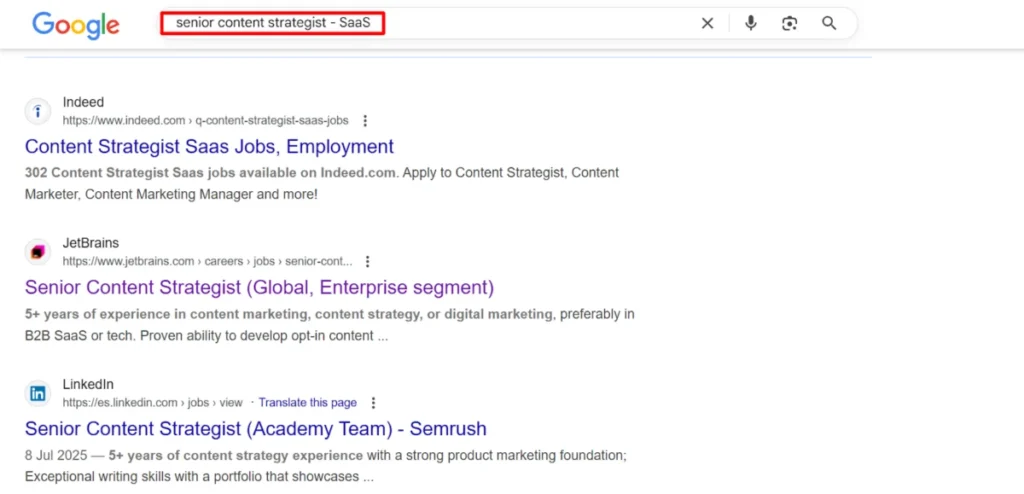
A proven formula for effective job titles is: Role + Level + Focus.
- Example 1: "Senior Content Strategist – SaaS"
- Example 2: "Entry-Level IT Support (Remote)"
This clear, concise format should be consistently applied across the page title, H1 tag, and Schema markup. Personality and engaging language can then be woven into the job description itself, after the initial searchability is secured. Industry analysts suggest that job titles adhering to common search patterns see up to 70% higher click-through rates from search results compared to highly stylized or obscure titles.
The Imperative of Salary Transparency
By 2026, including salary ranges in job postings is no longer merely a best practice but a near-universal expectation and, in many regions, a legal requirement. Platforms like Google for Jobs and LinkedIn explicitly reward listings with salary details by granting them higher visibility. Beyond algorithmic preference, research consistently demonstrates that candidates exhibit greater trust in employers who are transparent about compensation. This transparency not only attracts more qualified applicants but also significantly improves candidate retention throughout the hiring process and into onboarding.
Simplicity and clarity are key in salary disclosure:
- Clear Range: Provide a realistic salary range (e.g., "$75,000 – $95,000 USD").
- Specify Unit: Indicate if it’s annual, hourly, per-project, or per-word.
- Benefits Context: Briefly mention if the salary includes or excludes specific benefits (e.g., "plus comprehensive benefits package").
- Negotiability: If there’s flexibility, a subtle note can be added, but a range is still paramount.
For roles like travel positions or contract work, specifying per-word, per-project, or hourly rates within a clear range is equally crucial. This proactive approach fosters trust and sets realistic expectations from the outset.
Maintaining Content Freshness and Relevance
Search engine algorithms are designed to prioritize fresh, active content. A job posting that remains untouched for weeks signals inactivity, potentially leading to reduced visibility. Even minor, strategic updates can convey to search engines that a listing is current and relevant.
Effective strategies for maintaining freshness include:
- Periodic Review: Schedule regular reviews (e.g., bi-weekly) to update the posting.
- Minor Edits: Refresh the job description with new company achievements, team updates, or recent project examples.
- Adjusting Deadlines: Update the
validThroughdate in the schema and visible text. - Re-optimization: If initial performance is low, consider re-optimizing sections based on analytics.
- Promotional Updates: Announce updates on social media or internal channels.
These efforts do not necessitate a complete rewrite but rather strategic tweaks to signal ongoing relevance.
Precise Location and Remote Status Specification
Ambiguity regarding a role’s location or remote status can significantly deter qualified candidates and hinder search visibility. It is crucial for the job title, schema, and job description to precisely align on where the role can be performed.
Methods to clarify location include:
- Specific City/State/Country: "Marketing Manager, Austin, TX."
- Regional Focus: "Sales Representative, EMEA Region."
- Hybrid Model: "Hybrid: 3 days in office (New York City)."
- Fully Remote (Global/Regional): "Remote (Global)" or "Remote (US Time Zones Only)."
- Travel Required: "Consultant (50% Travel)."
This specificity ensures the post appears in location-filtered searches and prevents candidate confusion. It is particularly vital to use the term "remote" judiciously. If a role is not 100% remote with geographical flexibility, using "remote" can be misleading and off-putting, leading to mismatched applications and wasted effort. Clarity builds trust and targets the right audience.
Avoiding Duplicate Content Penalties
The practice of copying and pasting the exact same job description across multiple job boards or even duplicating it on different sections of a company’s own website is a common pitfall. Search engines are highly adept at identifying duplicate content and typically ignore all but one version, or penalize the content entirely. This significantly undermines visibility efforts.
Instead, recruiters should adopt a strategic approach:
- Canonicalization: For identical content appearing on different URLs on your own site, use canonical tags to specify the preferred version.
- Tailored Descriptions: Craft slightly unique versions of the job description for different platforms, emphasizing aspects most relevant to that audience (e.g., LinkedIn vs. a niche industry board).
- Unique Application URLs: Ensure each job board directs to a distinct application page on your career site.
- Leverage ATS Integration: Use your Applicant Tracking System (ATS) to manage unique content versions effectively, if it supports such functionality.
While this requires a bit more effort upfront, the payoff in terms of enhanced visibility and avoiding algorithmic penalties is substantial.
Optimizing for a Mobile-First Candidate Experience
In 2026, the overwhelming majority of job seekers initiate their search and application processes from mobile devices. A slow-loading or poorly formatted mobile experience can result in immediate candidate abandonment. Optimizing for mobile responsiveness is not just about user experience; it’s a critical ranking factor for search engines.
Key mobile optimization strategies include:
- Responsive Design: Ensure your career pages and job listings automatically adapt to different screen sizes.
- Fast Loading Speeds: Compress images, minimize code, and leverage caching to reduce load times.
- Readable Fonts: Use clear, legible fonts and adequate line spacing.
- Tap-Friendly Buttons: Ensure buttons and links are large enough and spaced appropriately for touch interaction.
- Concise Content: Break up large blocks of text with headings and bullet points for easier mobile scanning.
- Streamlined Application: Offer a simplified, mobile-friendly application process, ideally without requiring extensive document uploads initially.
A crucial tool for assessment is Google’s PageSpeed Insights, which provides detailed reports on mobile performance issues and actionable recommendations for improvement.
Data-Driven Iteration: Tracking Performance
The work doesn’t end once a job posting is live; in fact, that’s when the real optimization cycle begins. Leveraging analytics tools, such as Google Analytics, is indispensable for understanding how candidates discover and interact with job listings. This pre-application data is distinct from ATS data, which tracks post-application metrics.
Key analytics metrics and actions include:
- Traffic Sources: Identify where candidates are coming from (Google, specific job boards, social media).
- Page Views & Time on Page: Gauge interest and engagement with the listing.
- Bounce Rate: High bounce rates may indicate irrelevance or poor user experience.
- Exit Pages: Understand where candidates drop off in the application funnel.
- Search Queries: Discover the exact keywords candidates used to find your listing.
- A/B Testing: Experiment with different titles, descriptions, or call-to-actions to see what performs best.
The continuous analysis of this data allows recruiters to refine their strategies, leading to stronger-performing listings that are a clear signal of a credible and attractive employer brand.
Strengthening Internal Link Architecture
A often-overlooked yet impactful SEO strategy for job listings is the optimization of internal link structure within a company’s career site. A robust internal linking strategy not only aids search engines in crawling and indexing pages more effectively but also encourages candidates to explore more of the company’s offerings and culture.
Practical internal linking ideas include:
- Contextual Links: Within job descriptions, link to relevant department pages, employee testimonials, or company benefits pages.
- Related Jobs: Suggest similar roles at the bottom of a job listing.
- Category Pages: Organize jobs into logical categories (e.g., "Engineering Jobs," "Marketing Opportunities") with internal links.
- Homepage Visibility: Feature prominent links to career pages from the company homepage.
- Blog Integration: Link from relevant blog posts about company culture or industry insights to specific job openings.
This interconnected web helps distribute "link equity" across the site, boosting the SEO value of individual job pages and providing a richer user journey.
Going the Extra Mile: Advanced Optimization Techniques
To truly excel in the competitive 2026 job market, recruiters should consider these advanced strategies:
- Streamlined Application Process: Drastically shorten and simplify the application journey. Eliminate unnecessary steps like redundant psychometric tests or excessively long screening questionnaires. Focus on essential information to respect candidate time.
- Proactive Promotion: Actively promote job posts across various channels: corporate social media, targeted email newsletters, niche industry job boards, and professional communities. This amplifies reach and engagement beyond organic search.
- Voice Search Optimization: As voice assistants become more prevalent in job search, optimize listings for natural language queries. Include phrases like "we’re hiring a remote backend developer" to match conversational search patterns.
- Showcasing Employer Ratings: Utilize schema markup to display positive employer ratings from platforms like Glassdoor or Indeed directly in search results, building immediate credibility.
- Personalized Candidate Experience: Leverage AI to offer personalized job recommendations on career sites based on a candidate’s browsing history or profile, improving engagement.
Scaling Excellence with Technology: The Role of Recruitment Platforms
The manual optimization of every single job listing, especially for large organizations, is a time-consuming and resource-intensive endeavor. This is where specialized recruitment technology platforms become invaluable. Tools like Ongig are designed to empower talent acquisition teams to create search-optimized, inclusive, and on-brand job descriptions at scale, without the need for extensive manual rewrites.
Platforms such as Ongig facilitate:
- Centralized Content Management: Maintain a single source of truth for job description components, ensuring consistency.
- AI-Powered Optimization Suggestions: Receive real-time recommendations for improving SEO, clarity, and inclusivity.
- Automated Schema Markup: Generate correct
JobPostingschema automatically, simplifying technical implementation. - Brand Voice Consistency: Enforce brand guidelines and tone of voice across all listings.
- Bias Detection: Identify and reduce biased language to promote diverse hiring.
- Reporting and Analytics: Track performance of optimized listings within the platform.
By leveraging such systems, companies can move from ad-hoc optimization to a systematic approach, saving significant time while simultaneously boosting visibility and attracting a broader, more qualified candidate pool. This operational efficiency is critical whether hiring for five roles or five hundred, providing a competitive edge in a talent-scarce market.
Conclusion: The Future-Proofing Imperative
The landscape of job search in 2026 demands a sophisticated, multi-faceted approach to job posting optimization. The core tenets for achieving maximum visibility and attracting top talent can be summarized as:
- AI-First Content Strategy: Craft content explicitly designed for parsing by AI Overviews and SGE.
- Robust Schema Markup: Implement comprehensive
JobPostingschema as a foundational SEO element. - Clarity and Semantic Richness: Prioritize natural language and detailed explanations over keyword density.
- Candidate-Centric Job Titles: Align titles with how job seekers actually search.
- Mandatory Salary Transparency: Provide clear salary ranges to boost visibility and candidate trust.
- Proactive Content Maintenance: Regularly update listings to signal freshness and relevance.
- Precise Location & Remote Status: Eliminate ambiguity regarding work location.
- Unique Content Strategy: Avoid duplicate content across platforms.
- Mobile-Optimized Experience: Ensure seamless functionality and readability on all devices.
- Continuous Performance Tracking: Utilize analytics to refine and improve listings.
- Strategic Internal Linking: Enhance site navigation and search engine crawlability.
- Advanced Engagement Tactics: Streamline applications, leverage voice search, and showcase employer brand.
By diligently adhering to these best practices, organizations will not only ensure their job posts reach the most desirable candidates but also solidify their reputation as forward-thinking and transparent employers. The future of talent acquisition is here, and adapting to its demands is no longer optional but essential for sustained success.
This article incorporates insights and strategies from Jeremy Moser, co-founder & CEO at uSERP, a digital PR and SEO agency that partners with leading brands such as Monday, ActiveCampaign, and Hotjar. Moser is also an investor and builder of SaaS companies, including Wordable.io, and a regular contributor to prominent publications like Entrepreneur and Search Engine Journal.