The landscape of modern work is increasingly defined by the pursuit of purpose and sustained engagement, where the strategic implementation of employee recognition has emerged as a critical driver for organizational success. When recognition works effectively, a palpable shift occurs: employees become more engaged, teams align their efforts, and work is not merely completed but executed with a clear sense of intention. A compelling finding from a recent "State of Employee Recognition Report" indicates that a remarkable 91% of employees would exert greater effort if they felt genuinely valued, underscoring the profound impact of meaningful appreciation. However, many recognition programs remain anchored in vague intentions, relying on a hopeful but often unverified belief that they are making a difference. To truly harness the power of recognition, organizations must transition from feel-good initiatives to data-driven strategies, establishing measurable criteria that link appreciation directly to performance, cultural values, and overall engagement. This evolution transforms recognition from an abstract concept into an accountable, impactful business tool.
The Evolution of Employee Recognition: From Ad Hoc to Strategic Imperative
Employee recognition, in its earliest forms, often manifested as informal praise or annual awards, largely subjective and inconsistent. The mid-20th century saw the introduction of more structured programs, typically tied to tenure or exceptional achievements, but these often lacked direct correlation to daily performance or cultural alignment. The turn of the millennium, accelerated by technological advancements and a deeper understanding of organizational psychology, initiated a shift towards more continuous and peer-to-peer recognition models. The rise of social recognition platforms, for instance, allowed for real-time appreciation, fostering a culture of gratitude that extended beyond managerial hierarchies.
This evolution has been further propelled by significant shifts in the global workforce, including the "Great Resignation" and the "Quiet Quitting" phenomena observed in the early 2020s. These trends highlighted a critical need for organizations to proactively invest in employee well-being, satisfaction, and a sense of belonging. Industry analyses, such as those from Gallup, consistently demonstrate that highly engaged teams show 21% greater profitability and 17% higher productivity. A key component of fostering this engagement is effective recognition. Yet, despite widespread acknowledgment of its importance, a 2023 study by a leading HR consultancy revealed that nearly 60% of companies admit their recognition programs lack clear metrics for success, operating largely on anecdotal evidence rather than data-driven insights. This gap underscores the urgent need for a more structured, measurable approach to employee recognition.
The Strategic Imperative: Why Measurement Matters
Without a robust measurement strategy, employee recognition programs risk becoming fleeting feel-good gestures with limited long-term impact. To cultivate a resilient and scalable organizational culture, it is paramount to define what successful recognition looks like. By establishing clear criteria, companies can identify and celebrate critical moments, reinforce desired behaviors, and quantitatively demonstrate the program’s impact on key business objectives. This strategic approach elevates recognition from a mere HR function to a powerful lever for organizational performance.
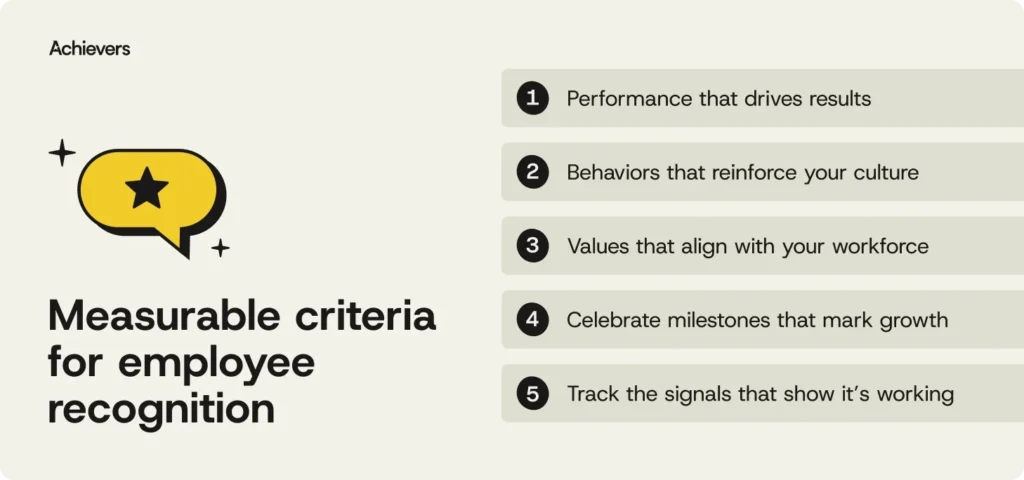
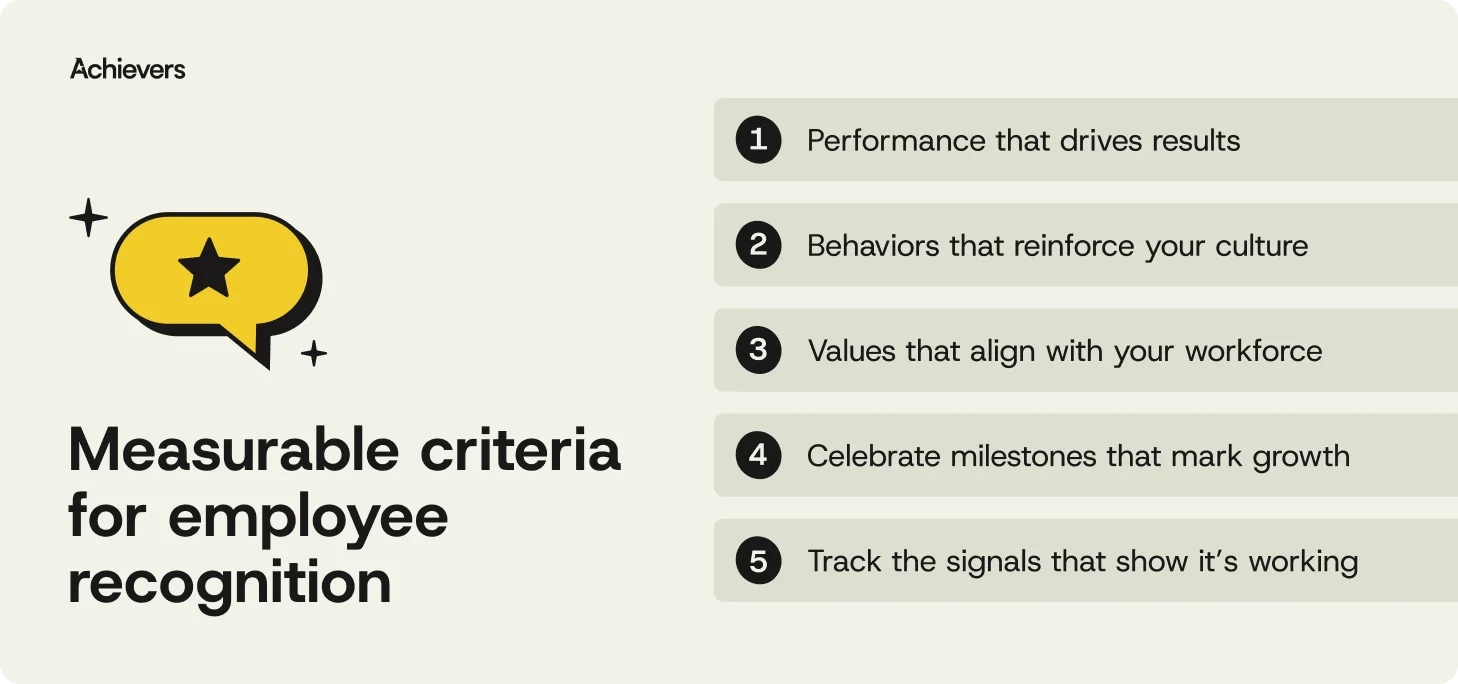
Here are five measurable criteria that transcend superficial appreciation, transforming recognition into an actionable and accountable component of talent management:
1. Performance That Drives Tangible Results
Recognition tied to performance metrics moves beyond subjective praise to celebrate achievements that directly contribute to business objectives. When organizations spotlight individuals or teams consistently meeting or exceeding targets, adhering to deadlines, or delivering exceptional work that impacts KPIs, they are not just rewarding output; they are actively setting and reinforcing the benchmark for success. This form of recognition is crucial for fostering a high-performance culture.

- What to measure:
- Achievement of Key Performance Indicators (KPIs): Tracking individual or team attainment of sales quotas, project completion rates, customer satisfaction scores, efficiency improvements, or innovation metrics.
- Project Milestones and Deliverables: Recognizing successful completion of critical project phases, early delivery, or overcoming significant challenges within a project timeline.
- Revenue Generation/Cost Savings: Directly linking recognition to quantifiable financial contributions.
- Quality and Accuracy Metrics: Celebrating contributions that improve product quality, reduce errors, or enhance service delivery.
- Problem-Solving Effectiveness: Recognizing successful resolution of complex issues, demonstrating initiative and analytical skills.
2. Behaviors That Reinforce Organizational Culture
Beyond outcomes, recognition should acknowledge how employees contribute, highlighting the everyday actions that subtly but powerfully shape an organization’s culture. Behavioral recognition focuses on intrinsic actions like proactively assisting a colleague, demonstrating intellectual curiosity, exhibiting resilience under pressure, or showing exemplary leadership in unofficial capacities. These are the often-overlooked moments that deserve visibility and reinforcement.
- What to measure:
- Collaboration and Teamwork: Frequency of cross-functional support, successful team projects, or peer nominations for collaborative spirit.
- Innovation and Creativity: Recognition for suggesting new ideas, process improvements, or adopting creative solutions.
- Leadership Qualities: Demonstrating initiative, mentorship, or positive influence on team morale.
- Adaptability and Resilience: Celebrating individuals who navigate change effectively, maintain composure, or quickly recover from setbacks.
- Proactiveness and Initiative: Recognizing employees who anticipate needs, take ownership, or go beyond their immediate scope of work.
3. Values That Align with the Workforce and Mission
Recognition gains profound resonance when it is explicitly linked to an organization’s core values. Values-based recognition connects appreciation to fundamental principles, clarifying not only what matters but why it matters. Whether an employee embodies integrity in a challenging decision, champions inclusion in team discussions, or demonstrates unwavering customer focus, these moments fortify the cultural fabric from within. This approach ensures that values are not merely statements but living principles.
- What to measure:
- Alignment with Core Values: Documenting instances where employees exemplify specific company values (e.g., integrity, innovation, customer-centricity, respect, sustainability).
- Ethical Conduct: Recognizing adherence to ethical guidelines and demonstrating moral courage in difficult situations.
- Diversity, Equity, and Inclusion (DEI) Initiatives: Celebrating contributions to fostering an inclusive environment, advocating for underrepresented groups, or promoting equitable practices.
- Community Engagement/Social Responsibility: Recognizing participation in corporate social responsibility efforts or volunteer work that aligns with company values.
- Mentorship and Knowledge Sharing: Rewarding employees who actively share expertise, mentor colleagues, or contribute to collective learning.
4. Milestones That Mark Growth and Dedication
Milestones serve as crucial points of celebration, signifying not just time passed but growth achieved and dedication maintained. Beyond traditional tenure awards, these can encompass career achievements, significant project completions, or even personal life moments that reflect the company’s commitment to employee well-being. Such recognition helps employees feel valued for their holistic contribution and personal journey, reinforcing a sense of belonging and long-term investment.
- What to measure:
- Career Anniversaries: Recognizing years of service, demonstrating loyalty and commitment.
- Professional Development Achievements: Celebrating certifications, completion of significant training programs, or attainment of new skills.
- Promotion and Role Transitions: Acknowledging career progression and increased responsibilities.
- Significant Project Completions: Marking the successful conclusion of major initiatives or long-term projects.
- Personal Life Milestones (optional): Acknowledging significant personal events (e.g., marriage, birth of a child, academic achievements) to show holistic care (must be handled with sensitivity and respect for privacy).
5. Tracking Signals That Confirm Program Effectiveness
The efficacy of a recognition program hinges on its reach, frequency, and measurable impact. This requires more than basic participation counts; it demands real-time signals that indicate whether the program is actively contributing to organizational goals or merely existing. These metrics provide critical insights for course correction and demonstrate how recognition influences behavior across the organization.
- What to measure:
- Recognition Frequency: The average number of recognition moments per employee per month/quarter, indicating sustained activity.
- Participation Rates: Percentage of employees actively giving and receiving recognition, across all levels and departments.
- Distribution Equity: Analyzing whether recognition is evenly distributed across teams, roles, demographics, and locations to ensure fairness and inclusivity.
- Sentiment Analysis: Monitoring the tone and content of recognition messages for positivity, specificity, and alignment with values.
- Engagement Survey Scores Correlation: Linking recognition activity to changes in employee engagement scores, eNPS (Employee Net Promoter Score), or pulse survey results.
- Retention Rates: Observing correlations between recognition frequency and employee turnover, particularly in high-performing segments.
- Performance Improvement: Tracking whether recognized behaviors lead to measurable improvements in individual or team performance.
- Usage of Recognition Platform Features: How often employees engage with various features of a recognition platform, such as peer-to-peer recognition, awards redemption, or social feeds.
How to Track Recognition Effectiveness: Beyond Simple Counts
Tracking the effectiveness of employee recognition programs requires a sophisticated approach that measures both participation and the resulting impact over time. The objective extends beyond merely tallying recognition instances; it aims to understand how these moments influence broader engagement and performance metrics. Organizations should focus on several key indicators to achieve a comprehensive view:
- Frequency and Reciprocity: Analyze how often employees and managers are both giving and receiving recognition. A healthy program demonstrates robust two-way recognition, suggesting a deeply embedded culture of appreciation. Industry benchmarks often suggest an ideal ratio of 3-5 recognition instances per employee per month for optimal impact.
- Distribution Across the Organization: Assess whether recognition is reaching all segments of the workforce equally, spanning different teams, roles, seniority levels, and geographic locations. Skewed distribution can indicate blind spots, managerial biases, or inadequate program awareness in certain areas.
- Correlation with Engagement Metrics: Consistently compare recognition activity with changes in engagement survey scores, eNPS, and other sentiment indicators. A positive correlation suggests that the recognition program is effectively fostering a more connected and motivated workforce. For example, a 10% increase in recognition activity might correspond to a 2-point increase in eNPS.
- Impact on Talent Outcomes: Monitor shifts in turnover rates, particularly among highly recognized employees, and track improvements in performance outcomes directly tied to recognized individuals or teams. Studies by organizations like the Society for Human Resource Management (SHRM) indicate that companies with effective recognition programs experience 31% lower voluntary turnover.
The most effective strategy involves tracking these metrics consistently, leveraging HR analytics dashboards to identify patterns and trends. When recognition is frequent, clearly aligned with organizational values, and widely adopted across the employee base, it becomes significantly easier to connect recognition activity to tangible business results, such as reduced absenteeism, enhanced innovation, and improved customer satisfaction.
Measuring the Success of Employee Rewards Initiatives
Beyond basic recognition, employee rewards initiatives require their own distinct measurement strategy, focusing on whether rewards translate into desired behavioral changes and measurable outcomes like engagement, retention, and performance. Merely tracking the number of distributed rewards without analyzing their impact is insufficient.
- Reward Distribution and Usage Analysis: This measures the frequency and spread of rewards across the organization, encompassing points, monetary incentives, or non-monetary awards tied to performance or recognition. Uneven distribution can highlight program design flaws or inconsistent manager adoption. Furthermore, tracking reward redemption behavior (how often employees use their rewards and what they choose) provides crucial insights into the perceived value and relevance of the rewards themselves. If redemption rates are low, it might signal that the reward catalog is unappealing or the redemption process is cumbersome.
- Reward Participation and Adoption Rates: This criterion assesses the percentage of employees actively earning and redeeming rewards. High adoption rates across diverse teams indicate that the rewards program is well-integrated into daily workflows and resonates with employee preferences. Conversely, low participation or uneven adoption suggests potential barriers, lack of awareness, or a misalignment between rewards and staff interests. A successful program sees over 70% of employees actively participating within the first year.
- Alignment Between Rewards and Desired Behaviors: A critical measure of success is the direct link between distributed rewards and the specific behaviors the organization aims to reinforce. This involves tracking:
- Which specific behaviors or achievements trigger rewards.
- The timeliness of reward delivery relative to the recognized action.
- The perceived fairness and transparency of the reward system.
- The correlation between receiving a reward and the subsequent repetition of the desired behavior.
According to the 2024 "State of Recognition Report," 41% of surveyed employees stated that small, frequent monetary rewards motivate them most. This highlights that contextual, timely rewards tied to specific recognition moments are often more impactful than large, infrequent rewards lacking immediate context. This direct linkage clarifies expectations and reinforces desirable actions, turning rewards into powerful behavioral reinforcement tools.
- Impact on Employee Engagement and Experience: Rewards significantly contribute to engagement when they validate employees’ efforts and reinforce their value to the organization. To measure this, organizations must correlate reward activity with engagement data. For instance, assessing whether employees who receive rewards more frequently report higher levels of connection, motivation, job satisfaction, or a stronger sense of purpose. This analysis helps establish whether the rewards program is positively influencing the overall employee experience.
- Program-Level Return on Investment (ROI): Ultimately, success at the program level is defined by whether rewards initiatives contribute to broader business outcomes. This includes quantifiable improvements in employee engagement, a rise in eNPS, enhanced performance and productivity metrics, and ultimately, a positive impact on the company’s bottom line through reduced turnover costs and increased efficiency. Calculating the ROI involves comparing the cost of the rewards program against the financial benefits derived from improved talent metrics.
The Achievers Manager Toolkit: Empowering Data-Driven Recognition
Defining measurable criteria for employee recognition is a crucial first step, but empowering managers to effectively track and act on these criteria is equally vital. Solutions like the Achievers Manager Toolkit bridge this implementation gap by integrating real-time insights, timely reminders, and recognition prompts directly into managers’ workflows. This ensures that leaders can seamlessly connect individual and team goals with specific behaviors and meaningful appreciation.
With such a toolkit, managers are equipped to:
- Access real-time recognition analytics: Providing immediate visibility into recognition trends within their teams, including frequency, distribution, and top recognized behaviors.
- Receive automated nudges and prompts: Guiding them to recognize employees proactively for specific achievements or cultural contributions, ensuring consistency.
- Align recognition with performance goals: Enabling managers to link recognition directly to individual KPIs and team objectives, reinforcing strategic priorities.
- Identify potential engagement gaps: Highlighting areas where recognition might be sparse or uneven, allowing for targeted intervention.
- Provide more specific and impactful feedback: Offering insights on how to craft recognition messages that resonate deeply and reinforce desired actions.
The result is more intentional, consistent recognition practices that clearly link everyday actions to quantifiable business impact, transforming managers into effective culture architects.
Building Recognition That is Measurable, Meaningful, and Enduring
Employee recognition should never be an afterthought; it is a fundamental strategy for demonstrating employee value, clarifying performance expectations, and cultivating a robust organizational culture where desired behaviors flourish. The most effective recognition is not merely heartfelt; it is meticulously trackable. By meticulously defining what matters and equipping the workforce with intuitive tools to celebrate it, recognition transcends fleeting moments to become an ingrained habit, a strategic imperative, and a powerful force for shaping organizational culture.
Achievers and similar platforms are designed to demystify appreciation, providing intelligent insights, gentle nudges for busy managers, and user-friendly tools that make recognition easy, personal, and measurable from inception. When recognition is clear, consistent, and demonstrably effective, exceptional work ceases to be an anomaly and steadily evolves into the organizational norm, driving sustained success and fostering a truly engaged workforce.