Organizational culture, often described as the unspoken heartbeat of a company, is a powerful yet elusive force that profoundly influences employee retention, drives innovation, fosters engagement, and ultimately dictates overall business performance. In today’s dynamic economic landscape, actively measuring and intentionally shaping this culture is no longer a discretionary option but a critical necessity for leadership aiming to move beyond guesswork and outdated systems. This guide delves into practical strategies for understanding and quantifying company culture, highlighting how empowered and recognized employees serve as the linchpin for creating lasting, impactful change across an organization.
Defining Company Culture and Its Measurement
At its core, company culture is the collective of shared values, behaviors, and expectations that govern how individuals collaborate within an organization. It articulates what actions are encouraged, what conduct is acceptable, and what achievements are celebrated. This intricate web of shared understanding permeates everyday operations, influencing decision-making processes, communication styles, leadership responses to adversity, and the very fabric of employee collaboration.
A culture metric, therefore, serves as a quantifiable indicator of a company’s cultural health, employee engagement, and internal alignment. These metrics transcend mere subjective perceptions, delving into tangible aspects such as employee engagement levels, the frequency and impact of recognition, collaboration effectiveness, employee turnover rates, and overall job satisfaction. By tracking these elements, organizations gain concrete insights into how their workforce operates, interacts, and experiences their professional environment.
It is crucial to acknowledge that the specific manifestations and priorities of culture vary significantly across industries. A rapidly scaling technology startup, a traditional manufacturing plant, and a complex insurance firm will inherently emphasize different behaviors, operate on distinct rhythms, and define success through disparate lenses. Consequently, any effective approach to understanding and measuring culture must be nuanced, accounting for these industry-specific realities rather than adhering to a monolithic set of universal ideals. By leveraging culture metrics, leaders are empowered to identify organizational strengths, pinpoint areas needing improvement, and make data-driven decisions that enhance performance, bolster retention, and elevate the overall employee experience. In essence, these metrics transform the intangible essence of culture into actionable data.
The Tangible Returns of Measuring Company Culture
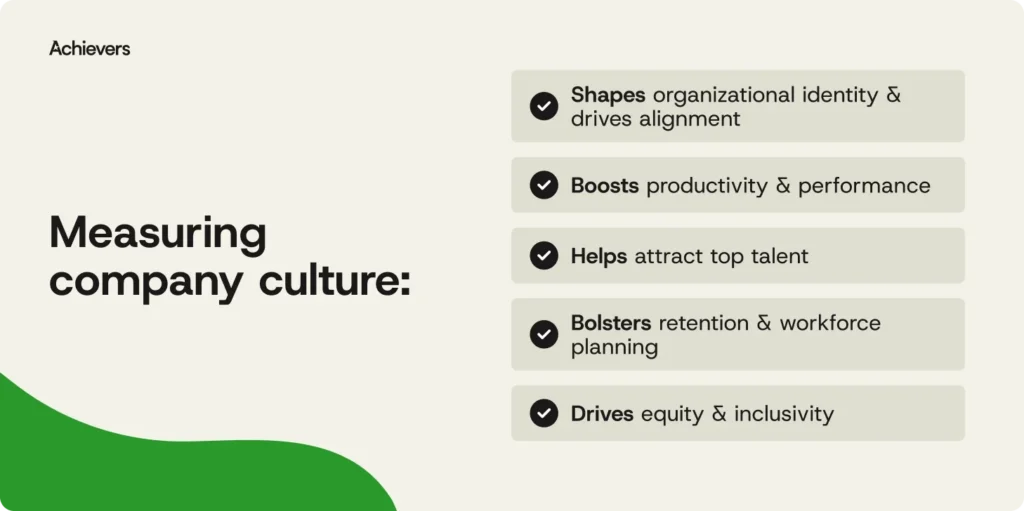
While a positive workplace atmosphere is inherently desirable, the true strategic advantage emerges when organizational culture is systematically measured and leveraged. A vibrant and healthy culture does more than simply boost morale; it directly contributes to heightened productivity, improved performance, and a stronger bottom line. The tangible business benefits of meticulously measuring and managing company culture are multifaceted:
Shaping Corporate Identity and Driving Alignment
A distinctive organizational culture imbues a company with its unique personality and ensures that all employees are united in pursuit of common objectives. When individuals share a clear sense of purpose and subscribe to a set of core values, organizational alignment becomes a powerful catalyst for enhanced productivity and superior performance. This shared understanding fosters a cohesive environment where collective efforts are channeled effectively towards strategic goals.
Amplifying Productivity and Performance
By identifying specific cultural strengths and weaknesses, organizations can proactively dismantle obstacles to productivity. When employees feel genuinely heard, valued, and appreciated, their engagement levels surge, leading to a direct and measurable uplift in their output and the quality of their work. This enhanced engagement translates into a more motivated and effective workforce.
Attracting and Securing Top Talent
In the contemporary job market, company culture has ascended to a pivotal factor in candidate decision-making. A compelling culture can be the deciding element that prompts a candidate to accept an offer, while a less attractive one might lead them to seek opportunities elsewhere. Organizations that actively measure and cultivate their culture can create an environment that resonates with high-caliber talent, significantly strengthening their employer brand and streamlining recruitment processes. This proactive approach ensures a consistent influx of skilled professionals.

Bolstering Retention and Strategic Workforce Planning
Employees who experience fulfillment and satisfaction within their work environment are more inclined to remain with their organization. Measuring culture enables leaders to identify potential "flight risks" early, allowing for timely interventions that can prevent departures. This proactive retention strategy proves significantly more cost-effective, time-efficient, and less disruptive than navigating the perpetual cycle of recruitment and onboarding. A stable workforce is a more experienced and productive workforce.
Championing Equity and Inclusivity
The creation of inclusive workplaces is not merely an ethical imperative but a strategic driver of environments where every individual has the opportunity to thrive. Measuring inclusivity ensures that all employees feel recognized, heard, and valued, which in turn strengthens collaboration and ignites innovation. By fostering a culture of equity, organizations cultivate an ecosystem that supports sustained growth, deep engagement, and long-term organizational success. An inclusive culture unlocks the full potential of the entire workforce.
Essential Culture Metrics for Workforce Cultivation
Organizational culture functions as the engine of a business, and metrics serve as its vital dashboard, providing real-time insights into operational health, flagging potential issues, and guiding strategic improvements. The paramount principle is to focus on indicators that genuinely reflect the vitality and well-being of the workplace.
While specific metrics can vary, a foundational set often includes:
- Employee Engagement Scores: Typically measured through regular surveys, these scores indicate the level of enthusiasm, commitment, and involvement employees feel towards their work and the organization.
- Recognition Rates: Tracking the frequency and perceived value of employee recognition highlights how effectively appreciation and achievements are being acknowledged, a key driver of motivation.
- Turnover and Retention Rates: Analyzing these figures reveals the organization’s ability to keep its talent, with lower turnover often correlating to a healthier culture.
- Employee Net Promoter Score (eNPS): This metric gauges employees’ willingness to recommend their company as a place to work, serving as a powerful proxy for overall satisfaction and cultural endorsement.
- Absenteeism and Presenteeism: Elevated rates in these areas can signal underlying cultural issues, such as burnout or disengagement, impacting overall productivity.
- Feedback and Communication Metrics: The volume, quality, and responsiveness of internal feedback mechanisms can indicate how open and effective communication channels are.
- Internal Promotion Rates: A healthy culture often fosters internal growth, with higher promotion rates suggesting opportunities for advancement.
Evolving Culture Metrics for a Future-Proofed Workplace
While traditional culture metrics provide a solid baseline, the rapidly evolving nature of the modern workplace necessitates a move towards more sophisticated, real-time insights. These next-generation indicators offer a deeper understanding of what truly drives cultural dynamics:
- Pulse Survey Data: Short, frequent surveys capture immediate sentiment and reactions to specific initiatives or workplace changes, providing agile feedback loops.
- Sentiment Analysis of Internal Communications: Leveraging AI to analyze the tone and content of employee communications (e.g., in internal chat platforms) can reveal underlying moods and concerns.
- Collaboration Network Analysis: Mapping informal communication and collaboration patterns can identify key influencers, knowledge silos, and potential areas for improved connectivity.
- Participation in Learning and Development Programs: High engagement in development opportunities suggests a culture that values growth and employee advancement.
- Cross-Functional Project Success Rates: The effectiveness of collaboration across different departments can be a strong indicator of an integrated and supportive culture.
- Employee-Generated Content and Ideas: The volume and quality of suggestions, innovations, or shared best practices originating from employees highlight engagement and a sense of ownership.
- Real-time Feedback on Managerial Support: Tools that allow for immediate feedback on managerial interactions can provide granular insights into leadership effectiveness in fostering culture.
Beyond Surveys: Comprehensive Culture Measurement Methodologies
Measuring organizational culture is a nuanced endeavor that extends far beyond the confines of traditional surveys. While surveys offer valuable quantitative data, they represent only one facet of a comprehensive cultural assessment. To truly grasp the intricacies of a workplace, a multi-pronged approach is essential, blending quantitative data with qualitative insights and anecdotal evidence. This holistic methodology allows for the collection of diverse clues that illuminate the unique drivers of an organization’s culture.
Key methods for a thorough cultural measurement include:
- 360-Degree Feedback: Gathering input from peers, subordinates, and supervisors provides a well-rounded perspective on an individual’s behaviors and their impact on the team and culture.
- Focus Groups and One-on-One Interviews: These qualitative methods allow for deeper exploration of employee experiences, perceptions, and suggestions, uncovering nuances that surveys might miss.
- Observation of Workplace Interactions: Direct observation of how employees communicate, collaborate, and handle challenges in their daily work can offer invaluable insights into enacted cultural norms.
- Analysis of Employee Exit Interviews: Understanding the reasons behind employee departures can reveal systemic cultural issues or areas where the organization is falling short.
- Review of Internal Policies and Practices: Examining how formal policies and informal practices align with stated cultural values provides a critical reality check.
- Employee Resource Group (ERG) Feedback: Insights from ERGs can highlight specific cultural challenges or successes related to diversity, equity, and inclusion.
- Benchmarking Against Industry Best Practices: Comparing cultural metrics and practices against those of leading organizations in the same sector can identify areas for competitive advantage.
Cultivating a Culture of Continuous Improvement
Organizational culture is not a static entity but a living, evolving ecosystem. By embedding recognition into the daily fabric of the workplace, organizations can profoundly influence key aspects of the employee experience. Data from the Achievers Workforce Institute (AWI) consistently demonstrates that employees who feel appreciated and engaged are significantly more likely to exhibit positive behaviors and outcomes compared to their less-recognized counterparts. For instance, these studies often indicate that engaged employees are:
- More productive: Contributing to higher output and efficiency.
- More innovative: Willing to share ideas and solutions.
- More loyal: Exhibiting lower intentions to leave the organization.
- Better brand ambassadors: Promoting the company positively to external stakeholders.
The true power of measurement lies in its ability to catalyze action. Continuous attention to company culture, transforming recognition and feedback into measurable impact, requires a commitment to tangible steps:

- Implementing Targeted Recognition Programs: Designing programs that acknowledge and reward behaviors aligned with desired cultural values.
- Facilitating Regular Feedback Loops: Establishing consistent channels for both giving and receiving constructive feedback.
- Investing in Leadership Development: Equipping managers with the skills to foster a positive and supportive team environment.
- Communicating Cultural Progress Transparently: Sharing data and insights with employees to foster a sense of shared ownership and accountability.
- Adapting Strategies Based on Data: Using cultural metrics to inform and adjust organizational strategies and initiatives.
Gauging the Effectiveness of Culture Change Initiatives
The success of culture change is ultimately measured by how effectively new values, behaviors, and operational methodologies are adopted and experienced by employees over time. Key indicators for assessing culture change effectiveness include:
Fostering a Sense of Belonging
A pivotal sign of successful culture change is when employees feel a profound sense of belonging within the organization. Belonging encompasses feeling accepted, valued, and integrated into the company’s fabric, which in turn boosts confidence and encourages active participation. Research from the Achievers Workforce Institute highlights that a significant percentage of employees report that a strong sense of belonging to the company culture directly builds their confidence, underscoring a direct correlation between cultural integration and an individual’s self-efficacy.
Strengthening Connection to Purpose and Values
Culture change initiatives are demonstrably effective when employees can clearly articulate and personally connect with the organization’s overarching purpose and core values. When employees can readily explain how their daily work contributes to broader company objectives, it signifies a robust alignment and a shared sense of collective direction, ensuring everyone is working towards common goals.
Reinforcing Desired Behaviors
Tangible evidence of successful culture change manifests in the consistent demonstration of encouraged and reinforced behaviors. Tracking which specific actions are recognized, rewarded, or otherwise supported provides a metric for assessing whether the organization is actively cultivating its intended culture, moving beyond mere pronouncements of values to their practical application.
Enhancing Employee Engagement and Confidence During Transition
Effective culture change is also reflected in how employees navigate periods of transition. Higher levels of employee engagement coupled with confidence in their ability to adapt to new ways of working indicate that employees feel adequately supported, well-informed, and empowered, rather than experiencing uncertainty or disconnection.
Ensuring Managerial Consistency
The impact of culture change is amplified when managers consistently embody and reinforce the new cultural expectations. Measuring manager effectiveness across communication, recognition, and support mechanisms helps ascertain whether the desired cultural tenets are being applied uniformly across all teams and departments.
Achieving Consistency Across Roles and Teams
A thorough evaluation involves scrutinizing engagement and participation levels across diverse roles, geographical locations, and work environments. This analysis is crucial for identifying whether the evolving culture is becoming genuinely pervasive throughout the entire organization, rather than being siloed in specific areas.
Elevating Company Culture Through Achievers
Culture is the bedrock of engagement, productivity, and retention, and Achievers provides the tools to transform this understanding into tangible action. Our integrated platform is designed to capture real-time employee feedback, monitor cultural health metrics, and identify emerging trends, empowering leaders to make informed, data-driven decisions.
Recognition serves as a powerful and immediate signal of organizational culture. Every expression of gratitude, every instance of successful collaboration, and every celebrated milestone contributes to a dynamic system that aligns employee behaviors with overarching business objectives. A measured culture is not just a desirable attribute; it is a strategic advantage. Achievers empowers organizations to cultivate a workplace where employees feel intrinsically connected, genuinely empowered, and motivated to perform at their highest level. Recognize. Reward. Achieve.