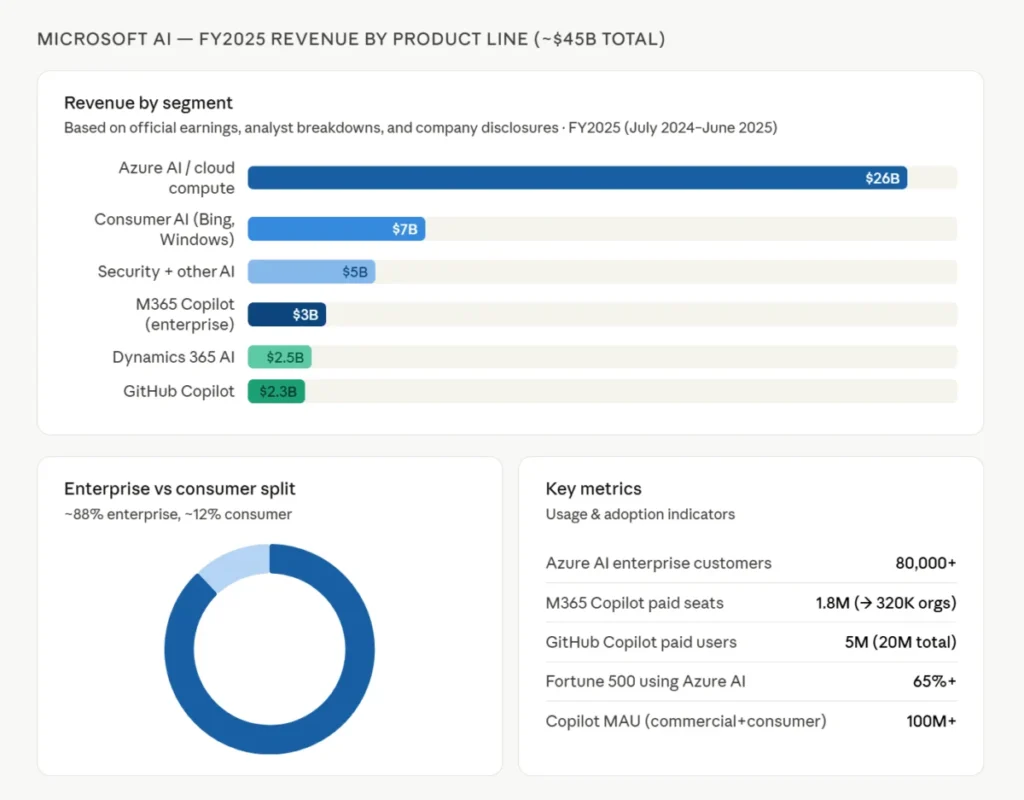
The artificial intelligence landscape is experiencing a seismic shift, characterized by the anticipated public offerings of prominent players like OpenAI and Anthropic. These moves have ignited intense speculation and fascination, not only due to the high stakes involved but also the dramatic narrative surrounding their leadership. While the industry buzz centers on how these AI powerhouses will contend with each other, a compelling counter-narrative suggests that Microsoft, a long-standing technology titan, might be poised to become the ultimate beneficiary of this evolving market. This analysis delves into the intricate dynamics of the enterprise AI sector, dissecting the critical components that position Microsoft for significant growth and market dominance.
The enterprise market for artificial intelligence can be broadly segmented into three interconnected layers: the foundational AI models, the user-facing application experiences (often termed "surfaces" or "harnesses"), and the surrounding ecosystem of integrations and support. Each layer presents unique challenges and opportunities, and success hinges on effectively navigating all three.
The Foundation: Navigating the Evolving Landscape of AI Models
At the core of the AI revolution are the sophisticated models that power various applications. The current market is witnessing a divergence, indicating that a singular, all-encompassing model is unlikely to meet the diverse needs of enterprises. This has led to the specialization of AI models for specific use cases. For instance, coding and analytical tasks might leverage models like Anthropic’s Claude, while narrative generation could be the domain of OpenAI’s offerings. Google’s Gemini is being explored for analytical and scientific applications, and even more specialized models like Grok are emerging for areas such as robotics and motion. The role of foundational models from companies like Nvidia, designed to understand the complexities of the physical world, remains a significant area of development.

The development of these models is not merely a matter of computational power; it extends to the meticulous process of data curation. The quality, relevance, and proprietary nature of training data are paramount. A pharmaceutical company, for example, would require an AI model specifically trained on vast datasets of proteins and advanced genetics to achieve meaningful insights. This specialization is crucial because a "one-size-fits-all" approach to AI is proving to be insufficient for businesses seeking deep domain expertise.
Historically, Anthropic has set a notable pace in code generation, a fundamental capability that underpins many AI-driven tasks. However, the strategic focus of major AI labs remains a critical question. Will OpenAI pivot towards healthcare applications? Will Google delve deeper into the intricacies of biology? The competition to optimize models for the physical world, encompassing robotics, manufacturing, and transportation, is intensifying, with Nvidia and potentially Grok emerging as key players.
Business buyers are increasingly recognizing the need for a multi-model strategy. The assertion that a single AI can "do everything" is losing credibility. Specialized, vertical AI systems, much like the evolution of AI Galileo for HR and talent management, demonstrate the power of focused development. AI Galileo, by concentrating on HR, labor markets, skills, and management topics, has evolved into a sophisticated consultant capable of addressing complex human capital challenges. This underscores the principle that deep domain expertise, cultivated through sustained focus and tailored data, yields superior performance and tangible value.
The Surface: Crafting the User Experience and AI Harness
Beyond the underlying models lies the critical layer of the "surface" or the application experience. This encompasses the user interface, development tools, integration capabilities, and overall ease of use. These are not merely models; they are sophisticated applications built around the models. Factors such as memory capacity, personalization, user experience design, and seamless interaction with external data systems are paramount. This layer is often referred to as the "AI Harness."
The significance of user experience cannot be overstated. A hypothetical scenario where Apple’s Siri becomes exceptionally intelligent and intuitive could lead to widespread adoption by billions within months. The underlying model powering such an assistant would be only one component of its success; the user-facing experience would be the primary driver.
Microsoft’s historical dominance in the personal computer market serves as a compelling case study. While competitors may have developed core technologies earlier, Microsoft’s triumph stemmed from its relentless focus on the application experience. By licensing and refining graphical interfaces and prioritizing the usability of applications like Excel, PowerPoint, and Outlook, Microsoft built a robust ecosystem that resonated with millions of users. The enduring success of Microsoft 365, with its hundreds of millions of paying subscribers, is a testament to the power of a polished and integrated application experience.
Similarly, business developers and IT professionals are increasingly prioritizing the "AI Harness." This involves more than just accessing raw AI capabilities; it requires a comprehensive suite of tools that facilitate seamless integration, management, and deployment. The ability of an AI solution to connect with existing enterprise resource planning (ERP) systems, customer relationship management (CRM) platforms, and other critical business software is non-negotiable. As demonstrated by the author’s experience with Claude’s integration with HubSpot, a failure in the "context layer" or the inability to retrieve and process relevant data can render even a powerful model ineffective. This highlights that the efficacy of an AI solution is heavily dependent on the quality of its integration and user interface.
The Ecosystem: Building a Network of Support and Innovation
The third crucial element is the ecosystem surrounding AI platforms. For businesses, this translates to a desire for AI solutions that offer a broad range of applications, robust integrations, comprehensive toolkits, and strong third-party support. The development of AI Galileo serves as an example of this need. As customers sought to connect Galileo with their existing policy databases, leadership models, and compliance training, the necessity for a rich ecosystem became apparent. This demand drives the creation of partner networks where third-party developers can build upon and extend the core platform, fostering innovation and customer-centric solutions.
In the enterprise AI space, where significant profit potential lies, vendors must cultivate vibrant ecosystems of partners. These partners not only enhance the platform’s capabilities but also create revenue streams through the development of specialized applications and services. The recurring feedback from HR and IT leaders underscores this point: while readily available, packaged AI tools for employees are valuable, the paramount need is for a platform that supports the development, procurement, and management of "agentic" applications. Businesses are wary of vendor lock-in and seek flexible solutions that can adapt to the rapidly evolving AI landscape.
The "Surface" vs. The "Model": A Paradigm Shift in Enterprise AI
The discourse in the corporate world is increasingly shifting from solely discussing AI "models" to emphasizing AI "surfaces." A "surface" represents the end-user application experience, distinct from the underlying large language model (LLM). The synergy between the surface and the model creates the overall user experience. In a business context, this translates to the practicality of the tools, the speed of response, the availability of historical data, and the effectiveness of the semantic connectivity layer. A robust connection to a company’s HR system or email, for instance, should yield valuable, contextually relevant data, not random or incomplete information.
The author’s personal experience with Claude’s HubSpot integration illustrates this challenge. The inability to retrieve a simple list of top clients and their recent marketing interactions, coupled with a timeout error, points to a deficiency in the "surface" or "context layer," rather than the underlying model’s intelligence. This predicament highlights the challenge facing AI developers like Anthropic and OpenAI. Their success in the enterprise market will depend on their ability to foster third-party development of robust integrations and application experiences. If these third-party integrations are poorly executed, the reputation and adoption of the core AI platform will suffer.
Microsoft’s Strategic Ascendancy
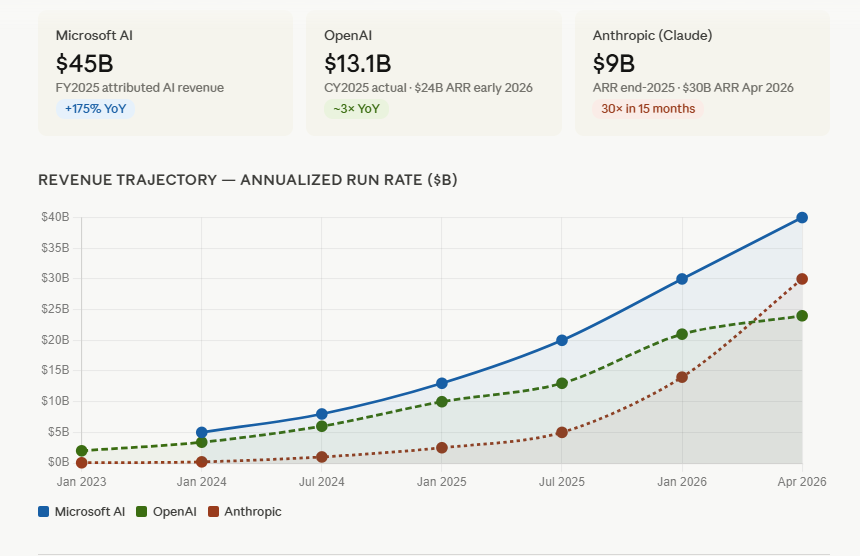
Amidst this complex market dynamic, Microsoft is emerging as a formidable contender, strategically positioned to capitalize on the enterprise AI opportunity. While OpenAI and Anthropic are reportedly generating substantial revenue, a closer examination reveals the nature of this revenue. Reports suggest that a significant portion of OpenAI’s revenue stems from consumer subscriptions, while Anthropic’s revenue is largely derived from selling AI compute power to other providers.
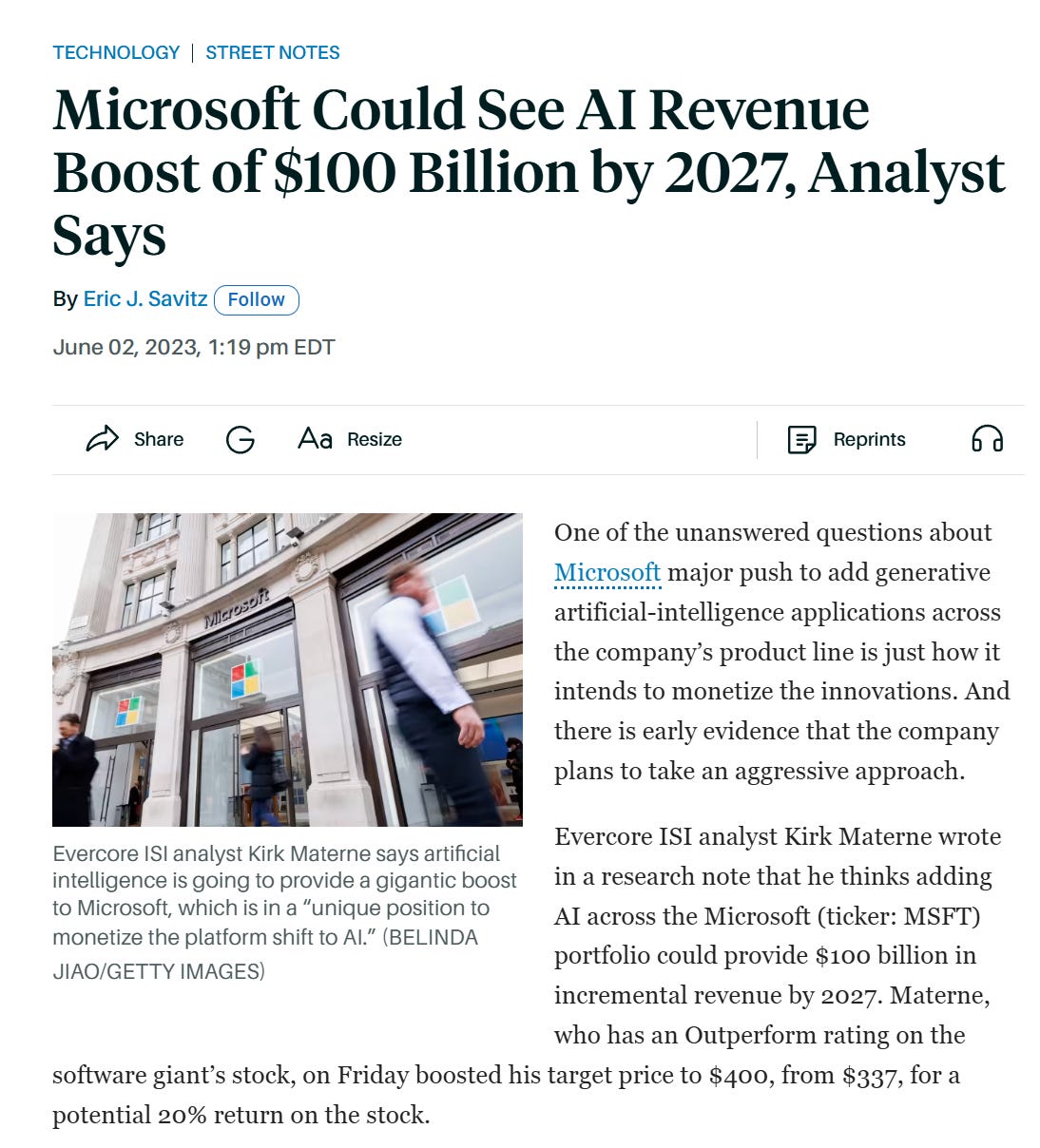
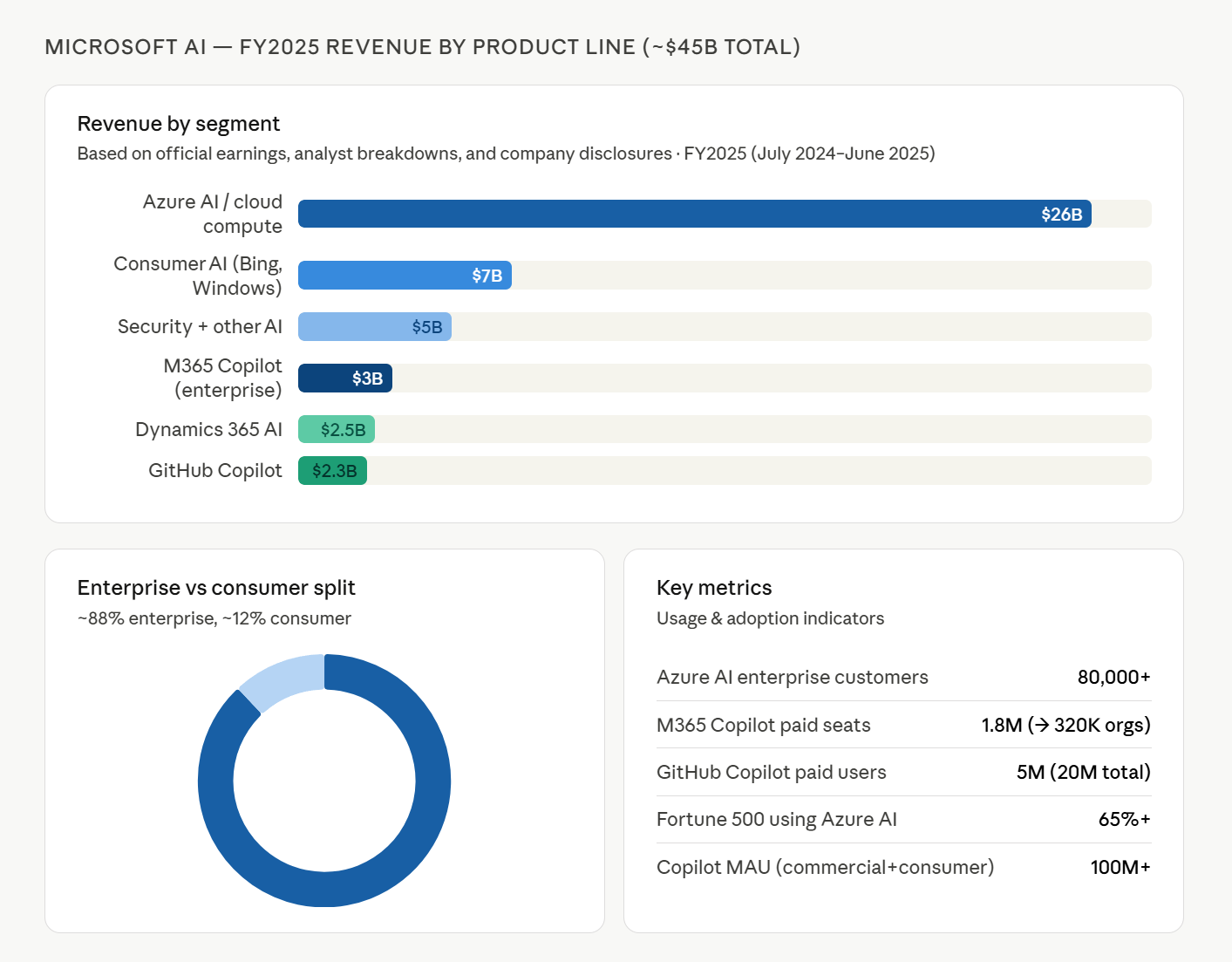
Microsoft, however, appears to be generating revenue directly from the "surface" layer, effectively capturing value from the integration and application of AI. The company’s investment in Copilot, its AI-powered assistant, demonstrates a clear strategy to embed AI across its vast product suite. With an estimated 15 million licensed users of Copilot and an average price point of $25 per month, Microsoft is generating billions in revenue from this offering alone. When combined with fees for Azure API services, Microsoft’s AI-related revenue is substantial and growing rapidly, with projections indicating it could reach tens of billions of dollars annually.
The Evolution of Microsoft Copilot: From Components to an Integrated Platform
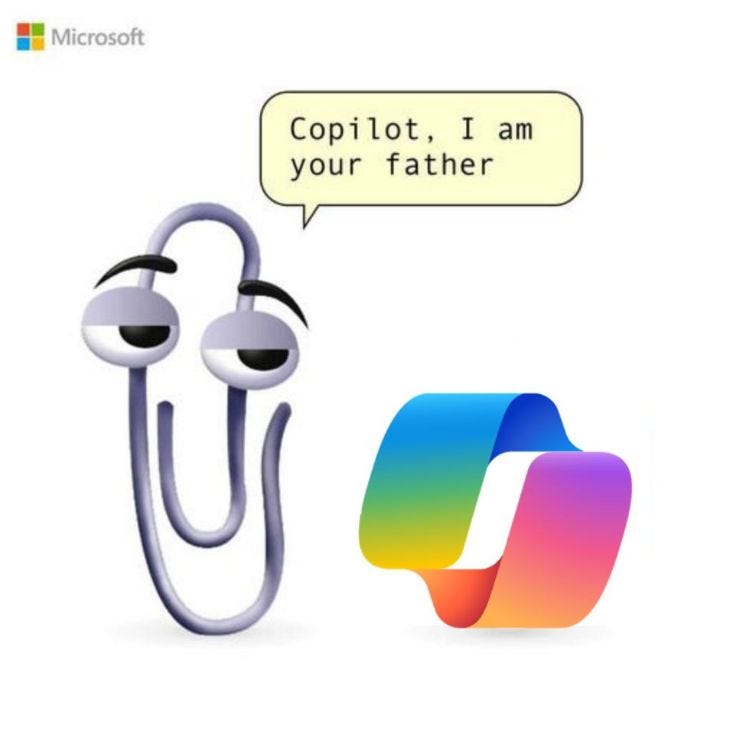
Microsoft’s journey with Copilot has been one of strategic evolution. Initially, the focus was on licensing OpenAI’s ChatGPT for Bing. This quickly expanded into the broader Microsoft Copilot vision, which, in its early stages, was perceived by some as a mere enhancement of existing productivity tools, akin to the nostalgic "Clippy." However, Microsoft’s ambition quickly outpaced this initial perception.
The company launched Copilot for Microsoft 365, alongside specialized versions integrated into Dynamics, Excel, GitHub, and other applications. This rapid proliferation of "surfaces" built upon OpenAI’s models was ambitious, yet at times, it felt disjointed. Microsoft also developed crucial supporting technologies, including M365 Graph Connectors for data integration and fine-tuning capabilities for custom intelligence.
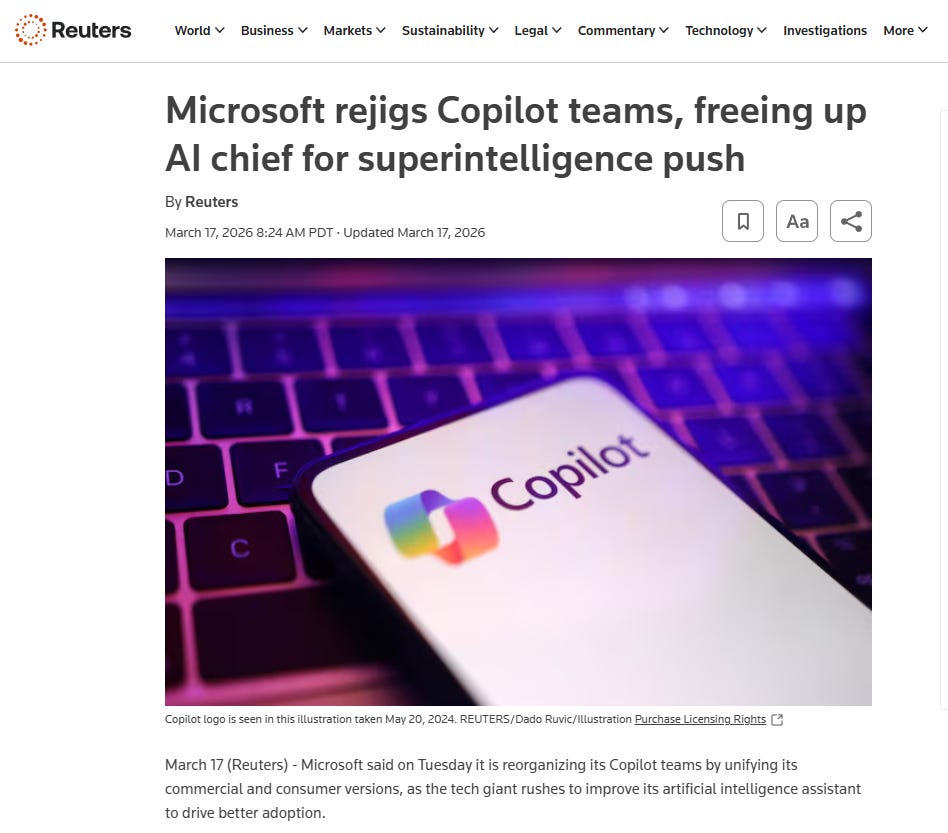
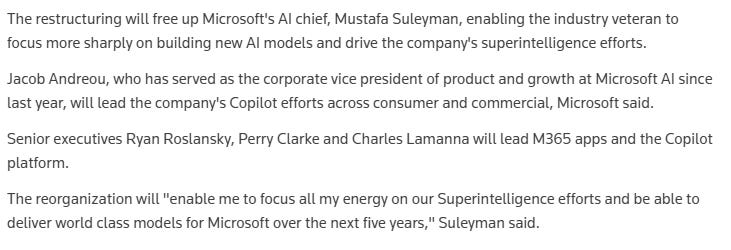
Recognizing the potential for user confusion amidst this flurry of product development, Microsoft’s leadership, under Satya Nadella, initiated a significant reorganization. The various Copilot product teams were consolidated into a single, unified product organization. This strategic move, led by experienced executives such as Ryan Roslansky (LinkedIn), Perry Clarke (Copilot Core), and Charles Lamanna (Agents and Apps), with Jacob Andreou overseeing growth, aims to streamline development and create a more cohesive AI strategy. This consolidation allows Microsoft to operate with a unified vision, akin to Nvidia’s integrated approach across its engineering layers.
This organizational realignment effectively:
- Unifies the Copilot Vision: Creating a singular product strategy for both consumer and enterprise AI.
- Accelerates Development: Enabling faster iteration and deployment of new features and integrations.
- Optimizes Resource Allocation: Focusing engineering efforts on core AI models and integrated application experiences.
- Enhances Market Responsiveness: Allowing for quicker adaptation to evolving customer needs and competitive pressures.
Microsoft’s Competitive Advantages in the Enterprise AI Arena
Microsoft’s anticipated gains in market share are rooted in several key strategic advantages:
-
Integrated Enterprise Toolset: The corporate market demands a unified solution that seamlessly integrates desktop applications, development tools, IT management capabilities for AI agents, and connectivity to legacy systems. While competitors like ServiceNow and Okta operate within this ecosystem, Microsoft’s ability to build and integrate these components within its existing framework, supported by partners, provides a significant advantage. The development of WorkIQ, Agent365, and Copilot Studio are clear indicators of this strategy.
-
Developer Ecosystem: The vast application development landscape is poised for a more integrated set of tools. Vendors across ERP, finance, productivity, and analytics are increasingly looking for APIs to plug into the "Copilot-land" ecosystem. While navigating the various API options (Teams, Graph, WorkIQ, Fabric) can be complex, the clarity and comprehensive nature of Microsoft’s offerings are becoming increasingly attractive.
-
End-User Familiarity and Accessibility: The PC user base, IT departments, and help desks can readily visualize how these AI applications can converge within the familiar Microsoft desktop environment. The user experience of Copilot is continuously improving, and the company’s commitment to investing top UI design talent in this area suggests a future where the interface becomes even more intuitive and aesthetically pleasing, overcoming the current "Frankensteinish" appearance.
-
Partner Network Expansion: As Microsoft opens its platform, particularly with the upcoming release of WorkIQ APIs, its partner network is expected to expand significantly. Corporate cloud vendors, concerned about being superseded by AI agents, will likely seek opportunities to integrate with and leverage the Copilot framework, further solidifying Microsoft’s market position.
Microsoft’s Value Proposition: Beyond the Model
Microsoft’s strategic value-add extends beyond simply providing access to AI models. The company is actively developing features that enhance the practical utility and integration of AI for businesses:
-
Deep Research Capabilities: The "Researcher" button, integrated with the Microsoft Graph, allows Copilot to conduct in-depth research across a user’s calendar, emails, and other data sources. This provides personalized advice, counsel, and contextual support, adding significant value to individual users and leaders.
-
Intelligent Routing: New Microsoft Agents are being developed to compare queries against multiple AI models, optimizing cost and performance. Over time, these agents will be capable of decomposing complex AI tasks and distributing them across various specialized models, further enhancing efficiency.
-
Agentic Interface for Core Applications: Copilot’s interaction with complex documents, including Word, Excel, and PowerPoint, is becoming increasingly sophisticated. Users can now query documents, modify tables, run reports, and create graphs directly within Copilot, with the changes reflected in the underlying applications. This extends the "in-app" Copilot experience across the Microsoft suite.
-
Intelligent Context Layer in Work IQ: The forthcoming Work IQ API will enable companies to import and build proprietary "context" into Copilot. This capability will transform Copilot into a powerful tool for agentic HR, finance, sales, and other business functions, allowing for intelligent automation and decision support.
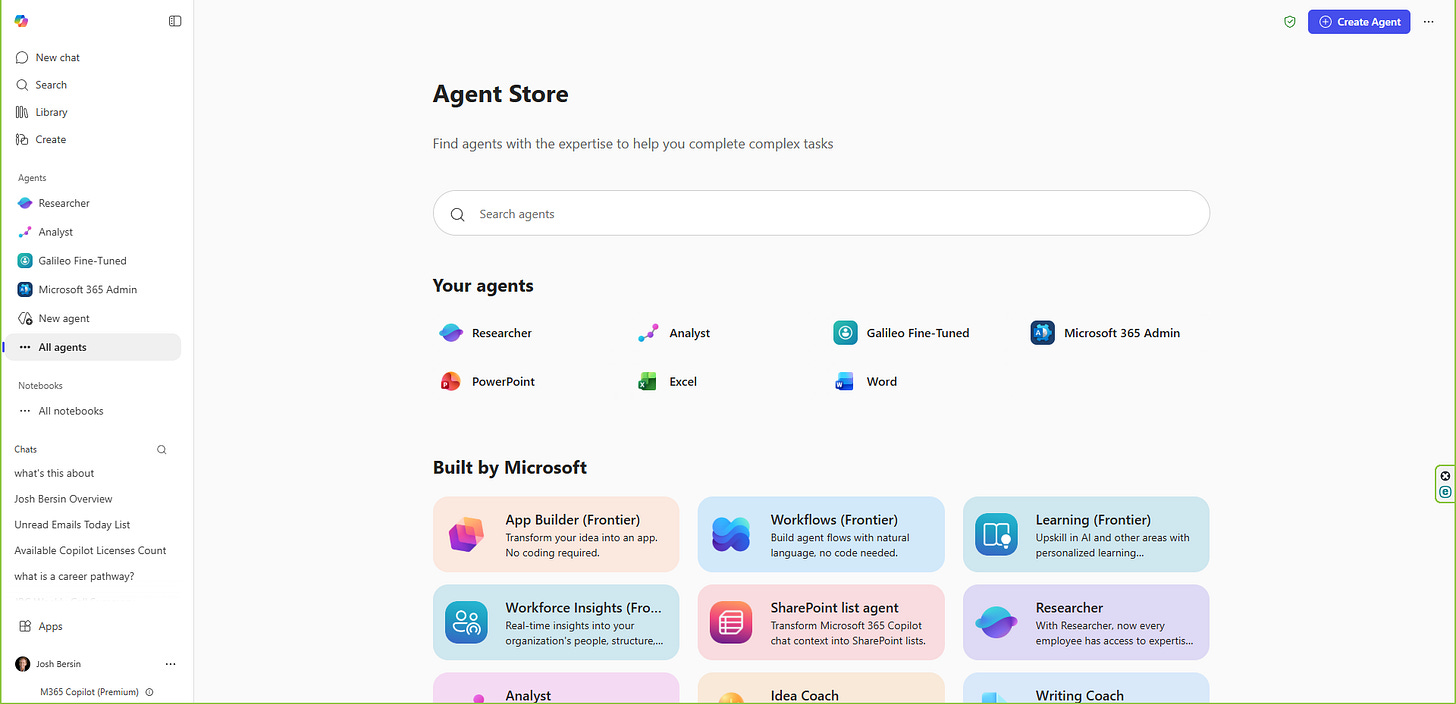
The integration of solutions like Galileo through Microsoft’s Graph connectors and fine-tuning capabilities exemplifies this approach. By making specialized AI tools accessible within the broader Microsoft ecosystem, companies can empower their employees with advanced management and HR advisory services.
In conclusion, while the public offerings of OpenAI and Anthropic command significant attention, Microsoft’s strategic positioning, demonstrated by its relentless focus on the "surface" and ecosystem development, coupled with its deep integration into the enterprise landscape, suggests it is exceptionally well-placed to become a dominant force in the enterprise AI market. The company’s ability to provide a comprehensive, integrated, and user-friendly AI experience, backed by a robust partner network and a clear strategic vision, positions it to capture substantial market share in the rapidly evolving world of artificial intelligence.