The landscape of enterprise Artificial Intelligence is undergoing a profound transformation, moving beyond static software systems to dynamic, learning entities. A key driver of this disruption is the emergence of AI Agents and Superagents, which are fundamentally different from traditional applications. Instead of being mere tools, these AI constructs are designed to learn, evolve, and ultimately, embody the unique operational DNA of a company. This paradigm shift, exemplified by Microsoft’s recent advancements in AI customization, promises to redefine how businesses leverage intelligent automation and secure their competitive edge.
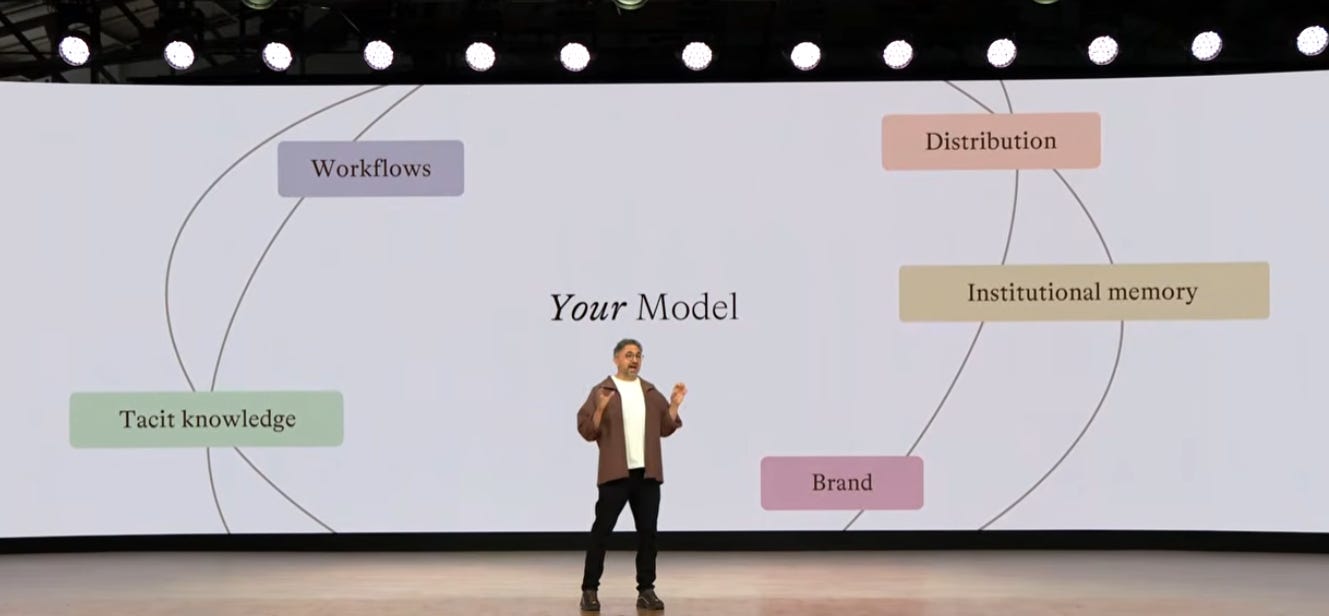
At its core, this innovation lies in the concept of AI Agents that become deeply ingrained in a company’s specific operations. Whether tasked with recruitment, employee training, or customer service, these agents continuously refine their understanding of an organization’s distinct nuances. This includes the implicit knowledge, historical experiences, policies, and cultural practices that often constitute a company’s most valuable, yet intangible, assets. These elements, ranging from risk management protocols and compliance procedures to the subtle "how we do business" principles, are crucial differentiators in today’s competitive market.
Microsoft’s commitment to this vision was recently showcased through its integration of the Galileo intelligence platform into its MS Copilot. This strategic move allowed the system to ingest and retrain itself on a company’s proprietary intellectual property. Early testing by the Microsoft HR team revealed that this tailored implementation delivered astoundingly more useful, detailed, and trustworthy insights, primarily because every inquiry was backed by citations from a knowledgeable, internal source. This effectively transformed MS Copilot into a world-class HR business partner and management consultant, deeply informed by the organization’s specific context.
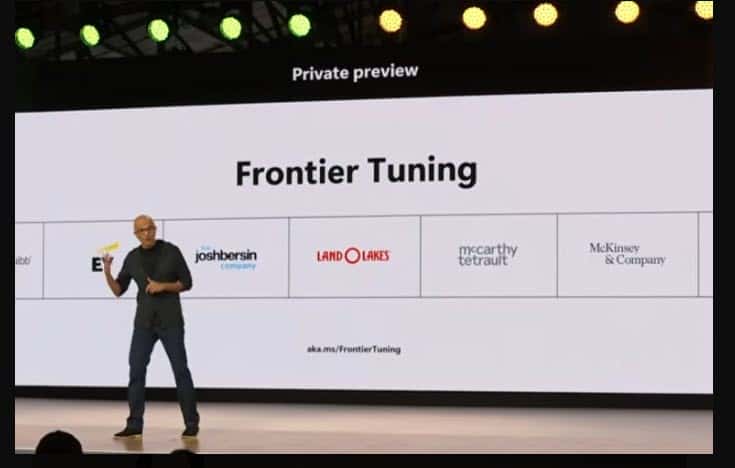
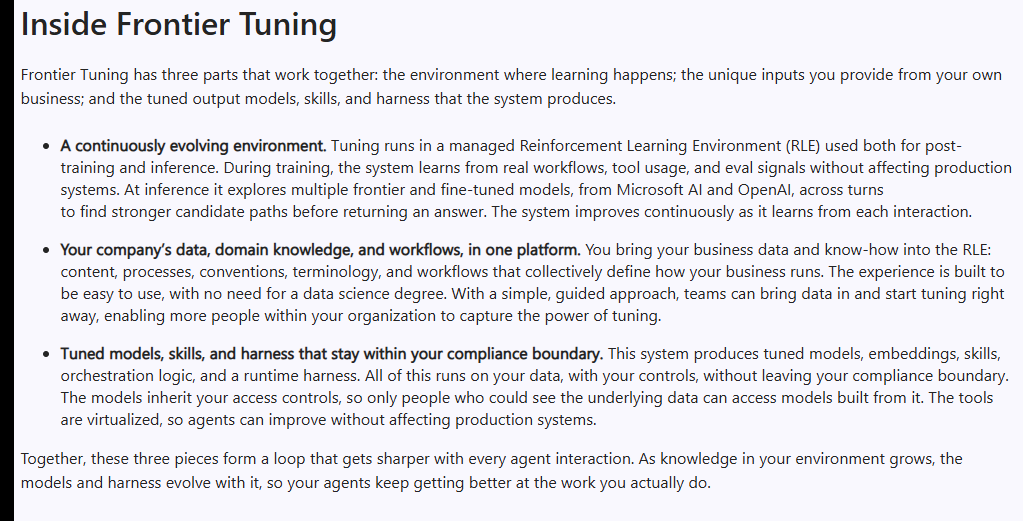
This capability is now being productized by Microsoft through a feature called "Frontier Tuning." This allows enterprises to directly fine-tune their Copilot instances, enabling IT and HR departments to embed their specific policies, hiring guidelines, compensation structures, onboarding procedures, and any other critical operational data directly into the AI system. This process "institutionalizes" this unique organizational knowledge, making it an intrinsic part of the AI’s operational framework.
Beyond simple data ingestion, Frontier Tuning introduces a significant advancement over traditional Retrieval Augmented Generation (RAG) implementations. While RAG systems primarily retrieve information, Frontier Tuning enables the AI to learn autonomously. Microsoft refers to this as the "Reinforcement Learning Environment," a sophisticated mechanism that allows the AI agent to continuously improve based on real-world feedback from users. This creates a self-optimizing system, mirroring the way humans learn and adapt through experience.
The practical implications of this technology were vividly demonstrated at the Microsoft Build 2024 conference in Seattle. During a presentation, it was revealed how companies can not only embed specialized AI offerings like Galileo but also integrate their own proprietary operational workflows. This concept was further underscored by Microsoft CEO Satya Nadella in his keynote address, where he emphasized that the true value of an AI model lies in its customization and uniqueness to a specific enterprise, rather than its broad, generic availability. This strategic direction positions Microsoft Copilot as a versatile "harness" capable of hosting a variety of AI models, including those from OpenAI, Anthropic, Microsoft’s own offerings, and critically, custom-tuned enterprise models. This opens up possibilities for R&D teams, for instance, to develop bespoke models trained on sensitive internal data, ensuring intellectual property remains secure.
Reinforcement Learning: The Engine of Autonomous AI Improvement
The autonomous learning capability facilitated by Frontier Tuning is a cornerstone of this new AI architecture. The underlying technology, detailed in Microsoft’s "Agent Lightning" initiative, leverages autonomous reinforcement learning to enable AI agents to continuously enhance their performance over time. Users and administrators can activate this reinforcement learning feature, allowing the AI to gather feedback on the efficacy of its actions and subsequently train itself. This iterative learning process is akin to human experiential learning, leading to increasingly sophisticated and contextually relevant AI behavior.
A compelling real-world example of this capability was shared by Microsoft concerning an internal crisis management AI agent. While the agent proved effective in numerous scenarios, unprecedented global events like the war in Ukraine and subsequent conflicts introduced new complexities, such as employees facing connectivity issues and requiring relocation assistance. By enabling the reinforcement learning feature, the agent was empowered to self-update with new policies and protocols necessary to address these evolving challenges. This dynamic adaptability is a critical advantage in managing complex and unpredictable enterprise environments.
While Frontier Tuning represents a deep integration and retraining of the AI model, other methods for customizing MS Copilot exist. Microsoft Graph Connectors, for instance, allow Copilot to access and utilize data from a wide array of Microsoft 365 applications, including SharePoint, PowerPoint, Word, Outlook, and Workday. However, these integrations are typically less deeply embedded into the agent’s core learning process, and the benefits of reinforcement learning may not be as pronounced.
Microsoft’s Strategic Expansion into Proprietary AI Models
In parallel with the advancements in AI customization, Microsoft has also made significant strides in developing its own suite of AI models. At the recent Build conference, Mustafa Suleyman, head of Microsoft AI, announced the launch of seven new AI models optimized for specific business use cases. This strategic move signals Microsoft’s ambition to compete directly with leading AI developers like Anthropic and OpenAI.
Historically, Microsoft’s partnership with OpenAI limited its ability to develop and deploy its own cutting-edge models. However, this new initiative allows Microsoft to offer a cost-effective and clean set of AI models, enhancing the value proposition of MS Copilot as an open and adaptable platform. The economic rationale behind this strategy is clear: as Suleyman noted, the goal is to reduce and eventually eliminate the substantial costs associated with licensing third-party models.
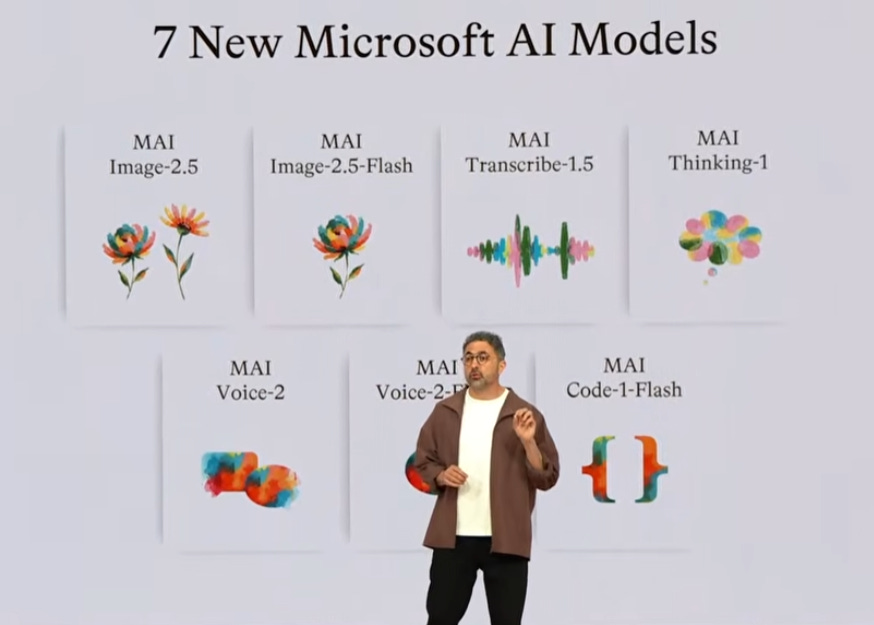
These newly developed Microsoft models are designed for high efficiency and are built with clean, licensed data, avoiding the potential intellectual property concerns associated with models trained on vast, uncurated internet content. This focus on proprietary, ethically sourced AI is particularly appealing to businesses concerned about data privacy and intellectual property protection.
A notable aspect of these new models is their approach to data usage. Unlike some existing models where user interactions can be used to train future iterations for other customers, Microsoft’s new models are designed to safeguard customer data. This is a critical distinction for organizations handling sensitive proprietary information. For example, if a user does not opt-out of learning features with models like Anthropic’s Claude, their interactions can become available to Anthropic and potentially be leveraged for other clients. Microsoft’s approach offers a compelling alternative for businesses that prioritize strict data segregation and the protection of their intellectual property.
This strategic direction is already bearing fruit with significant enterprise partnerships. Mayo Clinic, for instance, is collaborating with Microsoft to develop a "New Frontier Model for Healthcare." This specialized model is intended to provide clinicians with access to deep insights derived from real-world clinical practices, mirroring the approach taken in HR and management consulting where best practices are observed, studied, and documented.
Another prominent example is Land-O-Lakes, which has been piloting Microsoft’s MAI-Thinking-1 reasoning model. By employing Frontier Tuning, the company customized the model by feeding it thousands of internal documents, along with relevant communications from Teams and Outlook. The results, according to Microsoft senior product manager Tanaya Yadav, indicated that this fine-tuned version of MAI-Thinking-1 not only demonstrated greater accuracy but was also ten times more cost-efficient than OpenAI’s GPT-4.5.
Broader Implications and Future Outlook
The advancements in AI customization and proprietary model development signify a pivotal moment for enterprise AI. Microsoft’s strategic direction, characterized by its "harness" approach to Copilot and its commitment to developing specialized, secure AI models, positions it as a formidable player in the enterprise AI market. This approach addresses key concerns for businesses regarding data privacy, intellectual property security, and cost-effectiveness.
The ability for enterprises to fine-tune AI agents with their own unique data and operational knowledge, coupled with reinforcement learning for continuous improvement, promises to unlock unprecedented levels of productivity and efficiency. As organizations increasingly rely on AI for critical functions, the capacity to tailor these intelligent systems to their specific needs will become a significant competitive differentiator.
The long-term implications of this shift are far-reaching. It suggests a future where AI is not a generic utility but a deeply personalized and integrated component of every business’s operational fabric. This evolution from static systems to adaptive, intelligent agents that embody company-specific knowledge is poised to redefine the very nature of work and competitive advantage in the digital age. Microsoft’s commitment to this vision, backed by its extensive ecosystem and ongoing innovation, suggests a powerful trajectory for enterprise AI in the coming years.