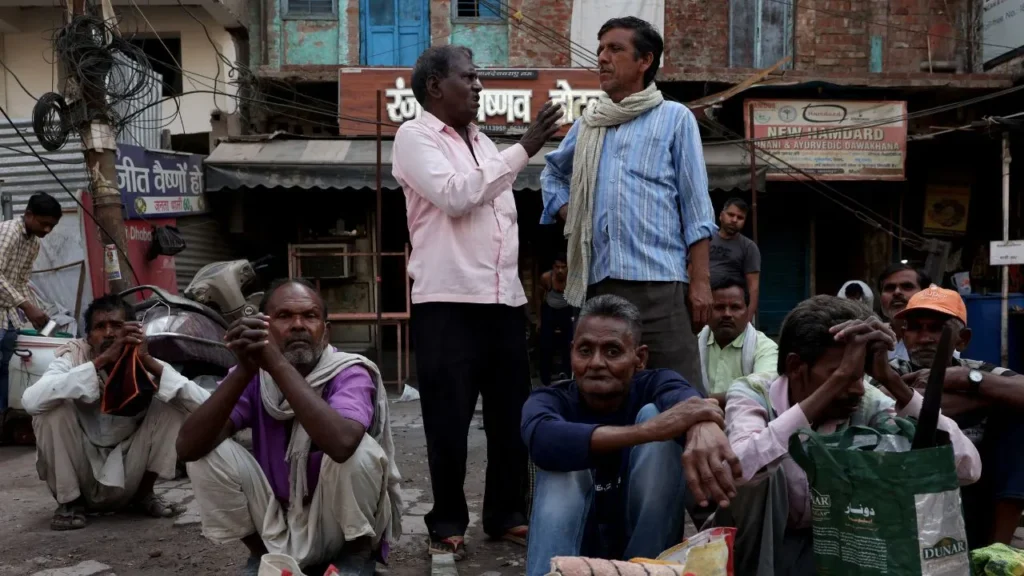
The escalating conflict in the Middle East is exerting a severe and multifaceted pressure on India’s economy, impacting two critical pillars of national employment: the outflow of skilled and unskilled labor to Gulf countries and the demand for India’s manufactured exports. This geopolitical instability, characterized by heightened tensions and disrupted trade routes, has triggered a dual blow, forcing Indian workers to return home prematurely and dampening global appetite for labor-intensive goods such as leather products and glassware. The ripple effects are increasingly visible in industrial heartlands and are raising concerns about potential social unrest as unemployment figures climb.
For generations, the Middle East has served as a vital economic lifeline for millions of Indians, offering stable and often lucrative employment opportunities. Simultaneously, robust global demand for India’s manufactured exports, particularly in sectors like footwear, garments, and artisanal goods, has been a significant driver of economic growth and job creation. However, the current foreign conflict has disrupted this established equilibrium, creating a precarious situation for a generation of Indian workers and businesses reliant on these traditional economic arteries.
The Human Cost: Returning Migrants and Diminished Fortunes
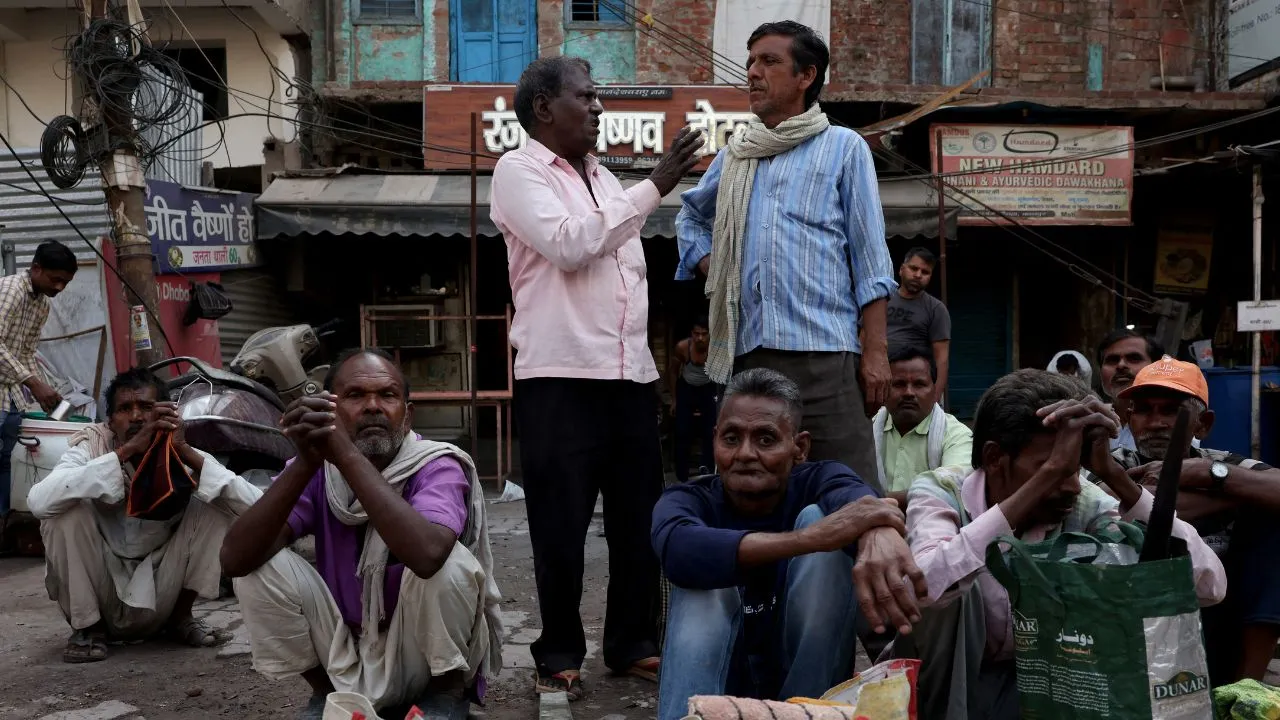
The most immediate and personal impact of the Middle East crisis is being felt by the millions of Indian expatriates. Mohammad Qureshi, a 32-year-old formerly employed in a jewelry shop in Saudi Arabia, exemplifies the plight of these returning migrants. Until January, Qureshi’s monthly earnings of approximately 30,000 rupees (around $311 USD) allowed him to save diligently, fund the construction of a modest home, and contribute significantly to his sister’s wedding expenses. His life in Saudi Arabia was characterized by financial stability and a clear path towards improving his family’s circumstances.
However, the escalating tensions in the region, particularly those involving Iran, have irrevocably altered his trajectory. Qureshi found himself unable to return to his post in the Gulf, forcing him back to his hometown of Kanpur in Uttar Pradesh. Now, he earns a meager third of his previous income working at his cousins’ tea stall. Living with his mother and elder sister, Qureshi’s days are now marked by an anxious wait for any sign of de-escalation that might allow him to reclaim his former livelihood. "Life in Saudi was easy and the money was good," Qureshi lamented, his voice tinged with weariness. "Life is difficult here. I pray the war ends soon so we can go back." His sentiment echoes the anxieties of countless others facing similar predicmatious, highlighting the deep reliance of many Indian households on remittances from overseas employment.
While India’s economy continues to demonstrate resilience, growing at a commendable rate of nearly 7%, and the national urban unemployment rate stands at 6.6%, these figures mask a growing unease within the labor market. Economists and recruitment agencies are sounding the alarm about a slowdown in hiring, stagnant wage growth, and a discernible decline in the quality of available jobs, particularly for the estimated 6 to 7 million young Indians who enter the workforce each year. This growing strain, if left unaddressed, carries the potential to dampen domestic consumption and, more worryingly, to fuel social unrest, as evidenced by recent protests in parts of northern India.
Economic Repercussions: Export Sector Under Siege

The geopolitical tremors are also profoundly impacting India’s export-oriented industries. Kanpur, a significant industrial hub in Uttar Pradesh, is a prime example of this economic squeeze. Taj Alam, owner of Kings International, a leather factory that supplies saddlery to international markets and sports goods to major retailers like Decathlon, has witnessed firsthand the detrimental effects of the Middle East conflict. The ongoing instability has led to a sharp increase in the costs of essential commodities, including fuel, gas, and logistics, including shipping. These escalating operational expenses are significantly eroding profit margins at a time when global demand for manufactured goods is showing signs of weakness.
Alam’s factory, once capable of processing 200 hides daily and employing over 500 workers, is now operating at roughly half its capacity and workforce. This reduction in output and employment has created a climate of uncertainty, disincentivizing expansion and new hiring. "The outlook will remain bleak until the Strait of Hormuz stabilises," Alam stated with a sense of foreboding. "Why invest when the future looks uncertain?" His sentiment underscores the critical dependence of these industries on stable international trade routes and a predictable geopolitical landscape.
Kanpur’s leather industry is a significant contributor to India’s economy, accounting for approximately a quarter of the nation’s $6 billion annual leather exports. This sector directly and indirectly provides employment to an estimated 500,000 people, according to Mukhtarul Amin, vice chairman of the Council for Leather Exports. Despite the current challenges, businesses within the sector are making concerted efforts to retain their existing workforce and avoid widespread layoffs, though caution prevails regarding any new investments or significant hiring drives.
Gulf Jobs: A Shrinking Horizon

The Middle East has historically been a primary destination for Indian migrant workers, with approximately 9 million of the nearly 19 million Indians working abroad residing in the Gulf region. Current World Bank projections indicate a significant slowdown in economic growth across the Gulf Cooperation Council (GCC) countries, with estimates showing a drop from 4.4% in 2025 to 1.3% in 2026. This projected economic deceleration raises serious concerns about the sustainability of existing employment opportunities for expatriate workers.
Recruitment agencies are reporting a marked increase in hiring uncertainty since the U.S.-Israeli strikes on Iran. Employers are increasingly delaying recruitment drives, and prospective migrants and their families are becoming more hesitant to incur the substantial costs associated with migration, given the volatile situation. Gautam Bhatnagar, a recruiter at Hayat Placement Services in Kanpur, confirmed this trend, noting a dramatic decline in job placements. "Earlier, we used to place five to 10 candidates every month," he stated. "Now we are lucky if we can place even one or two." This stark contrast underscores the significant contraction in overseas job opportunities.
While precise official figures on the number of Indian workers who have departed the Gulf are not yet available, preliminary reports suggest a substantial outflow. A foreign ministry official indicated last month that approximately 1.1 million Indians, encompassing passengers, workers, and other travelers, had returned from the region between the onset of hostilities on February 28 and the end of April. The ministry has not provided further updates in response to subsequent queries, leaving a void in real-time data.
The economic ramifications of these trends are particularly acute in southern Kerala, a state whose economy has long been shaped by the steady flow of remittances from its diaspora in the Gulf. Thomas Cherian, a 50-year-old who spent 18 years working for a construction firm in Saudi Arabia, is a poignant example. He returned to Kerala on leave in December, with plans to rejoin his company in March. However, his employer was forced to halt its projects and lay off around 600 Indian workers due to the escalating regional instability. Cherian now faces the prospect of his visa lapsing by the end of June if he cannot secure re-employment or return to his former position.

Ajith Kolassery, CEO of NORKA Roots, an agency dedicated to the welfare of Non-Resident Keralites, acknowledged that a "mass return" has not yet occurred. However, he cautioned, "But if the conflict continues, financial stress in Gulf economies could lead to large-scale repatriation, adding pressure to Kerala’s already strained job market." Remittances from overseas Indians have been a significant component of India’s foreign exchange earnings, with figures for April-December 2025 reaching $102.5 billion, an increase from $92.4 billion in the previous year. The Reserve Bank of India has not yet released data for January-March 2026, making it difficult to assess the immediate impact of the conflict on these vital financial flows.
Broader Implications: A Multifaceted Labor Market Strain
For the government of Prime Minister Narendra Modi, the confluence of these pressures presents a significant challenge, extending beyond mere economic indicators to touch upon the critical issue of youth employment and potential social instability. India is home to a vast demographic of nearly 400 million people between the ages of 15 and 29. Generating sufficient non-farm employment for this burgeoning population remains one of the government’s most pressing and persistent challenges, even amidst robust economic growth.
K.E. Raghunathan, national chairman of the Association of Indian Entrepreneurs, characterized the current situation as more than a cyclical downturn. "This is not just a cyclical slowdown," he stated. "AI, weak global trade and tighter migration conditions are narrowing traditional employment avenues across manufacturing, IT and overseas labour." This sentiment points to a complex interplay of factors, including technological advancements like Artificial Intelligence (AI), global trade headwinds, and increasingly restrictive migration policies, which are collectively constricting established pathways to employment.

India’s overall unemployment rate has seen a slight increase, rising to 5.2% in April from 4.9% in February. However, the unemployment rate among urban youth remains significantly higher, hovering near 14%. Adding to this concern is the pervasive issue of underemployment, where a substantial number of educated young individuals find themselves in low-paying or insecure jobs that do not align with their skills and qualifications. This mismatch between aspirations and available opportunities contributes to a sense of disillusionment and can have broader societal implications.
Ram Singh, an economist at the state-run Indian Institute of Foreign Trade, posits that the combination of weaker job prospects in the Gulf, persistent export uncertainty, and escalating operational costs is likely to lead to a slowdown in fresh hiring across manufacturing, logistics, and trade-linked sectors. "The bigger worry is weaker wage growth, especially in low-skill and routine white-collar functions vulnerable to AI-automation," he elaborated. "With a surplus labour market and firms seeking flexibility, this could mean more contractual, gig and informal work." This trend towards precarious employment models, driven by both economic pressures and technological advancements, could further exacerbate existing inequalities and create a more volatile labor market.
The interconnectedness of global events and their impact on national economies is starkly illustrated by the current situation in India. The conflict in the Middle East, a region that has historically provided crucial employment and economic support for millions of Indians, is now a source of significant economic strain. As the geopolitical landscape continues to evolve, the Indian government and its industries face the daunting task of navigating these complex challenges to ensure continued economic stability and provide meaningful employment opportunities for its vast and youthful population. The coming months will be critical in assessing the long-term consequences of this dual economic shockwave.