
HR leaders today are navigating a complex landscape, grappling with persistent tensions that often pit the needs of the business against the aspirations of employees. This dynamic, characterized by competing demands for speed versus clarity, future-ready talent versus meaningful growth, and sustained performance versus employee recognition, is creating a structural pull that can leave organizations feeling stalled. The prevailing challenge isn’t a lack of effort or intention, but rather a systemic difficulty in finding solutions that serve both organizational objectives and individual employee well-being simultaneously. This article delves into the core of these tensions, exploring how a shift in perspective from conflict resolution to condition building can unlock organizational potential.
The Core Dilemma: Business Agility vs. Employee Fulfillment
At the heart of the current HR leadership challenge lies a fundamental dichotomy: the business requires agility and rapid execution to remain competitive, while employees increasingly seek clarity, meaningful growth, and a sense of their contributions being recognized. This inherent tension, when not addressed holistically, leads to strategies that falter and teams that operate sub-optimally.
- Speed vs. Clarity: Businesses demand swift decision-making and agile responses to market shifts. Conversely, employees require clear communication regarding objectives, expectations, and the strategic direction of the organization to feel secure and effective.
- Future-Ready Talent vs. Meaningful Growth: Organizations must cultivate a workforce equipped with the skills for tomorrow’s challenges. Employees, however, desire career development that is not only relevant but also personally enriching and aligned with their long-term aspirations.
- Sustained Performance vs. Employee Recognition: The imperative for consistent high performance is a constant for businesses. Simultaneously, employees seek validation and acknowledgement for their efforts, desiring to feel that their contributions are seen and valued, thereby fueling sustained motivation.
The traditional approach for HR has often been to optimize for one of these poles at the expense of the other, leading to an unsustainable equilibrium. The critical question for forward-thinking HR professionals is not how to resolve these tensions, but rather how to cultivate an environment where both business imperatives and employee needs can coexist and flourish. This paradigm shift signifies a redefinition of the HR function, moving from a reactive problem-solver to a proactive architect of organizational well-being.

Defining a Thriving Team: The Synergy of Performance and Connection
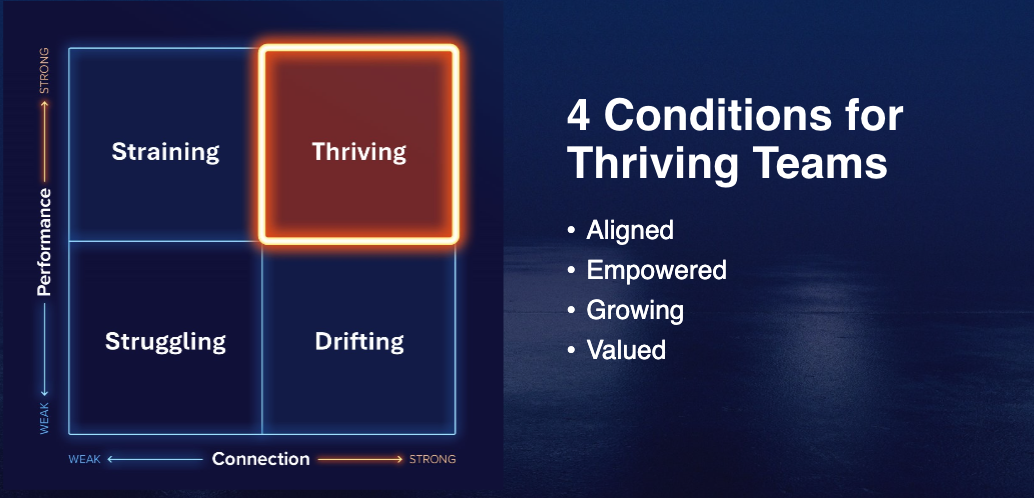
A truly thriving team is not defined by achieving high performance or fostering strong connections, but by the synergistic integration of both. Teams that excel in performance without a foundation of connection often operate under immense strain, leading to burnout and disengagement. Conversely, teams that prioritize connection without a clear focus on performance risk drifting without clear direction or measurable impact. Neither scenario is sustainable in the long term.
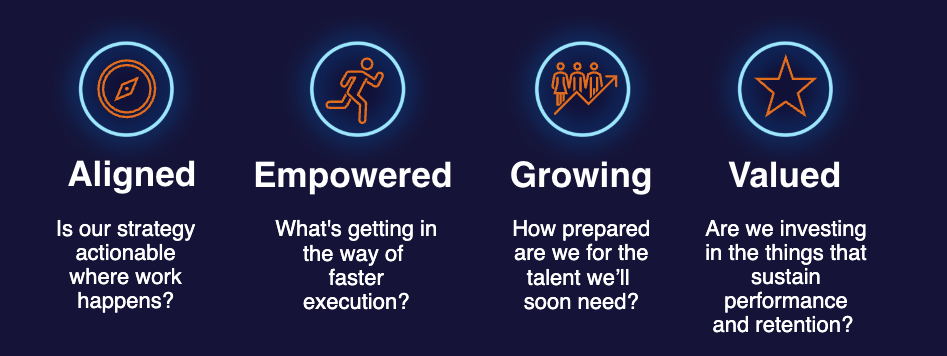
Quantum Workplace proposes a framework for understanding and cultivating thriving teams by focusing on four critical conditions: Aligned, Empowered, Growing, and Valued. Each of these conditions directly addresses a prevalent tension faced by HR leaders, offering a diagnostic approach to identify and rectify organizational shortcomings.
The Four Pillars of a Thriving Workforce: Diagnostic Questions for HR Leaders
To effectively address the dual demands of business and employees, HR leaders must move beyond surface-level observations and delve into diagnostic questions that reveal the underlying structural issues. These questions, when answered honestly and supported by data, can fundamentally alter strategic approaches and foster environments where both organizational success and employee well-being are concurrently achieved.
1. Aligned: Is Our Strategy Actionable Where Work Happens?
The Tension: Organizations need speed, while employees need clarity.
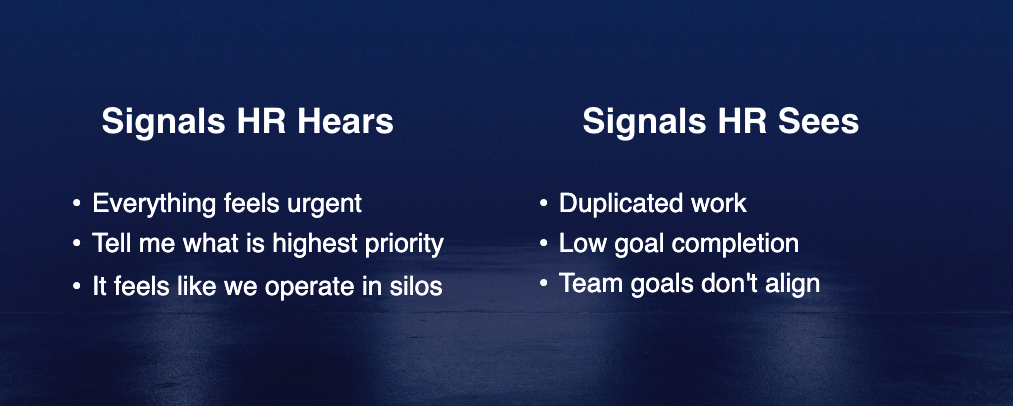
The challenge of alignment manifests in various ways within organizations. HR leaders frequently report a sense of urgency pervading all initiatives, a tendency for departments to operate in silos, and a constant need to clarify priorities. Data often reflects this through duplicated efforts, low rates of goal completion, and team objectives that lack a clear connection to the broader organizational strategy.
A crucial diagnostic question for HR is not merely whether employees understand the strategy, but whether this clarity differs significantly based on performance levels. While a lack of clarity among solid performers can often be addressed through targeted manager coaching, the absence of clarity among top performers signals a systemic organizational issue that manager intervention alone cannot resolve. This highlights a disconnect at a higher level, requiring a more comprehensive strategic re-evaluation.
Furthermore, a deeper diagnostic inquiry focuses on whether teams perceive accountability for the strategy as a genuine ownership or merely an imposed directive. Analyzing survey response patterns can reveal whether employees are truly engaged with the strategic objectives or have passively disengaged. This segmentation of responses allows for a nuanced understanding of the gap, connecting it to tangible outcomes such as engagement scores and turnover risk, thereby quantifying the cost of misalignment.
What Action Looks Like:
- Cascading Clarity: Implementing mechanisms to ensure strategic objectives are clearly articulated and understood at every level of the organization, from executive leadership down to individual contributors. This involves translating high-level goals into actionable team and individual objectives.
- Cross-Functional Collaboration: Breaking down departmental silos through initiatives that encourage interdepartmental communication, shared goals, and collaborative problem-solving. This can involve cross-functional project teams and shared performance metrics.
- Empowering Ownership: Fostering an environment where teams feel a genuine sense of ownership over strategic initiatives, rather than perceiving them as top-down mandates. This can be achieved through involving employees in the strategic planning process and empowering them to contribute to decision-making.
- Data-Driven Alignment: Utilizing data analytics to track the progress of strategic initiatives, identify areas of misalignment, and measure the impact of interventions. This includes analyzing employee feedback to gauge understanding and buy-in.
2. Empowered: What’s Getting in the Way of Faster Execution?
The Tension: Organizations need faster execution, while employees need fewer barriers.
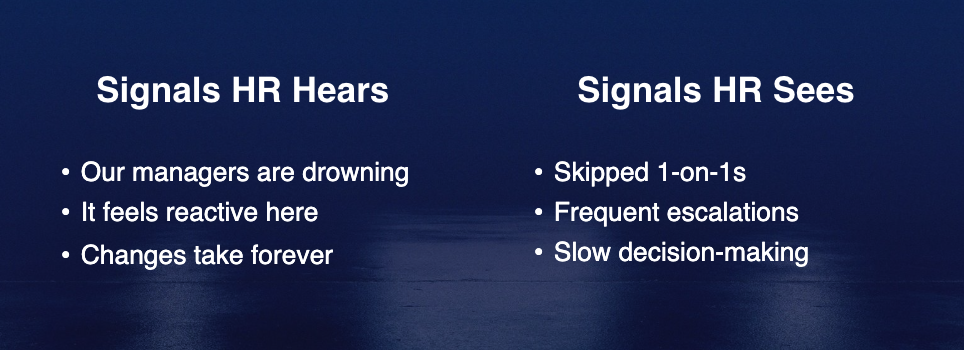
Signals of disempowerment are often evident in the daily operations of an organization. Managers report feeling overwhelmed, with a constant sense of reactivity and prolonged decision-making processes. This can manifest as skipped one-on-one meetings, frequent escalations of minor issues, and decisions that languish for days or even weeks.
A particularly insightful finding from data analysis involves connecting business Key Performance Indicators (KPIs) with employee feedback. This integration can reveal unexpected barriers to execution. For instance, in one observed case, the availability of materials or equipment was not the primary determinant of on-time delivery. Instead, the adoption rate of Artificial Intelligence (AI) tools emerged as a critical factor, providing a specific and counterintuitive insight that would likely be missed without cross-system data analysis.
A significant aspect often overlooked is the "manager experience gap." Data from various organizations consistently shows managers scoring substantially lower than non-managers on crucial metrics. For example, a comparison might reveal that only 57% of managers feel recognized for their contributions to organizational success, compared to 87% of non-managers, a 30-percentage-point deficit. Similarly, clarity on performance measurement can lag by 26 percentage points, and understanding their place in future organizational plans can be 23 percentage points lower for managers. Opportunities for learning new skills may also be perceived as less available to managers, with a 23-percentage-point gap. Crucially, the data often indicates that managers feel less committed to staying with the organization, with a 16-percentage-point gap in their willingness to remain.
This disparity underscores a fundamental truth: managers cannot effectively empower their teams if they themselves do not feel empowered. This is not a matter of individual personality but a structural issue within the organization’s support systems and recognition frameworks for its leadership cadre.
What Action Looks Like:
- Managerial Support Systems: Investing in robust training and development programs for managers, focusing on skills such as delegation, effective communication, decision-making, and employee coaching. Providing them with the necessary resources and autonomy to lead their teams effectively.
- Streamlining Processes: Identifying and eliminating bureaucratic hurdles and unnecessary layers of approval that impede swift execution. Empowering teams and individuals to make decisions at the lowest possible level.
- Barrier Identification and Removal: Proactively seeking to understand and address the obstacles that hinder employee productivity. This can involve regular feedback mechanisms, process reviews, and dedicated task forces to tackle systemic impediments.
- Bridging the Manager Experience Gap: Implementing specific initiatives to ensure managers feel valued, recognized, and supported. This includes clear career pathing, equitable performance feedback, and opportunities for professional growth that rival those offered to individual contributors.
3. Growing: How Prepared Are We for the Talent We’ll Soon Need?
The Tension: Organizations need future-ready talent, while employees want growth that matters.
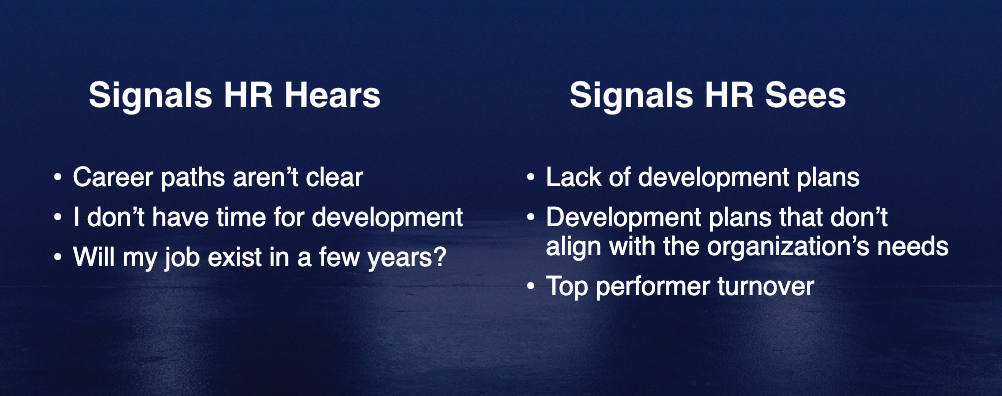
The landscape of career development is evolving rapidly, with employees increasingly questioning the long-term viability of their roles and seeking developmental pathways that offer tangible progression. The traditional notion of static career paths is giving way to a demand for dynamic growth opportunities that align with both individual aspirations and future business needs.
A key diagnostic question in this domain shifts from simply asking if development plans exist to inquiring whether these plans are actively implemented and intrinsically linked to an employee’s daily work experience. A documented growth plan that remains unacknowledged or unimplemented offers little benefit to the employee. Conversely, assigning stretch projects that cultivate skills critical for the organization’s future success transforms development into a practical, experience-based endeavor.
Succession planning data offers another critical lens. By integrating candidate status with employee survey feedback, organizations can ascertain whether they are intentionally cultivating the talent crucial for their future or relying on implicit assumptions. This data can also be leveraged to assess the effectiveness of current and emerging leaders, with feedback from their teams providing a real-time evaluation of their leadership capabilities. The overarching principle is to shift growth from a periodic, administrative process to an ongoing, integrated experience, utilizing projects, challenges, and real organizational priorities as the primary vehicles for development.
What Action Looks Like:
- Integrated Development Pathways: Designing career development frameworks that are fluid and responsive to evolving business needs and individual employee aspirations. This involves creating opportunities for skill acquisition through projects, cross-functional assignments, and mentorship.
- Future-Focused Skill Development: Proactively identifying the skills and competencies that will be critical for the organization’s future success and embedding the development of these skills into current roles and projects. This requires a strategic foresight into market trends and technological advancements.
- Data-Informed Succession Planning: Utilizing data to identify high-potential employees, assess their readiness for future roles, and create targeted development plans. This includes leveraging feedback to understand leadership effectiveness and potential.
- Continuous Learning Culture: Fostering an environment where continuous learning is encouraged, supported, and integrated into the daily workflow. This can involve providing access to learning resources, encouraging knowledge sharing, and celebrating learning achievements.
4. Valued: Are We Reinforcing What Matters Most?
The Tension: Organizations need sustained performance, while employees want to feel their contributions register.
The sentiment of not feeling valued can be a significant driver of disengagement and turnover. Employees often express concerns about increased workloads without commensurate compensation adjustments, perceptions of inequitable recognition across roles, and a belief that leadership prioritizes profit over people. From a data perspective, this often translates to highly variable recognition practices across different teams and significant turnover among key personnel.
A reframing question that can profoundly impact this dynamic revolves around Return on Investment (ROI). When turnover is driven by employees feeling unappreciated, recognition ceases to be a purely cultural initiative and becomes a financial imperative. By directly linking retention risks to recognition data, organizations can quantify the financial implications of a workforce that feels undervalued.
It is also crucial to recognize that feeling valued is not solely the purview of top performers. Solid contributors, who often constitute the largest segment of an organization’s workforce, also need to feel that their impact is significant. Recognition programs that exclusively target high achievers inadvertently overlook a substantial portion of the employee base. By correlating talent reviews or performance ratings with employee feedback, organizations can gain a clearer understanding of these patterns and ensure that appreciation is distributed equitably across the organization.
What Action Looks Like:
- Strategic Recognition Programs: Developing and implementing comprehensive recognition programs that acknowledge a wide range of contributions, from exceptional performance to consistent effort and teamwork. These programs should be aligned with organizational values and strategic objectives.
- Equitable Compensation and Benefits: Ensuring that compensation and benefits packages are competitive, transparent, and reflective of an employee’s contributions and market value. Regular reviews of pay equity are essential.
- Performance-Based Value Perception: Cultivating a culture where performance is not only measured but also consistently acknowledged and rewarded. This involves clear performance management processes and timely feedback mechanisms.
- Data-Driven Retention Strategies: Utilizing data to identify employees at risk of leaving and implementing targeted interventions to address their concerns, particularly those related to feeling valued and recognized. This includes analyzing exit interview data to understand reasons for departure.
Beyond Conflict: Building Conditions for Mutual Success
While the four tensions of Aligned, Empowered, Growing, and Valued may appear distinct on the surface, they share a common underlying structure: the perceived divergence between business needs and employee needs, with HR caught in the middle. The prevailing instinct is often to choose a side, to prioritize one demand over the other. However, a more effective and sustainable approach involves cultivating the conditions under which both sets of needs can be met concurrently.
Teams that are genuinely aligned, empowered, growing, and valued are not the result of compromise; they represent the bedrock of sustainable business performance. The role of HR, therefore, is not to personally resolve every individual tension, but to guide the organization in asking and answering more insightful questions that foster these conditions.
The right talent platform can be instrumental in this transformation. By integrating insights across engagement, performance, development, and recognition into a unified, connected view, such platforms empower every leader—not just those in HR—with the clarity and confidence to act on what truly matters. This holistic approach ensures that every manager, at every level and within every team, is equipped to foster an environment where both organizational objectives and employee well-being can thrive in tandem. The data to address these critical questions already exists within organizations; the challenge lies in connecting it and acting upon the insights it reveals.