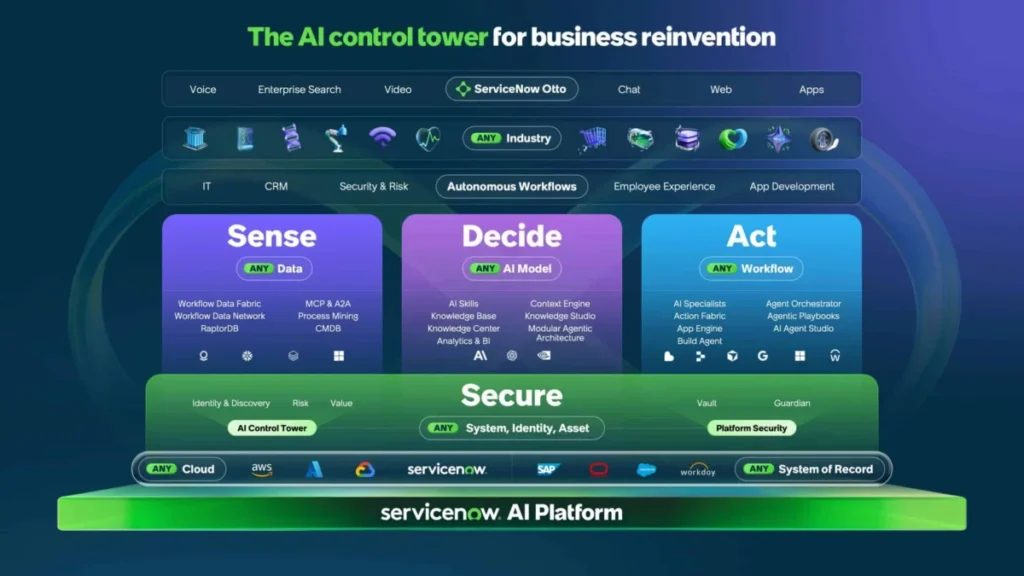
ServiceNow has unveiled a comprehensive suite of announcements, signaling an aggressive strategy to double its revenue to $30 billion within the next four years. At the heart of this ambition lies a clear objective: to become the central command for all AI agents within an enterprise, encompassing management, security, and the primary user interface. This move, while ambitious and met with similar strategies from competitors like Microsoft and Workday, represents a significant shift in how businesses will interact with and govern artificial intelligence. The potential implications for the SaaS market, and the broader enterprise technology landscape, are profound.
The Strategic Imperative: Control in an AI-Frenzied Landscape
The current enterprise AI landscape is often characterized by a proliferation of agents and models, leading to what some perceive as "chaos." ServiceNow’s core message positions its new offerings as the solution to this, promising "enterprise AI chaos into control." This resonates with IT leadership, who are tasked with ensuring security, compliance, and operational efficiency. Workday echoes this sentiment, asserting that "AI agents without enterprise governance are lawless by design."
While the focus on control is undoubtedly appealing to CIOs, the immediate challenge for many organizations remains the practical implementation and demonstrable return on investment (ROI) for AI use cases. ServiceNow’s new tools aim to address this by providing the framework for scalable deployment and management, potentially accelerating the realization of AI’s business value. The broader industry context is one of rapid AI adoption, with companies like Microsoft investing heavily in their own AI agent platforms, such as "Joule" and "Copilot," and Workday evolving its "System of Record" to a "Platform of Agents." This competitive dynamic underscores the urgency for ServiceNow to establish a dominant position.
Action Fabric: The Central Nervous System for AI Agents
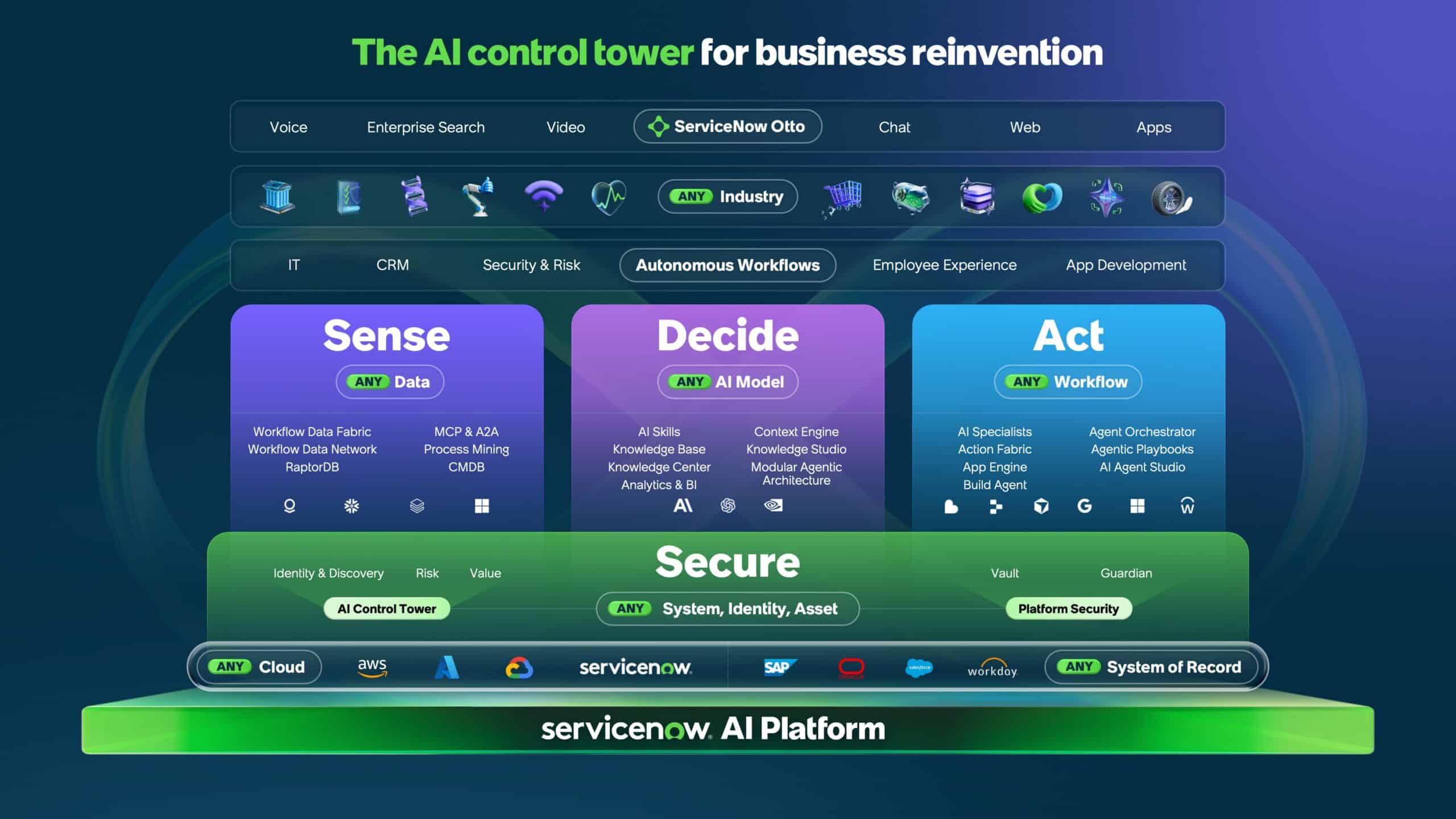
A cornerstone of ServiceNow’s new strategy is the "Action Fabric," a sophisticated monitoring and management layer designed to oversee all AI agent activity. This concept mirrors the visions of both Microsoft with its "Agent 365" and Workday with its "Agent System of Record." The Action Fabric, powered by a "MCP server" (likely referring to a robust middleware or control plane), is built on the principle of universality:
- Universal Compatibility: Any AI agent, regardless of its underlying model or vendor, can connect to the ServiceNow Fabric via the MCP server. This open architecture aims to break down silos and allow seamless integration of diverse AI solutions.
- Openness to All AI: The management tools are designed to be callable by agents themselves, enabling sophisticated automation scenarios and the integration of third-party management frameworks.
- Comprehensive Governance and Security: All agents connected to the Fabric undergo authentication, permission scoping, auditing, and continuous monitoring. ServiceNow’s extensive experience in building robust IT management systems, including its Configuration Management Database (CMDB), Workflow Data Network, security center, and identity and access controls, provides a strong foundation for this ambitious undertaking.
This approach leverages two decades of ServiceNow’s investment in enterprise infrastructure. Competitors are making parallel moves. Workday’s "Agent System of Record" and "Agent Gateway" are designed to open its platform to external agents on a per-call basis, with metered usage. SAP similarly requires agents to utilize its Business Accelerator Hub for accessing business rules, also subject to usage-based pricing. The choice for businesses will likely hinge on existing investments in platforms like Workday or SAP, and the perceived ease of development and integration with specific AI agent frameworks.
Otto: The "Front Door" to Enterprise AI and Employee Experience
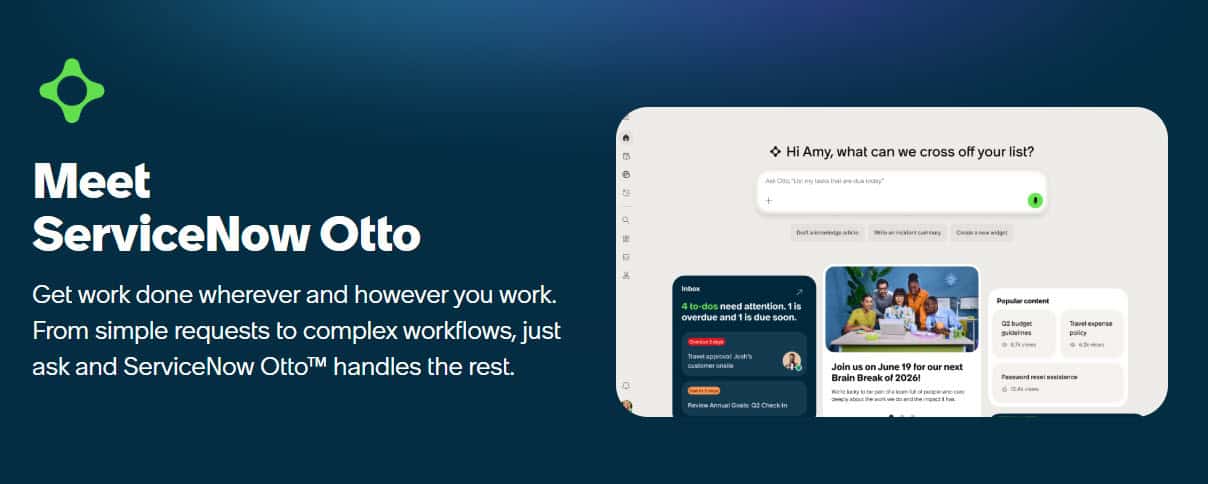
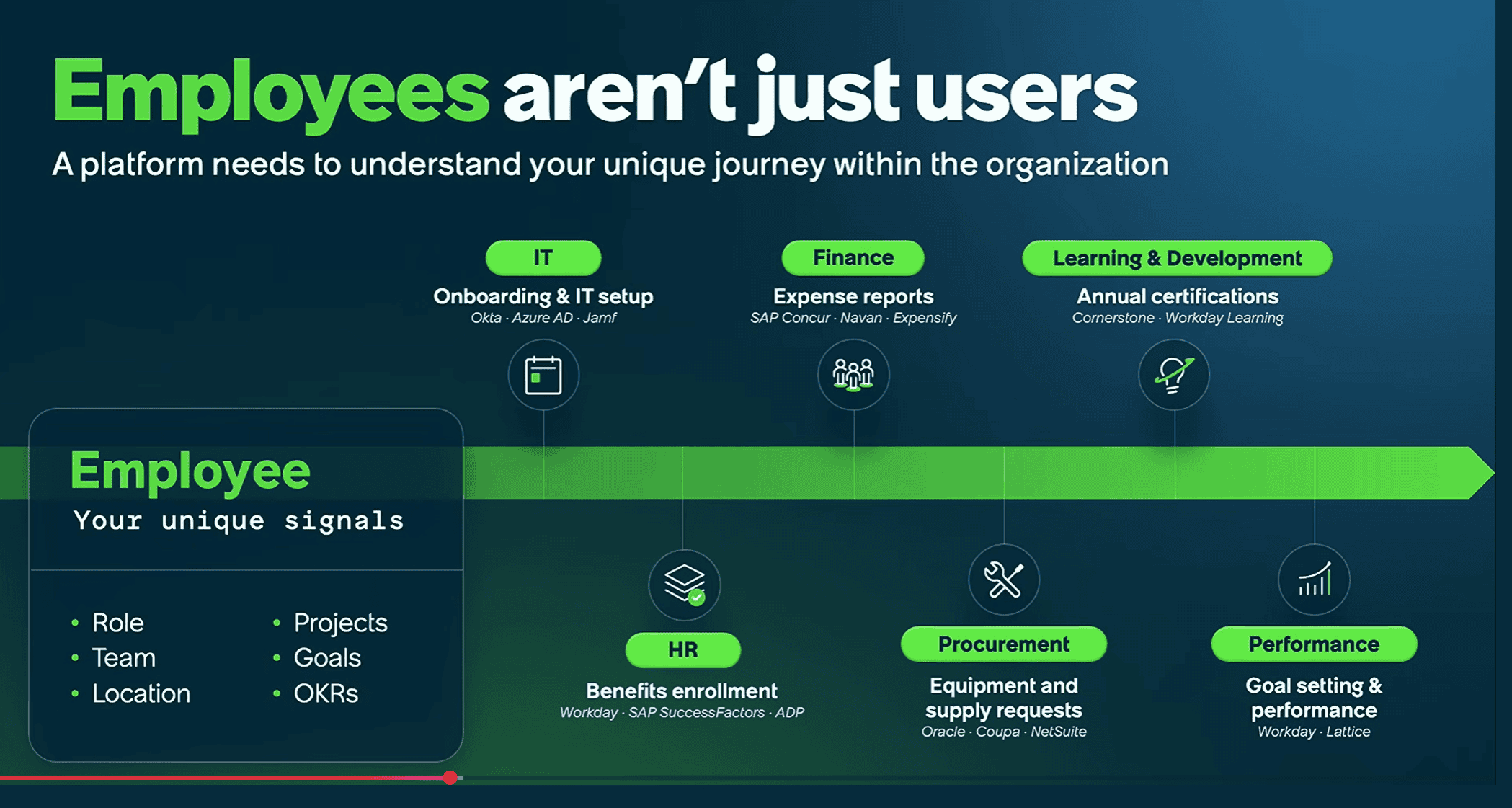
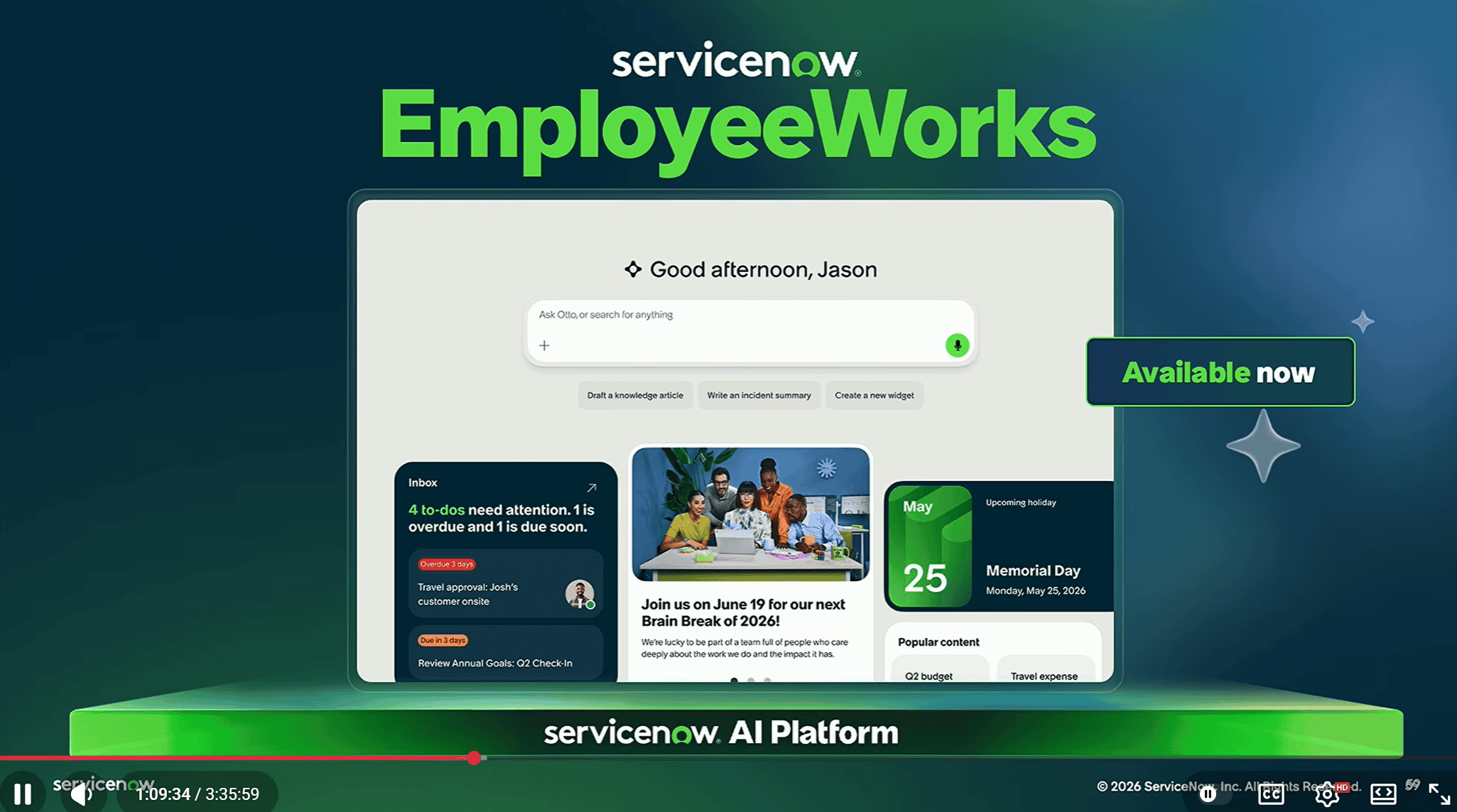
ServiceNow is reinventing its "Now Assist" capabilities by integrating with Moveworks and rebranding it as "Otto." This strategic move positions Otto as the primary interface – the "Front Door" – for employees to access any enterprise AI agent or service. This concept closely aligns with Workday’s introduction of "Sana" as its "Front Door to the Enterprise."
The branding of Otto as a distinct persona aims to create a more approachable and user-friendly employee tool for tasks ranging from simple search queries to complex knowledge management. While Moveworks and Sana share common ground, ServiceNow’s integration with Otto signifies a broader vision for employee experience (EX). This rebranding signals a departure from the traditional "Employee Self-Service" model towards a more proactive and integrated AI-driven support system.
The evolution of the Employee Experience Platform (EXP) market is complex. While a chatbot might appear to handle simple inquiries like vacation requests, its true value lies in its ability to integrate with a wide array of other enterprise systems and processes. Otto’s success will depend on its capacity to handle diverse employee needs, from HR and IT support to policy inquiries and internal communications. The integration with Galileo, ServiceNow’s "digital HR consultant," further enhances Otto’s capabilities by embedding advanced AI functionalities directly into the employee experience.
The AI Control Tower: Orchestrating Value and Mitigating Risk
The "AI Control Tower" represents ServiceNow’s ambition to provide a centralized hub for discovering, observing, governing, and securing enterprise AI. This platform aims to go beyond mere monitoring by attempting to quantify the ROI of AI agents, identify misbehaving agents, and detect instances of excessive resource consumption (e.g., high token usage).
This vision bears resemblance to historical attempts at comprehensive IT management, such as IBM’s "SystemView" in the 1980s, which sought to manage all resources within IBM’s proprietary network. ServiceNow’s approach, however, is tailored for the distributed and dynamic nature of modern AI deployments. By promising to manage not just agents but also workflows and identities, ServiceNow is positioning itself as a critical enabler for businesses navigating the complexities of AI integration.
However, the emphasis on monitoring and managing every decision raises important considerations. While beneficial for IT governance, it’s crucial to balance this with the human element of decision-making. The Ritz Carlton’s renowned service model, for instance, empowers employees to "use their own best judgment" to resolve customer issues. An over-reliance on absolute AI control could stifle innovation and employee autonomy.
The Autonomous Workforce: Defining the Roles of AI Specialists
ServiceNow is also introducing "The ServiceNow Autonomous Workforce," a framework of predefined "AI Specialists" designed for autonomous work. This initiative aims to bring clarity to the evolving roles of AI in the enterprise by outlining specific job functions that AI agents can perform. Examples include:
- Site Reliability AI Specialist
- AI Operations Specialist
- Level 1 Service Desk Specialist
- HR Service Delivery AI Specialist
- Case Management Specialist
- Third-party Screening Specialist
- Enterprise Architecture Specialist
- Vulnerability Exposure Specialist
This aligns with research into agent typologies, categorizing them as those that "take action," "set rules," and "observe and monitor." The introduction of specialized AI roles could streamline operations, centralize expertise, and potentially lead to a reimagining of organizational structures. For example, roles like "DEI analysis and compliance specialist" or "Pay equity advocate" could be consolidated within AI agents, freeing up human capital for more strategic initiatives.
Context Engine: Unifying Enterprise Operations
The "Context Engine" is ServiceNow’s proposed solution for creating a unified view of enterprise operations. It aims to identify and locate existing system business rules, metadata, organizational structures, privacy rules, and various business workflows, many of which originate from ERP and other core systems. By building a "graph of graphs"—integrating workflow data, knowledge graphs, action graphs, asset graphs, and decision graphs—ServiceNow seeks to provide a dynamic and intelligent understanding of how a business operates.
This approach is highly competitive. Microsoft’s "WorkIQ" and "Microsoft Graph" offer similar contextual capabilities, while platforms like Gloat’s "Loomra" are specifically targeting human capital applications. The success of the Context Engine will depend on its ability to seamlessly integrate with a vast array of existing enterprise systems and its capacity to provide actionable insights rather than just data aggregation.
Monetization and the Future of Software Revenue
ServiceNow’s ambitious revenue targets are underpinned by a new monetization model for enterprise software. Instead of traditional per-seat licensing, the focus is shifting towards usage-based fees for AI agent interactions. This model, which also includes Workday, Oracle, and SAP, reflects a broader trend in the trillion-dollar enterprise AI opportunity.
The emergence of new service companies, such as Anthropic’s partnership with Blackstone and OpenAI’s joint venture with private equity firms, underscores this shift. The paradigm is evolving from "software as a product" to "software as a service," with AI agents replacing a significant portion of human labor and associated costs.
The Business Case and Broader Implications
The core business case for ServiceNow’s strategy rests on providing essential control and governance for the burgeoning AI ecosystem. The ability to detect and mitigate sophisticated threats, such as prompt injection attacks, demonstrated in live demos, presents a compelling argument for investment. However, the question remains: how much will enterprises invest in this foundational infrastructure before widespread application deployment is complete?
The economic argument is nuanced. While AI agents can reduce labor costs, the overall ROI depends on their ability to truly "transform" work, not just automate it. Companies like Uber have reportedly scaled back on software agents, citing that human labor remains more cost-effective for certain tasks. This highlights the need for a strategic approach to AI transformation, focusing on redesign and optimization before layering on extensive governance tools.
Furthermore, the ease of development and integration with competing platforms will play a significant role. If Microsoft Copilot or Workday’s agent development environment prove more user-friendly, their associated management tools might gain favor. The "total cost of AI transformation" must encompass development, maintenance, business rules, and governance.
Conclusion: A Bold Vision for an AI-Driven Future
ServiceNow’s expansive vision for enterprise AI management and monetization is a bold declaration of intent. By aiming to control the "front door" to AI agents and provide a comprehensive "AI Control Tower," the company is positioning itself at the nexus of enterprise operations and artificial intelligence. While the competitive landscape is fierce, ServiceNow’s established strengths in workflow automation and IT management provide a solid foundation.
The ultimate success of this strategy will depend on its ability to deliver tangible ROI to businesses, adapt to the evolving needs of the workforce, and strike a balance between robust control and human-centric innovation. As AI continues to reshape the enterprise, ServiceNow’s ambitious moves signal a new era of how businesses will interact with, manage, and derive value from intelligent systems, ushering in a significant evolution in the software revenue model. The journey to truly transform work with AI is ongoing, and ServiceNow is making a significant play to lead the charge.