
The modern Human Resources landscape is defined by an intricate web of competing priorities, where the relentless pursuit of business agility often clashes with the fundamental need for employee clarity, growth, and recognition. This inherent tension, a constant challenge for HR leaders, is not a sign of insufficient effort but rather a symptom of systemic structural pulls that can leave organizations feeling stagnant. The core dilemma lies in the perception that optimizing for the business inherently compromises the employee experience, and vice versa. As businesses demand speed, employees require clarity. As organizations strive for future-ready talent, individuals seek meaningful growth. And as companies push for sustained performance, employees desire their contributions to be acknowledged and impactful. HR departments find themselves at the epicenter of these conflicting needs, often defaulting to strategies that prioritize one over the other, leading to stalled initiatives and unmet potential.

A fundamental re-evaluation of this dynamic is necessary. Instead of attempting to resolve these tensions, the strategic imperative for HR lies in cultivating an environment where both business objectives and employee needs can not only coexist but mutually reinforce each other. This shift represents not merely a reframing of existing roles but a redefinition of the HR function itself.
The concept of a "thriving team" is central to this evolution. A thriving team is characterized by the simultaneous presence of strong performance and robust connection. Teams that excel in performance without fostering genuine connection are prone to burnout and strain. Conversely, teams that prioritize connection without achieving performance benchmarks risk drifting and losing momentum. Neither scenario is sustainable in the long term.
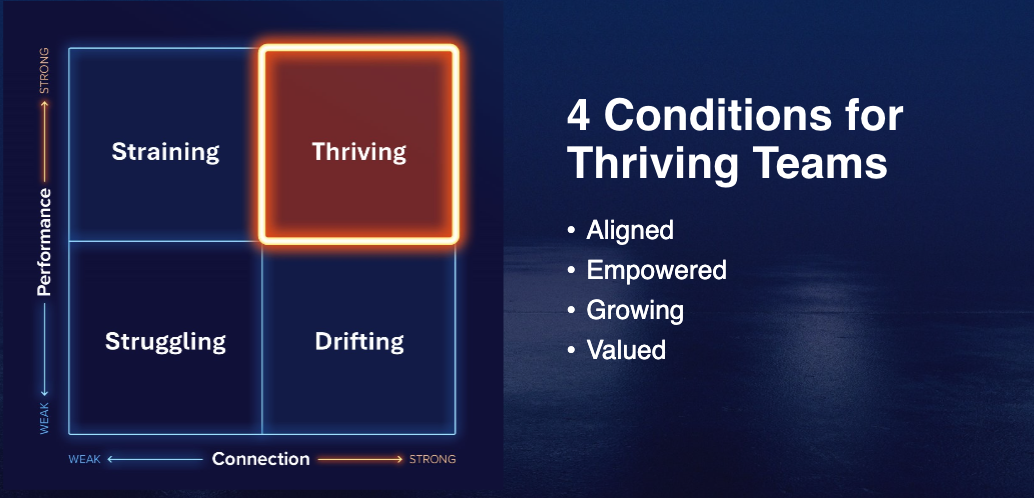
Quantum Workplace, a leader in employee engagement solutions, articulates this ideal through four key conditions for team thriving: Aligned, Empowered, Growing, and Valued. Each of these conditions directly addresses a critical tension HR leaders are currently managing. By honestly assessing these areas, organizations can unlock more effective strategies.
The Four Pillars of Thriving: Diagnostic Questions for HR Leaders
1. Alignment: Is Our Strategy Actionable Where Work Happens?
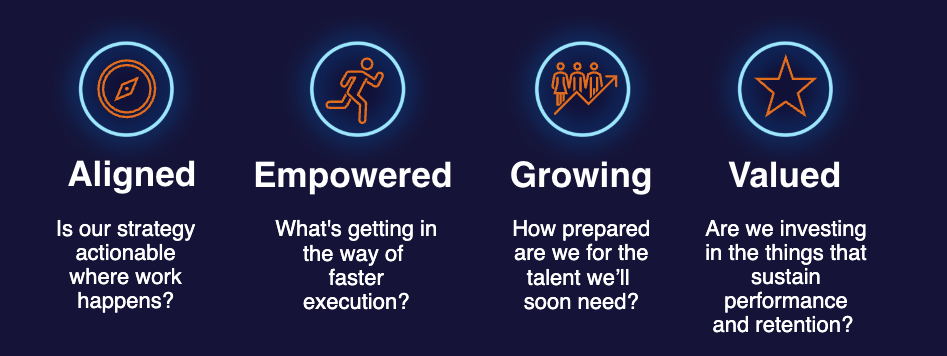
- The Tension: Organizations require speed, while employees need clarity.
- The Challenge: HR leaders frequently report a sense of urgency across departments, operational silos, and a constant need to prioritize. Data often reflects duplicated efforts, low goal completion rates, and team objectives that lack clear connection to the broader organizational strategy.
- Diagnostic Question 1: "Do employees possess clarity regarding the organizational strategy, and does this clarity vary by performance level?" While general awareness of strategy is important, a more critical indicator is whether high performers also struggle with clarity. When top performers are unclear, it signals an organization-wide problem that manager coaching alone cannot rectify. This situation requires a systemic review of how strategic goals are communicated and cascaded.
- Diagnostic Question 2: "Do teams feel genuinely accountable for the strategy, or does it feel imposed upon them?" The distinction between ownership and compliance is crucial. Employee feedback, particularly through surveys designed to identify genuine alignment versus passive disconnection, can reveal this critical difference. Furthermore, these responses can be segmented by other key outcomes like engagement scores and turnover risk, allowing HR to quantify the cost of misalignment.
- Implications and Data: Studies by McKinsey & Company have consistently shown that companies with highly aligned workforces outperform their peers. A 2023 report indicated that organizations with clear strategic alignment experienced, on average, a 15% higher revenue growth and a 20% improvement in employee retention. The lack of clarity can lead to wasted resources and missed opportunities. For example, if a sales team is unclear about the company’s new product focus, they may continue to push outdated offerings, directly impacting sales targets and requiring costly re-training later.
- Actionable Steps: This involves developing clear, measurable objectives that are communicated effectively across all levels. It requires fostering a culture where strategy is not just understood but actively owned by teams. This might include implementing OKR (Objectives and Key Results) frameworks that are collaboratively set and transparently tracked.
2. Empowerment: What’s Hindering Faster Execution?
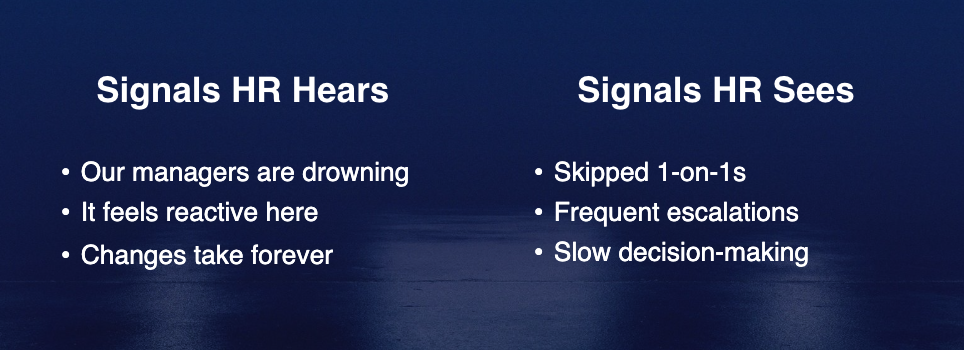
- The Tension: Organizations need faster execution, while employees need fewer barriers.
- The Challenge: Common signals include managers feeling overwhelmed, a reactive work environment, and prolonged decision-making processes. This can manifest as skipped one-on-one meetings, frequent escalations, and decisions that take days or weeks instead of hours.
- Diagnostic Question 1: "What specific barriers impede efficient execution, and how do these relate to business KPIs?" Connecting business metrics, such as on-time delivery, to employee feedback can reveal surprising insights. For instance, data might indicate that the primary bottleneck for on-time delivery is not material availability but rather the adoption of new technologies or inefficient internal processes. This requires a granular analysis of workflows and resource allocation.
- The Manager Experience Gap: A critical, often overlooked, factor is the experience of managers themselves. Data from one organization revealed a significant disparity: managers scored 23-30 percentage points lower than non-managers on metrics related to recognition, performance clarity, and understanding their place in future organizational plans. When managers do not feel empowered, they are ill-equipped to empower their teams. This is a systemic issue, not a matter of individual capability.
- Supporting Data: Research by Gallup highlights that managers account for at least 70% of the variance in employee engagement scores. When managers are disengaged or lack the tools and clarity to perform effectively, their teams inevitably suffer. A lack of clear performance metrics or recognition for their own efforts can lead to a cycle of disempowerment that ripples downwards.
- Actionable Steps: Addressing this tension requires streamlining approval processes, investing in technology that supports efficient workflows, and crucially, ensuring managers are equipped and supported. This includes providing them with clear performance expectations, adequate resources, and opportunities for their own development and recognition. Empowering managers to make decisions at the lowest possible level can significantly accelerate execution.
3. Growth: How Prepared Are We for Future Talent Needs?
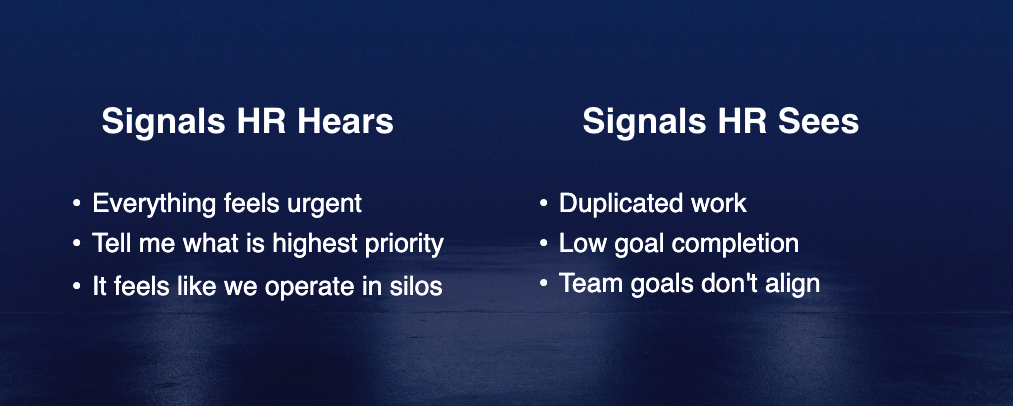
- The Tension: Organizations need future-ready talent, while employees seek meaningful growth.
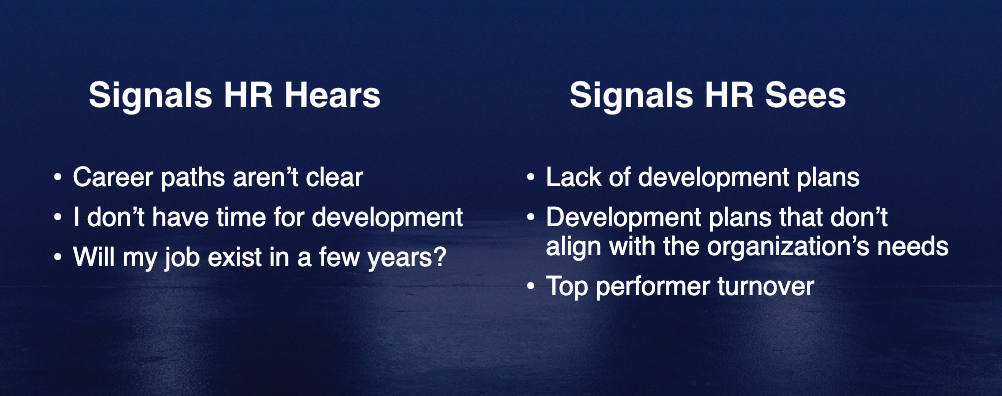
- The Challenge: Employees often face unclear career paths, limited opportunities for development, and a growing anxiety about the long-term viability of their roles in an era of rapid technological change. The question, "Will my job still exist in a few years?" is becoming increasingly common.
- Diagnostic Question 1: "Are development plans active and meaningfully integrated into employees’ daily work experiences?" A documented growth plan that remains on a shelf is ineffective. True growth occurs when development opportunities, such as stretch projects or challenging assignments, are aligned with both individual aspirations and the future skill needs of the business.
- Diagnostic Question 2: "How effectively are we identifying and developing critical future talent, and how is their current leadership capacity perceived?" Succession planning data, when integrated with employee feedback, can reveal whether talent development is a strategic, intentional process or merely an assumption. Feedback from a candidate’s team can provide a realistic assessment of their current leadership effectiveness, highlighting areas for targeted development.
- Background Context: The accelerating pace of technological advancement, particularly in areas like artificial intelligence and automation, is reshaping the future of work. Organizations that fail to proactively develop their workforce for these shifts risk significant talent gaps. The World Economic Forum’s "Future of Jobs Report" consistently emphasizes the growing demand for skills in areas such as analytical thinking, creativity, and technological literacy, while highlighting the decline in demand for manual and basic cognitive skills.
- Analysis of Implications: A failure to invest in employee growth not only impacts individual career trajectories but also poses a direct threat to organizational competitiveness. Companies that cultivate a learning culture are better positioned to adapt to market changes, innovate, and retain their most valuable employees. Conversely, a stagnant workforce can lead to a decline in productivity, innovation, and ultimately, market share.
- Actionable Steps: Growth should be viewed not as a periodic event but as an ongoing experience embedded within daily work. This involves leveraging projects, challenges, and real priorities as the primary vehicles for skill development. Implementing robust mentorship programs, offering continuous learning opportunities, and creating clear internal mobility pathways are essential components of a proactive growth strategy.
4. Value: Are We Reinforcing What Matters Most?
- The Tension: Organizations need sustained performance, while employees want to feel valued.
- The Challenge: Common sentiments include performing more without commensurate compensation increases, a perception that some roles are more valued than others, and a belief that leadership prioritizes profit above all else. Data often shows inconsistent recognition practices across teams and high turnover among key personnel.
- Diagnostic Question 1: "What is the ROI of recognizing employee contributions, particularly in relation to retention?" When turnover is driven by employees feeling undervalued, recognition transforms from a cultural nicety into a financial imperative. Quantifying the cost of high turnover directly linked to a lack of feeling valued allows organizations to make a compelling business case for investing in recognition programs.
- Diagnostic Question 2: "How effectively are our recognition programs capturing the contributions of solid performers, not just top achievers?" Many recognition programs are designed with high performers in mind, inadvertently overlooking the contributions of the majority of the workforce – the solid, consistent performers. By connecting talent reviews and performance ratings with employee feedback, organizations can identify patterns and ensure that recognition is distributed equitably and meaningfully across the entire employee base.
- Supporting Data: A recent survey by Deloitte found that organizations with highly effective recognition programs experience significantly lower voluntary turnover rates (often 10-20% lower) and higher employee engagement. When employees feel their efforts are acknowledged and appreciated, their commitment to the organization strengthens, leading to increased discretionary effort and loyalty.
- Analysis of Implications: A perception of being undervalued can lead to disengagement, reduced productivity, and ultimately, the loss of valuable talent. This is particularly detrimental in competitive labor markets where employees have multiple options. Furthermore, a lack of equitable recognition can foster resentment and create a divisive work environment, undermining team cohesion and overall morale.
- Actionable Steps: Recognition should be integrated into the fabric of the organization, moving beyond sporadic awards to consistent, timely, and meaningful acknowledgment. This includes fostering a culture where managers are trained and encouraged to provide regular positive feedback, celebrating team successes, and ensuring that recognition practices are transparent, fair, and aligned with organizational values.
Reimagining HR’s Role: From Problem Solver to Enabler
The common thread connecting these four critical tensions is the perceived dichotomy between business needs and employee needs, with HR caught in the crossfire. The traditional instinct has been to choose a side, often leading to suboptimal outcomes for both. The more strategic and impactful approach is to create an environment where both can thrive simultaneously.
Teams that are aligned, empowered, growing, and valued are not a compromise; they are the bedrock of sustainable business performance. HR’s role is not to personally resolve every individual conflict but to empower the organization to ask and answer smarter questions. This requires a fundamental shift in how HR operates, moving from a reactive, transactional function to a proactive, strategic partner.
The advent of integrated talent platforms is pivotal in this transformation. Solutions that connect insights across engagement, performance, development, and recognition provide a holistic view of the employee experience. This unified data allows every leader, from the C-suite to frontline managers, to gain clarity and the confidence to act on what truly matters. It democratizes insights, enabling informed decision-making at all levels and fostering a culture of shared responsibility for employee well-being and organizational success.
The questions outlined above serve as a starting point. The data required to answer them often already exists within an organization, fragmented across various systems and processes. The challenge lies in connecting these disparate data points to reveal actionable insights. By embracing a strategic framework that prioritizes both business imperatives and employee aspirations, HR can move beyond managing tensions to actively cultivating environments where both the organization and its people can achieve their full potential. This proactive approach is not just a best practice; it is the defining characteristic of future-ready organizations.