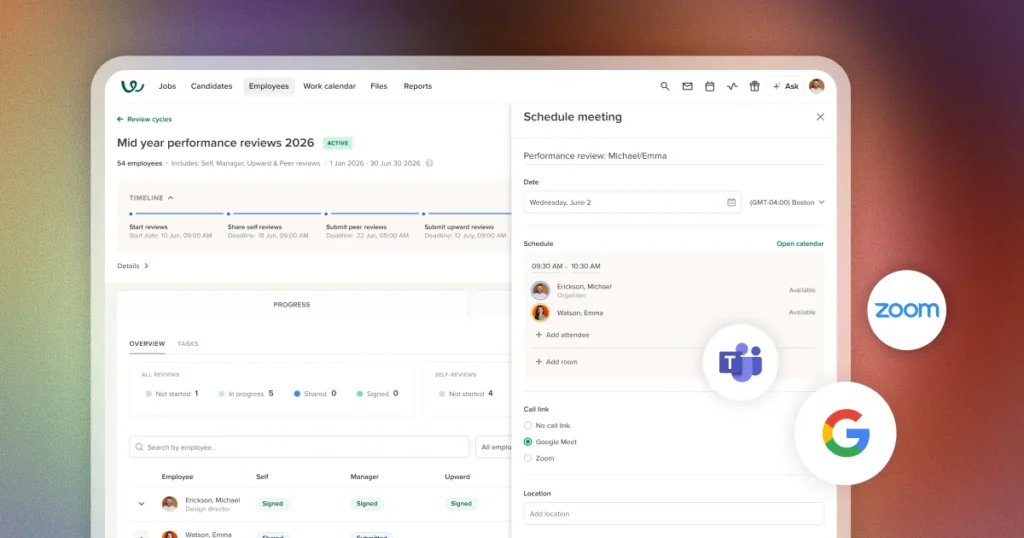
Workable, a leading provider of human resources technology, has announced a significant enhancement to its Performance Reviews module, introducing built-in performance review meetings directly within the existing review cycle. This strategic update aims to transform the traditionally static document-based review process into a dynamic, structured, and trackable conversation, ensuring that every written assessment is seamlessly followed by a meaningful dialogue. The new functionality is designed to foster greater transparency, accountability, and employee development by integrating the crucial face-to-face or virtual discussion directly into the digital workflow, eliminating the need for separate tools or manual tracking.
This enhancement marks a pivotal moment in Workable’s commitment to providing comprehensive HR solutions that address the evolving demands of modern workplaces. By embedding the meeting component, Workable addresses a long-standing challenge in performance management: the gap between written feedback and its effective delivery and discussion. Companies can now ensure that managers and employees engage in a structured conversation about performance outcomes, development areas, and future goals, all within the familiar Workable environment. This not only streamlines the process for HR administrators but also enhances the overall experience for managers and employees, making performance reviews a more impactful tool for growth rather than a mere administrative hurdle.
The Evolving Landscape of Performance Management: A Historical Context
Performance management has undergone a profound transformation over the past two decades. Historically, annual performance reviews were the cornerstone of talent assessment, often characterized by lengthy forms, numerical ratings, and a retrospective focus on past performance. While intended to provide feedback and guide development, these traditional systems frequently fell short. Studies consistently revealed high levels of dissatisfaction among both employees and managers, with many perceiving them as bureaucratic, biased, and ineffective. A 2014 study by Adobe, for instance, found that employees spent an average of 80,000 hours on performance reviews annually, yet 58% felt they didn’t improve performance. Similarly, Deloitte found that 62% of companies believed their performance management processes were not driving employee engagement.
The advent of agile methodologies, the rise of the knowledge economy, and the increasing demand for continuous feedback from younger generations of workers spurred a paradigm shift. Organizations began moving away from annual, top-down reviews towards more frequent, forward-looking feedback mechanisms, continuous performance management, and a greater emphasis on coaching and development. The COVID-19 pandemic further accelerated this shift, highlighting the need for flexible, empathetic, and digitally integrated HR processes that could support remote and hybrid workforces. In this context, HR technology platforms like Workable have become indispensable, evolving to offer tools that facilitate this new approach to talent management.
Workable has been at the forefront of this evolution, offering robust performance review capabilities that allow organizations to define objectives, conduct peer feedback, collect self-reviews, and manage manager assessments. Prior to this release, the platform enabled the creation of customizable review cycles, collection of multi-source feedback, and sharing of finalized reviews. However, the crucial step of facilitating the actual conversation, and ensuring its completion and documentation, often remained an external process, relying on managers to manually schedule and track these discussions. This new feature directly addresses that missing link, integrating the meeting as an indispensable, trackable component of the review cycle.
Diving Deep: How Workable’s Integrated Review Meetings Function
The core of Workable’s new offering lies in its seamless integration of performance review meetings into the existing review workflow, transforming the process from a linear document exchange into a comprehensive, multi-stage interaction. The design principle behind this innovation is to make the meeting feel like a natural and essential extension of the performance review, rather than a separate, disconnected event.
When an HR administrator initiates a new review cycle within Workable, they now have the option to enable the "performance review meeting" step. This feature is set to "on by default," underscoring its importance, but offers flexibility. Administrators can configure it as either "optional" or "mandatory," depending on the organization’s culture and policy. Crucially, a meeting completion deadline can also be established, injecting a layer of accountability and ensuring timely discussions. This configurability allows organizations to tailor the process to their specific needs, whether they are implementing structured meetings for the first time or reinforcing an existing culture of regular feedback.
The operational flow for managers and employees is intuitively designed. Once a manager completes and shares a written performance review with their direct report, the system immediately prompts them to book the required meeting. This prompt serves as a critical gateway; if the meeting step has been configured as mandatory, the ability to proceed to the final "signing" step of the review is blocked until the meeting is confirmed as completed. This hard stop ensures that the conversation cannot be bypassed, guaranteeing that every employee receives the dedicated feedback session they deserve. This mechanism directly tackles the common issue of reviews being shared but never properly discussed, which can lead to misunderstandings, disengagement, and a perception of unfairness.
To further enhance efficiency and ease of use, Workable has integrated directly with popular calendar systems. If calendar integration is enabled by the organization, managers can effortlessly check their availability and their employee’s, schedule the meeting, and even automatically generate a link for video conferencing platforms such as Microsoft Teams or Google Meet. Any subsequent changes to the meeting details are automatically synced, minimizing administrative overhead and reducing the chances of scheduling conflicts or missed appointments. This level of integration reflects the contemporary reality of hybrid and remote workforces, where virtual meetings are often the primary mode of communication, making a seamless digital scheduling process essential.
The meeting itself is not just a scheduling event; it’s also a recordable interaction. Once the performance review meeting takes place, both the manager and the employee are provided with dedicated sections within Workable to add notes. These notes are collaborative, meaning they are shared between participants, fostering transparency and ensuring a shared understanding of the discussion’s outcomes. Furthermore, these notes are fully visible to HR administrators, creating a comprehensive, auditable record tied directly to the specific review cycle. This centralized documentation is invaluable for compliance, talent development planning, dispute resolution, and providing a historical context for an employee’s performance trajectory. HR admins gain a real-time overview of the status of all meetings – which are booked, overdue, or completed – offering unparalleled visibility and ensuring organizational accountability. This level of oversight helps HR identify bottlenecks, intervene where necessary, and ensure that the performance management process is consistently applied across the organization.
The Criticality of Structured Feedback: Supporting Data and Industry Trends
The integration of structured meetings into performance reviews is not merely a feature update; it’s a response to compelling data and evolving best practices in human capital management. Research consistently highlights the profound impact of effective feedback on employee engagement, performance, and retention. A Gallup study revealed that employees who receive regular feedback from their managers are nearly three times more likely to be engaged than those who don’t. Yet, only 26% of employees strongly agree that they receive meaningful feedback at work. The absence of structured conversations often leaves employees feeling unheard, unvalued, and unclear about their performance expectations or career paths.
Traditional performance review systems, often criticized for their infrequency and lack of follow-through, often fail to capitalize on the potential of feedback. A PwC survey found that only 8% of companies reported that their performance management process was highly effective in driving value. One of the primary reasons for this ineffectiveness is the absence of a dedicated, documented conversation. Written reviews, while important for documentation, can be easily misinterpreted or ignored without the nuance and clarity that a direct discussion provides. The verbal exchange allows for questions, clarifications, and the establishment of mutual understanding, which is crucial for feedback to be actionable and constructive.
Moreover, structured performance review meetings contribute significantly to employee development. When feedback is delivered in a constructive, conversational format, employees are more likely to internalize it, identify specific areas for growth, and feel supported in their professional journey. A study by the Corporate Executive Board (CEB) found that organizations with effective performance management systems see a 30% higher return on investment than those with less effective systems. The integration of meeting notes directly into the review cycle provides a continuous record of development discussions, making it easier to track progress, set new goals, and inform future talent decisions. This also aligns with the growing trend of continuous learning and development, where feedback is seen as a driver of ongoing skill enhancement rather than a one-off event.
Strategic Insights and Inferred Reactions from Key Stakeholders
This strategic enhancement by Workable is likely to be met with positive reception across the HR tech landscape and among its user base. While Workable has not yet released official statements beyond the feature announcement, one can infer the strategic intent and anticipated benefits.
A hypothetical statement from Workable’s Head of Product, [Inferred Name e.g., Sarah Chen], might emphasize: "Our mission at Workable has always been to simplify and humanize the hiring and HR experience. With the integration of performance review meetings, we’re taking a critical step towards ensuring that performance feedback isn’t just a document, but a living, breathing conversation that drives growth and engagement. We understand that the true value of a performance review lies in the dialogue it fosters. By embedding this directly into the review cycle, we empower managers to deliver more impactful feedback and provide employees with the dedicated attention they need for development, all while giving HR teams unparalleled visibility and control."
From the perspective of an independent HR Tech Analyst, [Inferred Name e.g., Dr. Emily Thorne], this move signifies Workable’s continued commitment to holistic HR solutions: "Workable’s decision to integrate performance review meetings is a smart and necessary evolution. Many HR platforms excel at the administrative aspects of performance management, but the ‘human’ element – the actual conversation – often remains siloed or untracked. By bringing this crucial step in-platform, Workable is addressing a key pain point for organizations striving for more effective, transparent, and legally sound feedback processes. This feature not only enhances accountability but also positions Workable strongly in a competitive market where comprehensive, user-friendly solutions are increasingly sought after."
For HR Professionals, the implications are substantial. The new feature promises to significantly reduce administrative burden associated with tracking meetings, ensure compliance with feedback policies, and provide richer data for talent analytics. The ability to monitor meeting completion rates, identify overdue discussions, and access consolidated notes will empower HR to play a more strategic role in talent development and employee relations.
Managers will benefit from a streamlined process that guides them through the feedback delivery process, reinforcing best practices. The calendar integration and in-platform note-taking will save time and ensure that critical discussion points are documented accurately. More importantly, the mandatory meeting step, when enabled, will ensure that managers fulfill their crucial role in providing constructive feedback and fostering their team members’ growth.
Finally, Employees stand to gain the most from this enhancement. A structured, guaranteed conversation about their performance review means clearer understanding of expectations, recognition for achievements, and a transparent discussion about development areas. This fosters a sense of being valued and heard, contributing to higher engagement, trust in leadership, and a clearer path for career progression within the organization.
Broader Implications for HR, Managers, and Employees
The introduction of integrated performance review meetings within Workable carries significant implications across various organizational strata, reinforcing the platform’s utility and strategic value.
For HR Departments:
The most immediate benefit for HR is enhanced efficiency and compliance. The automation of meeting scheduling prompts and tracking significantly reduces the administrative burden traditionally associated with ensuring feedback discussions occur. HR teams will gain a centralized, real-time dashboard providing granular visibility into the status of all performance review meetings – booked, completed, or overdue. This level of oversight ensures accountability across the organization, helping HR identify and address potential bottlenecks or non-compliance proactively. Furthermore, the standardized documentation of meeting notes within the platform creates a robust audit trail, critical for legal compliance, dispute resolution, and supporting fair employment practices. By centralizing all performance-related data, HR can also glean deeper insights into manager effectiveness, employee development trends, and overall organizational health, enabling more data-driven talent strategies.
For Managers:
Managers are at the forefront of talent development, and this feature empowers them to fulfill that role more effectively. The built-in prompts and calendar integration simplify the logistical challenges of scheduling crucial feedback sessions. By making the meeting a mandatory step (when configured as such), Workable ensures that managers dedicate the necessary time and attention to discussing performance with their direct reports, fostering a culture of continuous feedback and coaching. The in-platform note-taking functionality provides a structured way to document key discussion points, commitments, and action items, ensuring clarity and follow-through. This reduces the cognitive load on managers, allowing them to focus on the quality of the conversation rather than the administrative overhead, ultimately leading to more impactful feedback delivery and stronger team performance.
For Employees:
For employees, this enhancement represents a significant improvement in the performance review experience. The guarantee of a structured conversation following a written review ensures that feedback is delivered with context, allowing for questions, clarifications, and mutual understanding. This transparency fosters trust and reduces anxiety often associated with reviews. Employees will feel more heard and valued, knowing that their performance and development are priorities. The documented meeting notes provide a clear record of agreed-upon goals, development plans, and next steps, empowering employees to take ownership of their growth and refer back to specific discussions. This leads to increased engagement, clearer understanding of career paths, and a stronger sense of psychological safety within the organization.
Strategic Impact for Workable:
For Workable itself, this feature solidifies its position as a comprehensive HR technology provider. By addressing a critical gap in the performance management workflow, Workable enhances its competitive edge against other HR platforms. It strengthens its offering beyond recruitment, providing a more integrated and holistic solution for the entire employee lifecycle. This strategic move is likely to increase user adoption of the Performance Reviews add-on and reinforce the value proposition for its Premier and Enterprise plan subscribers, ultimately contributing to customer satisfaction and market share growth. It signals Workable’s responsiveness to evolving HR needs and its commitment to continuous product innovation.
Access and Future Outlook
Workable’s enhanced Performance Reviews, including the integrated meeting functionality, are available as an add-on to its Standard HR plan and are already included in its Premier and Enterprise plans. This tiered availability ensures that organizations of varying sizes and needs can access the capabilities best suited for them. For organizations not yet leveraging Workable HR, the company offers a free 15-day trial, inviting potential users to explore its comprehensive suite of HR tools, now featuring these groundbreaking built-in review meetings.
The future of performance management continues to lean towards greater integration, personalization, and continuous dialogue. Workable’s latest enhancement is a testament to this trajectory, positioning the company at the forefront of delivering solutions that not only streamline HR processes but also fundamentally improve the employee experience and drive organizational performance. As businesses navigate an increasingly dynamic work environment, tools that facilitate meaningful human connections and development through structured feedback will remain indispensable.