Over the past few years, remote work has evolved from a temporary fix into a long-term reality for millions of professionals, fundamentally reshaping the global employment landscape. This transformative shift, largely accelerated by the exigencies of the global pandemic in early 2020, has seen a significant portion of the workforce transition from traditional office environments to working from home or other remote locations. Initially a crisis response, remote work quickly demonstrated its potential for flexibility, autonomy, and geographical reach, leading many organizations to embed it as a permanent operational model. In the United States alone, approximately 27% of employees now work remotely full-time, a statistic that underscores the profound and enduring nature of this change. Beyond full-time remote arrangements, a substantial number of companies have adopted hybrid models, allowing employees to split their time between home and office, further complicating the dynamics of workforce management.
While the flexibility inherent in remote work offers undeniable perks, it concurrently presents a unique and intricate set of challenges for both employees and organizations. The lines between professional and personal life often blur, leading to digital fatigue, extended working hours, and a pervasive sense of isolation. The spontaneous interactions and informal connections that naturally arise in a physical office setting are diminished, potentially impacting team cohesion, collaborative spirit, and overall organizational culture. For human resources (HR) professionals, the imperative to keep remote teams productive, engaged, and supported has become paramount. When employees feel genuinely supported, connected, and valued, the dividends are clear: enhanced performance, a robust organizational culture, and improved talent retention rates. This article delves into a comprehensive framework of actionable strategies that HR professionals can deploy to ensure remote employees not only perform their duties but truly thrive in a dispersed environment, contributing to a resilient and high-performing workforce.
The Genesis and Evolution of Remote Work: A Chronological Overview
Before the turn of the millennium, remote work was a nascent concept, largely confined to specific roles like sales or field service. Early forms involved telecommuting, often enabled by dial-up internet and basic communication tools, and were seen more as an employee perk than a strategic business model. The 2000s brought broadband internet and early collaboration platforms, gradually expanding the feasibility of working outside a central office. However, it remained a relatively niche practice, often viewed with skepticism by management concerned about productivity and oversight.
The 2010s saw a slow but steady increase in remote work adoption, driven by technological advancements in cloud computing, video conferencing, and project management software. Companies like Automattic (creators of WordPress) became pioneers, demonstrating that fully distributed teams could be highly successful. Research during this period began to highlight potential benefits such as reduced overhead costs, access to a wider talent pool, and improved employee satisfaction. Yet, many organizations still clung to traditional office-centric models, citing concerns about communication breakdowns, culture dilution, and security risks.
The seismic shift occurred in early 2020 with the onset of the COVID-19 pandemic. Overnight, remote work transformed from an option to a necessity for millions globally. Businesses scrambled to implement remote infrastructures, often with minimal preparation. This period served as an unprecedented global experiment, proving that many roles previously deemed "office-essential" could, in fact, be performed effectively from home. As the pandemic persisted, what was initially a temporary measure evolved into a strategic consideration. By late 2021 and into 2022, numerous companies, including tech giants and established corporations, announced permanent hybrid or remote-first policies. This transition solidified remote work’s status as a long-term reality, compelling HR departments to fundamentally rethink their strategies for engagement, performance management, and employee well-being. According to a 2023 survey by Gartner, 82% of company leaders plan to allow employees to work remotely at least some of the time, reflecting a widespread acceptance of this new paradigm.
Foundational Pillars for Remote Team Success
Engaging a dispersed workforce is not a passive undertaking; it demands intentional strategy, consistent effort, and a deeply embedded people-first mindset. For HR professionals, establishing robust foundational elements is crucial for building a remote ecosystem where employees can thrive.
1. Setting Clear Expectations and Goals:
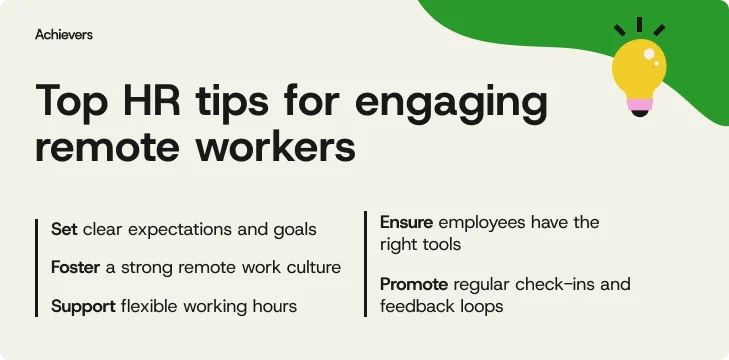
Remote work quickly falters in the absence of clarity. Without the immediate feedback and contextual cues of an office, employees can feel adrift if their objectives are vague. HR must champion the establishment of specific, measurable, achievable, relevant, and time-bound (SMART) goals for every remote role and project. Defining what success looks like, including precise timelines and clear ownership, eliminates ambiguity. When expectations are meticulously documented and readily visible through shared platforms, employees dedicate less time to interpreting ambiguous messages and more time to executing meaningful work. Research by Gallup indicates that only 50% of employees strongly agree they know what is expected of them at work, a figure that is even more critical for remote teams where informal clarification is less frequent.
2. Cultivating a Resilient Remote Work Culture:
Organizational culture is not confined to physical office walls; it merely manifests differently in a remote context. HR’s role is to actively reinforce core values through consistent behaviors, shared norms, and thoughtfully designed virtual team-building activities that create a sense of continuity and belonging. Small, repeatable moments of connection and recognition often hold more weight than infrequent, grand virtual events. This includes celebrating team successes, encouraging peer recognition, and creating digital spaces for informal interactions. A strong remote culture mitigates feelings of isolation and fosters a collective identity, essential for sustained engagement. A recent study by Buffer revealed that difficulty with collaboration and communication, often tied to cultural gaps, is a top struggle for remote workers.
3. Equipping Teams with Essential Tools and Technology:
Remote teams are inherently reliant on their technological infrastructure. HR must collaborate closely with IT to ensure employees have seamless access to reliable collaboration software (e.g., Slack, Microsoft Teams), robust video conferencing platforms (e.g., Zoom, Google Meet), secure cloud-based systems for data access, and functional home setups. This includes providing stipends for high-speed internet, ergonomic equipment, and necessary peripherals. When tools are intuitive, reliable, and remove friction from daily tasks, productivity flows naturally, reducing frustration and digital fatigue. Inadequate tools are a significant barrier to remote productivity, as evidenced by surveys showing that employees often spend considerable time troubleshooting technical issues.
Enhancing Communication and Connection in a Virtual Environment
Effective communication and genuine connection are the lifeblood of any successful remote team. HR plays a pivotal role in designing and facilitating these crucial interactions.
4. Promoting Regular Check-ins and Feedback Loops:
Without consistent touchpoints, remote work can breed disconnection. HR should advocate for and provide frameworks for scheduled one-on-ones between managers and team members, as well as regular team check-ins. These sessions are vital for sharing progress, proactively identifying and unblocking challenges, and providing constructive feedback while it is still timely and relevant. Frequent, structured conversations help teams stay aligned, supported, and aware of each other’s contributions and needs. Research by Harvard Business Review emphasizes that consistent, quality feedback is a primary driver of employee development and engagement, especially in remote settings.
5. Establishing Clear Communication Guidelines:
Unstructured communication can quickly lead to burnout and miscommunication in remote teams. HR must establish clear, shared expectations for response times across different channels, define meeting norms (e.g., agendas, designated note-takers, time limits), and clarify which channels to use for different types of messages (e.g., urgent vs. asynchronous updates). When employees understand communication protocols, they can manage their focus time more effectively, reducing the constant pressure to be "always on." This balance makes remote work feel more sustainable and less overwhelming.
6. Fostering Social Connections:
To combat isolation and build rapport, HR should actively create optional, low-pressure opportunities for employees to connect as individuals, beyond their professional roles. This can include virtual coffee breaks, themed social hours, online games, shared interest groups (e.g., book clubs, fitness challenges), or informal chat channels. These moments allow personality to shine, making collaboration feel more natural, empathetic, and enjoyable. They foster a sense of community that transcends geographical distance. A study by the National Bureau of Economic Research found that even brief, informal interactions can significantly boost team cohesion and information flow.
Prioritizing Employee Well-being and Flexibility
The long-term sustainability of remote work hinges on prioritizing employee well-being and embracing the inherent flexibility it offers. HR is instrumental in embedding these principles.
7. Supporting Flexible Working Hours:
Flexibility is arguably one of remote work’s greatest assets. HR should empower employees to structure their workday around their peak productivity times, while maintaining clear expectations regarding responsibilities and deadlines. When the focus shifts from "hours worked" to "outcomes achieved," flexibility becomes a powerful trust-builder, rather than a perceived trade-off. This autonomy can lead to improved work-life balance and reduced stress. A 2022 survey by McKinsey & Company indicated that flexibility is a top reason employees choose to stay with an organization.
8. Encouraging Effective Time Management Strategies:
Remote work demands a greater degree of self-structure and discipline. HR can provide valuable support by sharing practical time management approaches, such as the Pomodoro Technique, task prioritization frameworks (e.g., Eisenhower Matrix), blocking dedicated focus time, and breaking large projects into manageable chunks. Offering workshops or resources on digital wellness and combating distractions can further empower employees to maintain focus without feeling overwhelmed. These small habits contribute significantly to sustained productivity and reduced burnout.
9. Prioritizing Mental Health and Well-being:
The adage "you can’t pour from an empty cup" is particularly resonant in remote work environments, where digital demands can be relentless. HR must proactively encourage employees to take regular breaks, respect personal boundaries (e.g., not sending emails late at night), and foster an open environment where employees feel safe to discuss workload pressures and signs of job burnout. Providing access to mental health resources, EAPs (Employee Assistance Programs), and promoting a culture of self-care is not merely a perk; it is fundamental to building a resilient, high-performing, and sustainable remote team. The American Psychological Association reports that chronic work stress is linked to higher rates of burnout, which is exacerbated in remote settings without clear boundaries.

10. Addressing Remote Work Isolation Proactively:
"Out of sight" should never mean "out of mind." HR, in collaboration with managers, must implement strategies to proactively address feelings of isolation. This includes frequent check-ins, encouraging open conversations about challenges as well as successes, and creating structured opportunities for social interaction. Regular surveys on employee sentiment can also flag potential issues before they escalate. Feeling genuinely supported and connected significantly boosts engagement and reduces attrition.
11. Promoting Movement and Ergonomic Best Practices:
The sedentary nature of desk work, often exacerbated in home office setups, poses physical health risks. HR should disseminate simple guidance on ergonomics, correct posture, and the importance of regular movement breaks away from screens. This could involve sharing stretches, recommending ergonomic accessories, or organizing virtual fitness challenges. Small changes in physical habits can lead to noticeably improved comfort, reduced strain, and enhanced well-being throughout the workday.
Driving Growth, Recognition, and Fair Progression
For remote employees to remain engaged and committed, they need to see a clear path for growth and feel their contributions are recognized and valued. HR is central to building these pathways.
12. Recognizing and Celebrating Achievements Consistently:
Employee recognition should not be reserved solely for formal award ceremonies or annual town halls. HR must embed a culture of continuous appreciation, where contributions are called out regularly, wins are shared publicly across teams, and gratitude becomes an everyday part of work interactions. Whether it’s a small shout-out for a helpful gesture or a significant acknowledgment for project completion, consistent recognition fuels motivation and strengthens team connections. Data from Bersin by Deloitte indicates that organizations with robust recognition programs have 31% lower voluntary turnover.
13. Offering Opportunities for Professional Development:
Professional growth should not stagnate simply because work is remote. HR should ensure equitable access to learning, training, and development opportunities for all employees, regardless of location. This includes online courses, virtual workshops, mentorship programs, and access to industry conferences. When employees perceive a future within the organization and have opportunities to build new skills and confidence, they are significantly more likely to remain engaged and committed.
14. Ensuring Fair and Transparent Career Progression:
Remote employees must not be left to guess how career advancement works. HR must establish clear, transparent frameworks for performance evaluation, promotion criteria, and what career progression looks like across various roles and departments. This transparency builds trust, reduces anxiety, and helps employees focus their efforts on achieving relevant goals. Without clarity, remote workers may feel overlooked or disadvantaged compared to their in-office counterparts, potentially leading to disengagement and attrition.
15. Creating a Remote-Friendly Onboarding Experience:
A structured and welcoming onboarding experience is critical for new remote hires, who might otherwise feel isolated. HR should design a comprehensive program that includes clear documentation, virtual introductions to team members and key stakeholders, a designated buddy or mentor, and regular check-ins during the initial weeks and months. A strong start instills confidence, fosters early connections, and sets the tone for long-term success and integration into the company culture.
Optimizing Operations and Leading by Example
Beyond individual support, HR’s strategic influence extends to optimizing operational workflows and ensuring leadership embodies the desired remote culture.
16. Supporting Employee Resource Groups (ERGs):
Employee Resource Groups are more than buzzwords; they are vital conduits for building a sense of belonging and community, particularly in dispersed workforces. ERGs help employees feel connected and represented, even when teams are not physically together. HR should actively support these groups with visibility, dedicated resources, and leadership involvement, enabling them to create meaningful communities that span geographical locations and foster a more inclusive environment.
17. Making Meetings More Engaging and Effective:
Meetings, especially virtual ones, can be a drain on productivity and morale if not managed effectively. HR should champion a culture where not every update requires a live meeting. Encourage asynchronous communication for information sharing, and ensure that live meetings are focused, purposeful, have clear agendas, and respect participants’ time. Fewer, better-managed meetings help teams remain energized and productive, rather than being bogged down by unnecessary virtual gatherings.
18. Offering Incentives for Engagement and Performance:
Incentives serve as powerful motivators and reinforce organizational values. Whether through formal recognition programs, performance-based rewards, or meaningful perks (e.g., wellness allowances, professional development stipends), acknowledging effort and rewarding strong performance encourages continued engagement and high achievement. When effort is seen and rewarded equitably across remote and in-office teams, motivation often skyrockets, contributing significantly to retention.
19. Soliciting Regular Feedback from Employees:
True progress stems from understanding the employee experience. HR must establish robust mechanisms for soliciting regular, honest feedback from remote employees. This can include anonymous satisfaction surveys, open forums, virtual suggestion boxes, or pulse surveys. Crucially, feedback only holds value when it leads to demonstrable change. HR must commit to analyzing the data, communicating findings transparently, and acting on what is learned to continuously improve the remote work experience.
20. Leading by Example:
Ultimately, remote culture is profoundly shaped by leadership behavior. When leaders communicate clearly, respect boundaries, recognize effort, and show up authentically in virtual settings, these behaviors cascade throughout the entire organization. Leaders who embody the desired remote work values—flexibility, trust, empathy, and transparent communication—inspire their teams to do the same. Employees observe and emulate what leaders do, not merely what they say.
The Strategic Imperative for HR and Organizational Resilience
The shift to remote and hybrid work models represents not just a logistical change but a fundamental transformation in how organizations operate and connect with their workforce. For HR professionals, this evolving landscape presents an unprecedented opportunity to move beyond administrative functions and become true strategic partners in shaping organizational resilience and future success. By proactively implementing these 20 strategies, HR can cultivate environments where remote employees feel valued, connected, and empowered to contribute their best work.
The implications of a well-executed remote work strategy are far-reaching. Beyond immediate productivity gains, companies can tap into a wider, more diverse talent pool, reduce real estate costs, and enhance their employer brand. For employees, it offers greater autonomy, improved work-life integration, and reduced commuting stress. However, failing to address the challenges of remote work can lead to disengagement, high turnover, and a fractured company culture. Therefore, HR’s role in championing these practices is critical for attracting, retaining, and developing the talent necessary to thrive in the modern economy.
Building a Thriving, Future-Ready Remote Workforce
Engaging remote employees is not an insurmountable challenge, but it unequivocally demands intention, consistency, and the right strategic tools. From setting crystal-clear goals and encouraging essential flexibility to consistently recognizing great work and gathering real-time feedback, the comprehensive remote work tips outlined above serve as a blueprint for HR professionals to construct and sustain a remote culture that genuinely works.
When employees feel profoundly supported, genuinely seen, and authentically celebrated – regardless of their physical login location – they do more than merely maintain productivity. They cultivate deep loyalty, sustain intrinsic motivation, and are consistently prepared to bring their absolute best to their roles. In this new era of work, organizations that invest in thoughtful, people-centric remote strategies will undoubtedly gain a competitive advantage, fostering a workforce that is not only productive but also deeply connected, resilient, and ready for future challenges. Platforms that integrate recognition, feedback, and engagement tools, such as Achievers, can significantly streamline the implementation of these strategies, enabling HR leaders to scale their efforts and transform insights into impactful actions, ensuring a vibrant and thriving remote workforce.