
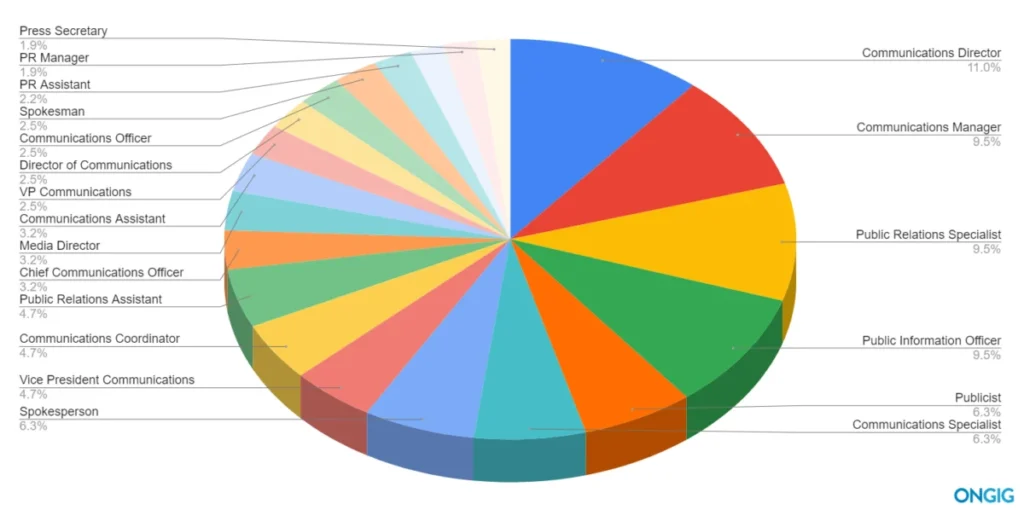
The communications and public relations landscape is undergoing a significant transformation, necessitating a reevaluation of job titles to effectively attract top talent and define organizational roles. A recent analysis by Ongig highlights the critical need for clarity and optimization in communications job titles, driven by a robust job market and evolving industry demands. This comprehensive mini-report, part of Ongig’s definitive guide on job titles, delves into which communications and PR roles garner the most attention from both prospective candidates searching on Google and employers seeking precise job descriptions. The findings underscore a dynamic field poised for sustained growth, with the Bureau of Labor Statistics (BLS) projecting approximately 27,600 openings annually through 2034 for public relations specialists alone, indicating a 5% growth from 2024 to 2034, outpacing the average for all occupations.
The Strategic Importance of Job Title Optimization
In an increasingly competitive talent market, the precision of a job title extends beyond mere nomenclature; it is a strategic tool that directly impacts recruitment efficiency, candidate engagement, and internal organizational clarity. Ongig’s research methodology involved an in-depth analysis of search queries by candidates and requests for job descriptions by employers, providing a dual perspective on market demand and perception. This data-driven approach aims to bridge the gap between what job seekers are looking for and what organizations are offering, ensuring that roles are accurately represented and discoverable.
The communications sector, encompassing a broad spectrum of functions from media relations and corporate affairs to internal messaging and crisis management, has become an indispensable component of organizational success. As companies navigate complex stakeholder environments, brand reputation management, and rapid digital shifts, the demand for skilled communicators continues to intensify. This growing importance is reflected in the BLS projections, which not only confirm a healthy job market but also point towards a diversification of communication roles across various industries.
Disentangling Communications, Public Relations, and Marketing
A perennial challenge within the industry involves distinguishing between "Communications," "Public Relations" (PR), and "Marketing" job titles. While often interwoven, particularly in smaller organizations, these functions possess distinct focuses that become more pronounced in larger enterprises. Public Relations traditionally concentrates on external audiences, managing the public image and media relations of an entity. Communications, however, typically encompasses a broader remit, spanning both external and internal messaging, ensuring consistent information flow and narrative control across all stakeholders.
For instance, large corporations often delineate these roles with titles such as "PR Director" or "External Communications Director" alongside an "Internal Communications Director," acknowledging the specialized expertise required for each domain. Small to medium-sized businesses (SMBs), conversely, might integrate internal communications tasks within leadership roles or streamline them under a singular "PR" umbrella, reflecting resource constraints and simpler organizational structures.
The relationship between Communications/PR and Marketing is similarly complex. While many organizations house these functions under a combined department, a clear separation often emerges at the C-level in large public-facing companies. The presence of both a Chief Communications Officer (CCO) and a Chief Marketing Officer (CMO) signifies distinct strategic leadership roles. The CCO typically oversees corporate reputation, stakeholder engagement, and overall narrative, while the CMO focuses on market strategy, product promotion, and sales enablement. Clipbook’s 2026 enterprise playbook for CCOs highlights a significant trend: a shift towards broader mandates for communications leaders, with CCO roles increasingly encompassing analytics, operations, and even AI transformation efforts. This evolution signals a greater strategic influence for communications within the corporate hierarchy, positioning CCOs as critical business leaders rather than purely functional specialists.
A Structured Approach: The Communications Job Title Hierarchy
Understanding the typical hierarchy within a communications department is crucial for both career progression and effective talent acquisition. While organizational structures can vary, a common framework includes six major levels: Leaders (C-suite), Vice Presidents, Directors, Managers, Individual Contributors, and Entry-Level positions.
Communications Job Titles for Leaders: At the apex, the head of Communications often reports directly to the CEO, underscoring the strategic importance of the function. The Chief Communications Officer (CCO) is the most prominent title, responsible for shaping the company’s brand, reputation, and overarching communication strategies. As Clipbook noted for 2026, effective CCOs are now expected to operate as strategic leaders, aligning multiple functions and demonstrating business acumen beyond traditional communications expertise. Other leadership titles include Chief Corporate Affairs Officer, Chief Public Affairs Officer, and Chief Brand Officer, reflecting the expanding scope of responsibilities.
Vice President-Level Communications Titles: These roles typically involve overseeing specific communication domains or large teams. Examples include Vice President of Corporate Communications, Vice President of Public Relations, Vice President of Internal Communications, and Vice President of Global Communications. These leaders are instrumental in translating the CCO’s vision into actionable strategies and managing significant departmental functions.
Director of Communications Job Titles: Directors manage specific programs, regional operations, or specialized areas within the communications framework. Titles such as Director of Media Relations, Director of Digital Communications, Director of Stakeholder Engagement, and Director of Crisis Communications are common. They are responsible for implementing strategies, managing teams, and ensuring operational excellence within their purview.
Managers of Communications Job Titles: Managers are the tactical executors, leading smaller teams or specific projects. Their roles are crucial for day-to-day operations and direct supervision. Common titles include Communications Manager, Public Relations Manager, Social Media Manager, and Content Communications Manager. They often coordinate campaigns, manage content creation, and liaise with various internal and external parties.
Individual Contributor PR or Communications Job Titles: These roles involve hands-on execution of communication tasks without direct supervisory responsibilities. They are vital for content creation, media outreach, event support, and channel management. Examples include Communications Specialist, Public Relations Specialist, Content Specialist, Media Relations Specialist, and Digital Communications Specialist.
Entry-Level Communications Job Titles: These positions serve as foundational stepping stones for aspiring professionals. They offer opportunities to learn the ropes, gain practical experience, and contribute to various communication initiatives. Titles such as Communications Assistant, PR Assistant, Public Relations Trainee, and Public Information Assistant are common, often requiring a bachelor’s degree in public relations, communications, journalism, or a related field.
Top Job Titles: A Tale of Two Perspectives
Ongig’s research revealed interesting dynamics between what candidates search for and what employers actively recruit for. While the article notes a "Top 20 PR and Communications Job Titles (Candidates)" chart, the provided detail focuses more heavily on the "Top 20 PR Job Titles and Descriptions/Communications Jobs Descriptions (Employers)." This disparity underscores the importance of employers aligning their job titles with candidate search behavior to maximize visibility and attraction.
Among the titles most frequently requested by employers for job descriptions, several stand out for their widespread applicability and strategic importance:
- Communications Coordinator: This entry-level to mid-level role is crucial for executing communication plans, drafting press releases, coordinating with journalists, and managing informational materials. It serves as a vital support function within any communications team.
- Communications Manager: A central role, the Communications Manager orchestrates internal and external communication strategies to promote brand image. They supervise content development, execute engagement initiatives, manage communication channels, and play a critical role in crisis communication.
- Public Information Officer (PIO): Predominantly found in government agencies and public sector organizations, PIOs act as conduits of information between their entity and the public. They craft press releases, manage media inquiries, and lead awareness campaigns, especially vital during emergencies.
- Chief Communications Officer (CCO): As the strategic head, the CCO directs all internal and external communications, shaping the company’s brand and reputation. They lead teams, develop campaigns, manage media relations, and oversee internal announcements, increasingly acting as a strategic business partner to the CEO.
- Public Relations Specialist: These professionals are the backbone of media relations, responsible for creating media releases, developing social media plans, and maintaining an organization’s public image. They respond to media requests, arrange interviews, and draft speeches.
- Marketing Communications Manager (MarCom Manager): This role bridges marketing and communications, leading market research, developing pricing strategies, and ensuring consistent messaging across all marketing and communication collateral.
The detailed descriptions provided for these and other roles by Ongig highlight the multifaceted responsibilities that communications professionals shoulder, from strategic planning and content creation to crisis management and stakeholder engagement.
The Impact of Remote and Hybrid Work Models
The COVID-19 pandemic irrevocably altered work paradigms, and the communications sector has been particularly receptive to remote and hybrid models. According to the FlexJobs Remote Work Economy Index, marketing and communications remote roles expanded by 30% or more in Q1 2026, even amidst a broader push for return-to-office mandates in other functions. This sustained flexibility in communications offers both opportunities and challenges for employers and job seekers.
For employers, the prevalence of remote and hybrid arrangements means access to a broader, more diverse talent pool, unrestricted by geographical limitations. However, it also necessitates greater clarity in job titles and descriptions. A generic title like "Communications Specialist" can be interpreted vastly differently in a remote context compared to a traditional office setting, especially concerning the scope of responsibilities, team interaction, and geographical reach (e.g., managing executive communications across a distributed team versus supporting a local PR agency). Employers must be explicit about the nature of remote work, expected collaboration tools, and reporting structures to attract candidates whose expectations align with the role’s demands.
For job seekers, this flexibility opens doors to opportunities that might have been geographically inaccessible before. However, it also demands a clear understanding of the nuances of remote work, including self-discipline, effective virtual collaboration, and the ability to manage communication across different time zones.
Job Market Outlook and Future Implications
The demand for communications and PR professionals remains robust and is projected to continue growing. The BLS projection of 5% growth for PR specialists from 2024 to 2034 is faster than the average for all occupations, signifying a healthy and expanding sector. This growth is largely driven by the increasing complexity of reputation management in the digital age, the proliferation of social media channels, and the ongoing need for organizations to communicate effectively with a diverse array of stakeholders.
A notable trend highlighted by Mediabistro is the "fragmentation" of PR hiring. Communications roles are increasingly being integrated into industries not traditionally associated with dedicated communications functions, such as healthcare systems, fintech companies, government agencies, and nonprofits. This means that the talent pool for communications professionals is broader than traditional perceptions might suggest. A candidate for an open communications role might currently hold a title like "Earned Media Strategist" or "Corporate Affairs Associate," rather than the more conventional "Public Relations Specialist." This implies that employers need to adopt a flexible mindset when reviewing candidate backgrounds, focusing on transferable skills and competencies rather than rigid adherence to specific past job titles.
The future of communications roles will likely see further integration of data analytics, artificial intelligence, and sophisticated digital tools. Communications professionals will increasingly be expected to not only craft compelling narratives but also to analyze engagement metrics, leverage AI for content optimization, and advise leadership on data-driven communication strategies. This evolution reinforces the CCO’s shift towards a broader, more strategic leadership role encompassing technological and analytical oversight.
Conclusion
The landscape of communications and public relations job titles is dynamic, reflecting the evolving demands of the modern corporate environment. Ongig’s research provides invaluable insights for both employers striving to attract the best talent and job seekers navigating their career paths. By understanding the distinctions between communications, PR, and marketing, recognizing the established hierarchy, and adapting to the profound impact of remote work, organizations can optimize their recruitment strategies. Similarly, professionals can better position themselves for success by understanding market demand and the expanding scope of roles. As the industry continues its robust growth and strategic evolution, clarity and precision in job titles will remain paramount for fostering effective communication and organizational triumph.






