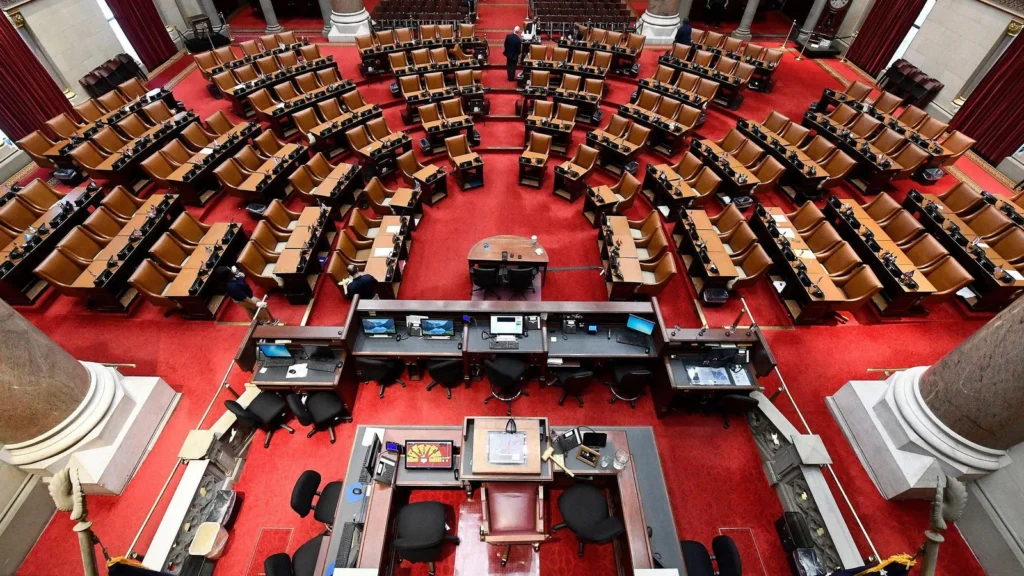
Albany, N.Y. – In a significant move aimed at restoring integrity and transparency to the job market, the New York State Assembly has passed S8877, a bill designed to crack down on "ghost jobs" and impose stringent requirements on employers and third-party recruitment platforms. The legislation, published on June 11, 2026, mandates that all job postings must include a clear timeframe for when, or if, a position is expected to be filled, with severe financial penalties for non-compliance. Authored by Laurel Kalser, this initiative reflects a growing national push to address deceptive hiring practices that have long frustrated job seekers and distorted labor market data.
The Pervasive Problem of "Ghost Jobs"
The phenomenon of "ghost jobs" refers to job postings that do not genuinely lead to an actual hire, often remaining active for extended periods without an intention to fill the role. This practice has become increasingly prevalent, contributing to widespread frustration among job seekers who invest considerable time and effort applying for positions that, ultimately, lead nowhere. According to an alarming report from MyPerfectResume, nearly one in three U.S. job listings fail to result in an actual hire, effectively creating a "ghost job economy" that exacts a heavy toll on applicants and skews perceptions of the labor market’s true health.
Several factors contribute to the proliferation of ghost jobs, as highlighted in an April 2025 report by the Congressional Research Services (CRS), a nonpartisan arm of the Library of Congress. Companies may post these phantom roles for various strategic, albeit often misleading, reasons. One common motivation is to evaluate a potential pool of candidates, gauging the availability and quality of talent in the market without an immediate hiring need. This allows organizations to build a talent pipeline for future openings or simply to benchmark salary expectations and skill sets.
Another reason cited by the CRS report is to signal to existing employees that their roles are not indispensable, subtly encouraging productivity or deterring demands for higher compensation. Some companies also use ghost jobs to project an image of growth and expansion, which can be particularly attractive to potential investors or stakeholders, even if the internal capacity for such growth isn’t yet in place. Furthermore, the report notes that ghost jobs can arise inadvertently from the automated practices of third-party online job boards, which may copy postings from other websites and keep them active long after the original position has been filled or removed. This technical propagation exacerbates the problem, creating a labyrinth of outdated and misleading listings.
The ramifications of ghost jobs extend far beyond individual applicant frustration. The problem distorts official labor market data, upon which policymakers, economists, and businesses rely for crucial decision-making. If a significant percentage of "job openings" are not genuine, then traditional metrics like the Job Openings and Labor Turnover Survey (JOLTS) may present an overly optimistic or simply inaccurate picture of economic activity and labor demand. This can lead to misinformed policy interventions, flawed economic forecasts, and an overall misallocation of resources in the job market.
For job seekers, the emotional and financial cost is substantial. Hours spent crafting tailored resumes, writing cover letters, and preparing for interviews for non-existent roles can lead to burnout, disillusionment, and a loss of confidence. This prolonged and fruitless search can also delay re-entry into the workforce, impacting personal finances and contributing to broader economic stagnation.
New York’s Comprehensive Legislative Response: S8877
New York’s S8877 directly addresses these issues with several key provisions designed to enforce transparency and accountability in the hiring process. The bill mandates that all employers, as well as third-party platforms hosting job advertisements, must include a specific timeframe indicating "if, and when, they expect the job to be filled." This requirement aims to provide applicants with crucial information, allowing them to make more informed decisions about where to direct their job search efforts.
Beyond the initial posting, S8877 also imposes strict requirements for the timely removal of job advertisements once a position has been filled. Employers are required to remove any digital post or print ad within two weeks of successfully filling the job. Similarly, third-party platforms bear a shared responsibility, having two weeks from the time they learn a job was filled to remove the corresponding posting from their sites. This dual responsibility is intended to prevent the lingering presence of outdated ads, which often contribute to the ghost job phenomenon.

To ensure compliance, the bill introduces a tiered system of significant financial penalties. An initial violation, such as failing to include the required timeframe or remove an ad within the stipulated period, will incur a fine of $2,500 for each non-compliant print ad or digital post. The financial repercussions escalate sharply if the violation is not corrected promptly. If an employer or platform fails to rectify the non-compliance within 30 days of the initial penalty, the fine increases to $5,000. Furthermore, this amount doubles for every subsequent 30-day period that the ad or post remains non-compliant, creating a powerful incentive for immediate action and sustained adherence to the law. These escalating fines underscore the seriousness with which New York lawmakers view the issue, aiming to make non-compliance economically untenable for businesses.
The passage of S8877 by the New York State Assembly marks a pivotal moment in the legislative battle against misleading recruitment practices. While the bill still requires further legislative steps, such as passage in the State Senate and the Governor’s signature, its advancement reflects a growing recognition of the need for robust regulatory frameworks in the digital age of recruitment. The legislative process involved extensive deliberation, with proponents arguing that the bill is essential for protecting job seekers and ensuring a fair and transparent labor market. Critics, while generally supporting the intent, have raised concerns about potential administrative burdens on businesses, particularly small enterprises, and the complexities of enforcing such regulations across myriad online platforms.
A National Movement Towards Transparency
New York is not alone in its efforts to combat ghost jobs. The issue has gained traction across the nation, with several other states introducing or considering similar legislation, highlighting a broader trend towards increased employer accountability in hiring.
-
Pennsylvania’s Ghost Job Postings Prevention Act (HB2321): Introduced on March 26, this bill goes even further in its requirements. It mandates that employers clarify whether a posted position is for an existing role, an anticipated opening, or an entirely new role. Furthermore, HB2321 would require the disclosure of an estimated timeframe for filling the job, intended hire and start dates, and – notably – the extent to which artificial intelligence (AI) will be utilized in the hiring process. This last provision addresses a burgeoning concern about the opaque nature of AI-driven recruitment and selection.
-
New Jersey’s S2136: Introduced in May, this bill also seeks to enhance transparency. It would require employers to explicitly state in a job posting if the advertisement is for an existing position, alongside other specific posting requirements. This aims to differentiate between immediate openings and speculative or future roles.
These state-level initiatives demonstrate a fragmented but determined legislative landscape emerging to address the problem. While each bill has its unique nuances, the common thread is a commitment to providing job seekers with clearer, more accurate information about the roles they are applying for. The increasing risk of liability is a significant factor driving employers to reconsider their recruitment strategies and to pay closer attention to these evolving legal requirements.
The Federal Push: Truth in Job Advertising and Accountability Act (TJAAA)
Beyond state borders, a grassroots movement is advocating for federal action. Truthinjobads.org is a prominent voice pushing for the introduction of its proposed legislation, the Truth in Job Advertising and Accountability Act (TJAAA), in Congress. Although the CRS report indicated no federal bills were pending as of April 2025, the advocacy group’s efforts highlight the desire for a unified national standard.
The TJAAA aims to set comprehensive federal standards for transparency and accountability in job postings. Its core objective is to prohibit fake or misleading job advertisements, thereby creating a more equitable and trustworthy environment for job seekers nationwide. Such federal legislation would provide a consistent framework, potentially reducing the patchwork of state-specific regulations and simplifying compliance for employers operating across multiple jurisdictions. Advocates argue that a federal approach is essential to address the systemic nature of ghost jobs, particularly given the interstate and often international nature of online recruitment platforms.
Implications for Employers, Job Seekers, and the Economy

The passage of bills like New York’s S8877 carries profound implications for various stakeholders.
-
For Employers: The new regulations will necessitate a significant overhaul of recruitment practices. Companies will need to develop robust internal processes to track job opening lifecycles, ensure timely removal of filled positions, and accurately project hiring timeframes. This may involve increased administrative overhead, the implementation of new HR software solutions, and potentially a more cautious approach to posting speculative or "evergreen" roles. While some employers might view these as additional burdens, proponents argue that greater transparency can also enhance a company’s reputation, improve candidate experience, and ultimately attract higher-quality applicants who trust the hiring process. The steep penalties also mean that compliance cannot be an afterthought; it must be a core component of any recruitment strategy.
-
For Job Seekers: The impact is overwhelmingly positive. A transparent job market reduces the time and emotional energy wasted on applying for non-existent positions. It fosters greater trust in job boards and employer advertisements, leading to a more efficient and less frustrating job search experience. Knowing whether a role is genuine and within a specific hiring timeframe empowers applicants to prioritize their efforts and focus on truly available opportunities. This could lead to a more equitable job market, particularly for those from disadvantaged backgrounds who may have fewer resources to dedicate to prolonged and fruitless job searches.
-
For Recruitment Platforms: Third-party job boards and aggregators face increased responsibility and potential liability. They will need to implement enhanced verification mechanisms, improve their data synchronization with employers, and actively monitor postings for compliance. This might spur innovation in platform design, leading to features that automatically flag outdated listings or prompt employers for updates. The fines stipulated in S8877 mean that platforms can no longer passively host content; they must become active participants in ensuring the veracity of job advertisements.
-
Economic Impact: A more transparent labor market can lead to improved economic efficiency. By providing more accurate data on genuine job openings, policymakers and economists can gain a clearer picture of labor demand, unemployment rates, and skill gaps. This improved data quality can inform more effective workforce development programs, educational initiatives, and macroeconomic policies. Furthermore, by reducing the friction in the job search process, these laws could help match workers to jobs more quickly, contributing to lower unemployment and increased productivity.
Challenges and Future Outlook
Despite the positive intentions, implementing and enforcing these new laws will present challenges. Defining a "time frame" for filling a job can be complex, especially in dynamic labor markets where unforeseen circumstances can delay or accelerate hiring. Distinguishing between legitimate talent pipeline building and intentionally misleading ghost jobs may also require nuanced interpretation and enforcement. The sheer volume of online job postings and the global nature of recruitment platforms will test the capacity of regulatory bodies to monitor and enforce compliance effectively.
Moreover, the increasing integration of artificial intelligence in recruitment processes, as highlighted by the Pennsylvania bill, adds another layer of complexity. Future legislation may need to address how AI tools are used to screen candidates, generate job descriptions, and manage application flows, ensuring transparency and fairness throughout the automated stages of hiring.
Ultimately, the New York Assembly’s passage of S8877 represents a significant step in an evolving legislative landscape. It is part of a broader movement to restore trust and efficiency to the job market by curbing deceptive practices. As more states consider similar measures and federal advocacy continues, the era of the unchecked "ghost job" may be drawing to a close, paving the way for a more transparent and accountable hiring ecosystem for all.