The landscape of talent acquisition is undergoing a profound transformation, driven by the relentless evolution of artificial intelligence and search engine algorithms. In an increasingly competitive global job market, companies that fail to adapt their job listings for these new realities risk missing out on top-tier candidates. The days of simply posting a job description and hoping for the best are long gone; success in 2026 hinges on strategically optimized, AI-friendly, and authentically human job postings designed to resonate with both sophisticated algorithms and discerning job seekers.
The Evolving Search Paradigm: AI and Semantic Understanding
For years, search engine optimization (SEO) in recruitment focused on keyword density and repetition. However, the advent of advanced AI-driven platforms, including Google for Jobs, job board algorithms, and a new generation of AI hiring tools, has fundamentally shifted this paradigm. These systems now employ semantic analysis, prioritizing a deep understanding of content over mere keyword matching. This means that clarity, comprehensive data, and alignment with candidate intent are paramount. Listings that are vague or poorly structured are increasingly overlooked, regardless of how many times a target keyword is mentioned. This shift underscores a critical need for recruiters and HR professionals to adopt a more sophisticated approach to job advertisement, treating each listing as a piece of digital content requiring strategic optimization.
A Brief Chronology of Digital Job Search Evolution
The journey to the current state of job search began decades ago with print classifieds, transitioning to early internet job boards in the late 1990s and early 2000s. The mid-2010s saw the rise of aggregators like Indeed and LinkedIn, consolidating job listings from across the web. A pivotal moment arrived in 2017 with the launch of Google for Jobs, a dedicated search experience that integrated directly into Google’s main search results, providing a centralized portal for job seekers. This development instantly democratized access to job listings but also necessitated structured data (JobPosting schema) for optimal visibility.
The late 2010s and early 2020s witnessed a surge in AI integration across various recruitment stages, from candidate sourcing to screening. More recently, Google’s introduction of Search Generative Experience (SGE) and AI Overviews in its search results (starting around 2023-2024) marked another significant leap. These features leverage generative AI to synthesize information and provide direct answers, often citing relevant sources. For job listings, this means content must be not only crawlable but also readily interpretable by AI to be included in these summaries, placing an even greater emphasis on precision and structured data.
Key Strategies for Maximizing Job Listing Visibility in 2026
Forward-thinking recruiters are now implementing a multi-faceted approach to ensure their job postings capture the attention of both human candidates and sophisticated AI.
1. Harnessing AI Overviews and Search Generative Experience (SGE)
Google’s AI Overviews and SGE are reshaping how information is consumed, presenting direct answers and summaries at the top of search results. For job listings, this translates into a crucial need for content that AI can easily parse and cite. Vague or ambiguous listings are effectively bypassed by these systems. Instead, job descriptions must utilize natural language, complete sentences, and specific details about the role to be effectively pulled into AI-generated summaries. The emphasis is on clarity and informational richness, mirroring how one might explain a role comprehensively to a prospective candidate.
Crucially, Schema Markup (specifically JobPosting schema) has become indispensable. This structured data provides AI systems with a clean, machine-readable signal, detailing key attributes of the job. It acts as a universal translator, ensuring that the nuances of a job are understood by diverse search platforms. Furthermore, AI systems are increasingly adept at detecting and penalizing duplicate or "thin" content, making unique, high-quality listings a competitive advantage. The practical implication is to write job listings as if directly answering the question, "What does this role truly involve?" – with thoroughness, specificity, and a human touch.
2. Implementing Robust JobPosting Schema Markup
The foundation of SEO for any job listing in 2026 is a robust JobPosting schema. Without this structured data, search engines struggle to categorize and display job posts effectively. It acts as a comprehensive map, guiding search algorithms through the intricacies of the role. The more complete and accurate the schema, the higher the likelihood of achieving enhanced visibility, often appearing in special user experiences within Google Search results, such as dedicated job carousels or filtered searches.
Essential elements to include in your JobPosting schema are:
@context: "https://schema.org"@type: "JobPosting"title: The specific job title (e.g., "Senior Content Strategist – SaaS")description: A detailed, human-readable description of the role.datePosted: The date the job was published.validThrough: The expiration date of the job posting.employmentType: (e.g., "FULL_TIME", "PART_TIME", "CONTRACT").hiringOrganization:@type: "Organization"name: Your company’s legal name.sameAs: URL of your company’s website.logo: URL to your company’s logo.
jobLocation:@type: "Place"address:@type: "PostalAddress"streetAddress: (if applicable)addressLocality: CityaddressRegion: State/ProvincepostalCode:addressCountry: Country
applicantLocationRequirements: For remote roles, specify geographic restrictions.baseSalary:@type: "MonetaryAmount"currency: (e.g., "USD")value:@type: "QuantitativeValue"minValue: Minimum salary.maxValue: Maximum salary.unitText: (e.g., "YEAR", "HOUR", "MONTH").
responsibilities: Key duties of the role.qualifications: Required skills, education, experience.educationRequirements: (e.g., Bachelor’s Degree, Master’s).experienceRequirements: (e.g., 5 years of experience).skills: Specific technical or soft skills.
To verify proper implementation, Google’s Rich Results Test remains an invaluable tool, ensuring the schema is valid and interpretable by search engines.
3. Prioritizing Clarity Over Keyword Stuffing
The outdated practice of keyword stuffing is not only ineffective but can actively harm a listing’s visibility. Modern search engines, powered by sophisticated Natural Language Processing (NLP), prioritize content that reads naturally and provides genuine value. Instead of merely repeating a job title, a compelling listing explains the role in depth.
Effective job descriptions should clearly articulate:
- What success looks like: Define key performance indicators (KPIs) or major achievements expected within the first 30, 60, or 90 days.
- Tools and technologies: List specific software, platforms, or methodologies the candidate will use.
- Project scope and impact: Describe the types of projects, their challenges, and their contribution to the company’s goals.
- Company culture: Offer insights into the work environment, team dynamics, and values.
- Career progression: Outline potential growth paths or learning opportunities.
Including helpful resources, such as links to team pages, company culture guides, or relevant industry trend reports (e.g., salary benchmarks for travel nurses), can further enrich the candidate experience and signal informational depth to AI. The guiding principle should be to write as if explaining the role to a highly qualified candidate over a coffee – specific, engaging, and comprehensive.
4. Adopting Candidate-Centric Job Titles
While creative job titles might foster internal camaraderie, they are often detrimental to search visibility. "Growth Wizard" or "Sales Rockstar" rarely align with what job seekers type into search engines. The focus must be on clarity and user intent.
A highly effective formula is: Role + Level + Focus (or Key Attribute).
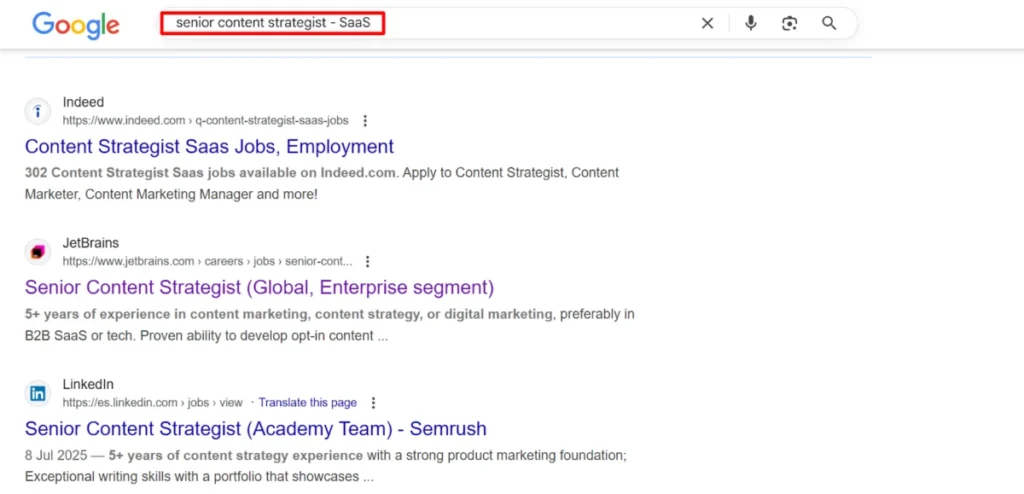
- Example: "Senior Content Strategist – SaaS" (Role: Content Strategist, Level: Senior, Focus: SaaS industry).
- Example: "Entry-Level IT Support (Remote)" (Role: IT Support, Level: Entry-Level, Key Attribute: Remote).
These titles should be consistently used in the page title, JobPosting schema, and the initial heading of the job description. Personality and company branding can then be infused within the body of the description. Data from platforms like Google Keyword Planner or job board analytics can provide invaluable insights into actual search queries used by candidates.
5. Embracing Salary Range Transparency
The inclusion of a salary range in job postings is no longer merely a best practice; it is increasingly a competitive necessity and, in many regions, a legal requirement. Platforms like Google and LinkedIn actively grant higher visibility to listings that include salary details. Research from Glassdoor consistently shows that candidates exhibit greater trust in employers who are transparent about compensation, leading to higher application rates and improved candidate retention throughout the hiring and onboarding processes.
Practical recommendations for salary disclosure include:
- Clear Range: State a specific salary range (e.g., "$70,000 – $90,000 per year").
- Currency: Always specify the currency (e.g., USD, EUR, GBP).
- Frequency: Indicate whether it’s annual, hourly, or per project.
- Contextual Details: Mention if benefits are included or separate, and any performance-based bonuses.
For project-based or contract roles, a per-word, per-project, or hourly rate range should be provided. The growing trend of pay transparency laws in jurisdictions like New York City, Colorado, California, and various European Union member states further solidifies the need for proactive disclosure.
6. Maintaining Listing Freshness
Search engines perceive recently updated content as more relevant. Stale job postings, left untouched for weeks, can signal inactivity and reduce visibility. Even minor updates can effectively refresh a listing’s "last modified" timestamp, indicating to algorithms that the content remains active and pertinent.
Simple update tactics include:
- Revising a bullet point: Tweak responsibilities or qualifications slightly.
- Adding a new sentence: Include an update on team growth or project milestones.
- Updating the application deadline: Extend the application window if needed.
- Refreshing internal links: Ensure all linked resources are current.
This doesn’t necessitate a complete rewrite, but rather a periodic review and subtle adjustment to maintain algorithmic favor.
7. Precise Location and Remote Status Declaration
Ambiguity regarding a role’s location or remote status can confuse both candidates and search algorithms. It is vital that the job title, JobPosting schema, and description consistently articulate where the role can be performed. This precision ensures the listing appears in location-filtered searches and manages candidate expectations.
Clarity can be achieved by:
- Full Remote: Clearly state "Remote (Global)" or "Remote (Specific Regions)" if the role can be performed anywhere or within certain geographical bounds.
- Hybrid: Specify "Hybrid (3 days in office, 2 days remote)" or "Hybrid (Flexible)" with details on office location.
- On-Site: Clearly indicate "On-Site (City, State)" for roles requiring physical presence.
- Relocation Assistance: Mention if relocation support is offered for on-site roles.
It is particularly important to differentiate between genuinely 100% remote roles and those with geographical restrictions or hybrid requirements, as the term "remote" can be misleading if not accurately qualified.
8. Avoiding Duplicate Content Penalties
Posting identical job descriptions across numerous job boards or even duplicating them on an employer’s own career site can lead to penalties. Search engines typically ignore duplicate content, or, if indexed, they will select only one version to display, effectively suppressing other identical listings.
Instead, employers should:
- Canonicalization: For content appearing on multiple pages within a single domain (e.g., a job board and the company careers page), use canonical tags to specify the preferred version.
- Tailored Descriptions: Craft slightly unique versions of job descriptions for different platforms, emphasizing aspects most relevant to that platform’s audience.
- Primary Source: Designate one platform or the company’s career page as the primary source, linking other listings back to it.
- Structured Syndication: Utilize Applicant Tracking Systems (ATS) that offer structured syndication to major job boards, often with built-in mechanisms to manage content uniqueness.
While requiring a bit more effort, this approach significantly enhances overall visibility and ensures each listing is treated as distinct and valuable by search algorithms.
9. Ensuring Mobile Responsiveness
With a significant majority of job candidates (estimated at over 70% by some studies) initiating and completing job searches from their mobile devices, mobile optimization is non-negotiable. A slow-loading or cluttered mobile experience can lead to high bounce rates, losing potential candidates before they even reach the application stage.
To optimize for mobile:
- Fast Loading: Compress images, minify CSS/JavaScript, and leverage browser caching to ensure rapid page load times. Google’s Core Web Vitals (Largest Contentful Paint, First Input Delay, Cumulative Layout Shift) are critical metrics here.
- Responsive Design: Implement a design that adapts seamlessly to various screen sizes.
- Readability: Use clear fonts, adequate line spacing, and concise paragraphs.
- Clickable Elements: Ensure buttons and links are large enough and spaced appropriately for touch interaction.
- Simplified Forms: Streamline application forms for mobile users, perhaps by enabling auto-fill or resume uploads from cloud storage.
Tools like Google’s PageSpeed Insights can diagnose and recommend improvements for mobile performance, directly impacting SEO and user experience.
10. Implementing Robust Analytics and Tracking
The work doesn’t end once a job post goes live. Continuous monitoring and analysis are crucial for iterative improvement. Leveraging analytics tools, particularly Google Analytics, allows recruiters to understand how candidates discover and interact with job listings before they apply. This pre-application data is distinct from ATS metrics, which typically track post-application activities.
Key metrics to track include:
- Traffic Sources: Identify where candidates are coming from (e.g., Google for Jobs, direct search, social media, referrals).
- Page Views & Unique Page Views: Gauge interest in specific roles.
- Time on Page: Indicates engagement level with the job description.
- Bounce Rate: High bounce rates suggest poor relevance or user experience.
- Conversion Rate: Track how many visitors proceed to the application page.
- Search Queries: Understand the exact terms candidates use to find your listings.
This data-driven approach enables recruiters to identify underperforming listings, pinpoint areas for improvement, and refine their overall talent acquisition strategy, ultimately strengthening the employer brand.
11. Strengthening Internal Linking Structures
A frequently overlooked but powerful SEO tactic is the optimization of internal links within a company’s career site. A robust internal linking structure helps search engines efficiently crawl and index job pages, distributing "link equity" across the site. It also enhances the user experience by guiding candidates to related roles, company information, and other relevant content, encouraging deeper exploration.
Effective internal linking strategies include:
- Related Jobs: Suggest similar or complementary roles on each job posting page.
- Department Pages: Link to specific department or team pages from relevant job descriptions.
- Company Culture Hub: Direct candidates to content showcasing company values, benefits, and employee testimonials.
- Career Paths: Create internal links that illustrate potential career progression within the organization.
These strategic links not only boost SEO but also provide a more holistic view of the company, enriching the candidate’s understanding and engagement.
12. Going the Extra Mile: Enhancing the Candidate Journey
Beyond technical SEO, several additional steps can significantly elevate the candidate experience and improve overall listing performance.
- Streamlined Application Process: Minimize friction by eliminating unnecessary steps like lengthy psychometric tests or redundant screening questions. A short, intuitive application process is vital, especially for mobile users. Multiple interview rounds and excessive testing can lead to high abandonment rates.
- Strategic Promotion: Actively promote job postings across social media channels (LinkedIn, Twitter, Facebook), in email newsletters, and on niche job boards relevant to the role.
- Voice Search Optimization: Incorporate natural-sounding phrases that mimic how a candidate might ask a voice assistant for job opportunities (e.g., "We’re hiring a remote backend developer," "Find me a marketing manager job in London").
- Display Company Ratings: Utilize schema markup to display aggregate ratings from platforms like Glassdoor or Indeed directly in search results, leveraging social proof to attract candidates.
Scaling Optimization with Specialized Tools
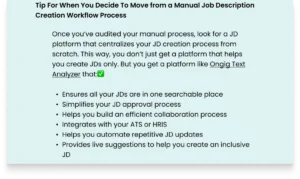
The comprehensive optimization of every single job listing can be a time-intensive endeavor, particularly for large organizations. This is where specialized platforms like Ongig become invaluable. Ongig is designed to help talent acquisition teams create search-optimized, inclusive, and on-brand job descriptions at scale, circumventing the need for manual rewrites for each post.
With Ongig, organizations can:
- Automate Schema Markup: Ensure every listing automatically includes correct and comprehensive
JobPostingschema. - Promote Inclusive Language: Utilize AI to identify and replace biased language, broadening candidate pools and enhancing diversity.
- Maintain Brand Consistency: Enforce consistent branding, tone, and messaging across all job descriptions.
- Integrate with ATS: Seamlessly connect with existing Applicant Tracking Systems for efficient workflow.
- Provide Content Analytics: Offer insights into job description performance, highlighting areas for improvement.
- Centralized Content Management: Manage and update job description templates and content from a single source, ensuring consistency and ease of updates.
By leveraging such tools, companies can standardize their optimization efforts, save significant time, and consistently boost visibility across all their open roles, transforming their job postings into powerful employer branding assets.
Conclusion: The Future of Talent Acquisition is Integrated and Intelligent
The landscape of talent acquisition in 2026 demands an integrated and intelligent approach. The era of passive job posting is over, replaced by a need for strategic, data-driven optimization that caters to both sophisticated AI algorithms and discerning human candidates.
A quick recap of the essential practices for maximizing job posting visibility:
- Optimize for Google’s AI Overviews and SGE with clear, structured content.
- Implement comprehensive
JobPostingschema markup. - Prioritize clarity and detailed explanations over keyword stuffing.
- Use candidate-centric job titles that reflect actual search intent.
- Always include a transparent salary range.
- Keep job listings fresh with regular, minor updates.
- Be precise about location and remote status.
- Avoid duplicate content by creating unique listings or using canonicalization.
- Ensure mobile responsiveness for a seamless candidate experience.
- Track performance using analytics tools to refine strategies.
- Strengthen internal linking to improve crawlability and user flow.
- Go the extra mile with streamlined applications, promotion, voice search, and ratings.
By meticulously following these best practices, organizations can ensure their job posts not only reach but also resonate with the ideal candidates, effectively securing the talent necessary for future growth and innovation. The investment in optimized job descriptions is no longer a luxury but a fundamental component of a successful talent acquisition strategy.