
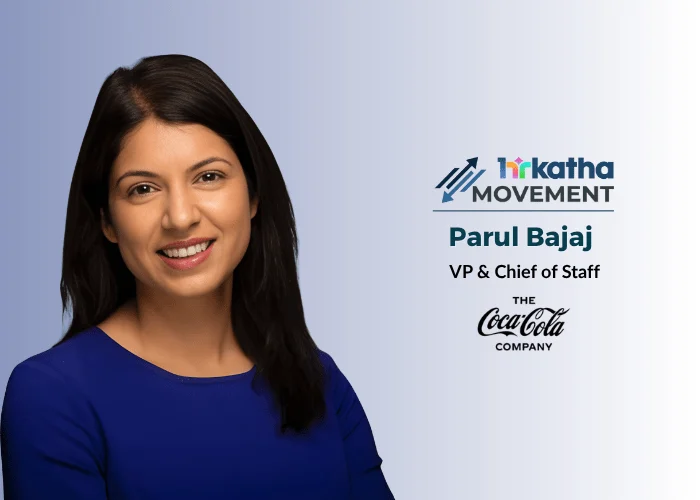
The Coca-Cola Company has announced the appointment of Parul Bajaj as Vice President and Chief of Staff, a pivotal role designed to strategically advise the Executive Vice President and Global Chief Communications, Sustainability, and Strategic Partnerships Officer. This move underscores the beverage giant’s intensified commitment to integrating its global communications, sustainability initiatives, and strategic partnerships under cohesive leadership, leveraging Bajaj’s extensive and varied experience across multiple industries and geographies. Her transition from Nissan Motor Corporation marks a significant career milestone, bringing a wealth of expertise in corporate communications, human resources, and sustainability leadership to one of the world’s most recognizable brands.
The Strategic Imperative of the Role at Coca-Cola
In today’s complex global landscape, the roles of communications, sustainability, and strategic partnerships are increasingly intertwined, demanding a holistic approach from corporate leaders. For a company of The Coca-Cola Company’s scale and global reach, managing brand reputation, stakeholder engagement, environmental stewardship, and community impact is paramount. The newly defined role, which Bajaj will inhabit, serves as a critical strategic advisory function, acting as a force multiplier for the global chief officer in navigating these interconnected domains.
The Vice President and Chief of Staff position at a multinational corporation like Coca-Cola is far more than an administrative role; it is a highly strategic function. It involves supporting senior leadership in setting and executing strategic priorities, ensuring alignment across various departments, managing complex projects, facilitating high-level communications, and often acting as a key liaison for internal and external stakeholders. Given the specific remit to advise on communications, sustainability, and strategic partnerships, Bajaj will be instrumental in shaping how Coca-Cola articulates its purpose, achieves its environmental, social, and governance (ESG) goals, and fosters meaningful collaborations that drive business value and societal impact.
The Coca-Cola Company has ambitious sustainability goals, including water replenishment, packaging circularity (World Without Waste initiative aiming for 100% recyclable packaging by 2025 and collecting the equivalent of every bottle or can it sells), and climate action (reducing absolute greenhouse gas emissions across its value chain). Effective communication of these efforts, alongside building strategic partnerships with NGOs, governments, and industry peers, is crucial for maintaining consumer trust and investor confidence. Bajaj’s background, particularly her recent focus on sustainability and corporate affairs at Nissan, aligns perfectly with these strategic priorities, indicating Coca-Cola’s intent to bring seasoned leadership to the forefront of these critical areas.
A Distinguished Career Trajectory: From Logistics to Global Beverages
Parul Bajaj’s professional journey is characterized by diverse industry exposure and a consistent upward trajectory, building a robust skill set in strategic communications, human capital management, and corporate affairs. Her career commenced after earning an MBA from the University of Mississippi-School of Business Administration, providing her with a strong foundation in business strategy and management.
Early Foundations at FedEx (2007-2014): Mastering Corporate Communications
Bajaj began her professional journey in 2007 as a Senior Communications Specialist at FedEx, the global freight and package transportation giant. Her tenure at FedEx, spanning over seven years and based out of Memphis, Tennessee, was formative. In this role, she gained invaluable experience in the intricacies of corporate communications for a company operating at the forefront of global logistics. FedEx, with its vast network and millions of daily shipments, relies heavily on clear, consistent, and effective communication to manage its brand reputation, engage its diverse global workforce, and inform stakeholders about its operations, innovations, and corporate social responsibility efforts. During her time, the e-commerce boom was gaining significant momentum, placing increased demands on logistics companies and highlighting the critical role of communications in managing public perception, internal morale, and stakeholder expectations during periods of rapid growth and operational complexity. Her responsibilities would have encompassed internal communications, media relations, and supporting executive communications, laying the groundwork for her future leadership roles.
Transition to Automotive: Bridgestone Americas (2014-2016)
August 2014 marked Bajaj’s transition to the automotive sector, joining Bridgestone Americas as Senior Manager-HR Communications. Based in Nashville, Tennessee, this role provided her with a new perspective on corporate strategy, focusing on the vital link between human resources and overarching corporate communications. Bridgestone Americas, a subsidiary of the world’s largest tire and rubber company, is a significant employer with a vast manufacturing footprint and diverse workforce. In this capacity, Bajaj would have been responsible for developing and executing communication strategies related to employee engagement, benefits, corporate culture, change management, and other critical HR initiatives. Effective HR communications are essential for fostering a positive work environment, attracting and retaining talent, and ensuring that employees understand and align with the company’s mission and values. This experience broadened her understanding of internal stakeholder engagement and the strategic importance of human capital in driving business success.
Extensive Leadership at Nissan Motor Corporation (2016-2024): Global Scope and Sustainability Focus
Parul Bajaj’s most extensive corporate experience prior to Coca-Cola was with Nissan Motor Corporation, where she spent approximately eight years in a series of progressively responsible roles that spanned corporate communications, alliance management, corporate social responsibility, and ultimately, sustainability and corporate affairs.
Her association with Nissan began in 2016 as Manager, Corporate Communications. In this initial role, she contributed to shaping Nissan’s public image and internal messaging, navigating the competitive and rapidly evolving automotive industry. The industry was already grappling with shifts towards electrification, autonomous driving, and new mobility services, making strategic communications crucial for brand positioning and stakeholder trust.
Two years into this role, in 2018, she was elevated to Senior Manager, External Communications, for the Renault-Nissan-Mitsubishi Alliance. This promotion signaled her growing influence and expertise, particularly in managing complex, multi-brand communications strategies on a global scale. Based out of Paris, France, for a year and a half, she was at the heart of the Alliance’s global communications efforts. The Renault-Nissan-Mitsubishi Alliance, at its peak, represented one of the largest automotive groups in the world, requiring intricate coordination of messaging across diverse markets, cultures, and corporate identities. This period also saw significant leadership changes and strategic challenges within the Alliance, underscoring the demanding nature of managing external communications in a high-stakes, international environment. Her work would have involved protecting and enhancing the reputation of all three brands, engaging with international media, and communicating the Alliance’s strategic vision and technological advancements.
Following her international assignment, July of 2019 brought her back to the US, where she assumed the role of Executive Director, Nissan Foundation, based out of Tennessee. This marked a significant shift towards corporate social responsibility (CSR) and philanthropy. The Nissan Foundation focuses on promoting cultural diversity and educational excellence, particularly in communities where Nissan operates. As Executive Director, Bajaj would have been responsible for the strategic direction, program development, and operational oversight of the foundation, ensuring its initiatives aligned with Nissan’s broader corporate values and community engagement goals. This role provided her with deep insights into the strategic importance of CSR in building brand equity, fostering community relations, and demonstrating corporate citizenship.
Three years later, in 2022, she returned to Paris, taking on the role of Chief of Staff to the Senior VP of Corporate Affairs and Sustainability for Nissan AMIEO (Africa, Middle East, India, Europe, and Oceania). This position was a culmination of her prior experiences, blending strategic support, regional oversight, and a dedicated focus on sustainability. As Chief of Staff, she played a crucial role in coordinating strategic initiatives, facilitating communication across departments, and supporting the senior leadership in driving the corporate affairs and sustainability agenda for a vast and diverse region. The AMIEO region is critical for Nissan, representing significant growth markets and diverse regulatory environments, particularly concerning environmental standards and sustainability reporting. This role further solidified her expertise in integrating sustainability into core business operations and strategic communication frameworks.
By February of 2023 (original article states 2025, but given the current year, 2023 is a more logical interpretation for a recent move), she was once again back in the US, taking on the role of Senior Manager, Sustainability. This final role at Nissan underscored the company’s increasing emphasis on dedicated sustainability leadership and strategy. In this capacity, she would have been instrumental in developing and implementing sustainability initiatives, tracking ESG performance, and communicating progress to internal and external stakeholders. This experience directly prepared her for the integrated communications and sustainability focus of her new role at The Coca-Cola Company.
Broader Impact and Implications for The Coca-Cola Company
Parul Bajaj’s appointment to Vice President and Chief of Staff at The Coca-Cola Company is highly significant, reflecting several key trends in global corporate leadership and strategy:
- Convergence of Strategic Functions: The role explicitly links communications, sustainability, and strategic partnerships. This organizational design recognizes that these functions are no longer siloed but are deeply interdependent in shaping corporate reputation, driving business growth, and ensuring long-term value creation. Companies are increasingly seeking leaders who can bridge these traditional divides.
- Elevated Importance of Sustainability: By placing sustainability squarely within the remit of a global chief officer, and supporting it with a dedicated strategic advisor like Bajaj, Coca-Cola signals a deepening commitment to its ESG agenda. This is crucial for attracting socially conscious consumers, investors, and talent. Bajaj’s recent dedicated focus on sustainability at Nissan provides invaluable experience in this rapidly evolving field.
- Value of Cross-Industry Experience: Bajaj’s career spans logistics (FedEx), automotive components (Bridgestone), global automotive manufacturing (Nissan, Renault-Nissan-Mitsubishi Alliance), and now consumer packaged goods (Coca-Cola). This diverse background offers a unique perspective on managing corporate reputation, stakeholder engagement, and strategic challenges across different business models and regulatory environments. This cross-pollination of talent is increasingly sought after by large corporations seeking innovative solutions.
- Strategic Nature of Chief of Staff Role: The elevation of the Chief of Staff role to a Vice President level, with a clear strategic advisory function to a global chief, highlights its critical importance in complex organizations. It signifies that Coca-Cola values a highly capable individual who can serve as a thought partner, operational strategist, and integrator for its top-tier leadership in key strategic areas.
- Enhanced Global Communications Strategy: With a leader like Bajaj, who has extensive experience in managing external communications for a global alliance (Renault-Nissan-Mitsubishi) and navigating complex international corporate affairs, Coca-Cola is poised to strengthen its global communications strategies. This includes more cohesive messaging around its brand purpose, product innovations, and sustainability commitments across diverse markets.
This strategic hire positions The Coca-Cola Company to further its ambitions in responsible business practices, transparent communication, and impactful global partnerships. Bajaj’s extensive and varied background makes her exceptionally well-suited to navigate the complexities inherent in such a multifaceted and globally significant role, promising to enhance the company’s efforts in shaping its future narrative and impact. The move is a testament to the evolving demands on senior leadership in today’s corporate world, where strategic vision, adaptability, and a comprehensive understanding of interconnected global challenges are paramount.







