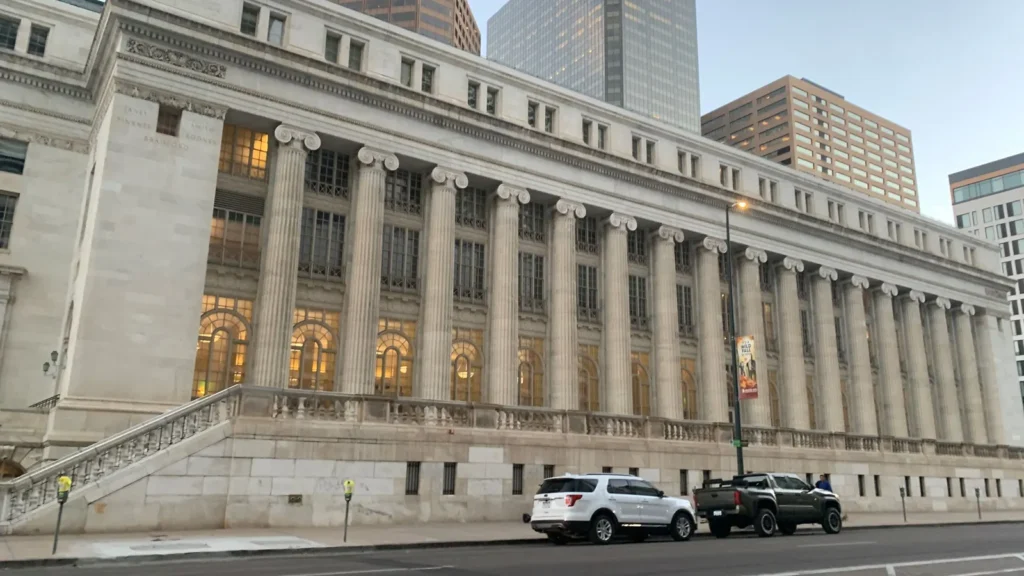
Denver, CO – In a significant ruling that further shapes the evolving legal landscape surrounding workplace Diversity, Equity, and Inclusion (DEI) initiatives, the U.S. Court of Appeals for the Tenth Circuit has affirmed a lower court’s decision to dismiss a hostile work environment claim brought by an employee who alleged that mandatory DEI training created a discriminatory atmosphere. The court found that while the plaintiff expressed offense at certain aspects of the training, he failed to demonstrate that the content or its aftermath sufficiently altered the terms, conditions, or privileges of his employment to meet the legal standard for a hostile work environment under Title VII of the Civil Rights Act of 1964.
The plaintiff, an employee of the Colorado Department of Corrections (CDOC), argued that the DEI training program, which included discussions on racial terms and guidance on workplace interactions, constituted racial discrimination. This decision comes at a time when DEI programs are increasingly under scrutiny, with a growing number of lawsuits challenging their implementation and content across various sectors.
Background of the Case and Initial Allegations
The legal challenge originated when the plaintiff filed a lawsuit alleging that the CDOC’s DEI training created a hostile work environment. His initial argument in a Colorado district court focused primarily on the content of the training itself. However, the district court ruled that the DEI training alone was not sufficient to trigger liability under federal anti-discrimination laws. Following this initial setback, the plaintiff amended his complaint, adding several new allegations aimed at strengthening his claim that the training led to an abusive work environment. These new claims broadened the scope of his argument beyond just the training materials to include their perceived institutional impact and the employer’s response to his complaints.
The original complaint detailed several elements of the DEI training that the plaintiff found objectionable. These included a glossary of racial terms, such as "white fragility" and "white exceptionalism," which he perceived as inherently biased. The training also offered meeting guidance suggesting that leaders should "let less powerful people speak first" and recommended videos that presented generalized discussions about how White individuals view race. The plaintiff contended that these elements, when combined, created an environment where he, as a member of the majority group, felt targeted and discriminated against.
The Tenth Circuit’s Scrutiny of the Plaintiff’s Claims
The Tenth Circuit meticulously reviewed both the original and newly added allegations, focusing on whether the plaintiff could establish that the training or its aftermath created an objectively hostile or abusive work environment. The court acknowledged the content of the training but ultimately found that the plaintiff could not sufficiently argue that it altered the terms, conditions, or privileges of his job, a critical requirement for a hostile work environment claim under Title VII.
Regarding the training content, the court made several key observations:
- Glossary of Terms: While the plaintiff found terms like "white fragility" and "white exceptionalism" offensive, the court found no evidence that the glossary affected his job responsibilities or created a tangible detriment to his employment.
- Meeting Guidance: The guidance to "let less powerful people speak first" was not shown to have led to an abusive workplace or to have negatively impacted the plaintiff’s ability to perform his job or interact with colleagues. The court sought a direct link between the guidance and an altered work condition, which was not established.
- Recommended Videos: Similarly, the court noted that even if the plaintiff found the videos offensive, he did not explain how their content affected his job responsibilities, interactions with fellow employees, or career advancement. The mere presence of potentially offensive material, without a demonstrated impact on employment conditions, was deemed insufficient.
The court emphasized that a hostile work environment claim requires more than just subjective offense. It demands an environment that a reasonable person would find hostile or abusive, and one that the victim subjectively perceives as abusive. Crucially, the conduct must be sufficiently severe or pervasive to alter the conditions of the victim’s employment and create an abusive working environment. The Tenth Circuit concluded that the plaintiff’s allegations, while expressing personal discomfort, did not meet this high bar.
Analysis of New Allegations and Employer Responsibilities
The Tenth Circuit was similarly unconvinced by the plaintiff’s new allegations, which sought to demonstrate a more systemic impact of the DEI training:
- Commitment to Ideology: The worker alleged that the corrections department was rigidly committed to the training’s ideology. However, the court pointed out that the training materials themselves indicated that content might change and "be modified on an ongoing basis," suggesting a degree of flexibility rather than immutable dogma. Furthermore, the training explicitly included "admonitions" that employees were not required to change their personal values or beliefs and were encouraged to discuss the program’s content, thereby undermining the claim of forced ideological endorsement.
- Reliance on Training for Disciplinary Decisions: The plaintiff claimed that supervisors relied on the training for disciplinary decisions. Yet, he could only cite one instance where a supervisor allegedly reversed a disciplinary action against a worker of a different race after that worker complained about racism. The court found this example lacking in crucial details; the plaintiff did not specify whether the accusation of racism was warranted, whether the incident occurred before or after the training, or, most critically, how this single instance affected his own work conditions or created a hostile environment for him.
- Failure to Investigate Complaints: Finally, the officer alleged that the Colorado Department of Corrections failed to investigate his complaints. While an employer can incur liability for failing to investigate an actionable hostile environment, the court reiterated that such a failure, in cases where no actionable hostile environment exists, "may merely ‘preserve… the very circumstances that were the subject of the complaint’," leaving "’an employee no worse off than before the complaint was filed’." In essence, if the initial conditions did not constitute a hostile environment, a failure to investigate them also would not create one.
Legal Framework: Title VII and Hostile Work Environment Claims
This case underscores the stringent legal standards for proving a hostile work environment under Title VII of the Civil Rights Act of 1964. Title VII prohibits employment discrimination based on race, color, religion, sex, and national origin. A hostile work environment claim arises when an employee is subjected to unwelcome conduct based on one of these protected characteristics, and the conduct is sufficiently severe or pervasive to alter the conditions of the victim’s employment and create an abusive working environment.
The U.S. Supreme Court, in cases like Harris v. Forklift Systems, Inc. (1993), clarified that the environment must be both objectively and subjectively offensive. This means a reasonable person would find it hostile or abusive, and the victim must also perceive it as such. Factors considered include the frequency of the discriminatory conduct; its severity; whether it is physically threatening or humiliating, or a mere offensive utterance; and whether it unreasonably interferes with an employee’s work performance. Importantly, Title VII is not a general civility code, and simple teasing, offhand comments, or isolated incidents (unless extremely serious) will not amount to discriminatory changes in the terms and conditions of employment. The Tenth Circuit’s decision in this case hinges on the plaintiff’s inability to demonstrate that the DEI training met this high bar of severity and pervasiveness.
The Broader Context: The Rise of DEI and Legal Challenges
The last decade has seen an unprecedented expansion of DEI initiatives across corporate, governmental, and educational institutions. Fuelled by a growing awareness of systemic inequalities and social justice movements, particularly following events in 2020, organizations have invested heavily in training, workshops, and policy changes designed to foster more inclusive workplaces. Reports indicate that the global DEI market is projected to grow significantly, with many companies spending substantial resources on these programs. The stated goals of DEI are often to enhance employee engagement, improve innovation, reduce bias, and create equitable opportunities for all.
However, this rapid proliferation has also led to increased scrutiny and, as seen in this case, legal challenges. Critics argue that some DEI training programs can be divisive, promote reverse discrimination, or impose ideological viewpoints that can alienate employees, particularly those from majority groups. This has sparked a legal and cultural debate about the balance between promoting diversity and preventing new forms of discrimination. Federal and state courts are now frequently tasked with interpreting Title VII in the context of these modern workplace initiatives.
Contrasting Precedents: The Second Circuit’s Stance
The Tenth Circuit’s ruling stands in contrast to decisions from other circuits, highlighting the nascent and evolving nature of this area of employment law. A notable example is a case involving a New York City educator who sued the city’s Department of Education (DOE) for mandating a DEI training that she alleged resulted in consistent, targeted harassment. In that case, a district court initially granted summary judgment to the employer. However, the Second Circuit Court of Appeals reversed this decision, finding that a reasonable jury could determine she experienced racial discrimination, a hostile work environment, and constructive discharge.
The Second Circuit’s reasoning in the NYC educator case, Vought v. Hudson, hinged on the argument that the training in question was not merely educational but potentially prescriptive and led to direct, adverse actions. The plaintiff in that case provided evidence of specific instances of harassment and professional detriment following the training, including being singled out, ridiculed, and ultimately feeling compelled to leave her position. This distinction is crucial: while the Tenth Circuit found the Colorado plaintiff’s claims lacked specific instances of direct impact on his job, the Second Circuit found such evidence compelling enough to allow a jury to decide. The NYC case eventually settled out of court in December, preventing a full trial and further appellate review of the precise factual distinctions that led to the Second Circuit’s ruling. This difference in outcomes between circuits underscores the complexity of these claims and the fact-specific nature of hostile work environment litigation.
Reactions and Future Steps
William Trachman, an attorney representing the plaintiff in the Tenth Circuit case, expressed disappointment with the court’s decision. "We are disappointed by the Court’s decision, and continue to believe that [the plaintiff] suffered a hostile work environment when the Colorado Department of Corrections’ official training asserted that he was a white supremacist, and needed to treat prisoners and his colleagues differently based on race," Trachman told HR Dive. He indicated that his legal team is evaluating the possibility of filing a petition for review with the U.S. Supreme Court. Such a move, if pursued and granted, could potentially lead to a landmark decision clarifying the legal boundaries of DEI training under Title VII nationwide.
The Colorado Department of Corrections has not publicly commented on the ruling, but their successful defense implies a commitment to their DEI initiatives while maintaining that their programs do not create a hostile work environment. Legal experts anticipate that this ruling will be closely watched by employers and HR professionals.
Implications for Employers and Employees
The Tenth Circuit’s decision offers critical insights for organizations designing and implementing DEI programs:
- Documentation is Key: Employers must carefully document the objectives, content, and guidelines of their DEI training. Explicitly stating that participation does not require individuals to change personal beliefs, and encouraging open discussion, can mitigate claims of forced ideological endorsement.
- Focus on Behavior, Not Identity: Training should focus on fostering inclusive behaviors, understanding unconscious bias, and promoting equitable practices rather than making generalizations about racial groups or assigning collective guilt.
- Clear Complaint Mechanisms: Robust and accessible internal complaint mechanisms for addressing concerns related to DEI training are essential. While a failure to investigate an unactionable claim won’t create liability, demonstrating a commitment to addressing legitimate concerns is crucial for a healthy workplace.
- Impact on Job Conditions: The ruling reinforces that for a hostile work environment claim to succeed, the alleged conduct must demonstrably alter the terms or conditions of employment. Mere offense or discomfort, without a tangible impact on job responsibilities, opportunities, or interactions that rise to the level of severity or pervasiveness, may not be sufficient.
For employees, the decision highlights the importance of articulating how DEI training directly and adversely affects their specific job responsibilities, career progression, or creates an objectively abusive work environment, rather than focusing solely on subjective offense.
The Evolving Legal Landscape
The varied outcomes in federal appellate courts, such as the Tenth and Second Circuits, underscore that the legal standards for challenging DEI initiatives are still being defined. These cases are shaping how Title VII is applied to modern workplace diversity efforts, forcing courts to grapple with the intent behind DEI programs versus their perceived impact on individual employees. As more majority-group plaintiffs bring allegations of Title VII violations related to DEI, further litigation and potentially Supreme Court intervention may be necessary to provide clearer guidance for employers and employees nationwide. The balance between fostering an inclusive environment and ensuring compliance with anti-discrimination laws remains a complex and evolving challenge in contemporary employment law.