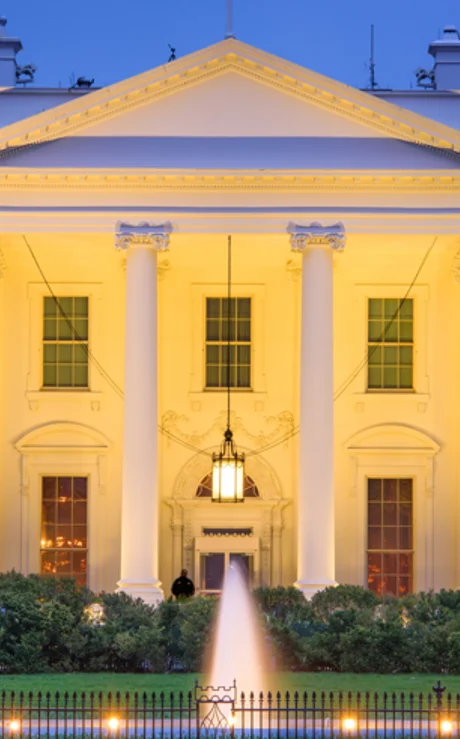
On April 23, 2025, the White House issued a sweeping Executive Order entitled “Restoring Equality of Opportunity and Meritocracy,” signaling a fundamental shift in how the United States government interprets and enforces civil rights laws. The Order establishes a new federal mandate to eliminate the use of disparate-impact liability in all contexts to the maximum extent permitted by law. This directive targets a decades-old legal theory that allows for the prosecution of policies that appear neutral but have a disproportionately adverse effect on protected groups, such as racial minorities or women. By directing federal agencies to deprioritize enforcement and litigation based on this theory, the administration aims to pivot the national focus toward "colorblind" meritocracy, while simultaneously creating a complex new legal landscape for employers, technology developers, and state regulators.
The Core Mandate: A Departure from 50 Years of Jurisprudence
The Executive Order declares that it is the official policy of the United States to cease the application of disparate-impact theory, which the administration characterizes as a violation of the Constitution’s guarantee of equal treatment. The order asserts that the theory "imperils the effectiveness of civil rights laws by mandating, rather than proscribing, discrimination" to achieve predetermined racial or demographic outcomes.
For more than half a century, disparate-impact liability has been a cornerstone of American civil rights enforcement. Unlike "disparate treatment," which requires proof of intentional discrimination, "disparate impact" focuses on the consequences of employment practices. The theory was first validated by the U.S. Supreme Court in the landmark 1971 case Griggs v. Duke Power Co., where the Court ruled that Title VII of the Civil Rights Act of 1964 prohibits not only overt discrimination but also practices that are "fair in form, but discriminatory in operation." This was later codified by Congress in the Civil Rights Act of 1991, specifically under Section 703(k).
The April 23 Order explicitly challenges this history, directing all federal agencies—including the Equal Employment Opportunity Commission (EEOC) and the Department of Justice (DOJ)—to deprioritize any enforcement actions or litigation rooted in disparate impact. This includes a 30-day window for agency heads to identify all existing regulations, guidance, and even consent judgments that rely on the theory and propose steps for their amendment or repeal.
A Chronology of the Disparate Impact Standard
To understand the magnitude of this policy shift, one must look at the timeline of how disparate impact became integrated into the American legal fabric:
- 1964: The Civil Rights Act is passed, prohibiting discrimination based on race, color, religion, sex, or national origin.
- 1971: Griggs v. Duke Power Co. establishes that requirements like high school diplomas or intelligence tests that disproportionately exclude Black applicants and are not related to job performance are illegal.
- 1989: The Supreme Court’s decision in Wards Cove Packing Co. v. Atonio temporarily makes it harder for plaintiffs to win disparate impact cases.
- 1991: Congress passes the Civil Rights Act of 1991, which codifies the disparate impact standard into federal law, reversing the effects of Wards Cove.
- 2015: The Supreme Court confirms in Texas Department of Housing and Community Affairs v. Inclusive Communities Project, Inc. that disparate-impact claims are cognizable under the Fair Housing Act.
- 2023: The EEOC issues technical guidance warning that the use of Artificial Intelligence (AI) in hiring could lead to disparate impact liability.
- April 23, 2025: President Trump signs the "Restoring Equality of Opportunity and Meritocracy" Order, directing the federal government to abandon the theory.
Implications for Artificial Intelligence and Algorithmic Hiring
One of the most immediate impacts of the Executive Order will be felt in the burgeoning field of HR technology and Artificial Intelligence. In recent years, the EEOC had made "algorithmic fairness" a top priority, cautioning employers that using AI tools for resume screening, video interviewing, or performance metrics could inadvertently trigger disparate impact lawsuits if the software’s underlying data favored one demographic over another.
Under the new Order, the federal government will likely cease investigations into AI developers and the companies that deploy their tools based solely on statistical disparities in hiring outcomes. Section 1 of the Order argues that the "specter" of disparate-impact lawsuits has hindered businesses from making decisions based on merit and customer needs.
For tech vendors, this may reduce the immediate pressure of federal audits. However, the legal risk has not vanished. Because the Executive Order cannot unilaterally overwrite Section 703(k) of the Civil Rights Act—a statute passed by Congress—private plaintiffs still maintain the right to sue. Historically, the EEOC has used its vast resources to conduct "systemic" investigations that private law firms often find too expensive to litigate. Without the EEOC leading the charge, the burden shifts entirely to the private bar, which may or may not have the appetite for the high costs of statistical experts and data discovery required for such cases.
Federal Agency Directives and the 30-Day Review
The Order is structured to ensure rapid implementation across the federal bureaucracy. Key sections include:
- Section 4: Directs agencies to "deprioritize enforcement" of all statutes and regulations that include disparate-impact liability, specifically highlighting Title VII (employment) and Title VI (federal financial assistance).
- Section 6: Requires the Attorney General and the EEOC Chair to review all pending investigations and civil suits. This could lead to the dismissal of ongoing litigation, the withdrawal of amicus briefs in private cases, and the modification of existing consent decrees.
- Section 7: Tasks the Attorney General with evaluating whether federal authority can be used to "preempt" state laws that continue to enforce disparate impact standards.
This 30-day review period is expected to result in a massive rollback of agency guidance documents issued over the last several decades. Agencies like the Department of Housing and Urban Development (HUD) and the Consumer Financial Protection Bureau (CFPB) are also affected, meaning the shift will ripple through the housing and lending markets, where disparate impact has long been used to combat "redlining" and credit bias.
Reactions and Stakeholder Analysis
The announcement has drawn sharp reactions from across the legal and political spectrum.
Proponents of the Order argue that disparate impact forced companies to adopt "de facto quotas" to avoid litigation. Pro-business groups and conservative legal scholars have long contended that the theory incentivizes employers to lower standards or engage in race-conscious hiring to balance their statistical profiles, which they argue is a form of reverse discrimination.
Civil rights organizations, conversely, have condemned the move as a major setback for racial and gender equality. The NAACP and the ACLU issued statements suggesting that without disparate impact liability, "systemic barriers" that are not overtly racist but nonetheless exclusionary will go unchecked. They point to data showing that disparate impact litigation has been instrumental in opening up police and fire departments, as well as corporate management roles, to a broader demographic of Americans.
Legal experts note that the Order sets up a potential constitutional showdown. By declaring the theory "fundamentally at odds with constitutional principles," the administration is inviting the Supreme Court to revisit the Griggs precedent. Given the current conservative majority on the Court, many analysts believe the administration is looking for a "test case" to strike down the disparate impact standard entirely, arguing it violates the Equal Protection Clause.
The Conflict with State and Local Laws
Perhaps the most significant challenge for employers is the growing divergence between federal and state law. While the Executive Order curtails federal enforcement, it does not reach state statutes.
Currently, several states have robust fair employment laws that recognize disparate impact:
- New York and New Jersey: Both have human rights laws that explicitly allow for disparate impact claims.
- California: The Fair Employment and Housing Act (FEHA) remains a powerful tool for plaintiffs.
- Colorado and Illinois: Both states recently passed laws specifically targeting bias in AI, with provisions that mirror the disparate impact framework.
If an employer operates in these jurisdictions, they remain subject to the same risks as before the Executive Order. This creates a "patchwork" regulatory environment where a hiring practice might be perfectly legal in the eyes of the federal government but lead to a multi-million dollar class-action lawsuit in state court. The administration’s plan to explore "preemption" (Section 7) is an attempt to solve this, but legal scholars warn that federal preemption of state civil rights laws is a difficult legal hurdle to clear.
Data and Statistical Context
The scale of the "systemic" enforcement that is now being deprioritized is significant. According to EEOC data from recent fiscal years, the commission has increasingly focused on "systemic" cases—those involving more than 20 people or a widespread policy. In 2023, the EEOC filed 25 systemic lawsuits, many of which relied on disparate impact theories.
Furthermore, the financial stakes are high. In the past decade, major corporations have paid out hundreds of millions of dollars in settlements for disparate impact claims related to hiring tests and background check policies. For instance, the use of criminal background checks was a major focus of the previous administration’s EEOC, leading to significant settlements with retailers and logistics companies. Under the new Order, these types of investigations are expected to cease at the federal level.
Conclusion: Navigating "Choppy Waters"
The "Restoring Equality of Opportunity and Meritocracy" Executive Order represents one of the most significant shifts in civil rights policy in the modern era. By moving the federal government away from the disparate impact standard, the administration is attempting to redefine the legal meaning of "discrimination" as an act of intent rather than an outcome of policy.
However, for the American business community, the "specter" of litigation has not disappeared; it has simply moved. Employers must now navigate a landscape where federal agencies may offer a "green light" for certain practices, while state regulators and private trial lawyers continue to hold a "red light." As the 30-day review period unfolds, companies are advised to maintain rigorous documentation of the "job-relatedness" and "business necessity" of their selection procedures, as these remain the primary defenses in the private and state-level litigation that is almost certain to follow this federal retreat.