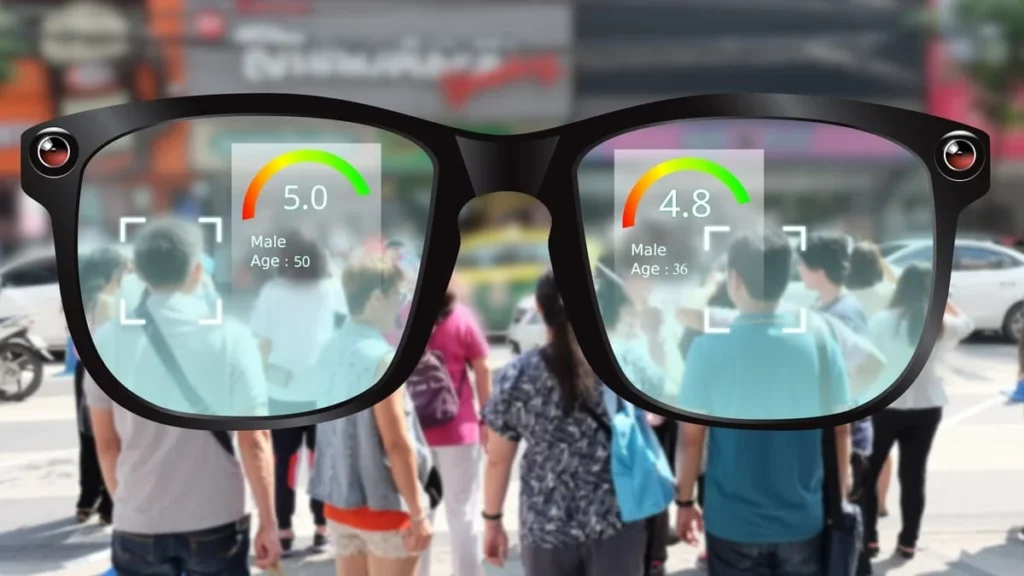
Retail workers across the United Kingdom are confronting a rapidly escalating threat to their privacy and safety, as members of the public increasingly employ smart glasses to secretly record them during their shifts. This alarming trend, highlighted by shop workers’ union Usdaw, raises profound concerns about employee well-being, data protection, and the evolving landscape of public interaction in an age of ubiquitous personal recording devices. The union’s stark warning follows a high-profile incident involving former television presenter Michael Barrymore, who filmed a sales assistant without their knowledge or consent, subsequently posting the footage to millions of followers across TikTok and YouTube.
The revelation underscores a critical intersection of technological advancement, personal privacy, and the demanding environment of frontline retail work. While the specific interaction in the Barrymore case was described as friendly, Usdaw representatives emphasize that the broader pattern of covert filming constitutes a serious invasion of privacy and poses significant risks to employees, particularly when such recordings are disseminated widely on social media platforms.
The Proliferation of Covert Recording Technology
The advent and rapid popularization of smart glasses represent a paradigm shift in the ease and discretion with which individuals can record their surroundings. Devices like Meta’s Ray-Ban smart glasses, which integrate cameras and microphones seamlessly into eyewear, have become increasingly accessible and socially acceptable. These devices allow users to capture photos and videos from a first-person perspective with minimal overt indication that recording is underway, often requiring only a subtle voice command or a tap on the frame. This technological leap has democratized content creation, enabling anyone to become a chronicler of their daily life, but it has simultaneously blurred the lines of consent and privacy in public and semi-public spaces.
Market research indicates a significant growth trajectory for the smart glasses sector. Projections from various industry analyses suggest the global smart glasses market, valued at approximately $2.5 billion in 2023, is anticipated to surge to over $15 billion by 2030, driven by advancements in augmented reality (AR) and increasing consumer adoption. While many users purchase these devices for personal use, such as hands-free photography or livestreaming, the potential for misuse, particularly in situations involving non-consenting individuals, is becoming glaringly apparent.
The Barrymore Incident: A Catalyst for Concern
The specific incident that brought this issue to the forefront involved Michael Barrymore, a personality known for regularly documenting his daily activities using smart glasses. The footage, captured without the sales assistant’s awareness, showed the worker clearly identifiable and engaged in their duties. The employee, who has chosen to remain anonymous, only became aware of the recording days later when a customer recognized him from social media, prompting him to locate the video online.
This scenario, while seemingly benign on the surface due to the "friendly" nature of the interaction, encapsulates the core anxieties expressed by Usdaw. The delay between the recording and the worker’s discovery highlights the surreptitious nature of the technology. The sales assistant was deprived of the opportunity to consent, decline, or even be aware that his image and workplace were being captured and shared with millions globally. While he personally stated he was not "distressed" by this particular incident, he was quick to emphasize the severe implications for more vulnerable individuals. "If I’ve just come out of a very abusive relationship and had to move area to get away from somebody, then a video showing exactly where I’m working could be extremely concerning," he articulated, underscoring the potential for real-world harm.
Usdaw’s Urgent Call: Protecting Frontline Workers
Jayne Allport, Usdaw’s national officer, has been unequivocal in her condemnation of covert filming, describing it as an "increasing problem" for shop workers. She stressed that the uploading of such recordings to social media platforms, where they can reach vast audiences, exposes employees to "significant personal risks." The union’s position is rooted in the fundamental right of individuals to control their personal information and maintain privacy, especially within their workplace.
Usdaw’s concerns extend beyond the mere act of filming. Allport elaborated on the potential for recordings to be used maliciously, citing instances where customers deliberately film disputes with staff and then post the footage online in an attempt to embarrass or shame workers and retailers. "If you can imagine going to work and then being confronted by someone, having a discussion with them that may well get heated, that being filmed, and then it goes on to social media, you can just imagine how those shop workers are feeling about it," she explained. "It can be absolutely devastating." This weaponization of recording technology transforms a personal device into a tool for intimidation and harassment, exacerbating an already challenging work environment for retail staff who frequently face verbal abuse and aggression.
The Legal and Ethical Labyrinth: Privacy in Private Premises
A significant aspect of this debate revolves around the legal distinction between filming in public spaces versus private premises like shops. While individuals generally have a limited expectation of privacy in truly public areas, the situation changes within a commercial establishment. Shops, despite being open to the public, remain private property. Retail staff, therefore, typically hold a "reasonable expectation" that images of them will not be recorded and published without their consent.
This principle touches upon various legal frameworks, notably data protection laws such as the UK General Data Protection Regulation (UK GDPR). The UK GDPR defines "personal data" broadly to include any information relating to an identified or identifiable living individual. A clear image of a person, especially when combined with their workplace location, can constitute personal data. Processing such data (including recording and publishing) without a lawful basis, such as consent, legitimate interest, or legal obligation, can be a breach of data protection principles. Many users of smart glasses, however, may be entirely unaware that their actions, while potentially not criminal, could constitute a breach of data protection laws.

The Information Commissioner’s Office (ICO), the UK’s independent authority set up to uphold information rights, has provided guidance on recording in public and private spaces. While the ICO acknowledges that individuals can record for personal use, the moment that footage is shared widely, especially commercially or with intent to identify and target individuals, it falls under stricter data protection rules. The burden of proof for consent or a legitimate basis for processing often lies with the person recording and publishing.
The Broader Impact: Mental Health and Vulnerability
The potential ramifications for retail workers’ mental health are profound. The constant fear of being covertly filmed, coupled with the anxiety of potentially appearing in an unsolicited online video, can contribute to significant stress, anxiety, and feelings of vulnerability. For individuals with sensitive personal circumstances, such as those who have left abusive relationships or have other compelling reasons to keep their whereabouts private, the exposure of their workplace online can be terrifying. This fear is not hypothetical; Usdaw’s Allport explicitly highlighted this scenario on BBC Radio 4’s The Media Show, stating, "They could be filming someone who has escaped an abusive relationship or violent past, and they don’t want anybody to know where they are."
Beyond the initial shock, the permanence of online content means that once a video is published, it can be incredibly difficult to remove completely. Even if a platform takes down the original post, copies may persist elsewhere, leading to long-term distress and potential real-world threats. This "digital footprint" can follow individuals, impacting their sense of security and well-being long after the initial incident.
Employer Responsibilities and HR Implications
For employers in the retail sector, the rise of covert filming presents a new frontier in their duty of care towards staff. Human Resources departments must now contend with developing policies and providing support for employees affected by such incidents. This includes:
- Clear Policies: Implementing clear guidelines for staff on how to respond to customers filming them, and what steps the company will take to support them.
- Training: Equipping employees with the knowledge and confidence to politely request that filming cease, or to escalate situations where they feel unsafe.
- Support Systems: Establishing robust support mechanisms, including counselling services, for staff whose mental health is impacted by unwanted online exposure.
- Legal Guidance: Providing legal advice and assistance to employees who wish to pursue action against individuals who have unlawfully recorded or published their personal data.
- Collaboration with Platforms: Developing protocols for engaging with social media platforms to request the removal of non-consensual content.
Ultimately, employers have a responsibility to create a safe working environment, which increasingly includes safeguarding employees from digital harm and privacy breaches originating from customer interactions.
A Call for Consent and Responsible Content Creation
Usdaw’s central plea is for content creators to adopt a more responsible and respectful approach. The union urges members of the public who create social media content to "seek permission before filming staff and to consider the potential consequences of publishing footage without consent." Jayne Allport suggests that a brief conversation—explaining the purpose of the filming and asking if the worker is comfortable appearing on camera—is a simple yet crucial step. While many employees might agree, obtaining explicit consent is both an act of respect and an essential safeguard for the privacy and safety of retail workers.
This call for consent aligns with broader ethical guidelines for content creation, emphasizing the importance of respecting individual autonomy and avoiding actions that could cause distress or harm. As smart glass technology becomes more pervasive, the onus will increasingly fall on individual users to exercise discretion and empathy, recognizing that their right to record does not supersede another individual’s right to privacy and safety.
The Future Landscape: Technology, Privacy, and Public Interaction
The ongoing tension between technological advancement and individual rights is a defining characteristic of the digital age. Smart glasses represent just one facet of this evolving dynamic. As these devices become more sophisticated, potentially incorporating facial recognition or other advanced data-gathering capabilities, the privacy challenges will only intensify.
Legislators, technology companies, and societal norms will need to adapt. This could involve:
- Clearer Laws: Legislation specifically addressing covert recording in private commercial spaces, perhaps mirroring stricter rules applied to security cameras.
- Technological Solutions: Smart glasses manufacturers could integrate features that make it more obvious when recording is taking place (e.g., more prominent indicator lights) or even develop "privacy modes" that detect and blur identifiable faces in certain contexts.
- Public Awareness Campaigns: Educating the public about the ethical implications of covert filming and the legal ramifications of data protection breaches.
- Industry Standards: Retail associations and unions could collaborate to develop industry-wide guidelines for managing and responding to covert recording incidents.
The incident involving Michael Barrymore and the subsequent warning from Usdaw serve as a stark reminder that while technology offers unprecedented opportunities for connection and content creation, it also demands a renewed commitment to ethical behavior, respect for privacy, and robust protections for those on the front lines of public-facing professions. The well-being of retail workers, who are essential to daily life, must not be compromised by the casual, unconsented use of recording devices.