
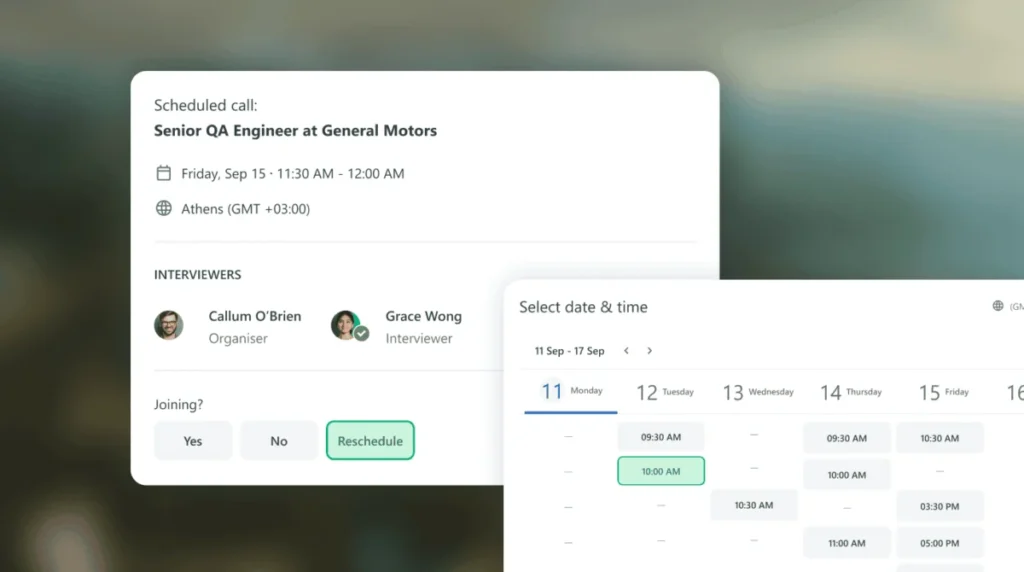
The persistent challenge of interview scheduling, a common source of friction in the talent acquisition process, is being addressed through significant technological advancements, particularly with the introduction of candidate self-rescheduling capabilities. For hiring managers, the scenario is acutely familiar: a meticulously prepared interview invitation extended to a promising candidate, perfectly aligned with the team’s availability, only to be met hours before the scheduled time by an email bearing the dreaded phrase, "I’m so sorry, but something has come up. Can we reschedule?" This seemingly minor inconvenience often initiates a protracted back-and-forth exchange, involving multiple emails, intricate calendar comparisons, and arduous coordination among several interviewers, ultimately delaying the interview by days. Beyond the logistical quagmire, this administrative burden frequently casts a shadow on the candidate’s perception of the company, potentially undermining its carefully cultivated image as a modern, agile, and people-first organization. The latest enhancements in scheduling technology aim to entirely eliminate this friction, promising a smoother, more respectful, and ultimately more efficient hiring journey for all parties involved.
The Hidden Inefficiency: Why Half of Interview Invitations Fail
Beneath the surface of a seemingly straightforward process lies a startling inefficiency that significantly impacts recruitment pipelines. Industry data reveals a surprising statistic: on average, a staggering 50% of initial interview requests never materialize into actual booked meetings. This means that if a company diligently sifts through 200 applications and extends interview invitations to 40 promising candidates, only approximately 20 of those interviews will ever find a place on the calendar. Half of these critical opportunities, representing potential top talent, are lost before any meaningful conversation can even begin.
This widespread attrition is not primarily due to candidate disinterest or recruiter oversight. Instead, an analysis of over 10,000 candidate interactions reveals a systemic issue rooted in rigid scheduling workflows. Historically, when a candidate needed to reschedule an interview—a common occurrence given the demands of modern professional and personal lives—the existing systems offered little flexibility. The prevailing solution often required recruiters to generate an entirely new scheduling link, effectively forcing both parties to restart the coordination process from scratch. This cumbersome requirement created unnecessary friction at a critical juncture, consuming valuable recruiter time in logistical coordination rather than strategic engagement, and in many cases, leading to promising interviews simply falling through the cracks, never to be finalized. The cumulative impact is substantial: frustrated candidates, overworked recruiters, and a measurable loss of potential talent.
The Evolution of Talent Acquisition: A Shift Towards Candidate Centricity
The landscape of talent acquisition has undergone a profound transformation over the past decade. What was once a predominantly employer-driven market has steadily evolved into a candidate-centric environment, particularly for skilled professionals in high-demand fields. This shift has been accelerated by several macro trends, including the widespread adoption of remote work, the competitive pressures of the "Great Resignation" or "Great Reevaluation," and a growing emphasis on work-life balance and employee well-being.
Early 2010s: Hiring processes were often bureaucratic, with companies dictating terms and candidates expected to conform. Technology was primarily focused on Applicant Tracking Systems (ATS) for managing applications, with scheduling largely manual or rudimentary.
Mid-2010s: The rise of employer branding began to put pressure on companies to improve the candidate experience. Initial attempts at automated scheduling emerged, but often lacked flexibility. The concept of "candidate experience" gained traction as a strategic differentiator.
Late 2010s to Early 2020s: The COVID-19 pandemic accelerated the shift to virtual hiring and highlighted the need for seamless digital processes. Candidates, empowered by options and a greater focus on company culture, became more discerning. Flexibility and respect for their time emerged as paramount considerations. The traditional model, where companies held all the power, became increasingly untenable in attracting top-tier talent. Candidates are now evaluating potential employers as critically as employers are assessing them, making every interaction a crucial touchpoint that shapes their perception of company culture and values.
Defining a Superior Candidate Experience: Respect and Autonomy
Extensive research across diverse industries consistently underscores a fundamental truth: the most effective candidate experiences are built upon principles of respect and autonomy. When prospective employees are empowered to manage their own interview schedules, mirroring the self-service capabilities they expect for any other professional meeting or personal appointment, it communicates a powerful message of trust and value. This approach signals that the company recognizes and respects their professional standing and personal commitments. Conversely, forcing candidates into rigid, one-way communication flows or making them jump through administrative hoops for simple adjustments can create a perception of being merely "processed" rather than being treated as a valued potential partner. Such experiences can lead to disengagement and a negative impression of the company’s operational efficiency and regard for its people.
The Innovation: Candidate Self-Rescheduling in Action
The core of the new improvements centers on a groundbreaking candidate self-rescheduling feature designed to eradicate the traditional friction points. Here’s how it fundamentally changes the interview coordination process:
Upon receiving an interview invitation, candidates are now provided with a unique link that not only allows them to initially book a slot but also empowers them to reschedule with a single click if their availability changes. This eliminates the need for cumbersome email threads, the anxiety of waiting for a recruiter’s response, or the concern of inconveniencing the hiring team. Candidates can simply access the same interface, view the updated availability of the interview panel, and select a new time that suits them, all from the originally provided pool of available slots.
This feature is not merely about convenience; it incorporates intelligent guardrails to protect both the candidate experience and the operational efficiency of the hiring team:
- Real-time Availability Sync: The system maintains a dynamic, real-time synchronization with the calendars of all designated interviewers, ensuring that only genuinely available slots are presented to the candidate. This prevents double-bookings and ensures accuracy.
- Minimum Notice Period: Companies can configure a minimum notice period (e.g., 24 or 48 hours) required for a candidate to reschedule. This prevents last-minute changes that could disrupt interviewer schedules without adequate warning.
- Reschedule Limit: To maintain control and prevent excessive changes, a configurable limit can be set on the number of times a candidate can self-reschedule for a single interview stage. Beyond this limit, the process might revert to recruiter intervention.
- Automated Notifications: Any candidate-initiated reschedule automatically triggers immediate notifications to all involved interviewers, updating their calendars and informing them of the change without any manual intervention.
- Conflict Prevention Logic: The system intelligently prevents candidates from selecting times that would create conflicts with other pre-existing internal meetings for the interviewers, even if those meetings were added after the initial invitation was sent.
A Holistic Overhaul: Eight Additional Improvements
While candidate self-rescheduling is the flagship innovation, its introduction is part of a broader suite of eight additional improvements, meticulously developed based on extensive feedback from hiring teams grappling with various pain points in the interview process. These enhancements collectively aim to create a more robust, intuitive, and efficient scheduling ecosystem:
- Enhanced Interview Panel Coordination: The system now offers advanced capabilities for coordinating multiple interviewers, including automated conflict-checking across diverse team calendars and intelligent suggestions for optimal panel configurations, significantly reducing the manual effort in finding consensus availability.
- Global Time Zone Intelligence: Automated time zone detection and conversion ensure that candidates receive interview times displayed in their local time, eliminating confusion and potential missed appointments due a misunderstanding of time differences.
- Configurable Automated Reminders: Beyond standard calendar invites, the platform now supports customizable automated reminders for both candidates (e.g., 24 hours, 1 hour before) and interviewers, reducing no-show rates and ensuring all parties are prepared.
- Dynamic Buffer Time Management: Hiring managers can now configure automated buffer times between consecutive interviews for individual interviewers, preventing back-to-back scheduling that leads to fatigue and rushed transitions.
- Role-Based Scheduling Rules: Companies can establish specific, role-based scheduling rules, such as requiring certain senior interviewers for specific stages or ensuring a diverse interview panel composition, which the system then automatically enforces when presenting availability.
- Integrated Feedback Prompts: Immediately following an interview, interviewers receive automated prompts with direct links to submit feedback within the ATS, streamlining the post-interview process and improving data capture efficiency.
- "On-Behalf-Of" Scheduling: Recruiters can now more easily schedule interviews on behalf of candidates, even leveraging the new self-service capabilities, making it simpler to assist candidates who may prefer or require direct support.
- Comprehensive Scheduling Analytics Dashboard: A new analytics dashboard provides hiring teams with granular insights into scheduling efficiency, including average reschedule rates, no-show percentages, time-to-schedule metrics, and candidate satisfaction scores related to the scheduling process, enabling continuous improvement.
These comprehensive updates move beyond mere convenience, representing a strategic pivot towards fundamentally rebalancing the power dynamic in recruitment.
Broader Implications: Redefining Professional Engagement
The impact of these improvements reverberates across multiple facets of the hiring ecosystem:
For Candidates: This means being treated with the respect and professionalism they deserve as valued contributors. They gain the autonomy to manage their schedules efficiently, communicate changes clearly, and experience companies as flexible, respectful, and technologically advanced from their very first interaction. This positive initial experience can significantly enhance their willingness to engage further and ultimately accept an offer.
For Hiring Teams: The administrative burden is dramatically reduced. Recruiters are freed from the tedious cycle of email ping-pong, manual calendar updates, and the frustrating detective work of tracking down why a promising candidate might have seemingly "ghosted" an interview. This reclaimed time can be redirected towards more strategic activities, such as candidate sourcing, deeper engagement, and cultivating talent pipelines.
For Hiring Metrics and Business Outcomes: The improvements translate directly into measurable business impact. Companies can expect faster time-to-fill rates due to reduced scheduling delays, higher interview show rates as candidates have greater control, and demonstrably improved candidate satisfaction scores. These are not just qualitative benefits; they contribute to a stronger talent pipeline, reduced recruitment costs, and ultimately, a more competitive workforce.
Why This Matters: A Strategic Imperative for Modern Talent Acquisition
The traditional recruiting model, characterized by an imbalanced power dynamic, often placed all control on one side of the table. Companies dictated when and how interviews would occur, expecting candidates to bend their schedules to fit. However, the modern talent market operates fundamentally differently. The most sought-after candidates possess multiple options and are actively evaluating companies based on their culture, flexibility, and overall employee experience, often starting with the recruitment process itself. Every interaction, from the initial job posting to the final offer, serves as a crucial touchpoint that shapes their perception of the company’s values and operational efficiency.
When organizations empower candidates with the autonomy to manage their interview schedules, it sends an unequivocal message: their time is valued, their professionalism is trusted, and they are deserving of respectful treatment from the very first interaction. This approach fosters a sense of partnership rather than processing, building goodwill and enhancing the employer brand from the outset. In an era where talent is a strategic asset, providing a superior, friction-free candidate experience is no longer merely "good recruiting"—it has become a critical business imperative for attracting, engaging, and securing the best talent available. Companies that fail to adapt risk falling behind in the race for top professionals.
Seamless Integration and Future-Proofing
The implementation of candidate self-rescheduling is designed for maximum ease of adoption, leveraging existing technological infrastructure. The feature is now readily available to all customers utilizing Google Calendar or Microsoft Calendar integrations, ensuring broad compatibility with common enterprise ecosystems. Crucially, the rollout requires no disruptive changes to existing workflows. Current scheduling links remain fully active, allowing hiring teams the flexibility to adopt the new functionality at their own pace, integrating it incrementally as they become familiar with its benefits. This thoughtful approach ensures a smooth transition, minimizing any potential operational friction during the adoption phase.
These latest updates are a direct result of continuous feedback from hiring teams who navigate the complexities of talent acquisition daily. They underscore a commitment to iterative improvement, recognizing that even small changes in the scheduling domain can yield meaningful differences in efficiency and experience. The philosophy guiding these enhancements is clear: thoughtful hiring technology should serve to remove obstacles, not create them. By streamlining the scheduling process, organizations can empower their teams to focus less on cumbersome coordination logistics and more on engaging in quality conversations with the right candidates, ultimately leading to stronger hires and a more robust talent pipeline.
Ready to provide candidates with unparalleled control over their interview experience and optimize your hiring workflow? Explore the comprehensive new scheduling features or contact us to understand how these innovations can be seamlessly integrated into your specific talent acquisition strategy.






