
This week, enterprise cloud software giant Workday announced a comprehensive and forward-thinking artificial intelligence strategy, anchored by its newly integrated technology platform, Sana. The move marks a significant pivot for Workday, aiming to embed advanced AI capabilities across its suite of human capital management (HCM) and financial solutions, fundamentally reshaping how businesses interact with their core operational data. For partners and early adopters like Galileo, an HR Superagent that has been built upon the Sana platform for the past three years, this announcement validates the underlying technology and signals a new era of AI-driven productivity for Workday’s extensive customer base.
Understanding the Sana Ecosystem
At its core, Sana Labs, the company Workday has now fully embraced, was founded in 2016 with a distinct identity as an AI-first organization, with product development following suit. Joel Hellermark, the visionary founder, initially set out to leverage machine learning and AI to revolutionize how individuals learn, access knowledge, and collaborate within professional environments. In its nascent stages, Sana Labs collaborated with pioneering AI entities, including OpenAI, even before the public launch of ChatGPT. This early exploration culminated in the development of an AI-driven learning system. As the company matured and secured significant investment, its strategic direction evolved into the creation of two distinct product lines: Sana Learning, a next-generation, AI-native system for content and learning, and Sana Agents, an elegantly designed platform that consolidates multiple Large Language Models (LLMs) into a streamlined productivity interface.
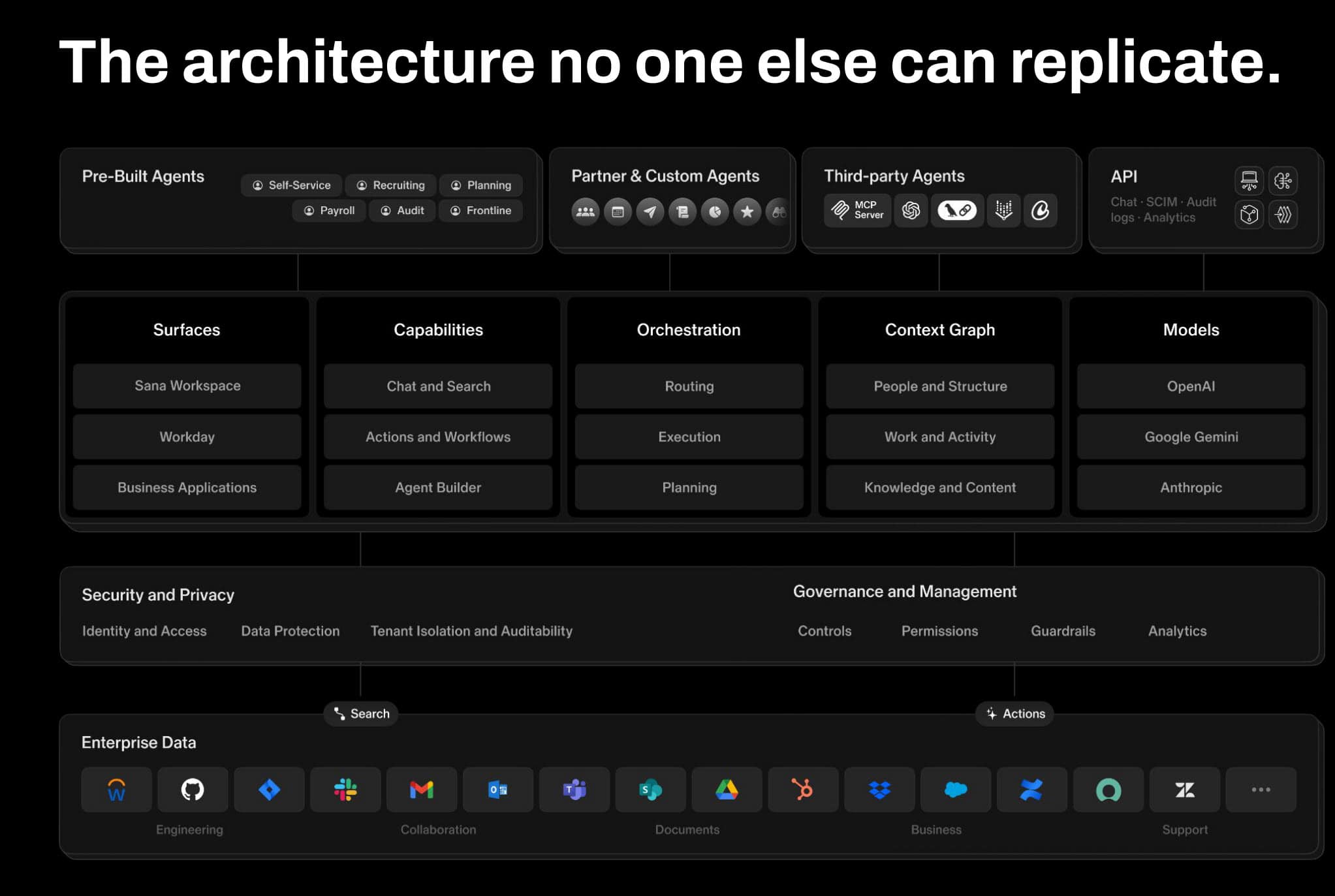
The Sana Agent platform, which currently powers Galileo, offers users a multifaceted capability set. It allows for querying any LLM, managing and integrating data and documents, generating visual content such as images and presentations, recording and analyzing meetings, and developing custom prompts, workflows, and even sub-agents. In essence, Sana Agent functions as a sophisticated "agent platform" that sits atop various AI models, simplifying their usability, enabling robust history storage, and empowering users to construct their own productivity-enhancing agents.
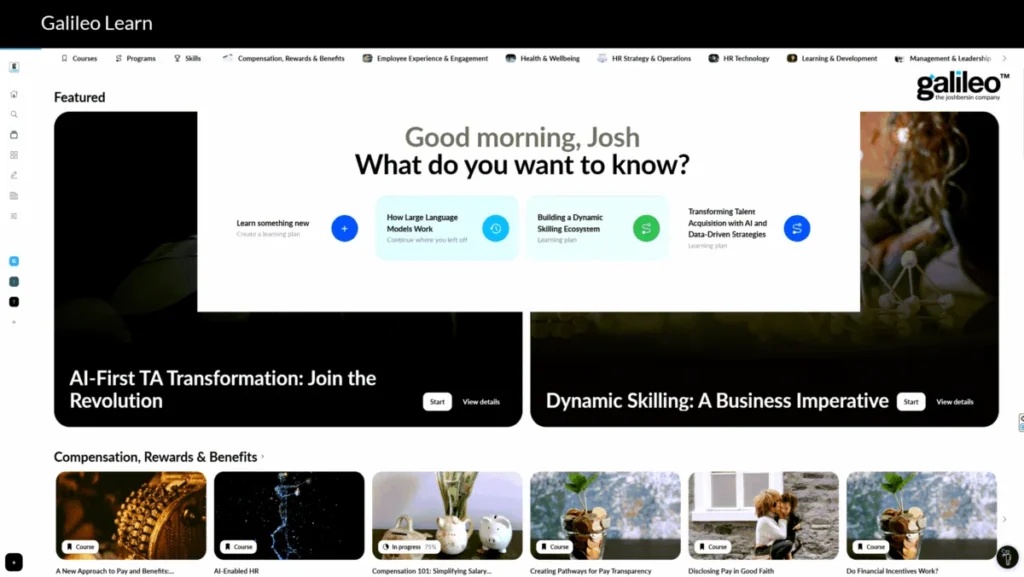
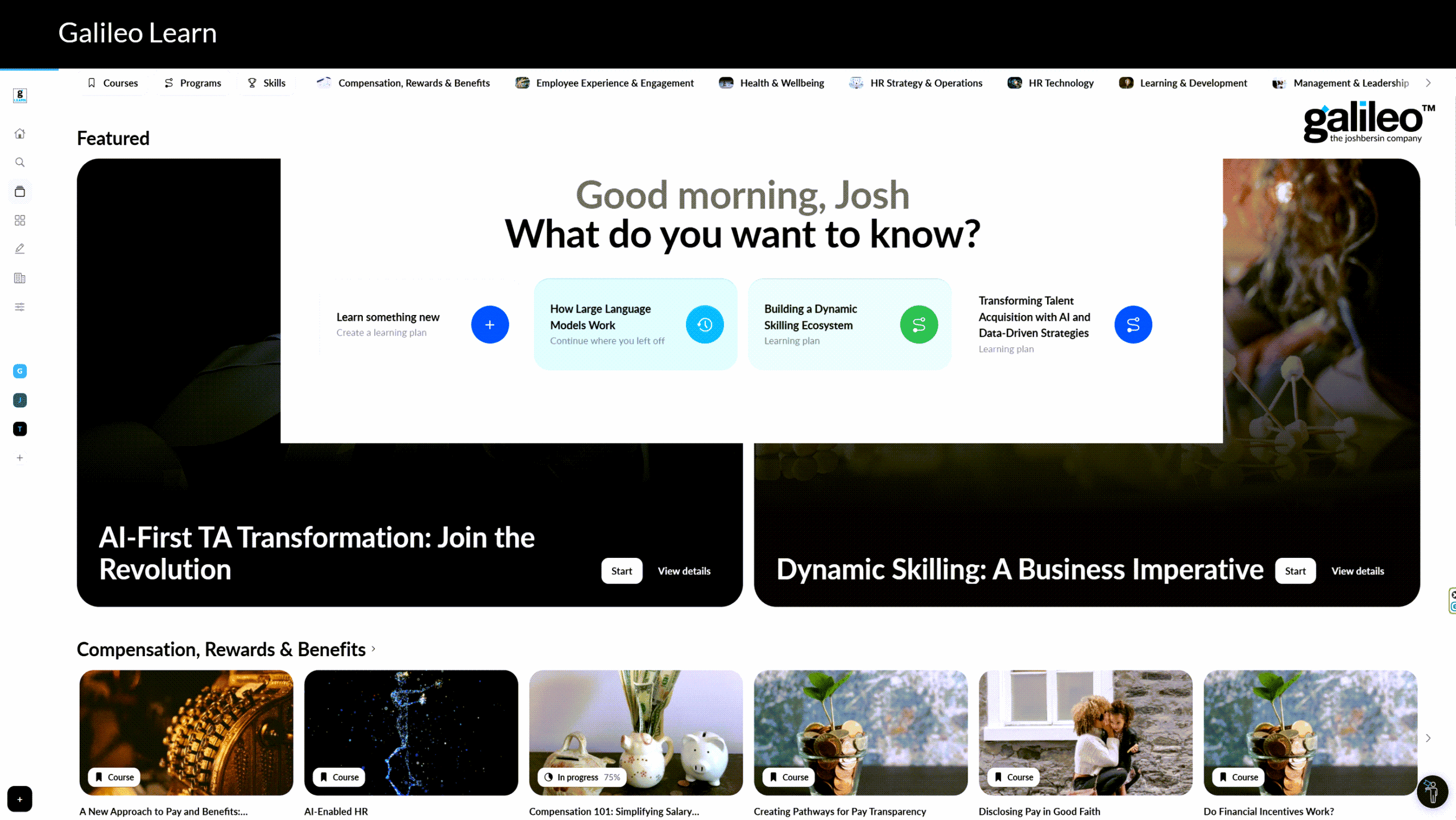
Complementing this, Sana Learning, known to Galileo users as Galileo Learn, is presented as an intuitive learning platform that has proactively set benchmarks for building training modules, coaching programs, assessments, and a myriad of other educational content. While the focus of Workday’s recent announcement is on the broader AI strategy, Sana Learning is positioned to become a cornerstone of a substantial and potentially highly profitable business for Workday, aligning with concepts such as "Dynamic Enablement" in the evolving landscape of workforce development. The integration between Galileo and Galileo Learn allows users to seamlessly run applications, access a comprehensive knowledge base, and engage in learning activities within a unified experience. Furthermore, the Sana Agent platform’s mobile application and voice generation capabilities, exemplified by Galileo’s ability to replicate a user’s voice, highlight its sophisticated and user-centric design.
Workday’s Four Pillars of AI Transformation
Following the acquisition, Workday and Sana have jointly outlined an ambitious roadmap, articulated through four key strategic announcements:
1. Sana for Workday: Immediate Access to an Integrated Interface
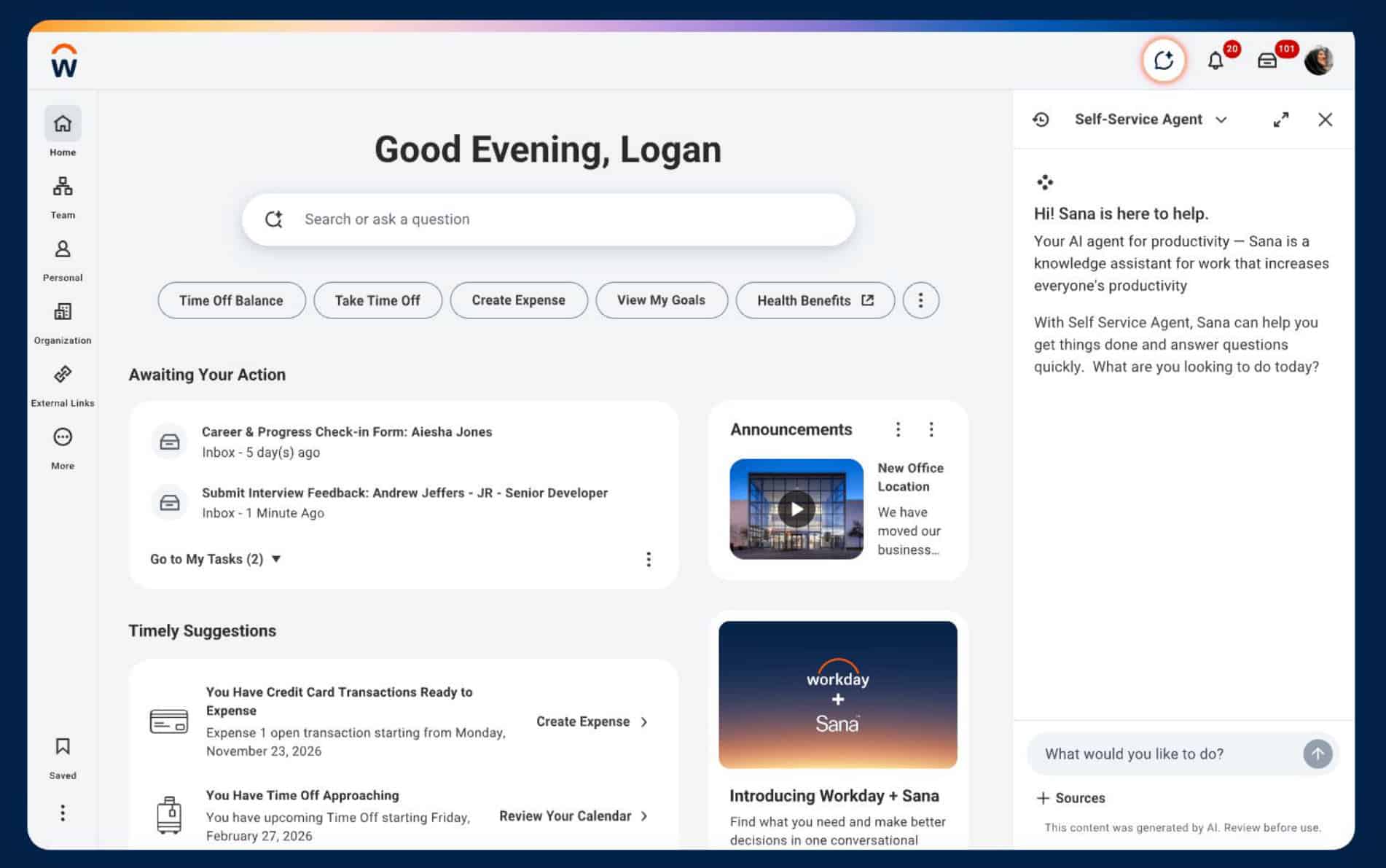
Effective immediately, all Workday customers gain access to a new Workday interface, branded as Sana for Workday. This integration brings transactions and data directly from a company’s Workday system into the Sana Agent environment. This transformative step empowers employees and managers to interact with their organizational data through natural language queries, run reports, initiate transactions, and perform other essential tasks without navigating the complexities of the traditional Workday interface. Security protocols inherent to Workday are meticulously maintained, ensuring that each user only accesses the data and transactions for which they have appropriate permissions. For existing Galileo users, this means the intelligence of Galileo’s HR Superagent can now be directly applied to all Workday information, unlocking unprecedented analytical and operational capabilities. This initial integration is described as a monumental step, effectively "unlocking" the Workday system for a broader range of users, including casual employees, managers, and HR and IT professionals, by abstracting away the technical complexities of the Workday UI.
2. Sana Enterprise: The Unified Front Door to Enterprise Systems
Workday is also introducing Sana Enterprise, an advanced version of the Sana platform that requires an upgraded license. This enhanced offering extends Sana’s reach beyond Workday, enabling users to seamlessly connect with and interact with other critical enterprise systems, including Salesforce, Microsoft Teams, Slack, SharePoint, and many more. This integration capability, already a cornerstone of Galileo’s functionality, allows for easy configuration and provides both read and write access to these disparate systems. Consequently, Sana Enterprise is positioned to serve as a unified "front door" for all users, potentially assuming a role similar to that of established employee experience platforms like Microsoft Viva and ServiceNow. Critically, Sana Enterprise inherits Workday’s robust security framework, including job-level, job-role, and hierarchical data access controls. This inheritance significantly alleviates concerns for IT departments regarding the deployment and management of security, data privacy, and authentication rules across multiple integrated systems.
3. Sana as the Agent Development System: Empowering Custom AI Solutions
A third pivotal announcement designates Sana as Workday’s primary Agent Development System, enabling customers to build their own AI agents. Sana utilizes a workflow development tool that facilitates the creation of applications through a drag-and-drop interface, allowing users to assemble "steps" or "prompt paths." Workday plans to further enhance this capability by integrating visual coding tools like Flowise in future quarters, transforming Sana into an even more robust and user-friendly development studio. This empowers a wide spectrum of users – from individual employees and managers to HR teams and corporate developers – to create internal applications with greater ease. An illustrative example presented involves an employee travel booking application that can manage travel policies, identify flights, secure approvals, and facilitate expense reporting. The expectation is that companies will develop thousands of such agents and applications, with potential for third-party developers to also contribute to this ecosystem.

4. Sana’s AI Infrastructure as Workday’s Core AI Engine
The fourth and final pillar of Workday’s strategy positions Sana’s AI infrastructure as the foundational AI engine for the entire Workday ecosystem. Previously, Workday marketed its various AI agents under the "Illuminate" brand to highlight its advancements. Moving forward, all new AI agents developed by Workday will operate within and be powered by the Sana infrastructure. This consolidation ensures a cohesive and integrated AI experience across Workday’s product portfolio, leveraging Sana’s advanced AI capabilities as the underlying technology.
Implications and Strategic Significance
The multifaceted announcements from Workday carry significant implications for its vast customer base and the broader enterprise software landscape.
Enhanced User Experience and Employee Engagement
Perhaps the most immediate and tangible benefit for Workday customers is a substantial upgrade to the user experience. Having utilized the Sana platform extensively, the author notes its elegance, ease of use, speed, and overall enjoyable interface, a stark contrast to the often-perceived complexity of the traditional Workday UI. The integration allows for document storage, seamless integration with Microsoft and Google tools, and the potential for Sana to become the primary desktop experience for employees. For organizations that upgrade to Sana Enterprise, the platform effectively transforms into a comprehensive "employee experience platform," directly competing with established players like Microsoft Viva, ServiceNow, and Zoom/Workvivo. While the market for employee experience platforms is highly competitive, Workday’s native integration with its core system provides a distinct advantage.
Accelerated App Development and AI Upskilling
Workday customers now possess a powerful and accessible tool for building custom applications and fostering AI literacy among their workforce. The Sana platform enables employees at all levels to explore, learn, and develop their own AI solutions. The seamless integration of Sana Agents with Sana Learning ensures that employee training and enablement are intrinsically linked. For instance, Galileo Learn’s extensive library of over 750 courses in management, leadership, and HR becomes immediately available within the Workday ecosystem. The platform’s ability to connect with various LLMs—including Claude, OpenAI’s models, Gemini, and internally developed LLMs—from a single interface means employees can engage with diverse AI capabilities. The intuitive nature of Sana’s workflow module, designed for ease of use and visual editing, transforms it into an accessible AI studio, allowing employees to create sophisticated applications with branching logic and custom prompts, akin to building custom GPTs.
A Strengthened AI Engineering Foundation
Workday’s acquisition of Sana brings an experienced AI engineering team with deep expertise in data labeling, LLM optimization, Retrieval Augmented Generation (RAG) pipelines, and various AI tuning challenges. This in-house capability is expected to accelerate the development and deployment of AI projects within Workday, leading to greater efficiency and more integrated AI architectures. The strategy maintains Workday’s native business rule and security architecture, ensuring that Sana-built applications adhere to the company’s stringent governance and security standards, making the development of secure and compliant AI applications more straightforward.
A World-Class AI-Native Learning System
Sana Learning is recognized as one of the most advanced AI-native platforms available today. This technology positions Workday to tap into the rapidly growing corporate learning and development market, estimated to be worth nearly $400 billion, presenting a significant new opportunity for both Workday and its customers. The platform’s sophisticated capabilities in content creation, personalized learning paths, and AI-driven assessments are expected to drive innovation in how organizations enable their workforces.

The Competitive Landscape
Workday’s strategic move into a more integrated AI experience places it in direct competition with other major enterprise software providers. Oracle’s AI Studio, powered by its own AI infrastructure, and SAP’s Joule, its AI agent designed to interact with SAP and SuccessFactors applications, represent similar efforts to "agentify" their core systems. Microsoft’s suite of AI offerings, including MS Copilot, Copilot Studio, Agent365, and the WorkIQ intelligence layer, offers comparable integrated experiences, particularly for users within the Microsoft 365 ecosystem. While MS Copilot currently lacks direct integration with Workday, its comprehensive approach to AI-driven productivity presents a compelling alternative.
The presence of major LLM providers like OpenAI, Anthropic, and Google’s Gemini also influences the competitive dynamic. Many organizations have already established budgets and integrations with these foundational AI models, and the decision to adopt a new agent front-end like Sana will require careful cost-benefit analysis. However, the unique integrations with Workday and the advanced learning capabilities offered by Sana may prove compelling enough to justify the investment.
Furthermore, companies like Google and Microsoft are actively developing integrations across their productivity suites, encompassing email, search, file management, and application development tools, mirroring Sana’s strategy. The rapid pace of innovation in the AI space means that Workday, by entering the front-end productivity business, must continuously adapt to new trends, models, and communication tools. ServiceNow’s recent acquisition of Moveworks, an agent platform, underscores the strategic importance of this market segment, and with ServiceNow’s substantial size relative to Workday, the competition is expected to intensify.
Workday, Sana, and Galileo: A Synergistic Partnership
The integration of Galileo with Workday’s new AI strategy is a significant development. As an official partner, Galileo now offers its HR Intelligence and comprehensive knowledge corpus directly integrated into Workday and the Sana platform. This allows Galileo’s HR intelligent agent and its extensive library of over 400 pre-built prompts and workflows to seamlessly access and leverage Workday data. Similarly, the Galileo Learn library, comprising over 750 courses in HR, leadership, technology, and management, can be readily activated within a customer’s instance of Sana Learning. This makes Galileo a powerful "instant-on" solution that capitalizes on the integrated Workday-Sana experience, offering a robust starting point for organizations seeking to enhance their AI and learning capabilities.
The Evolving AI Landscape
The contemporary AI landscape is characterized by diversity, with many companies utilizing a mix of AI tools, including MS Copilot, OpenAI, Claude, and other specialized solutions. Workday’s strategic integration of Sana, leveraging the vast investment in HR data, security, and financial management inherent in its core platform, is poised to simplify this complexity for its customers. While the future trajectory of major AI players remains unpredictable, with further consolidation and new developments likely, the adoption of Sana by Workday customers represents a secure and strategically sound choice, offering a unified and powerful AI experience. The accompanying video, "Workday & Sana: New AI Strategy Unleashes Front Door to Work," further elaborates on the transformative potential of this collaboration.







