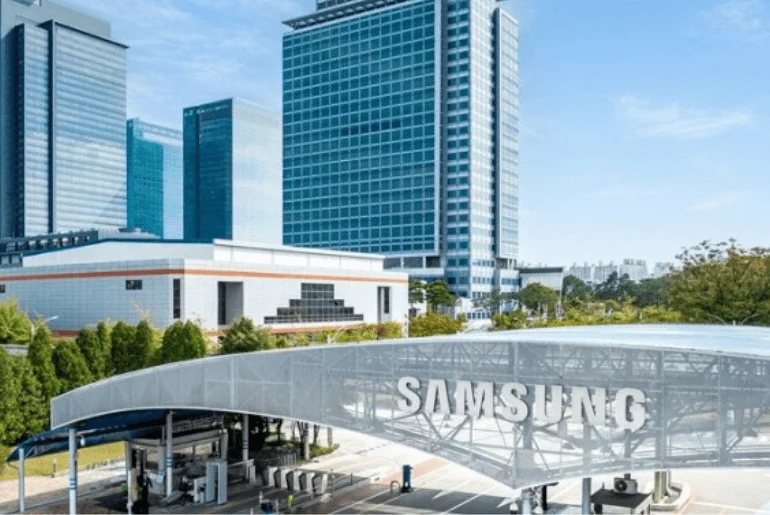
Samsung Group, the South Korean multinational conglomerate, is embarking on an expansive and strategic initiative to fundamentally transform its operational paradigm by deeply integrating artificial intelligence across its vast global enterprise. This ambitious undertaking includes granting its extensive workforce access to external generative AI tools and launching a comprehensive, large-scale capability-building program targeting all levels, from its top leadership to its general employee base. The move signifies a pivotal shift inward, leveraging AI not just in its renowned products but also to redefine how the organization itself functions, aiming to evolve into what it terms an "AI-native company."
The initial phase of this transformation involves allowing employees to utilize popular generative AI platforms such as OpenAI’s ChatGPT, Google’s Gemini, and Anthropic’s Claude. This widespread access is intended to immediately enhance productivity across diverse functions, ranging from accelerating software development cycles and refining coding processes to innovating marketing strategies, optimizing supply chain management, and streamlining customer support interactions. However, the scope of this initiative extends far beyond mere task automation; it is designed to cultivate a pervasive AI-first mindset and foster a culture of continuous innovation driven by intelligent technologies.
The "AI-Native" Vision: A Strategic Imperative
Samsung’s declaration of intent to become an "AI-native company" reflects a profound understanding of the current technological epoch. In an increasingly competitive global landscape, where agility, efficiency, and innovation are paramount, AI is no longer a peripheral technology but a core driver of business value. This strategic pivot positions Samsung to harness the full potential of AI, not just as a tool for incremental improvements but as a foundational element for redesigning entire business processes, strengthening data-driven decision-making, and significantly redefining workforce capabilities. This vision is particularly critical for a conglomerate of Samsung’s scale, with interests spanning electronics, semiconductors, shipbuilding, construction, and finance, where operational synergies and technological leadership are crucial for sustaining competitive advantage.
The shift mirrors a broader trend observed among global industrial powerhouses and technology giants. Companies worldwide are increasingly recognizing that superficial adoption of AI will not suffice; a deep, systemic integration is required to unlock transformative benefits. For Samsung, a leader in numerous high-tech sectors, establishing itself as an AI-native entity is not merely an operational upgrade but a strategic necessity to maintain its vanguard position against fierce competition from Silicon Valley behemoths, aggressive Chinese tech firms, and nimble startups. Industry analysts frequently highlight that companies embracing AI comprehensively are projected to achieve higher growth rates and greater market capitalization in the coming decade.
A Phased Approach to Enterprise-Wide Transformation
Central to Samsung’s strategy is a strong emphasis on leadership involvement, recognizing that top-down commitment is vital for any large-scale organizational change. This month, the company initiated its specialized "AI Transformation (AX) Boot Camp." This intensive program is tailored for approximately 50 presidents who lead Samsung’s various affiliate companies. The curriculum is meticulously designed to prioritize hands-on application and practical problem-solving over abstract theoretical understanding. Participants are challenged to actively explore, experiment with, and identify concrete ways in which AI can be leveraged to redesign workflows, optimize operational efficiencies, and reshape core business processes within their respective organizations. This practical, results-oriented approach ensures that strategic decisions regarding AI implementation are informed by direct experience and a deep understanding of its potential.
Following the initial leadership immersion, the AI education initiative will cascade down through the management hierarchy. An estimated 2,300 executives across Samsung’s numerous affiliates are slated to undergo comprehensive AI training by August 12. This widespread executive training aims to ensure that strategic directives from the top are met with informed understanding and effective implementation capabilities at the managerial level. The company has articulated ambitious plans to further expand these training programs, aiming to cover its entire global employee base before the end of the year. This comprehensive, phased rollout underscores Samsung’s commitment to fostering a truly AI-literate workforce capable of integrating AI tools and methodologies into their daily tasks, thereby embedding AI at every layer of the organizational fabric.
Historical Context: Samsung’s AI Journey and Industry Landscape
Samsung’s current internal AI transformation builds upon a robust foundation of prior AI investments and product integration. For years, AI has been a cornerstone of its product portfolio, particularly in consumer electronics. From the Bixby voice assistant launched with its Galaxy smartphones to advanced AI processing chips in its premium devices, and the sophisticated AI algorithms powering its smart home appliances and connected devices, Samsung has consistently showcased AI’s capabilities in enhancing user experience. Its semiconductor division, Samsung Foundry, also plays a critical role in the global AI ecosystem, manufacturing advanced chips that power AI applications for various clients, including its own internal needs.
However, this latest phase represents a significant strategic pivot. While previous efforts focused on embedding AI into products, the new initiative is about embedding AI into the organization’s very operational DNA. This internal focus is critical in the face of accelerating global competition. Companies like Apple, Google, and Microsoft are also heavily investing in generative AI, both for their consumer offerings and internal efficiencies. Tesla’s AI-driven manufacturing and autonomous driving systems, Amazon’s AI-powered logistics, and Meta’s AI research are all examples of how major tech players are leveraging AI to gain a competitive edge. Samsung, as a diverse conglomerate, must demonstrate similar agility and innovation across its varied business units to remain a global leader. This internal transformation is a proactive response to these competitive pressures and a recognition of AI’s potential to redefine industry benchmarks.
Driving Operational Excellence: Deep Dive into Functional Applications
To support this extensive transition and ensure effective AI deployment, each of Samsung’s affiliate companies will establish dedicated AI teams. These specialized units will be responsible for a multitude of critical functions, including formulating specific AI strategies tailored to their respective business objectives, establishing robust data governance frameworks to ensure data quality and ethical use, overseeing the development and deployment of AI models, and continuously enhancing employee capability through ongoing training and support.
Senior leadership will play an active role in directly supervising AI deployment across all key business functions. This includes:
- Product Development: Accelerating design cycles, simulating product performance, predictive maintenance for prototypes, and generating innovative product features.
- Procurement: Optimizing supplier selection, predicting material costs, automating contract analysis, and identifying supply chain risks.
- Manufacturing: Enhancing predictive maintenance for machinery, optimizing production lines for efficiency, quality control automation, and managing energy consumption.
- Logistics: Streamlining inventory management, optimizing routing for deliveries, predicting demand fluctuations, and improving warehouse automation.
- Marketing and Sales: Personalizing customer experiences, automating content generation for campaigns, predicting sales trends, and optimizing pricing strategies.
- Customer Support: Deploying intelligent chatbots for instant query resolution, analyzing customer feedback for service improvements, and automating routine support tasks.
- Corporate Operations: Streamlining administrative processes, enhancing cybersecurity measures, automating financial reporting, and optimizing human resources functions through AI-powered analytics.
The objective across these functions is not to replace human intelligence but to augment it, empowering employees with advanced tools to perform their roles more effectively, make data-informed decisions, and focus on higher-value, strategic tasks.
The Critical Role of Data Governance and Security
As Samsung broadens employee access to external AI tools, the company has explicitly stated its commitment to strengthening security protocols. This is a crucial aspect of enterprise-wide AI adoption, particularly with generative AI, which involves processing and often generating sensitive information. The risks associated with data leakage, intellectual property exposure, and the inadvertent sharing of confidential corporate or customer information are significant.
Samsung’s security measures are expected to encompass several layers:
- Data Anonymization and Masking: Implementing technologies to strip identifiable or sensitive information before data is fed into external AI models.
- Secure Sandboxing: Creating isolated environments for AI tool usage to prevent data from leaving controlled corporate networks.
- Strict Access Controls: Limiting which employees can access specific tools and what types of data they can process.
- Employee Training on Responsible AI Use: Educating the workforce on best practices for data privacy, ethical AI interaction, and recognizing potential security threats.
- Internal AI Model Development: For highly sensitive internal data and processes, Samsung is likely to prioritize the development and deployment of proprietary, on-premise AI models, ensuring complete control over data sovereignty and security.
- Vendor Due Diligence: Rigorous evaluation of external GenAI providers’ security postures, data handling policies, and compliance certifications.
This proactive stance on security is vital for maintaining customer trust and safeguarding Samsung’s vast intellectual property, which is a cornerstone of its competitive advantage. The balance between fostering innovation through open access and ensuring robust security will be a continuous management challenge.
Economic and Competitive Imperatives: Why Now?
The timing of Samsung’s accelerated AI transformation is no coincidence. The global economy is experiencing a rapid maturation of AI technologies, particularly generative AI, which has moved from experimental labs to practical enterprise applications at an unprecedented pace. Reports from leading consulting firms, such as McKinsey and Gartner, consistently project that AI could add trillions of dollars to the global economy in the coming years through productivity gains, new products, and optimized operations. For instance, McKinsey Global Institute estimates that generative AI could add the equivalent of $2.6 trillion to $4.4 trillion annually across various industries.
For a manufacturing giant like Samsung, these figures translate into tangible competitive advantages. Enhanced efficiency in manufacturing processes can lead to significant cost reductions. Faster product development cycles can accelerate time-to- market, giving Samsung an edge in rapidly evolving consumer electronics and semiconductor markets. Improved customer service can boost brand loyalty, and optimized supply chains can mitigate disruptions, a lesson learned painfully during recent global crises.
Moreover, the "war for talent" in the AI space is intensifying. By providing cutting-edge AI tools and comprehensive training, Samsung aims not only to upskill its existing workforce but also to attract and retain top AI talent, positioning itself as an employer of choice for professionals seeking to work at the forefront of technological innovation.
Implications for Samsung and the Global Tech Ecosystem
Samsung’s aggressive push to become an "AI-native company" carries significant implications, both for the conglomerate itself and for the broader global technology and manufacturing sectors.
-
For Samsung:
- Enhanced Competitiveness: A truly AI-integrated operational model will likely lead to unparalleled efficiencies, faster innovation, and a stronger position against global rivals.
- New Business Models: Deep AI integration could unlock entirely new revenue streams and service offerings that are currently unforeseen.
- Talent Development: The massive upskilling initiative will create a highly capable and adaptable workforce, ready for future technological shifts.
- Operational Resilience: AI-powered analytics and automation can provide greater resilience against supply chain shocks and market volatility.
- Ethical Leadership: By proactively addressing security and governance, Samsung can set benchmarks for responsible AI adoption in large enterprises.
-
For South Korea: As one of the nation’s largest conglomerates and a cornerstone of its economy, Samsung’s AI transformation will likely serve as a blueprint and catalyst for other Korean companies. It reinforces South Korea’s national strategy to become a global leader in AI and advanced technologies, driving domestic innovation and fostering a skilled workforce across the country.
-
For Global Manufacturing and Tech: Samsung’s journey will be closely watched by other multinational corporations, particularly those in manufacturing, logistics, and consumer electronics. Its successes and challenges will provide valuable case studies, potentially accelerating AI adoption trends and shaping best practices for enterprise-wide AI integration on a global scale. This could set a new standard for operational excellence in the age of artificial intelligence, prompting other industry leaders to accelerate their own AI transformation efforts to avoid falling behind.
Future Outlook and Challenges
While the vision is clear and the commitment strong, Samsung’s AI transformation will undoubtedly face challenges. Integrating AI across such a vast and diverse organization requires significant cultural shifts, substantial investment in infrastructure, and continuous adaptation to evolving AI capabilities. Overcoming resistance to change, ensuring data quality across disparate systems, and navigating the ethical complexities of AI deployment will be ongoing efforts. The company will also need to continuously monitor the performance and societal impact of its AI systems, ensuring they are used responsibly and ethically.
Nevertheless, by proactively embracing generative AI tools, investing heavily in leadership and employee training, and establishing dedicated AI governance structures, Samsung is positioning itself to not only navigate the complexities of the AI era but to lead it. This ambitious transformation is poised to redefine Samsung’s operational landscape, solidify its competitive edge, and set a powerful example for how global enterprises can strategically harness AI to build a more productive, innovative, and resilient future.