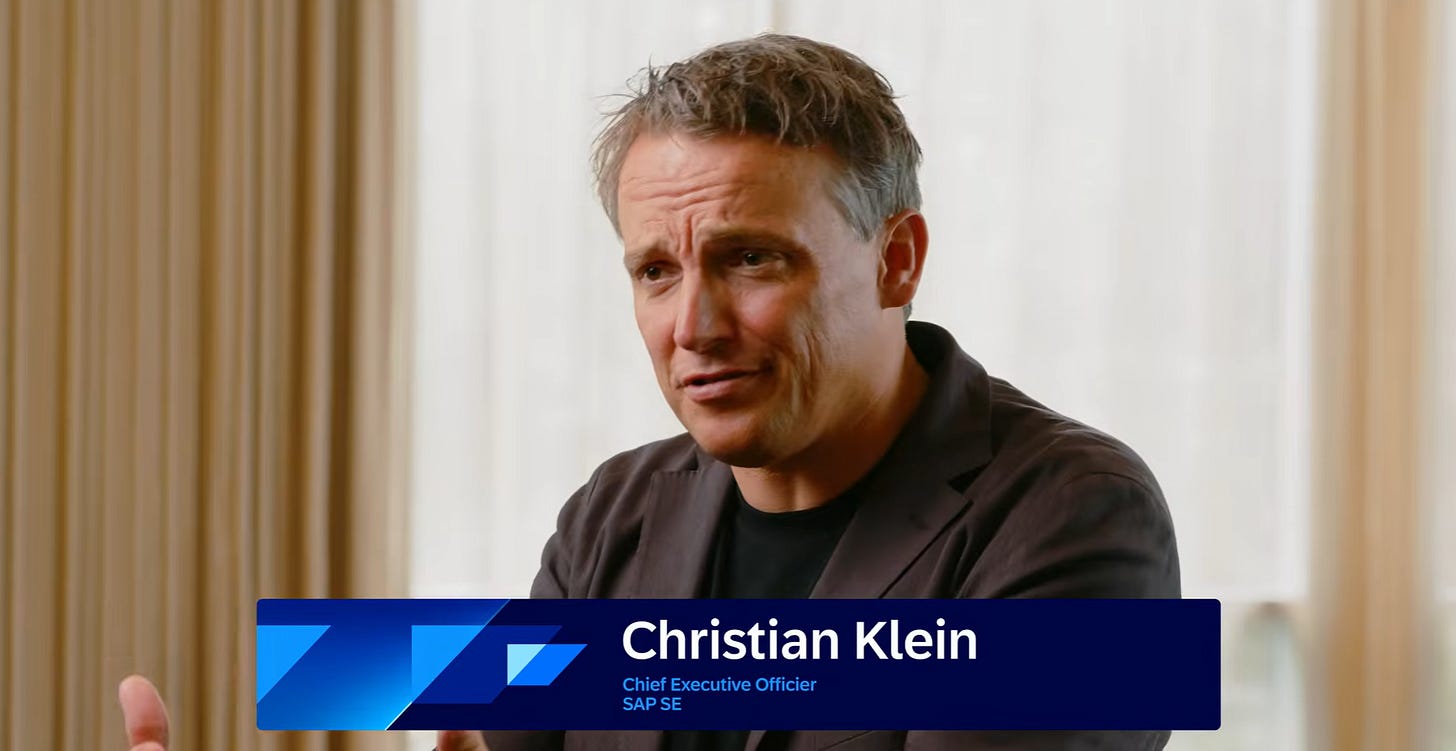
Last week, SAP unveiled "The Autonomous Enterprise," a comprehensive artificial intelligence architecture that its CEO, Christian Klein, boldly claims repositions the company at its core as an AI-first enterprise. This ambitious announcement, made at a significant industry event, represents a multi-year strategic pivot for the enterprise software giant, aiming to integrate AI deeply into the fabric of business operations. The initiative promises a unified AI platform for agent development and governance, an autonomous suite to execute core business functions, and a reimagined user experience designed to transform how professionals interact with enterprise software.
"The Autonomous Enterprise includes a unified AI platform for building, contextualizing and governing agents, an autonomous suite that executes core business operations and a new user experience that redefines how people work with enterprise software," stated Christian Klein, CEO of SAP SE, highlighting the three core pillars of this transformative strategy.
Background and Strategic Context
The launch of "The Autonomous Enterprise" is the culmination of over three years of focused effort by SAP, encompassing developments in areas like their AI assistant Joule, agent technologies, and various business data layers. This announcement signifies a major strategic shift, moving beyond incremental AI integrations to a foundational architectural overhaul. While the term "autonomous" might invite debate, the underlying ambition is clear: to equip businesses with intelligent systems capable of not just assisting, but actively optimizing and executing complex processes.
SAP’s position as a true Enterprise Resource Planning (ERP) system provider is crucial to understanding the scope of this announcement. Unlike specialized software vendors, SAP’s platforms manage a vast array of business resources, from financial and human capital to intricate supply chain logistics, manufacturing processes, procurement, and vendor relationships. With over 25 industry-specific editions, SAP’s systems can meticulously track a product’s lifecycle from inception to customer support, detailing every component, supplier, contract, and assembly detail. This end-to-end visibility, built through decades of development and strategic acquisitions, enables diverse industries such as pharmaceuticals, automotive, consumer goods, airlines, energy, healthcare, and telecommunications to manage their entire value chains, revenue streams, costs, and profitability.
The implication for businesses is profound. Previously, answering complex questions, such as why a specific product group’s profit margin is declining in a particular region, would necessitate extensive manual data analysis by teams of experts. SAP’s new AI architecture, however, aims to automate this investigative process. A user could query Joule, for example, about a profit margin decline for a candy product line in South America. The AI, leveraging the comprehensive data within the SAP ecosystem, could pinpoint factors like increased supplier prices, shipping cost spikes, or raw material cost fluctuations, and identify the primary contributing factors. This capability, if fully realized, moves businesses from reactive data analysis to proactive, AI-driven insights.
Key Components of "The Autonomous Enterprise"
The announcement centers on several key technological advancements and strategic initiatives:
The Autonomous Enterprise Framework
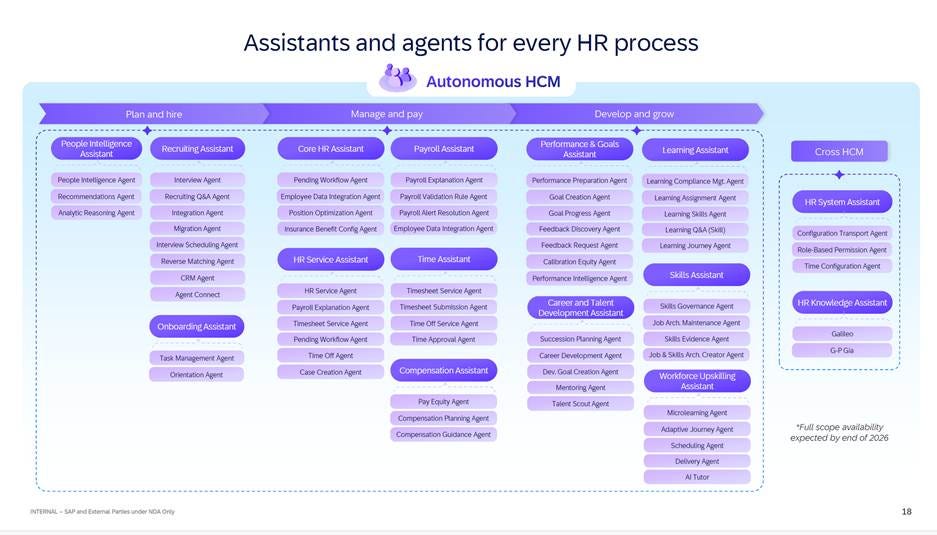
The overarching theme of "autonomy" suggests SAP’s vision of systems that can operate with reduced human intervention, identifying and rectifying suboptimal processes. This is realized through a suite of over 224 announced "agents." These agents are designed to automate specific tasks and workflows, ranging from routine administrative functions to complex analytical processes.
In the Human Capital Management (HCM) domain alone, SAP has outlined numerous agents, each targeting specific HR processes. These agents are categorized by their function, with some focusing on monitoring, others on executing actions, managing rules, or handling data and information retrieval. The breadth of these agents indicates a strategy to embed intelligence across the entire spectrum of enterprise functions.
For instance, in the realm of Human Resources, agents are being developed to streamline processes like payroll, which is notoriously complex and prone to errors. They can also target employee development initiatives, automating the identification of skill gaps, generating personalized upskilling materials, and directing employees to relevant training. While these automations offer immediate value by simplifying existing, often laborious, tasks, the ultimate transformative potential lies in their ability to fundamentally redesign HR operations.
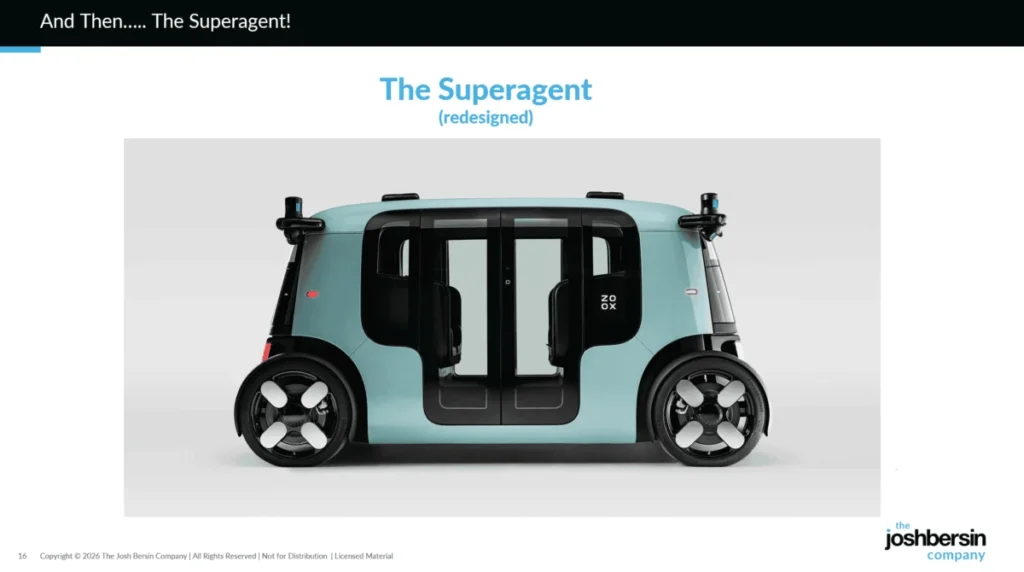
The "Waymo" vs. "Zoox" Analogy
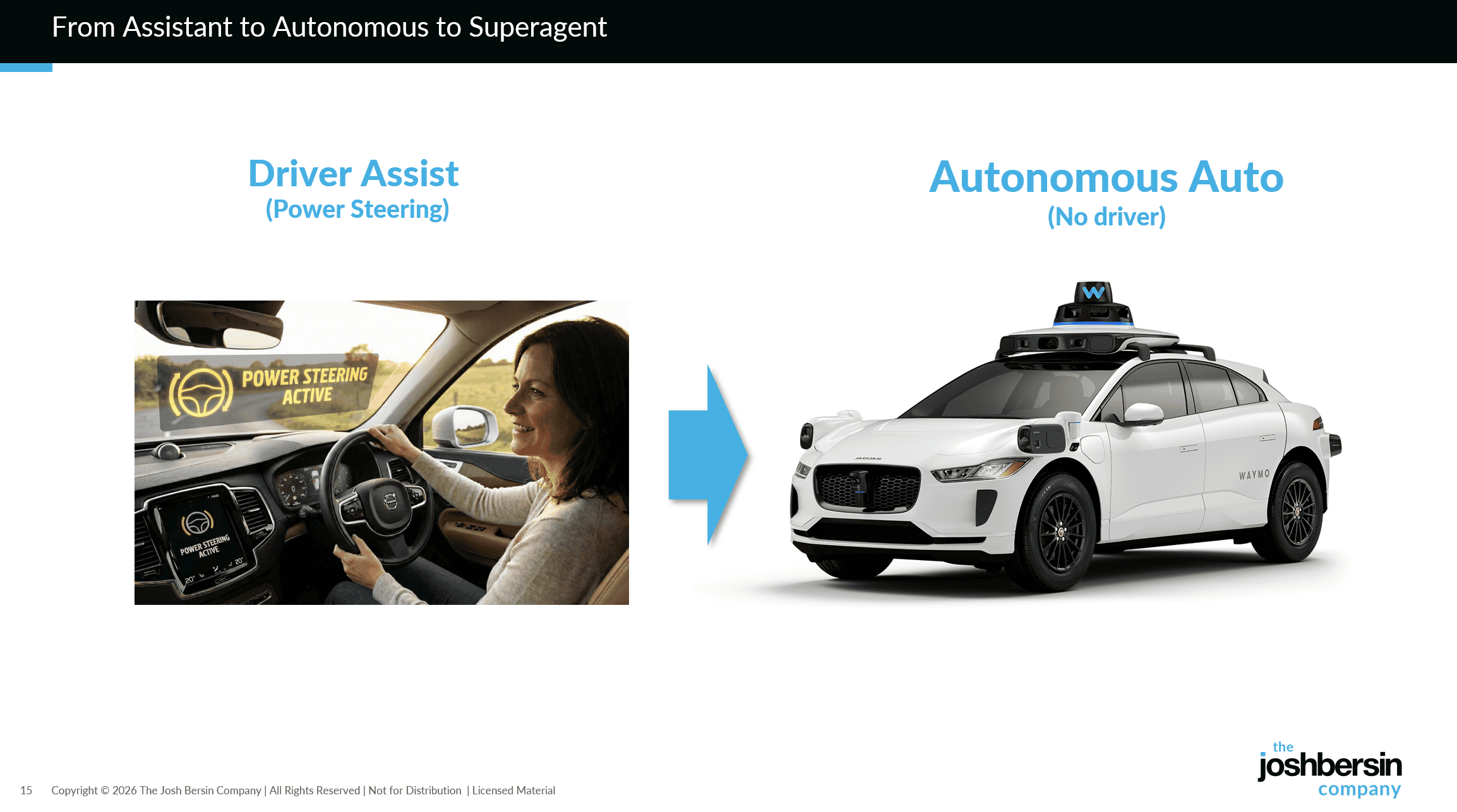
The author of the original analysis posits an analogy to illustrate SAP’s approach: comparing it to Waymo (a self-driving car that operates within the existing framework of a car) versus Zoox (a vehicle reimagined from the ground up for the passenger experience). SAP, in this view, is presented as a "Waymo" – enhancing and automating existing processes within its current ERP structure rather than completely reinventing the fundamental architecture of business operations.
This distinction is critical. While SAP’s AI agents are designed to make existing systems operate more autonomously and effectively, they are primarily focused on optimizing current workflows rather than radically changing how business is conducted. This approach offers significant immediate benefits by improving efficiency and reducing manual effort within complex SAP environments. However, it suggests that the full revolutionary potential of AI, which could involve complete process redesign, may be a future evolution for SAP.
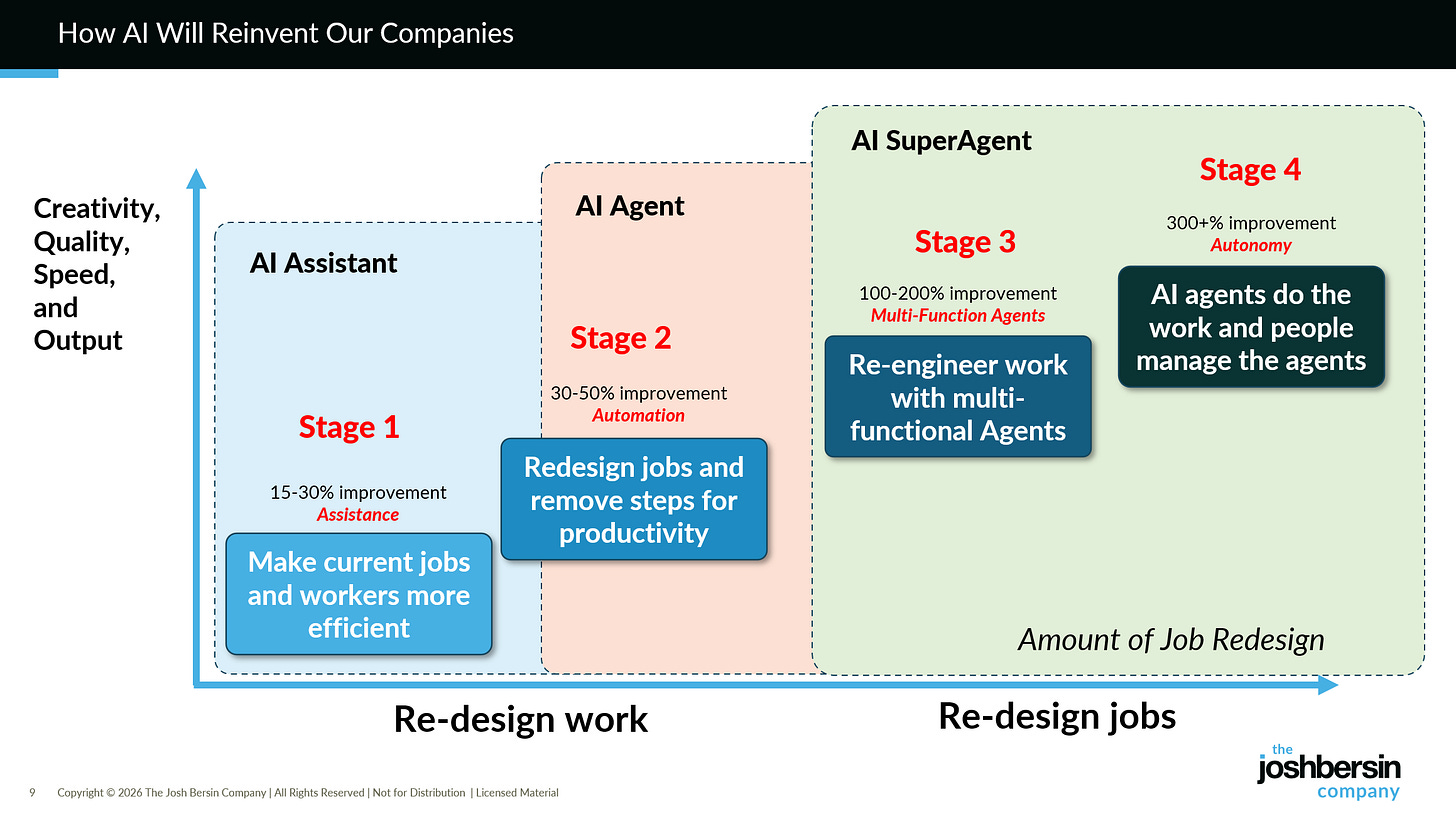
The company’s four-stage model for AI agent use cases highlights that while automation (Stage 2) provides value, Stages 3 and 4, which likely involve more sophisticated redesign and optimization, offer substantially higher Return on Investment (ROI). SAP’s current focus on automation is a pragmatic first step, leveraging its deep integration into business processes.
Technological Underpinnings: The AI Layer
Beneath the surface of "The Autonomous Enterprise" lies a sophisticated AI architecture designed for enterprise-scale operations. A central component is a large blue AI layer, which integrates a data fabric and numerous AI models. Notably, this layer features a significant "context window," allowing SAP to feed vast amounts of business data into its AI models.
A groundbreaking element is SAP’s proprietary tabular data model, SAP-RPT-1.5. This model is specifically engineered to analyze, evaluate, and model tabular data, which forms the bedrock of virtually all business software. Unlike general-purpose Large Language Models (LLMs) that can sometimes struggle with structured data, SAP-RPT-1.5 is optimized for massive datasets, enabling users to discover, analyze, model, and perform "what-if" scenarios on complex, real-time business information. This innovation is particularly exciting for data professionals, offering a playground for exploring intricate business data.
The SAP Knowledge Graph: The "Brain" of the System
At the heart of the architecture lies the SAP Knowledge Graph. This component is described as the "brains" of the system, meticulously mapping the thousands of business entities, structures, and rules within SAP into a semantic layer that AI agents can understand and interact with. When a user poses a query, whether a simple request for information on family leave or a complex analytical question, the Knowledge Graph translates it into context-specific queries that allow the AI to retrieve the necessary data and information.
This semantic layer is crucial for enabling natural language interactions with complex enterprise systems. It bridges the gap between human language and the intricate, often highly technical, structure of ERP data. Furthermore, an intelligence layer called Galileo, integrated into SAP and currently available, acts as an AI-driven advisor for HR, human capital, and leadership, leveraging the Knowledge Graph and Joule.
Joule: The User Interface and Development Platform
Joule, SAP’s AI copilot, serves as the primary user interface for employees and administrators interacting with "The Autonomous Enterprise." It is also a powerful development tool for creating new agents. Initially launched as a chatbot for transaction automation, Joule has evolved significantly.
The new Joule Studio is positioned as an enterprise-grade development environment, moving beyond simple "vibe coding" to offer a robust platform for designing, building, testing, integrating, and managing agents of varying complexity. This empowers IT teams and SAP developers with a comprehensive toolkit to create bespoke agents that can interact with the vast SAP ecosystem.
The potential here is substantial: developers can use Joule to potentially "re-design SAP" by creating highly personalized onboarding systems, custom development pathways, or entire employee lifecycle management agents. While SAP offers pre-built agents, Joule Studio allows for customization and even entirely new agent development from scratch. This mirrors the strategies of competitors like ServiceNow and Workday, which are also positioning themselves as agent platforms. However, Joule’s direct integration with SAP’s unique data objects and modules across its suite gives it a distinct advantage for SAP customers.
For end-users, Joule acts as a conversational interface, similar to Workday’s Sana or ServiceNow’s Otto. Users can interact with Joule to ask questions and perform tasks, making enterprise software more accessible and intuitive.
Advanced Capabilities: "Big Memory" and AI Governance
A notable aspect of SAP’s announcement is the development of massive context windows designed to store an entire "company memory." This concept envisions AI models retaining a comprehensive dataset of operational knowledge, including customer data, products, processes, rules, documents, and communications. This "company corpus" can then be used for continuous analysis, modeling, and improvement.
This "company model" approach, detailed in research on HR 2030, holds the promise of identifying direct contributors to performance gaps. By capturing tribal knowledge and operational best practices within the AI model, organizations could uncover insights, such as why some sales teams engage senior executives for support while others do not, leading to significant improvements across thousands of business activities. This capability, if realized, could offer a substantial ROI, potentially rivaling or exceeding the value of simple automation.
Recognizing the inherent risks of autonomous agents, SAP has also introduced the AI Agent Hub. This system provides critical AI governance capabilities, akin to those offered by Workday and ServiceNow. It allows for the management of rules, data policies, security protocols, and operating limits for AI agents. The hub supports non-SAP agents as well, offering tools to control agent consumption, verify agent functionality, manage data connections, and coordinate agent interactions.
The challenge of agent-to-agent communication and coordination is a significant one. For example, an HR training agent should ideally coordinate with agents responsible for development planning, performance management, and employee work monitoring to ensure a cohesive and effective experience. SAP’s AI Agent Hub aims to address these complexities, providing a framework for managing these intricate dependencies.

The Future of SAP: An AI Company?
SAP CEO Christian Klein’s assertion that SAP is now an AI company is a bold statement that reflects a strategic imperative in the current technology landscape. The fear among investors and enterprise software leaders is that AI startups could disrupt the established order. However, the reality for major ERP and HCM providers like SAP, Workday, and Oracle is that rebuilding decades of complex, deeply integrated systems from scratch is a monumental undertaking.
Instead, SAP’s strategy, mirroring that of Workday and Oracle, is to re-engineer its existing robust platforms to become AI-native applications. The goal is not to discard existing investments but to leverage AI to drive cross-domain process innovation, enhance customer and employee experiences, and create smarter, more responsive systems.
This AI integration promises to deliver specialized assistants across various business functions:
- Finance: Assistants for closing processes, controlling, and related workflows.
- Spend Management: Assistants for sourcing and procurement.
- Supply Chain: Assistants for end-to-end delivery processes.
- Human Resources: Assistants for recruitment, career development, and talent management.
- Customer-Facing Functions: Assistants for sales, service, offers, and marketing.
This pervasive integration of AI, where execution is embedded within intelligent agents that operate across the entire suite, effectively makes software less visible. Customers will interact less with static workflows and more with systems that can decide, recommend, escalate, and act autonomously. This shift is also expected to influence SAP’s financial model, potentially moving towards consumption-based and outcome-driven pricing, complementing its traditional seat licensing.
Broader Implications and Analysis
SAP’s "Autonomous Enterprise" initiative represents a significant strategic move to defend its market position and drive future growth. While the immediate focus on automation provides tangible benefits by streamlining existing processes, the long-term vision of deeply integrated AI agents capable of process redesign and continuous self-optimization holds the greatest transformative potential.
The company’s investment in a proprietary tabular data model and a robust knowledge graph suggests a deep commitment to leveraging AI’s power for complex business data. The development of Joule Studio as an enterprise-grade agent development platform is also a crucial step, empowering customers and partners to build custom AI solutions tailored to their specific needs.
The success of this strategy will hinge on several factors:
- Execution: The ability to reliably deliver on the promise of autonomous agents that perform complex tasks accurately and efficiently.
- Adoption: How quickly and effectively businesses integrate these new AI capabilities into their operations.
- Innovation: SAP’s capacity to evolve its AI offerings beyond automation to true process redesign and optimization, moving further along the "Waymo" to "Zoox" spectrum.
- Competition: The ongoing race with other enterprise software giants and agile AI startups.
Despite the challenges, SAP’s strategy appears sound. By building upon its vast foundation of industry and business knowledge, and leveraging decades of customer investment, the company is well-positioned to reinvent and reinvigorate its growth trajectory in the AI era. The move towards embedding AI execution within agents promises a future where enterprise software is more intuitive, more powerful, and ultimately, more transformative for businesses worldwide. The coming years will be critical in observing how "The Autonomous Enterprise" reshapes business operations and solidifies SAP’s position in the evolving AI landscape.