The Shift Toward Decision-Driven Pedagogy
For decades, corporate training was dominated by linear modules—often referred to as "page-turners"—where learners were presented with information and subsequently tested on their ability to recall facts. However, modern learning science suggests that retention and skill acquisition are significantly higher when learners are required to apply knowledge in context. Scenario-based learning (SBL) has emerged as a preferred solution to this challenge. By placing learners in simulated workplace environments, SBL forces them to navigate complex situations and make choices that mirror real-world demands.
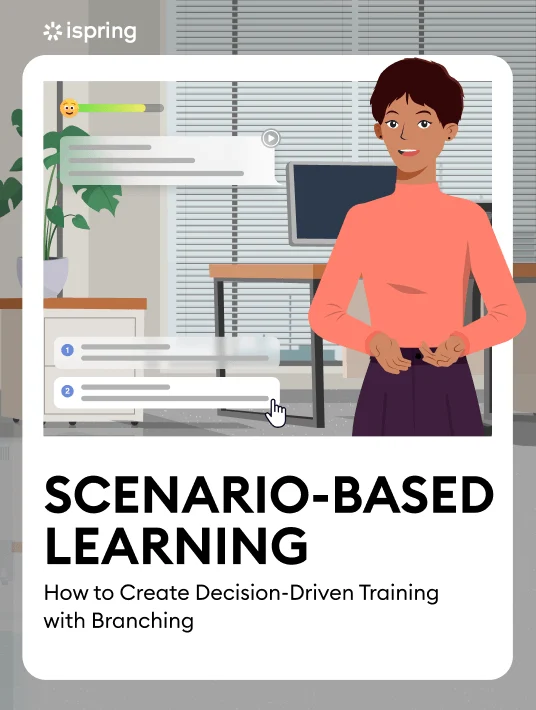
The newly launched eBook focuses specifically on branching scenarios, a sophisticated form of SBL where the learner’s decisions dictate the subsequent path of the training. Unlike linear scenarios, which lead to the same conclusion regardless of the input, branching scenarios create a web of possibilities. This "choose-your-own-adventure" style of learning provides immediate feedback through consequences, allowing employees to see the direct impact of their actions in a risk-free environment. This methodology is particularly effective for high-stakes roles in healthcare, emergency services, and corporate leadership, where a single decision can have profound financial or safety implications.
Chronology of Development and Release
The development of "Scenario-Based Learning: Decision-Driven Training With Branching" follows a three-year period of intensive research by iSpring Solutions into user engagement patterns within Learning Management Systems (LMS). Beginning in early 2024, iSpring identified a recurring "engagement cliff" where learner interest dropped sharply after the ten-minute mark in traditional video-based or slide-based courses.
By mid-2025, the project shifted toward the creation of a definitive framework for branching logic that could be scaled across various industries without requiring massive production budgets. The eBook underwent a rigorous peer-review process involving instructional designers and corporate training officers throughout the first half of 2026. Its official release on September 9, 2026, on the eLearning Industry platform represents the culmination of these efforts, offering a distilled version of best practices that have been tested in diverse corporate settings.
Technical Architecture of Branching Scenarios
One of the primary barriers to the adoption of branching scenarios has been the perceived complexity of their design. The iSpring guide seeks to demystify this process by breaking down the architecture of a scenario into manageable components. According to the eBook, an effective branching scenario consists of three core elements: the Challenge, the Choice, and the Consequence.
![Scenario-Based Learning: How To Create Decision-Driven Training With Branching [eBook Launch]](https://cdn.elearningindustry.com/wp-content/uploads/2026/09/shutterstock_2637057583.jpg)
- The Challenge: This is the setup or the "hook." It presents a realistic workplace dilemma that requires a decision.
- The Choice: Learners are presented with several options, ranging from the ideal response to common mistakes or "distractors."
- The Consequence: This is where the "branching" occurs. Based on the choice, the narrative shifts, showing the learner the outcome of their decision rather than simply telling them they were "correct" or "incorrect."
The guide emphasizes that for training to be effective, these scenarios do not need to be infinitely complex. In fact, over-branching can lead to "cognitive overload," where the learner becomes more focused on the mechanics of the game than the actual learning objectives. The eBook provides strategies for creating "bottleneck" points where various branches converge, ensuring the training remains focused and manageable for developers.
Supporting Data and Market Trends
The release of this eBook is supported by a wealth of data indicating the superior efficacy of active learning models. According to the 2026 Global L&D Report, organizations that implement scenario-based training see a 40% increase in post-training performance metrics compared to those using traditional methods. Furthermore, the "forgetting curve"—the rate at which learners lose information over time—is significantly flattened when training involves decision-making components.
Research cited in the context of this launch suggests that:
- Retention Rates: Practice-by-doing (a hallmark of SBL) results in 75% to 90% retention, whereas reading or listening results in only 10% to 20%.
- Cost-Efficiency: While branching scenarios require more upfront investment in design, they reduce the need for repeated training sessions and lower the costs associated with real-world errors.
- Learner Preference: 82% of employees surveyed in 2025 reported a preference for interactive simulations over static video presentations.
The eLearning market itself is projected to reach $450 billion by 2028, with interactive and immersive technologies (including SBL and VR-lite simulations) representing the fastest-growing segment. The iSpring eBook positions itself as a vital tool for instructional designers looking to stay competitive in this rapidly evolving landscape.
Industry Reactions and Expert Perspectives
The launch has garnered significant attention from the global L&D community. Industry analysts suggest that the emphasis on "judgment" over "recall" is a direct response to the rise of Artificial Intelligence in the workplace. As AI takes over routine tasks, the value of human workers increasingly lies in their ability to handle nuance, ambiguity, and complex interpersonal dynamics—skills that are best honed through scenario-based practice.
"The challenge for modern trainers is no longer just the delivery of information, but the facilitation of experience," noted one senior instructional designer during the eBook’s pre-launch webinar. "This guide provides a pragmatic approach to building those experiences without needing a team of software engineers."
![Scenario-Based Learning: How To Create Decision-Driven Training With Branching [eBook Launch]](https://cdn.elearningindustry.com/wp-content/uploads/2026/09/shutterstock_2637057583-768x431.jpg)
Corporate leaders have also expressed interest in the methodology for its ability to standardize high-level decision-making. In sectors like customer service and sales, branching scenarios allow companies to train thousands of employees to handle difficult conversations with a consistent, brand-aligned approach, while still allowing for individual agency and problem-solving.
Broader Impact and Future Implications
The implications of "Scenario-Based Learning: Decision-Driven Training With Branching" extend beyond simple course design. It signals a broader shift in how corporate success is measured. By moving toward decision-driven training, organizations are essentially adopting a "competency-based" model of workforce development. This approach allows HR departments to identify which employees possess the natural aptitude for leadership or crisis management based on their performance in complex simulations.
Furthermore, the guide touches upon the integration of branching scenarios with emerging technologies. As AI-driven authoring tools become more prevalent, the ability to generate realistic branching paths will become faster and more automated. However, the foundational principles of narrative flow and instructional integrity—the core themes of the iSpring eBook—remain essential to ensure that AI-generated content remains pedagogically sound.
In the long term, the widespread adoption of these techniques is expected to lead to safer workplaces and more resilient business models. In high-risk industries, the ability to "fail safely" within a branching scenario can prevent catastrophic real-world consequences. For the broader corporate world, it fosters a culture of accountability and critical thinking, as employees become accustomed to considering the long-term impact of their daily choices.
Conclusion
The release of the iSpring Solutions and eLearning Industry eBook provides a necessary framework for the next generation of digital education. By focusing on the mechanics of branching and the psychology of decision-making, the guide offers a clear path forward for organizations looking to modernize their training programs. As the workforce continues to navigate an era of rapid technological change and increasing complexity, the ability to design training that effectively develops human judgment will remain a critical competitive advantage. The eBook is currently available for download, offering instructional designers, HR professionals, and business leaders the tools they need to transform their educational offerings into powerful drivers of organizational performance.