San Jose, CA – [Insert Date] – ServiceNow has unveiled a sweeping suite of announcements, signaling its aggressive intent to capture a dominant position in the burgeoning enterprise Artificial Intelligence (AI) market. The company’s strategic vision, aimed at doubling its revenue to $30 billion within the next four years, centers on becoming the essential management layer, security gateway, and operational front door for every AI agent deployed within an organization. This move positions ServiceNow to potentially monetize the rapidly expanding AI ecosystem, a strategy that echoes similar ambitions from major tech players like Microsoft and Workday.
The announcements come at a pivotal moment for enterprise software, with many observers suggesting the "SaaS Apocalypse" may be receding, replaced by a new era focused on AI-driven transformation. ServiceNow’s strategy is clearly articulated: "We are turning enterprise AI chaos into control," a message that resonates with Chief Information Officers grappling with the rapid proliferation of AI tools. This contrasts with a sentiment from Workday, which posits that "AI agents without enterprise governance are lawless by design." While the appeal to CIOs for control and governance is evident, the core challenge for many businesses remains the practical demonstration of scalable Return on Investment (ROI) for their AI initiatives. The success of ServiceNow’s new offerings will hinge on their ability to not only provide control but also to catalyze faster, more tangible business value.
One journalist has aptly described ServiceNow’s new approach as a "tollgate for agents," implying a paid passage for organizations to integrate and manage AI within their operations. This metaphor highlights the potential for a new revenue stream derived from the very infrastructure that underpins AI agent deployment and oversight.
The Action Fabric: Centralized AI Oversight and Monetization
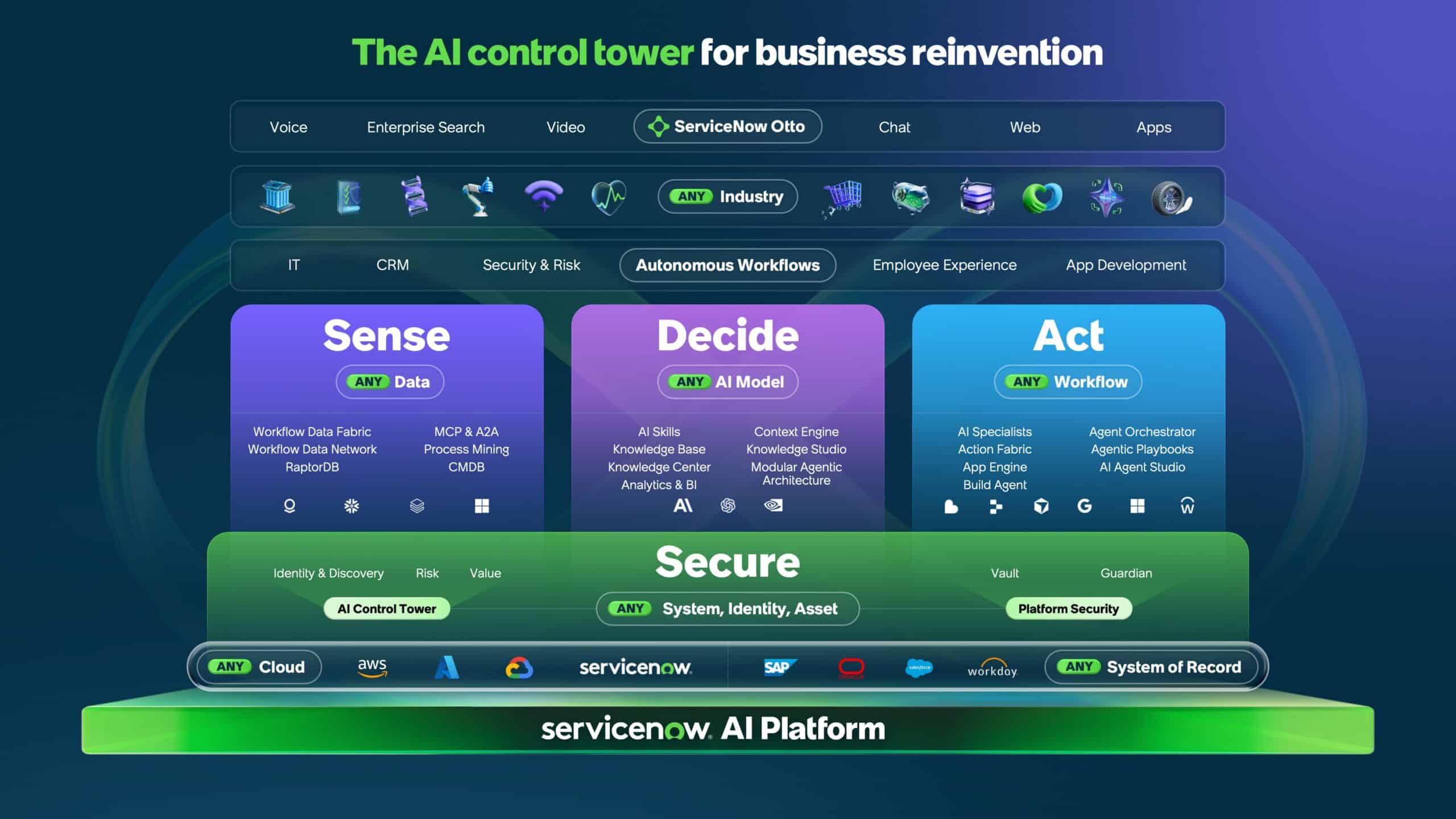
At the heart of ServiceNow’s new strategy is the "Action Fabric," a sophisticated monitoring and management layer designed to oversee all AI agent activities. This concept aligns with parallel visions from Microsoft (Agent 365) and Workday (Agent System of Record), all aiming to establish a comprehensive governance framework for AI agents.
ServiceNow’s Action Fabric, delivered via an MCP server, emphasizes an open architecture:
- Universal Agent and Model Compatibility: The platform is designed to connect with any AI agent, regardless of its origin or the underlying AI model it utilizes. This includes agents developed internally, by third-party vendors, or through partnerships, offering a degree of vendor neutrality in agent integration.
- Openness to All AI: The management tools are not only for ServiceNow agents but can also be invoked by external AI agents. This allows for the automation of management tasks and the seamless integration of third-party management frameworks, fostering a more dynamic and interconnected AI ecosystem.
- Robust Security and Control: All agents connected to the Action Fabric undergo rigorous authentication, permission scoping, auditing, and continuous monitoring. This focus on "Full Control; Full Trust" aims to mitigate risks associated with unmanaged AI deployments, although the specifics of how this integrates with existing business rules from platforms like Workday or SAP require further clarification.
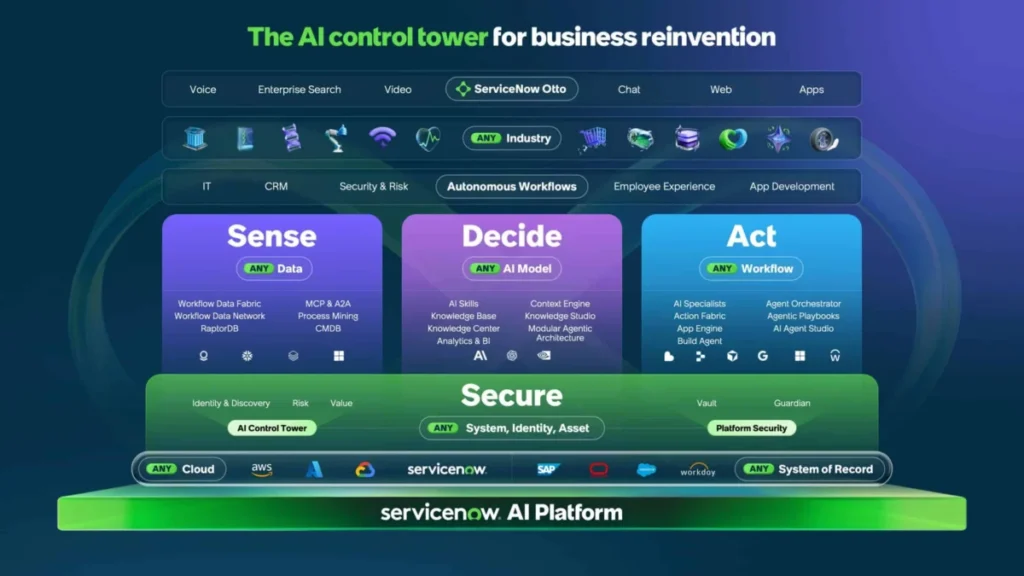
This initiative leverages ServiceNow’s two decades of investment in foundational IT management technologies. Key components include its Configuration Management Database (CMDB), the Workflow Data Network, pre-configured business rules, Security Center, and identity and access controls. Collectively, these elements form a comprehensive IT management system for both AI agents and enterprise applications, positioning ServiceNow as a platform ready for an AI-driven "reinvention."
This strategic pivot mirrors efforts by competitors. Workday, for instance, is moving from a "system of record" to a "platform of agents" with its Agent System of Record and Agent Gateway, which allow external agents to interact with Workday’s core functionalities on a per-call basis. Similarly, SAP mandates that agents access its business rules through SAP’s Business Accelerator Hub, with usage-based metering. The choice for enterprises will likely depend on their existing investments in platforms like Workday or SAP, and their preferred development environments for AI agents.
Otto: The "Front Door" to Enterprise AI and Employee Experience
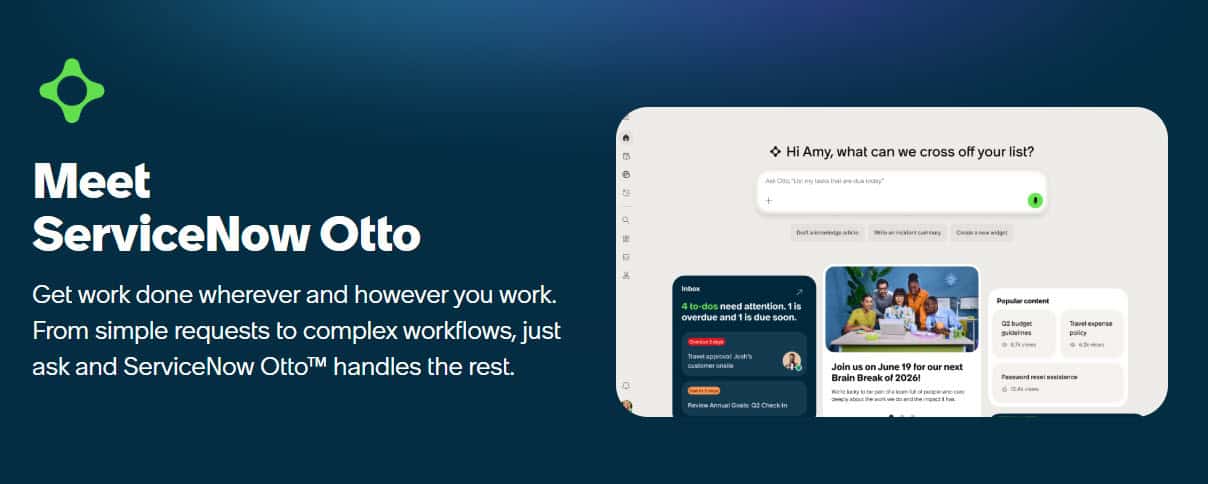
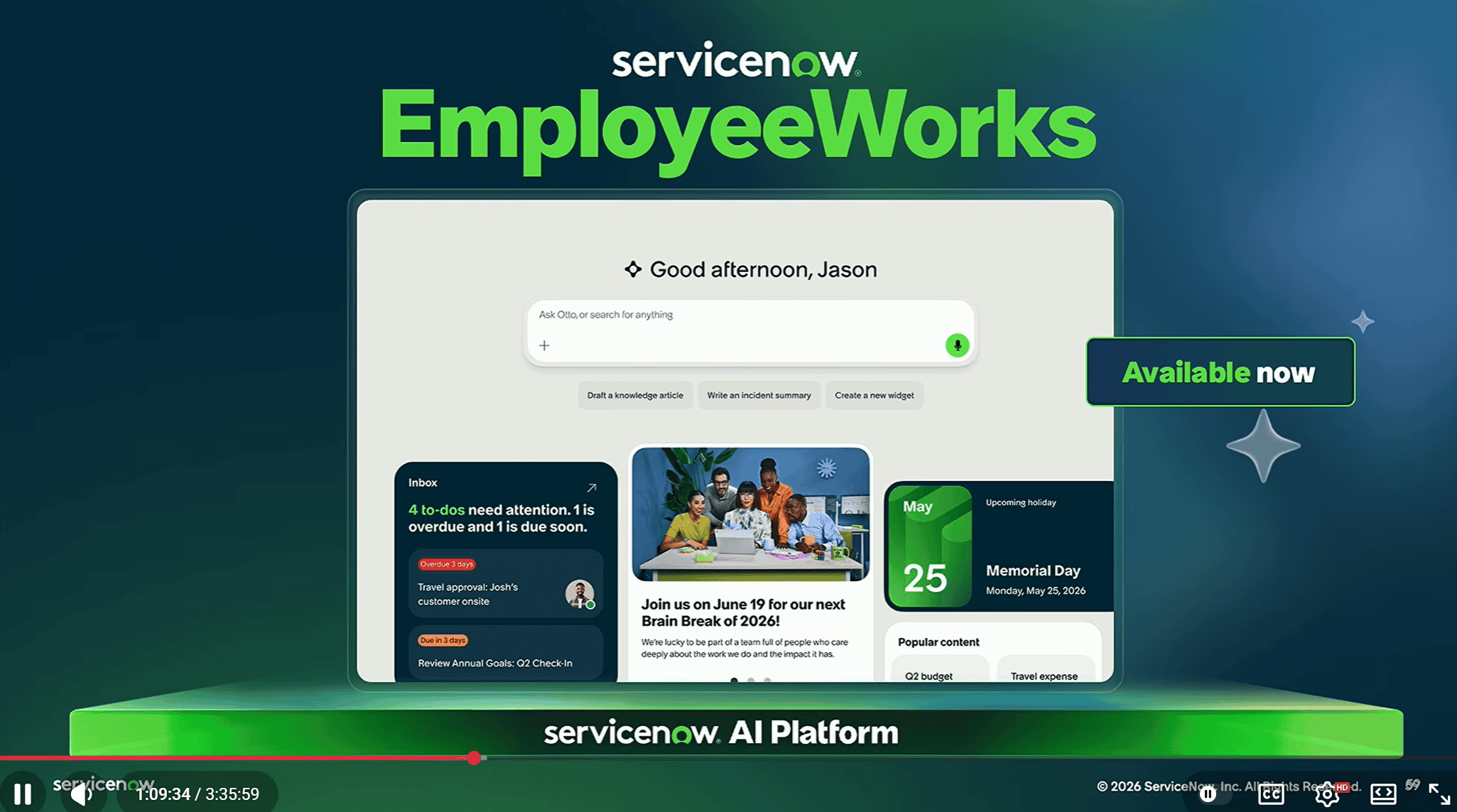
ServiceNow is also redefining its Now Assist capabilities, rebranding and integrating them into "Otto," a persona-driven AI agent positioned as the primary interface for employees to access enterprise resources and services. This move directly challenges Workday’s introduction of "Sana" as its enterprise front door and aligns with a broader trend of creating more intuitive and accessible AI interactions for the workforce.
Otto, which integrates Moveworks’ technology, is designed to serve as a friendly, employee-facing tool for a wide range of tasks, including search, knowledge management, and general assistance. ServiceNow is framing Otto as the new standard for Employee Experience (EX), moving beyond traditional "Employee Self-Service" models.
The branding of Otto as a distinct persona is intended to make AI more approachable and human-centric. Bhavin Shah, founder of Moveworks, now leads the Otto initiative, emphasizing an "open" approach under the "EmployeeWorks" umbrella. This suggests a strategy to consolidate various employee-facing AI functionalities into a unified and accessible platform.
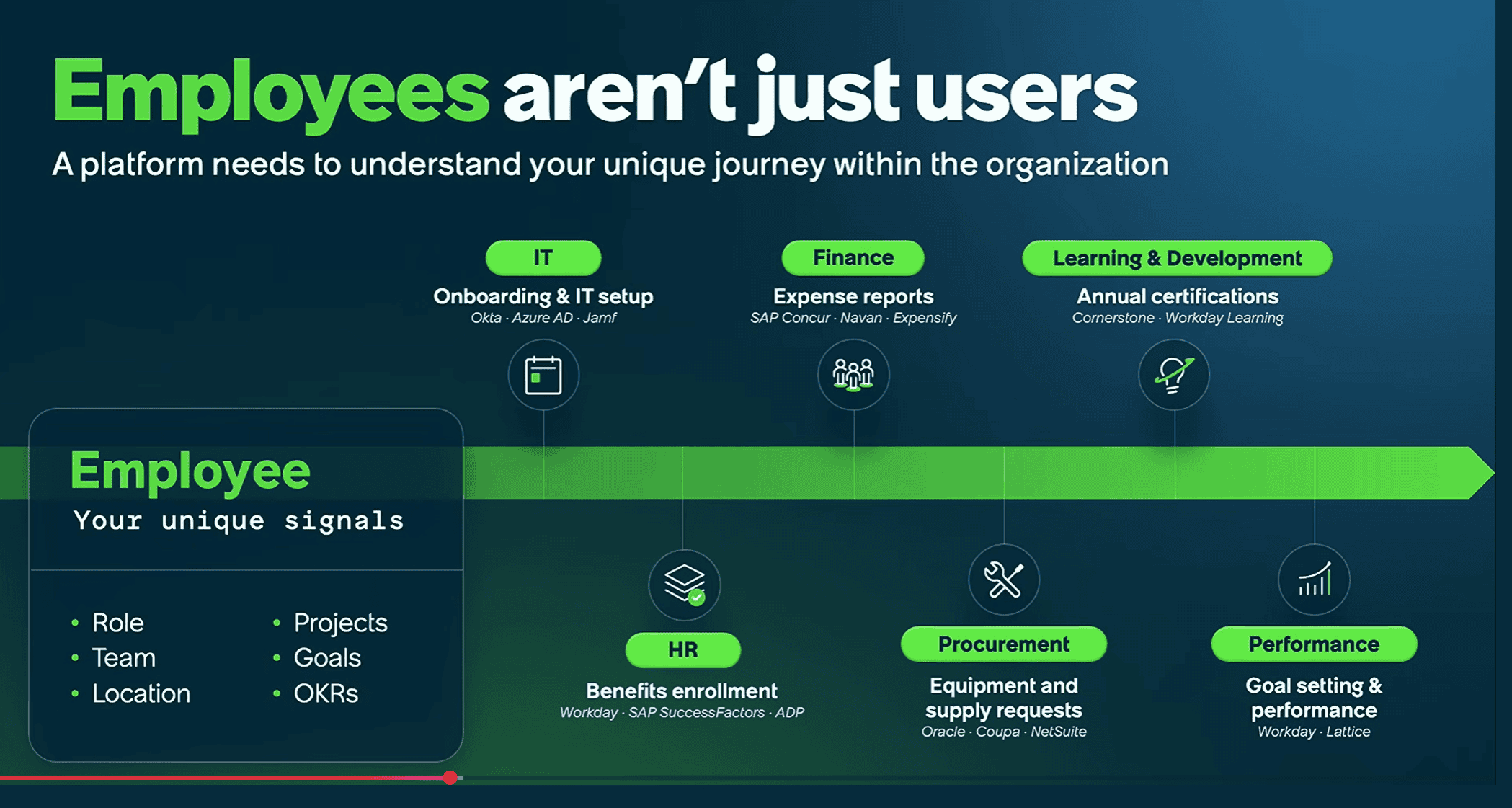
While Otto aims to be a comprehensive EX platform, the inherent complexity of employee needs presents a significant challenge. Real-world employee inquiries often span multiple domains, requiring deep integration with various systems for HR, IT, policy, and general operational support. ServiceNow acknowledges that Otto will require extensive integrations to fulfill its promise, particularly in areas like crisis management or specialized support scenarios, as exemplified by complex use cases involving employee support during geopolitical events.
The competitive landscape for EX platforms is intense, with major players like Microsoft and Zoom, alongside numerous Human Capital Management (HCM) vendors, vying for market share. ServiceNow’s approach of naming and personifying its AI agent is a deliberate strategy to differentiate itself in this crowded field.
The AI Control Tower: Governance, Security, and ROI Measurement
ServiceNow’s "AI Control Tower" represents an ambitious vision for managing the entire lifecycle of enterprise AI. Beyond mere monitoring and provisioning, the Control Tower aims to quantify the ROI of AI agents, identify underperforming or misbehaving agents, and detect cost overruns related to token consumption. This concept draws parallels to historical IT management systems, such as IBM’s SystemView, which sought to provide a unified view and control over complex computing environments.
The vision presented by ServiceNow’s leadership emphasizes managing not just agents and workflows but also the identities and interactions of people within the enterprise. This comprehensive approach, while bold, raises questions about the balance between centralized control and empowering individual judgment, particularly in contexts where human intuition and decision-making are crucial. The Ritz Carlton’s philosophy of empowering employees to "use their own best judgment" serves as a reminder of the potential pitfalls of overly prescriptive AI governance.
The ServiceNow Autonomous Workforce: Defining AI Roles
Further elaborating on its AI strategy, ServiceNow has introduced "The ServiceNow Autonomous Workforce," a framework of pre-defined "AI Specialists" designed to perform specific autonomous tasks. This initiative aims to provide organizations with ready-to-deploy AI roles, addressing the current ambiguity in how businesses are naming and integrating their AI agents.
These AI Specialists span various business functions, including:
- IT Operations: Site Reliability AI Specialist, AI Operations Specialist, Level 1 Service Desk Specialist.
- Human Resources: HR Service Delivery AI Specialist, Case Management Specialist, Third-Party Screening Specialist.
- Security & Architecture: Enterprise Architecture Specialist, Vulnerability Exposure Specialist.
This move aligns with broader industry discussions on the future of work and the evolving roles of AI. By defining these specialized AI roles, ServiceNow is helping organizations conceptualize how AI can augment or automate existing job functions, potentially leading to the centralization of tasks previously handled by multiple individuals. The Galileo platform, now integrated as an add-on to Otto, further enhances these capabilities, offering a "digital HR consultant" experience.
The Context Engine: Unifying Enterprise Operations
ServiceNow’s "Context Engine" is another key innovation, designed to create a unified operational view of the enterprise. This context layer identifies and locates existing system business rules, metadata, organizational structures, privacy policies, and business workflows, many of which originate from ERP and other core systems.
The Context Engine aims to build a "graph of graphs," integrating ServiceNow’s workflow data network with knowledge, action, asset, and decision graphs. This comprehensive data integration is intended to enable the platform to learn and adapt to how a business operates, with an added "autonomous data analytics" capability facilitated by an AI Analyst Specialist.
This area is highly competitive, with Microsoft’s Workday offering similar capabilities through Microsoft WorkIQ and its extensive connectors to the Microsoft Graph. Gloat has also entered the fray with Loomra, focusing on human capital applications. The ability of these platforms to provide deep contextual understanding of enterprise operations will be a critical differentiator.
A Bold Vision for Future Revenue and the Evolving Software Model
ServiceNow’s comprehensive suite of AI offerings underscores a significant revenue growth strategy, aiming to capitalize on the projected trillion-dollar opportunity in enterprise AI. The company’s approach moves beyond traditional per-seat licensing to a model where revenue is increasingly driven by agent usage and the value derived from AI-powered automation and insights. This mirrors the broader industry trend of "software as a service" evolving into a more usage-centric and outcome-driven model.
The recent surge in AI services companies, such as Anthropic’s partnership with Blackstone and OpenAI’s joint venture, highlights the maturation of the enterprise AI market and the growing demand for integrated AI products and services.
However, the economic viability of this strategy remains a subject of ongoing analysis. While AI promises to enhance efficiency and potentially reduce labor costs, the substantial investment required for AI infrastructure, management, and governance needs to be offset by demonstrable productivity gains and business transformation. As illustrated by Uber’s recent decision to scale back on software agents in favor of human labor, the cost-benefit analysis of AI adoption is dynamic and subject to economic realities.
The emphasis on "transforming work" rather than simply "automating work" suggests a need for organizations to strategically redesign their processes and workflows before fully embracing the infrastructure for AI management. Furthermore, the ease of development and the availability of robust management tools within competing platforms like Microsoft Copilot and Workday could influence customer choices. The "total cost of AI transformation" will encompass not only infrastructure and governance but also the crucial aspects of development, maintenance, and business rule implementation.
Ultimately, the vision articulated by ServiceNow and its competitors points towards a future where AI agents are integral to enterprise operations, driving efficiency, security, and new forms of employee engagement. The challenge for businesses will be to navigate this complex landscape, ensuring that the pursuit of AI-driven control and efficiency does not overshadow the fundamental human element of work, where judgment, adaptability, and innovative thinking remain paramount. The long-term success of these ambitious strategies will depend on their ability to deliver tangible business value and foster a more intelligent, efficient, and empowered workforce.