
In today’s increasingly complex and interconnected global business landscape, the ability of leaders to effectively span boundaries is no longer a desirable trait but a critical imperative for organizational success. Traditional management models, which often focused on protecting departmental or functional silos, are proving inadequate. Instead, executives must evolve into leaders who can actively bridge divides, fostering collaboration and driving collective progress across a diverse array of colleagues. This evolution from manager to boundary-spanning leader is key to unlocking innovation, solving complex problems, and navigating the perpetual challenges of the modern organizational ecosystem.
The core of this leadership transformation lies in cultivating the capability to foster collaboration and establish a unified direction, alignment, and commitment across various organizational divides. These boundaries can manifest in numerous ways, including geographical locations, distinct organizational cultures, differing levels within the hierarchy, and varied professional backgrounds. The ultimate aim of boundary spanning is to serve a higher vision or overarching organizational goal, ensuring that individual efforts contribute to a cohesive and impactful collective outcome.
Examples of this crucial skill in action are commonplace: a team leader representing their unit’s needs to senior management or external stakeholders, a project manager orchestrating efforts across multiple departments, or an individual seeking critical information from external subject matter experts. The importance of this cross-boundary collaboration is not confined to the executive suite; it is vital at every leadership level, across all teams and groups, and throughout entire organizations and complex systems. In an era where disruption is a constant, the capacity to connect disparate elements and harness collective intelligence is paramount.
The Multifaceted Benefits of Boundary Spanning Leadership
Leaders who actively engage in spanning boundaries unlock a significant competitive advantage. Their ability to foster collaboration across diverse groups directly translates into enhanced problem-solving capabilities, the generation of more innovative solutions, and a greater capacity to adapt and thrive in our interdependent, complex world. The tangible benefits include:
- Enhanced Innovation: By drawing on diverse perspectives and knowledge bases from across the organization and beyond, leaders can stimulate novel ideas and approaches that might otherwise remain undiscovered.
- Improved Problem-Solving: Complex challenges rarely exist within a single organizational silo. Boundary spanning allows leaders to access the necessary expertise and resources from various areas to develop comprehensive and effective solutions.
- Increased Agility and Adaptability: In a rapidly changing environment, the ability to connect different parts of the organization and external networks enables faster responses to market shifts and emerging threats.
- Greater Efficiency and Resource Optimization: By breaking down silos, leaders can facilitate the sharing of best practices, reduce duplication of effort, and ensure resources are allocated more strategically across the organization.
- Stronger Organizational Cohesion: Fostering collaboration and understanding across different groups can break down "us vs. them" mentalities, leading to a more unified and purpose-driven workforce.
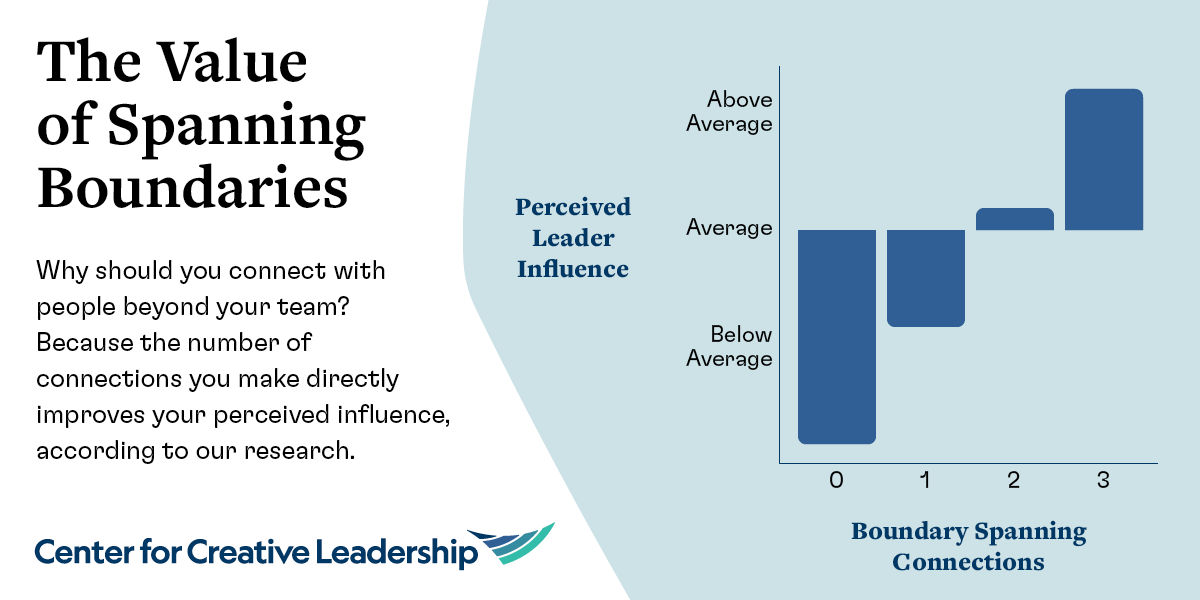
Beyond organizational gains, the personal benefits for leaders are also significant. Proprietary research conducted by the Center for Creative Leadership (CCL) using their Looking Glass, Inc.® simulation, which involved over 300 senior leaders across more than 50 teams, revealed compelling insights. Conversational analytics from this simulation indicated that individuals who consistently engaged in boundary spanning were perceived as substantially more influential within their teams. Conversely, those who failed to forge these connections exhibited considerably less influence. This data underscores a direct correlation between outward and cross-functional engagement and a leader’s perceived impact.
Further reinforcing the significance of this skill, CCL’s past research on boundary spanning leadership, which surveyed over 125 senior executives, highlighted a substantial gap between perceived importance and actual effectiveness. An overwhelming 86% of these top leaders deemed effective collaboration across boundaries as "extremely important" in their roles. However, a mere 7% reported feeling "very effective" at this crucial task, revealing a significant 79% effectiveness gap. This disparity clearly indicates that while the value of boundary spanning is widely recognized, the development of this skillset remains a critical area for improvement across the leadership spectrum.

Navigating the Complex Terrain of Organizational Boundaries
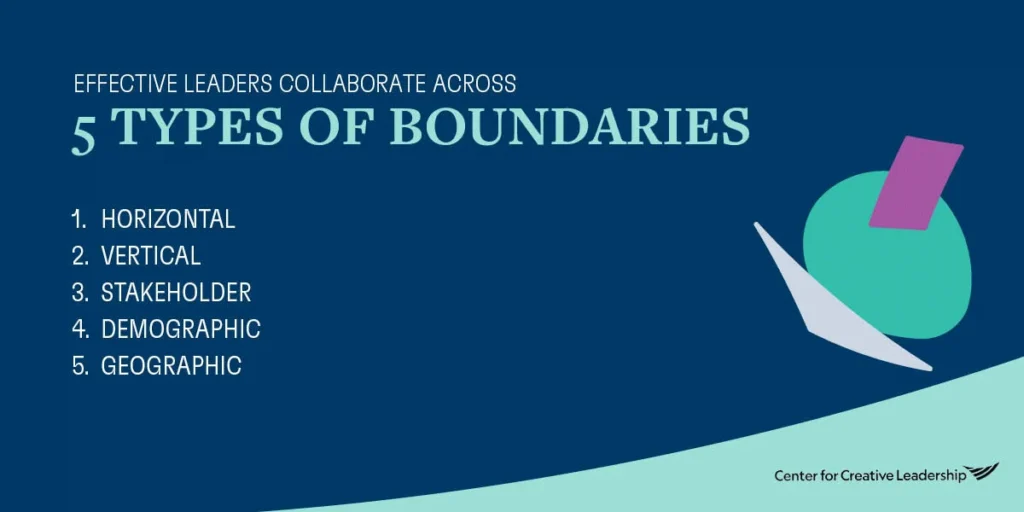
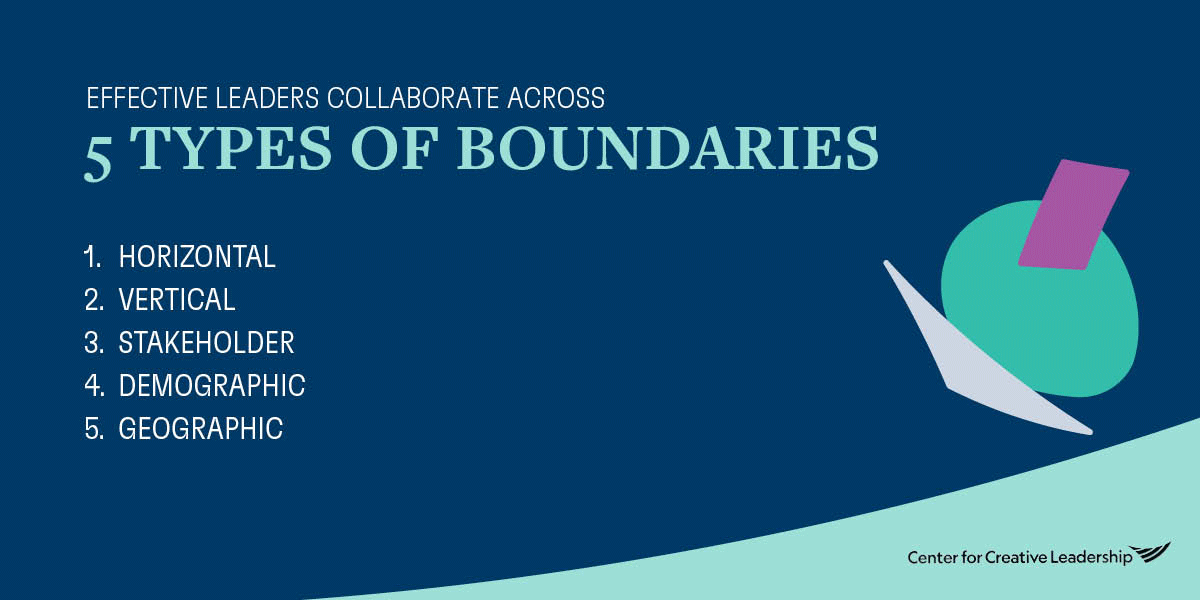
To effectively span boundaries, leaders must first understand the distinct types of barriers that impede collaboration within organizations. CCL’s research, drawing on insights from leaders worldwide, identifies five primary categories of organizational boundaries:
1. Horizontal Boundaries
These boundaries separate groups based on areas of expertise, function, or experience. While often the most valuable for leaders to bridge, they are also frequently the most challenging. The negative consequences of unmanaged horizontal boundaries are evident when one function is prioritized over another, when the success of one product line jeopardizes another, or when departments work at cross-purposes.
Senior executives consistently cite challenges arising from spanning horizontal boundaries as a primary concern, nearly three times more frequently than issues related to other boundary types. Facilitating cross-functional collaboration is a pervasive leadership challenge, directly reflecting the inherent difficulty in traversing these functional divides.
Data from simulations, such as CCL’s Looking Glass, Inc.®, helps illuminate why these horizontal connections are so arduous. This analysis suggests that horizontal connections are the least likely to be maintained under pressure, particularly when considering formal roles and organizational structures. Individuals tend to connect more readily with senior leaders or their immediate team members than with peers in different divisions.
Despite these difficulties, horizontal boundaries often serve as crucial conduits for new information and innovative ideas entering a team or organization. The prevalence of matrixed and regional structures in many modern organizations, while intended to foster collaboration, can inadvertently erect walls between essential working groups. This often leads to the common organizational imperative of "silo-busting." Facilitating lateral, cross-functional collaboration is a recurring theme in client engagements with organizational leadership experts.
While initial inclinations in collaboration might focus on immediate networks and readily available resources, effective boundary spanning also necessitates robust ties to external stakeholders. Research on team effectiveness indicates that 89% of respondents believe that strong team-to-team relationships are the primary driver of effective boundary spanning. However, these externally focused efforts must be complemented by strong internal team processes, including clear priority setting, defined roles, and cultivated trust. Without this internal foundation, external boundary spanning may not yield its full potential benefits.
2. Vertical Boundaries
Vertical boundaries traverse levels of rank, seniority, authority, and power within an organization. The hierarchical structure, separating groups into top, middle, and entry-level tiers, is a common organizational feature.

Compared to horizontal boundaries, vertical boundaries were less frequently cited as a challenge by executives in earlier research. This aligns with emerging findings from simulations where vertical connections tend to occur more frequently and are engaged in regardless of an individual’s formal authority. While these boundaries are often spanned more readily and present fewer challenges for senior leaders, ensuring that employees feel comfortable voicing concerns and sharing information up the hierarchy remains critical.
The risk associated with over-reliance on vertical boundary spanning is the potential for the organization to become siloed, with expertise confined to different pockets. Leaders and their team members can serve as a natural conduit for issues, questions, and resource sharing, but this should not be the sole avenue for cross-boundary interaction.
3. Stakeholder Boundaries
Spanning boundaries with organizational stakeholders is inherently complex and multifaceted. Stakeholder groups can include clients, customers, shareholders, boards of directors, partners, alliances, suppliers, vendors, advocacy groups, governmental and non-governmental agencies, and local, regional, national, and global communities. While vital to organizational success, leaders often have limited formal authority over these external entities. Recent research on leadership ratings indicates that the perspectives of board members, for example, provide unique and valuable information in predicting senior leaders’ effectiveness, underscoring the importance of effectively engaging these diverse groups.
4. Temporal Boundaries
These boundaries relate to the perception and management of time, encompassing past, present, and future orientations. Different departments or individuals may have varying perspectives on urgency, planning horizons, and the value of historical data versus future projections, creating friction and hindering coordinated action.
5. Geographic Boundaries
In a globalized world, organizations frequently operate across different locations, time zones, and cultural contexts. Spanning these geographic boundaries requires navigating diverse communication styles, work practices, and cultural norms to foster a cohesive and productive global team.
Implementing Boundary Spanning Strategies for Leaders
The solutions to many of today’s most pressing business challenges lie at the intersection of multiple organizational boundaries. Therefore, truly effective leadership necessitates the ability to create direction, alignment, and commitment across these critical divides. While leading beyond one’s immediate organizational chart, across diverse stakeholder interests, or beyond the confines of one’s own division can be demanding, it is undeniably achievable.
Through extensive research and practical experience in fostering more interdependent forms of leadership, a set of three universal strategies has emerged for leaders and organizations that effectively span boundaries:
- Managing Boundaries: This foundational strategy focuses on establishing clear protocols for interaction and defining how different groups will operate together. It is about creating a secure and predictable framework for collaboration.
- Forging Common Ground: This strategy emphasizes building trust, developing a shared understanding of goals, and cultivating a collective investment in the work at hand. It is about creating shared purpose and mutual reliance.
- Discovering New Frontiers: This strategy involves actively seeking out novel opportunities, insights, and perspectives by engaging with diverse networks and embracing innovation. It is about continuous learning and forward momentum.
Strategic Approaches to Boundary Spanning
To implement these strategies effectively, leaders should approach boundary spanning with intention and a clear understanding of the specific context.
Identifying Relevant Boundaries: The first step involves a thorough assessment of the challenge at hand and identifying which boundaries are most prevalent or pose the greatest obstacle. This assessment is best conducted collaboratively with the team, asking critical questions like, "What are we aiming to achieve with these stakeholders?" and "Who is best positioned to initiate this boundary-spanning effort?"
Selecting Effective Tactics: Once the boundaries are understood, leaders must choose tactics that align with the three universal strategies to clarify focus and maximize effectiveness. It is often beneficial to concentrate on one strategy at a time until tangible improvement is observed before moving to the next.
Tactics for Managing Boundaries: These tactics are crucial for establishing a stable foundation for collaboration:
- Clarifying Roles and Responsibilities: Ensuring that each party understands their specific contributions and expectations.
- Establishing Communication Protocols: Defining how, when, and through which channels information will be shared.
- Defining Decision-Making Processes: Outlining how decisions will be made, who will be involved, and the escalation paths.
- Setting Clear Performance Expectations: Agreeing on measurable outcomes and how progress will be tracked.
- Developing Shared Norms and Values: Creating a common understanding of acceptable behaviors and organizational culture.
Tactics for Forging Common Ground: Building trust and shared commitment is paramount:
- Facilitating Relationship Building: Creating opportunities for individuals from different groups to connect on a personal level.
- Identifying Shared Interests and Goals: Highlighting common objectives that transcend individual departmental aims.
- Promoting Mutual Understanding and Empathy: Encouraging active listening and perspective-taking across diverse groups.
- Developing Shared Language and Frameworks: Creating a common lexicon and conceptual models for discussing challenges and solutions.
- Celebrating Shared Successes: Recognizing and reinforcing collaborative achievements to build positive momentum.
Tactics for Discovering New Frontiers: This strategy focuses on innovation and growth:
- Actively Seeking Diverse Perspectives: Encouraging input from individuals with different backgrounds, experiences, and expertise.
- Engaging with External Networks: Connecting with industry peers, thought leaders, and subject matter experts outside the organization.
- Experimenting and Piloting New Ideas: Creating safe spaces for trying out novel approaches and learning from the outcomes.
- Fostering a Culture of Curiosity and Learning: Encouraging continuous exploration and the pursuit of new knowledge.
- Translating Insights into Action: Developing mechanisms to effectively integrate new discoveries into ongoing operations and strategies.
Research from simulations like Looking Glass, Inc.® suggests that even modest gains, such as maintaining just one or two additional connections, can yield significant benefits. Over time, the sustained weaving of relationships allows a network to gain a deeper understanding of itself and its members, catalyzing transformative processes that better position the network for future challenges and opportunities.
Conclusion: The Indispensable Skill of Boundary Spanning
The strategies and tactics outlined provide a practical framework for leaders to actively engage in boundary spanning within their daily work. These behaviors, skills, mindsets, and practices are best learned and applied organically through everyday interactions, whether in in-person or virtual meetings, strategic planning sessions, or any situation where boundaries become apparent.
Effective leaders consistently find ways to generate positive change, co-create innovative solutions, and make significant contributions to their organizations and communities by embracing boundary spanning as a core leadership competency. By actively seeking to bridge divides and foster collaboration, leaders can unlock the collective potential of their organizations and navigate the complexities of the modern business world with greater success.
For organizations looking to cultivate this critical leadership capability, investing in tailored learning journeys that leverage research-based modules is a strategic imperative. Topics such as Boundary Spanning Leadership, Collaboration & Teamwork, Leading Remote & Virtual Teams, and Psychological Safety & Trust are essential components of a comprehensive leadership development program in today’s interconnected global economy.








