The modern talent acquisition landscape presents an array of challenges, not least among them the often-convoluted process of securing approval for job descriptions (JDs). Many organizations find themselves in a familiar predicament: the time taken to approve a JD often eclipses the time required to actually fill the position. This pervasive issue is characterized by approval requests getting inexplicably stuck, a lack of clarity regarding approval hierarchies, and an overall sense of disarray within the JD lifecycle. These systemic failures collectively signal a critical need for optimizing the job description approval workflow, a process that is more vital than ever in the highly competitive hiring environment of 2026. This article will dissect the core issues plaguing JD approval processes and offer strategic insights and practical tips to navigate these formidable challenges.
The Bottlenecks of Bureaucracy: Common Pitfalls in JD Approval
At the heart of an inefficient talent pipeline often lies a cumbersome JD approval process. What might appear as minor administrative hurdles can quickly escalate into significant operational blockades, impacting recruitment timelines, candidate experience, and ultimately, an organization’s ability to secure top talent.
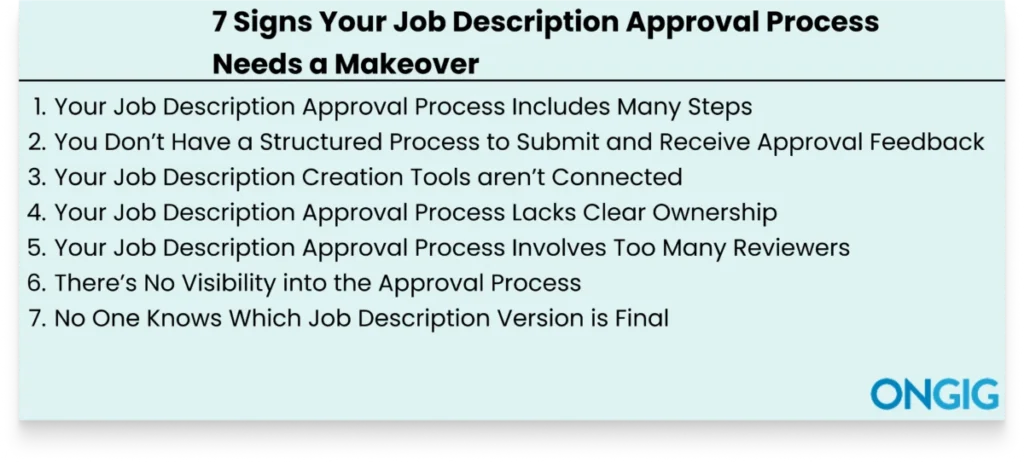
1. Over-Engineered Approval Workflows:
A primary culprit behind JD approval delays is an excessively complex workflow. Many teams, in an attempt to ensure thoroughness, inadvertently over-engineer their approval processes, incorporating an unnecessary number of steps. While each individual step may seem justifiable in isolation, their cumulative effect can stretch a task that should take a day into several weeks. For instance, a single bottleneck, such as a mandatory approval from an individual on leave or a step routinely requiring extensive back-and-forth clarification, can bring the entire process to a grinding halt. When multiple such points of potential failure are strung together—perhaps eight or nine stages in total—delays become not just frequent but the accepted norm. Industry reports suggest that upwards of 40% of recruitment delays can be attributed to such approval bottlenecks. To counteract this, organizations must rigorously audit their JD approval workflows, identifying truly essential stages and streamlining them for maximum efficiency. The goal should be to construct a lean, agile process, ideally condensing it to four pivotal steps, rather than an unwieldy nine-stage marathon.
2. Fragmented Feedback Mechanisms:
The absence of a structured process for submitting and receiving feedback is another significant impediment. When stakeholders are forced to chase updates with "just checking in" emails, it signals a deeper problem with communication channels. A decentralized feedback system—where HR provides comments on Google Docs, hiring managers offer suggestions via Slack, and legal teams deliver verbal directives—creates a chaotic environment. This fragmentation necessitates manual reconciliation of disparate inputs, increasing the likelihood of missed feedback, conflicting edits, and a protracted back-and-forth cycle. Such inefficiencies not only prolong the approval timeline but also introduce errors that can impact the quality and compliance of the final JD. Establishing and rigorously enforcing a single, designated platform for all feedback, edits, and sign-offs is paramount. Any deviation should be promptly redirected to the approved channel, fostering consistency and clarity.
3. Disconnected Creation Tools:
A typical job description creation process often involves a patchwork of disconnected tools: drafting in Google Docs, emailing for edits, posting for approval on Slack, and then manually copying the final version into an Applicant Tracking System (ATS). This fragmented technological ecosystem is a breeding ground for confusion and costly errors. A reviewer might make a critical edit in one document version, while another stakeholder approves an outdated copy circulating elsewhere. Without a unified system, tracking who has completed their review, the current status of the document, or which version is indeed the latest, becomes an impossible task. This often leads to wasted effort, duplicated work, and the publication of JDs that do not reflect the final, approved content. The solution lies in centralizing the entire job description collaboration process within a single, integrated platform. Systems like Ongig, designed for comprehensive job description management, ensure that all stakeholders access and work on the most current version, providing a single source of truth for all JD-related activities.
4. Ambiguous Ownership and Accountability:
A lack of clear ownership within the JD approval process is a silent killer of efficiency. When asked who "owns" the approval workflow, responses often vary wildly—the recruiting team might point to legal, while talent acquisition might defer to HR managers. This ambiguity leads to a severe lack of accountability. When a JD gets stalled for weeks, despite being flagged for urgent approval, the absence of a designated individual responsible for oversight means there’s no clear point of contact for follow-up, only a web of conflicting answers. This disorganization directly impacts the speed and reliability of the process. Implementing a role-based approval workflow with clearly defined stages is essential. Each individual’s responsibilities must be explicitly outlined, removing any guesswork about who does what. Critically, a single individual or team should be designated as the overall process owner, ensuring accountability and a clear escalation path when issues arise.
5. Over-Inclusion of Reviewers:
While diverse perspectives are valuable, involving an excessive number of reviewers in every job description approval creates unnecessary bottlenecks. Requiring sign-offs from more than six individuals for each JD can transform a straightforward task into a logistical nightmare. The challenge isn’t the importance of stakeholder input but the inherent difficulty in coordinating, tracking, and reconciling feedback from such a large group. Tracking who has reviewed, who is pending, and resolving conflicting edits among many stakeholders consumes valuable time. Furthermore, without a clear hierarchy, disagreements among reviewers can indefinitely stall the process. Best practice dictates defining a core group of "required" reviewers, typically a maximum of four key stakeholders whose input is indispensable for the JD to go live. Other stakeholders can be designated as "optional" or consulted only for specific, complex roles, thereby streamlining the critical path to approval.
6. Deficient Process Visibility:
Operating a JD approval process without clear visibility is akin to navigating blindfolded. When teams are unaware of why an approval request is stuck, or at what stage it resides, they cannot effectively manage or optimize the workflow. This lack of transparency means not knowing if the responsible person has even seen the request, if they are actively working on it, or if they are facing an unforeseen impediment. Without insight into the approval timeline or potential roadblocks, it becomes impossible to identify bottlenecks, address underlying issues, or forecast completion times accurately. For example, a delay might be mistakenly attributed to a lack of attention, when in reality, the reviewer is simply overwhelmed with a backlog of requests. To rectify this, organizations must implement tools that provide real-time status updates and track key performance indicators (KPIs) for each stage of the approval process. Dashboards that display reviewer queues, approval times, and pending tasks can illuminate potential issues and allow for proactive intervention.
7. Uncontrolled Version Proliferation:
The collaborative nature of JD creation often results in multiple versions of the same document, especially when various reviewers are making edits across different platforms. This proliferation of versions—an original draft, a compensation-adjusted version, a compliance-edited version—scattered across disparate channels, creates profound confusion. Without a clear "source of truth," team members cannot confidently identify the definitive, approved document. A hiring manager might inadvertently post an outdated JD, leading to discrepancies in job responsibilities or qualifications, and ultimately requiring a retraction or re-posting. This not only wastes time but can also damage the employer brand. A robust job description management software that incorporates version history and track changes functionality is the definitive solution. Such a system ensures that all edits are recorded, all versions are traceable, and the final, approved document is clearly identifiable and accessible to everyone, eliminating ambiguity and ensuring consistency.
The Imperative of Efficiency: Why JD Approval Matters More Than Ever in 2026
The increasing complexity and competitiveness of the global talent market in 2026 elevate the importance of an efficient JD approval process from a mere administrative convenience to a strategic imperative.
-
Speed Wins Qualified Candidates: The war for talent is fiercer than ever. Top-tier candidates are rarely on the market for long; they are actively pursued, interviewed, and often fielding multiple offers simultaneously. A JD approval process that extends over weeks means delays in posting, leading to missed opportunities to engage with highly sought-after professionals. Organizations with streamlined, rapid approval processes significantly reduce their time-to-hire, gaining a crucial advantage in attracting and securing the best talent. Studies indicate that companies with optimized JD workflows can reduce their time-to-fill by up to 25%, directly impacting their ability to onboard high-performers faster.
-
Compliance is Paramount: The regulatory landscape for hiring continues to evolve rapidly. In 2026, equal opportunity requirements, accessibility standards, and particularly pay transparency laws vary significantly across countries, states, and even industries. For instance, in the U.S., publishing JDs without salary ranges in jurisdictions like Colorado, New York, or California can expose organizations to significant legal and reputational risks. A haphazard JD approval process creates vulnerabilities for non-compliance. Conversely, a well-defined process, embedding standardized compliance checks and legal reviews, acts as a crucial safeguard, ensuring all published JDs adhere to the latest legal requirements and mitigate potential penalties.
-
Preserving and Enhancing Employer Brand: A disorganized and inefficient JD process can inadvertently project a negative image of the organization. JDs with confusing requirements, missing critical information like salary ranges, or poor formatting reflect poorly on the company culture and operational effectiveness. This can deter top candidates who perceive such disarray as indicative of a broader lack of professionalism. A robust approval process ensures that every JD published is polished, professional, comprehensive, and aligned with a standardized template, thereby reinforcing a positive employer brand and attracting a higher caliber of applicants.
-
Maintaining Alignment Across Stakeholders: A job description is not solely an HR document; it is a critical instrument that aligns the expectations of various internal stakeholders, including hiring managers, department heads, legal teams, and even finance. Misaligned expectations, stemming from inadequate review or approval, can lead to hiring the wrong candidates, necessitating costly re-hiring processes and wasted resources. A meticulously designed JD approval process ensures that all critical stakeholders review and approve the document before it goes live. This guarantees that the final JD accurately reflects the needs and expectations of all involved parties, preventing internal disputes and fostering organizational coherence in talent acquisition efforts.
Leveraging Technology: A Modern Approach with Integrated Solutions
Many of the aforementioned JD approval challenges stem from a fundamental root cause: reliance on manual, disconnected processes. Modern job description management software, such as Ongig, is specifically designed to address these issues by providing a centralized, integrated system.
Ongig facilitates a seamless JD approval experience through:
- Centralized Workflow Automation: All JD creation, editing, and approval activities occur within a single platform, eliminating the need to juggle multiple tools. This automation reduces manual touchpoints and accelerates the flow of information.
- Customizable Approval Workflows: Organizations can configure role-based approval paths tailored to their specific needs, ensuring the right people review and approve at the right time. This brings clarity to ownership and accountability.
- Real-time Visibility and Dashboards: Intuitive dashboards provide a comprehensive overview of every JD’s status, including who is responsible for the next step, estimated timelines, and potential bottlenecks. This transparency empowers teams to proactively manage the process.
- Robust Version Control and Audit Trails: Every change, comment, and approval is meticulously recorded, providing a complete audit trail. This ensures that the latest version is always clear and accessible, and historical changes can be easily reviewed.
- Integrated Feedback Mechanism: All feedback and edits are consolidated within the platform, preventing fragmentation and ensuring that all stakeholders are working from a unified set of inputs.
- Compliance Checks and Best Practices: The software can incorporate automated checks for compliance with diversity, inclusion, and pay transparency regulations, significantly reducing legal risks.
- Collaboration Tools: Features like in-document commenting and notifications streamline communication among reviewers, fostering efficient collaboration and reducing back-and-forth delays.
By adopting a centralized system like Ongig, organizations can dramatically reduce their JD approval timelines from weeks to mere days, freeing up valuable HR and recruiting resources to focus on strategic talent initiatives.
Transitioning to an Optimized Workflow: Tips for Success
The move from fragmented, manual processes to an organized, automated JD approval system requires careful planning and execution. While the prospect of change can seem daunting, particularly for teams comfortable with existing (albeit inefficient) methods, the long-term benefits far outweigh the initial effort.
- Pilot Program: Start with a small pilot group to test the new workflow and technology. This allows for fine-tuning the process and gathering user feedback before a full-scale rollout.
- Stakeholder Engagement: Actively involve key stakeholders (HR, hiring managers, legal, IT) from the outset. Their buy-in and input are crucial for successful adoption.
- Clear Communication: Develop a comprehensive communication plan to inform all users about the new process, its benefits, and the transition timeline. Address potential concerns proactively.
- Training and Support: Provide thorough training sessions and ongoing support resources (user guides, FAQs, dedicated helpdesk) to ensure all team members are proficient with the new system.
- Phased Implementation: Consider a phased rollout, perhaps by department or job family, to manage the transition smoothly and minimize disruption.
- Continuous Improvement: Establish metrics to track the effectiveness of the new process (e.g., average approval time, number of revisions). Regularly review these metrics and gather user feedback to identify areas for continuous improvement.
Whether an organization manages a handful or thousands of JDs annually, a scalable solution can accommodate varying demands. Establishing a well-defined JD workflow through an integrated system ensures clarity, efficiency, and compliance throughout the talent acquisition journey.
Essential JD Approval Checklist for Streamlined Operations
To provide immediate clarity and remove common points of confusion, a structured checklist can serve as an invaluable guide for all involved parties.
Step 1: Recruiter Drafts the Job Description
- Action: Initiate JD creation within the centralized platform.
- Responsibility: Recruiter.
- Key Tasks: Populate essential details (title, department, location, compensation range), draft core responsibilities and qualifications, ensure adherence to initial template standards.
- Platform Features: Utilize templated fields, initial compliance prompts, and integrated content libraries.
Step 2: Hiring Manager Reviews and Approves
- Action: Review and provide feedback on the JD’s accuracy and alignment with team needs.
- Responsibility: Hiring Manager.
- Key Tasks: Verify job requirements, confirm role-specific details, provide input on team fit and desired candidate profile.
- Platform Features: In-document commenting, real-time collaboration, digital sign-off.
Step 3: Legal/Compliance Review (If Required)
- Action: Conduct a thorough review for legal adherence and regulatory compliance.
- Responsibility: Legal/Compliance Team.
- Key Tasks: Check for pay transparency law compliance, equal opportunity language, data privacy considerations, and any industry-specific regulations.
- Platform Features: Automated compliance flags, audit trails for legal review, secure document sharing.
Step 4: Final Approval and Publication
- Action: Grant final approval for the JD to go live.
- Responsibility: Designated HR/TA Lead or Department Head.
- Key Tasks: Confirm all previous approvals are secured, verify the final version, and authorize posting.
- Platform Features: Final approval gates, integration with ATS for seamless posting, version locking.
This structured approach, reinforced by dedicated job description management software, ensures that every JD follows a predictable, efficient, and compliant path from conception to publication. The ability to download and adapt a pre-designed JD Approval Checklist template can further expedite this transition, offering a tangible starting point for organizations committed to optimizing their talent acquisition processes.
Why a Good Job Description Process is Indispensable
An efficient JD approval process is foundational to effective talent acquisition, ensuring that every job description is accurate, compliant, and perfectly aligned with organizational standards before it ever reaches a potential candidate. Centralizing the JD creation process within a single platform is the most direct and effective way to achieve this, streamlining workflows and eliminating scattered efforts. Ideally, a lean approval process should consist of no more than four critical steps to prevent unnecessary delays. Modern JD management software offers a comprehensive solution by consolidating all aspects of JD approvals, including dashboards for visibility, change tracking, audit logs, and automated approval workflows. This integrated approach transforms a previously fragmented and time-consuming task into a cohesive and expedited operation, ensuring that organizations can attract, engage, and secure the best talent in today’s demanding market.