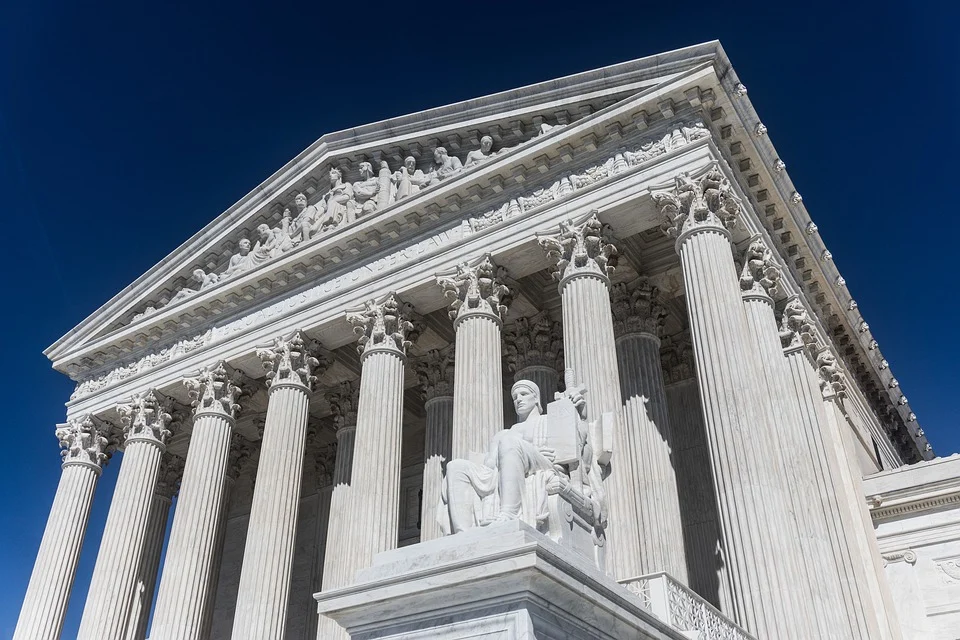
In a move that has surprised legal observers and frustrated corporate defendants across the United States, the U.S. Supreme Court issued a one-sentence per curiam decision on June 5, 2025, dismissing the writ of certiorari in Laboratory Corporation of America Holdings v. Davis. By dismissing the case as "improvidently granted," the nation’s highest court bypassed a critical opportunity to resolve a long-standing circuit split regarding whether federal courts can certify a class action under Federal Rule of Civil Procedure 23 when the class includes individuals who have suffered no actual injury. The decision leaves a complex patchwork of legal standards in place, particularly affecting employers and businesses operating in jurisdictions like the Ninth Circuit, where class certification requirements remain more lenient toward plaintiffs.
The central question the Court was expected to answer involved the intersection of Article III standing and the procedural requirements for class certification. Under Article III of the U.S. Constitution, federal courts only have jurisdiction over actual "cases or controversies," which requires a plaintiff to demonstrate a "concrete harm." However, in recent years, several appellate courts have allowed the certification of massive damages classes that include many members who may never have been personally affected by the defendant’s alleged conduct.
The Genesis of the Dispute: Accessibility and the Unruh Act
The litigation began when Luke Davis and Julian Vargas, two individuals who are legally blind, filed a class-action lawsuit against Laboratory Corporation of America Holdings, commonly known as Labcorp. The plaintiffs alleged that Labcorp’s implementation of self-service, touchscreen kiosks at its patient service centers violated Title III of the Americans with Disabilities Act (ADA) and California’s Unruh Civil Rights Act.
The kiosks, designed to streamline the check-in process, were not equipped with screen-reading technology or tactile overlays, making them inaccessible to blind patients attempting to use them independently. Labcorp defended its practices by noting that its service centers remained staffed by employees who could assist patients with check-ins at the front desk, using the same backend technology as the kiosks. Furthermore, the company provided online check-in options accessible via personal devices with assistive technology.
The legal stakes escalated significantly due to the specific provisions of California’s Unruh Act. While the federal ADA primarily provides for injunctive relief—requiring businesses to fix accessibility barriers—the Unruh Act allows plaintiffs to recover a minimum of $4,000 in statutory damages for every single violation. When the district court certified a class potentially exceeding 100,000 blind individuals, Labcorp found itself facing a potential liability of nearly $500 million per year.
Procedural History and the Ninth Circuit’s Role
The U.S. District Court for the Northern District of California initially certified the class, finding that the common question of whether the kiosks were accessible predominated over individual issues. Labcorp challenged this, arguing that the class was "over-inclusive" because it included thousands of blind individuals who either never visited a Labcorp facility or who visited but had no intention or desire to use the kiosks, thereby suffering no "concrete injury."
Despite these arguments, the U.S. Court of Appeals for the Ninth Circuit affirmed the certification. The Ninth Circuit has historically maintained a lower threshold for class certification than some of its peers, often ruling that the presence of uninjured members does not automatically defeat the "predominance" requirement of Rule 23(b)(3), provided that the class can be refined later or that the uninjured members do not represent a "significant" portion of the class.
Labcorp appealed to the Supreme Court, which granted certiorari in late 2024. The legal community anticipated a definitive ruling that would build upon the Court’s 2021 decision in TransUnion LLC v. Ramirez. In TransUnion, the Court held that "every class member must have Article III standing in order to recover individual damages." However, the Court did not explicitly state at what stage of the litigation—certification or final judgment—that standing must be proven for the entire class.
The Supreme Court’s Sudden Reversal
The dismissal of the case on June 5 came as a significant blow to those seeking national uniformity. A dismissal as "improvidently granted" (often referred to as a "DIG") typically occurs when the justices realize, after reviewing the full merits and hearing oral arguments, that the case is a poor "vehicle" for deciding the legal question. This can happen if there are unresolved factual disputes, jurisdictional hurdles, or if the case has become moot.
In the Labcorp instance, a procedural wrinkle likely contributed to the dismissal. During the interlocutory appeal process, the district court issued a clarifying order regarding the class definition. While the Ninth Circuit reviewed the original order, the existence of a second, modified order created a technical debate over which ruling was actually before the Supreme Court.
Justice Brett Kavanaugh was the lone dissenter in the dismissal. In a sharp-toned opinion, he argued that the Court should have proceeded with the case. He dismissed the procedural concerns as "insubstantial" and argued that the legal question was "straightforward." Kavanaugh wrote that if members of a class are not injured, they cannot share common questions with those who are, and therefore, a class including uninjured members should never be certified under Rule 23.
Data and Economic Implications for Corporate Defendants
The implications of the Supreme Court’s silence are far-reaching, particularly for the healthcare and retail sectors. According to data tracked by Seyfarth Shaw, ADA Title III federal lawsuit filings have remained at historic highs, with thousands of cases filed annually. California remains the primary epicenter for this litigation, largely due to the lucrative nature of the Unruh Act’s statutory damages.
In 2023 and 2024, class action settlements across all sectors reached record-breaking figures, often driven by the "in terrorem" effect of massive potential liability. When a court certifies a class of 100,000 members, even a defendant with a strong legal defense faces immense pressure to settle to avoid the "annihilating liability" of a trial.
Justice Kavanaugh highlighted this in his dissent, noting that "overinflated" classes force companies into "costly settlements," the costs of which are eventually passed on to consumers and workers. For a company like Labcorp, which operates in a high-volume, low-margin diagnostic environment, a $500 million judgment would be catastrophic, potentially affecting its ability to provide services to the broader public.
The Growing Circuit Split
The Supreme Court’s refusal to act leaves the various federal circuits in conflict.
- The Ninth Circuit: Continues to allow certification of classes containing uninjured members, shifting the burden of "weeding out" those members to the post-trial or damages phase.
- The Second and Third Circuits: Have generally required a more rigorous showing at the certification stage that the class is defined in a way that limits it to those who have suffered a concrete harm.
- The Eighth and Eleventh Circuits: Have signaled that the presence of even a small number of uninjured members may be enough to defeat the predominance requirement, as individualized inquiries into each member’s injury would overwhelm common legal questions.
This lack of uniformity encourages "forum shopping," where plaintiffs’ attorneys specifically target jurisdictions with the most favorable certification standards to maximize their leverage during settlement negotiations.
Strategic Outlook for Employers and Legal Counsel
While the Supreme Court has passed on this specific case, legal experts suggest the issue is far from dead. The conservative majority on the Court, led by Justice Kavanaugh and Justice Gorsuch, has shown a consistent interest in tightening the requirements for Article III standing and curbing what they perceive as "litigation abuse."
In the interim, employers and corporate defendants are advised to adopt a proactive defense strategy:
- Challenging Class Definitions Early: Defendants must aggressively argue at the certification stage that the proposed class definition is "facially overbroad" and includes individuals who could not have possibly been harmed.
- Developing Individualized Evidence: By producing evidence that different class members interacted with the challenged technology or policy in different ways (e.g., some used the kiosk, some used the front desk, some preferred online check-in), defendants can argue that "individualized inquiries" predominate over common ones.
- Leveraging TransUnion: Although Labcorp was dismissed, the TransUnion precedent remains valid law. Defendants should continue to cite it to argue that a court cannot award damages to a class where injury has not been proven for every member.
Conclusion
The dismissal of Laboratory Corporation of America Holdings v. Davis represents a missed opportunity for the Supreme Court to provide much-needed clarity to the American legal system. For now, the "accessibility" of federal courts to massive, potentially uninjured classes remains a matter of geography. Until the Court finds a "cleaner" vehicle to address the issue, businesses must continue to navigate a landscape where the mere threat of an over-inclusive class action can result in multi-million dollar liabilities, regardless of the actual harm suffered by the plaintiffs. Justice Kavanaugh’s dissent serves as a clear signal that at least some members of the Court are eager to revisit this issue, suggesting that another test case will likely reach the docket in the near future.