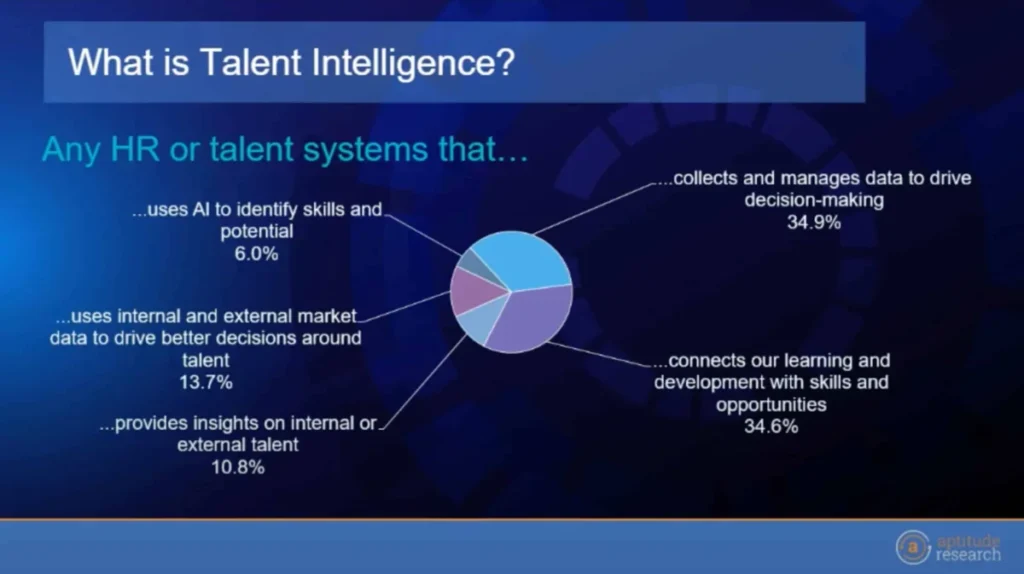
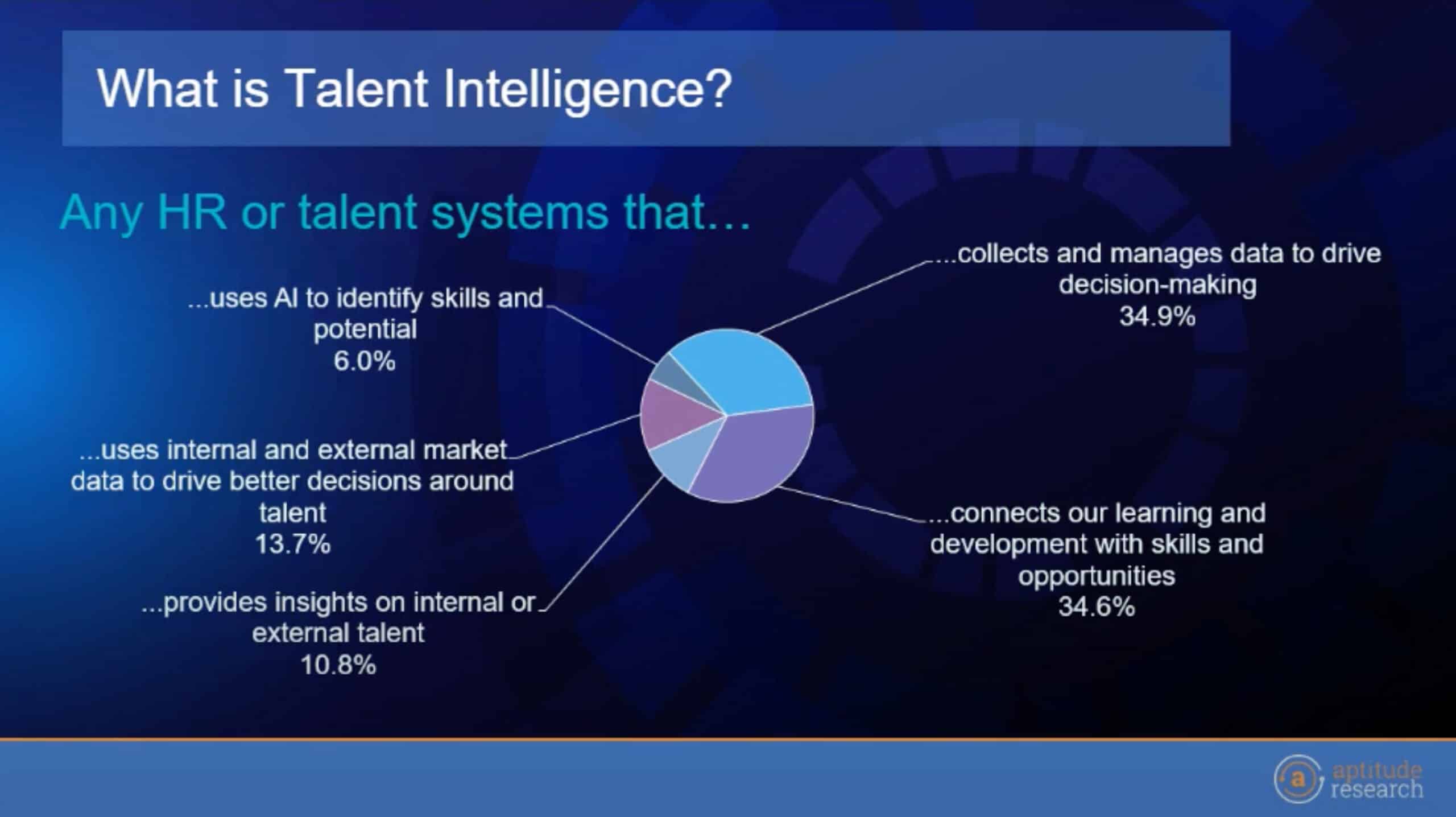
In an era defined by rapid technological advancement and evolving workforce dynamics, the field of Human Resources is undergoing a profound transformation. At the forefront of this shift is "talent intelligence," a sophisticated methodology that leverages Artificial Intelligence (AI) to collect, analyze, and interpret data on both internal and external talent pools. This innovative approach empowers HR leaders to move beyond traditional recruitment and management practices, enabling them to assess potential candidates with unprecedented accuracy, gain a comprehensive understanding of existing skills within their organization and the broader industry, and proactively forecast future skill requirements. Ultimately, talent intelligence aims to align talent strategies with overarching business objectives, driving organizational success and competitive advantage.
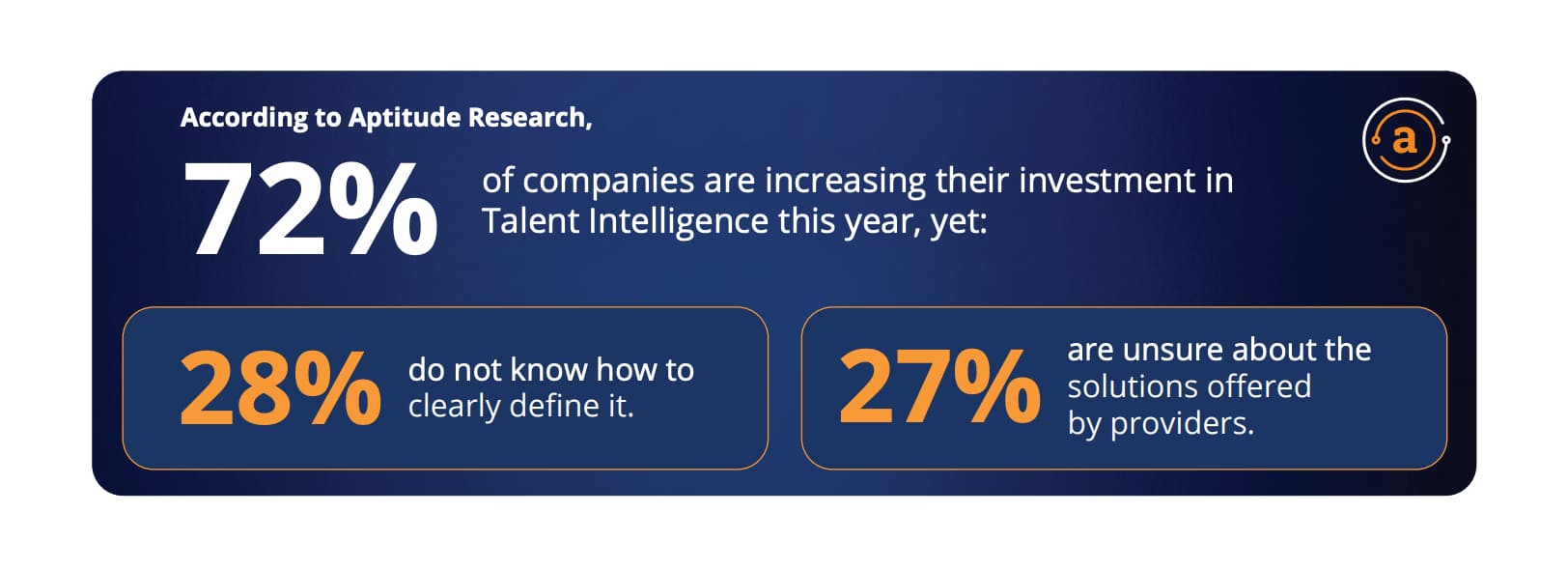
The imperative for adopting talent intelligence is underscored by recent industry data. A survey by Aptitude Research reveals that a significant 72% of companies are increasing their investments in talent intelligence platforms. However, despite this substantial financial commitment, a considerable fraction of these organizations are yet to fully grasp the scope, functionality, and strategic purpose of this transformative technology. This disconnect highlights a critical need for clearer understanding and implementation strategies to maximize the benefits of talent intelligence.
Madeline Laurano, a leading analyst at Aptitude Research, recently shared her insights on the burgeoning impact of talent intelligence across various industries in a dedicated discussion. Her analysis, which forms the basis of extensive reports and webinars, illuminates what talent intelligence truly is, its multifaceted benefits, and practical pathways for organizations seeking to build more robust, skills-based workforces.
Defining Talent Intelligence: Beyond Traditional HR Systems
Talent intelligence represents a significant leap forward in HR technology, emerging as one of its fastest-growing sectors. Aptitude Research’s findings paint a clear picture of the current labor market realities: 62% of organizations have either eliminated or plan to eliminate roles, while 65% have identified skill gaps. Concurrently, a remarkable 90% of companies have created new roles, indicating a dynamic and constantly shifting demand for specific expertise. This environment of rapid change and disruption necessitates a skills-centric approach to talent management. Organizations are increasingly relying on a deep understanding of skills to effectively manage their workforce and make informed strategic decisions. Talent intelligence provides the framework for quantifying and understanding these critical skills.
Laurano clarifies what talent intelligence is not, stating, "It is not an ATS. It’s not a standalone recruitment solution. It’s not an LMS. It’s not your system of record." Instead, she defines it as "a platform that uses AI to provide skills-based insights that serve as the cornerstone of your talent acquisition, talent management, and strategic workforce planning strategy." This distinction is crucial. Talent intelligence is not a replacement for existing HR systems but rather an intelligent layer that enhances their capabilities.
At its core, talent intelligence utilizes AI to transform raw data into actionable insights that inform every stage of the talent lifecycle. It offers organizational leaders a clear view of skill trends within their own workforces and those of their competitors, enabling more cost-effective strategies for talent acquisition. Furthermore, it provides employees with a transparent and equitable means to be recognized, developed, and promoted. Far from being a mere data repository, talent intelligence is a strategic fusion of AI and advanced skills analysis, designed to deliver tangible business outcomes across HR functions and the broader organization.
The Multifaceted Benefits and Profound Impact of Talent Intelligence
One of the most striking benefits of talent intelligence is its ability to reveal the true skill potential of individuals. Many candidates and employees tend to underestimate their own capabilities, often listing only a handful of skills on their resumes or in initial assessments. Talent intelligence platforms, through sophisticated AI analysis, can infer a significantly larger number of skills, often identifying a dozen or more directly applicable skills. This analysis can extend to identifying an additional 15 adjacent or learnable skills, dramatically expanding an individual’s perceived skill footprint from a mere handful to potentially over 30.
This capability directly addresses the primary benefit of talent intelligence: the real-time understanding of skills. The power of AI to extract these skills-based insights and illuminate an employee’s or candidate’s full potential is the cornerstone of talent intelligence and its immense value. These dynamic, skills-based insights have a cascading positive effect on recruitment, talent management, and strategic workforce planning.
For recruiters, talent intelligence exponentially widens the available talent pool by identifying candidates with transferable skills who might otherwise be overlooked. Promotions and internal mobility become more merit-based, driven by demonstrable skills rather than tenure or subjective criteria. Workforce planning evolves from a reactive process to a strategic endeavor focused on acquiring the precise skills needed for future business success.
Beyond operational efficiency, talent intelligence offers significant advantages in terms of transparency and fairness. When AI-driven platforms can clearly articulate why a candidate is a strong fit for a particular project or role, it instills confidence and encourages applications. Critically, talent intelligence serves as a powerful tool in reducing bias in hiring and promotion processes, fostering more equitable and inclusive workplaces.
The impact of talent intelligence extends to performance management. Traditionally, performance discussions are often one-directional, from manager to employee. A skills-based approach, facilitated by talent intelligence, fosters continuous collaboration. Employees gain clarity on their career aspirations within the organization and identify the specific skills required to achieve those goals. This empowers them to work collaboratively with their managers to develop targeted learning plans and acquire the necessary competencies, leading to greater job satisfaction and career growth.
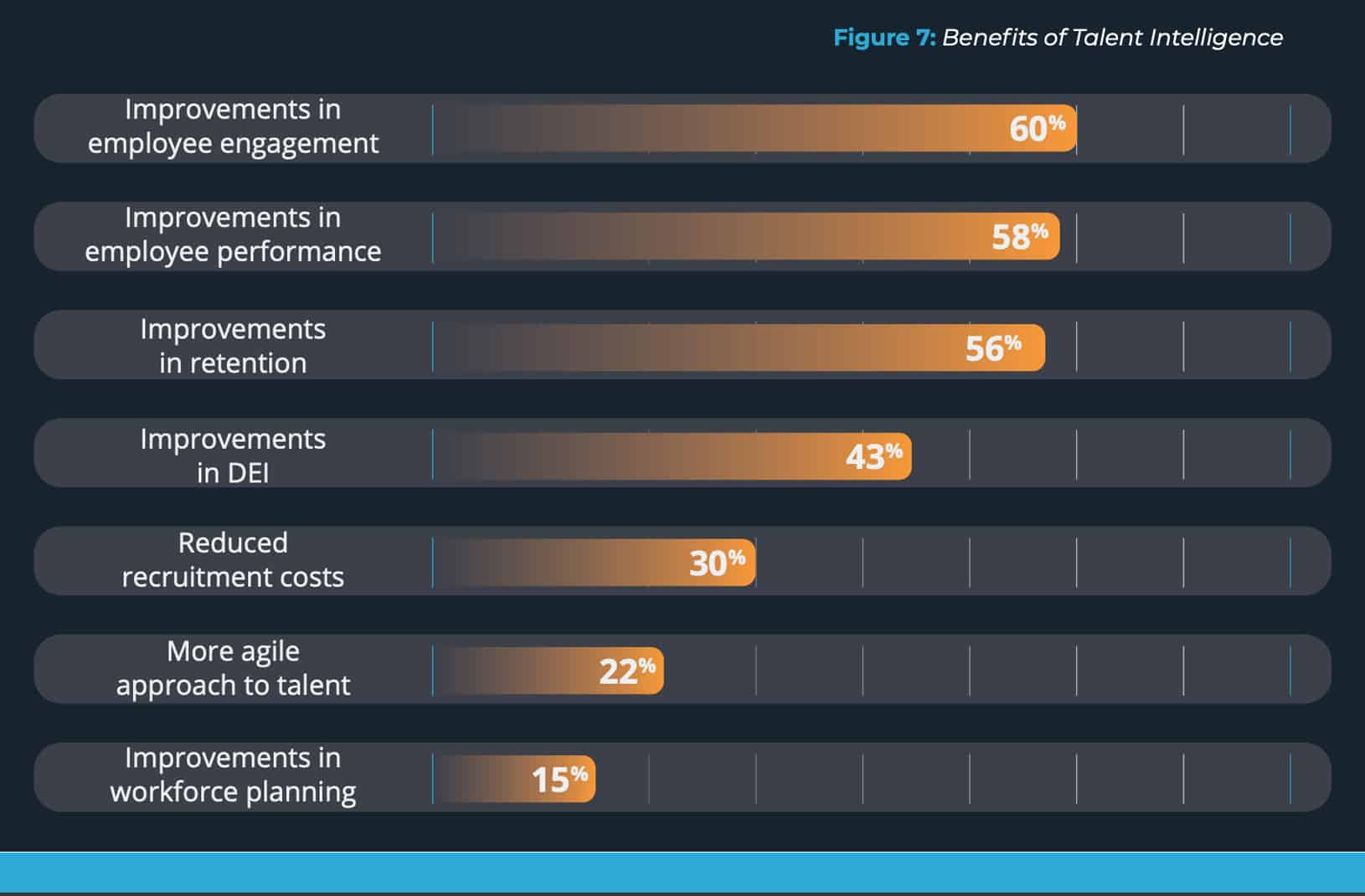
The business outcomes associated with the adoption of talent intelligence are substantial. Aptitude Research reports that 60% of businesses experience improved employee engagement, 58% see enhanced employee performance, and 56% report better retention rates. These figures highlight that the value of talent intelligence transcends HR processes, directly contributing to the overall health and vitality of an organization.
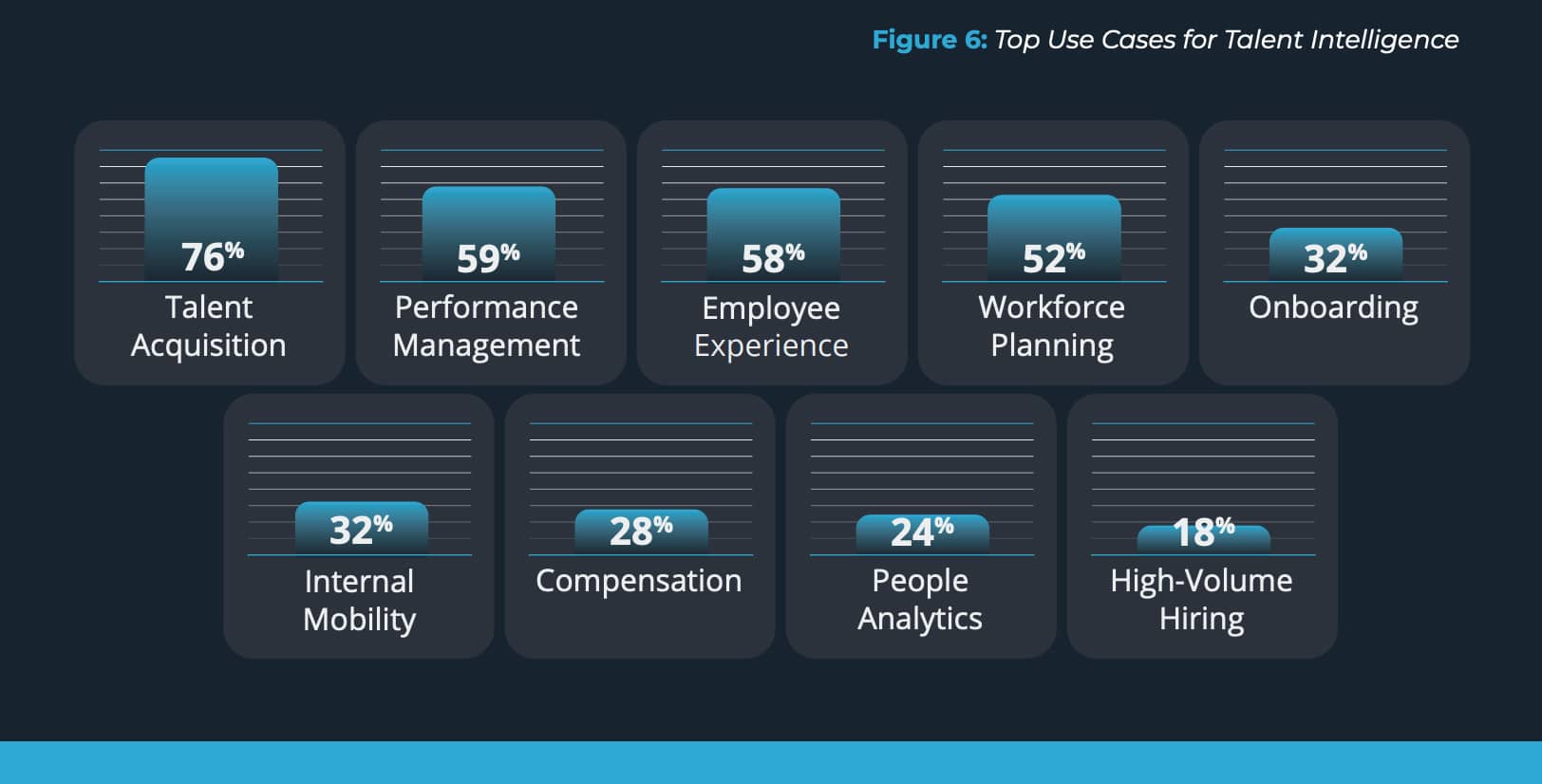
Key Use Cases for Talent Intelligence:
- Talent Acquisition: Identifying and sourcing candidates with the precise skills needed, widening the talent pool, and reducing time-to-hire.
- Internal Mobility and Career Pathing: Empowering employees to explore career opportunities and identify skill development pathways.
- Workforce Planning: Proactively identifying skill gaps and future talent needs to inform strategic business decisions.
- Learning and Development: Tailoring training programs based on identified skill deficiencies and future requirements.
- Diversity, Equity, and Inclusion (DEI): Mitigating bias in hiring and promotions by focusing on objective skill assessments.
- Performance Management: Facilitating collaborative goal setting and skill development discussions.
A Shift in AI Sentiment: Augmenting the Human Element in HR
The integration of talent intelligence into existing HR frameworks is fundamentally altering how organizations perceive and manage their most valuable asset: their people. AI plays a pivotal role in this paradigm shift. Laurano observes a notable evolution in organizational attitudes towards AI, stating, "Companies are maturing in their adoption and interest in AI, moving from fear to seeing its value." This evolution is reflected in investment trends, with 69% of organizations now increasing their investment in AI for talent acquisition.
AI’s role in talent intelligence extends far beyond mere data processing. It provides contextualized insights about individuals and employers, dynamically adapting skills management to meet evolving needs. Crucially, the integration of AI into HR is not about replacing human judgment but about augmenting it. AI is increasingly viewed as an extension of the HR team, enhancing the capabilities of HR professionals and recruiters rather than supplanting them. This collaborative perspective is supported by data indicating that 80% of companies continue to place human judgment at the core of talent decisions, with AI serving as a powerful informational support system.
This synergy between AI and human intuition fosters a more talent-centric approach, equipping HR professionals with deeper insights and enabling more informed, strategic decision-making. In a landscape where AI can sometimes be misunderstood or viewed with apprehension, its ethical application in HR is paramount. Laurano emphasizes this point: "We’re seeing a shift toward ethical AI, which can actually reduce bias." This responsible deployment of AI within talent intelligence ensures that talent acquisition and management processes are objective, data-driven, and ultimately, more human-centric and equitable.
Clarifying the Role of Systems of Record in the Age of Intelligence
The evolution within HR technology signifies a critical transition from traditional "systems of record" to advanced "systems of intelligence." This is not an exclusive dichotomy but rather a complementary relationship. While systems of record efficiently store structured data, such as employee demographics, compensation details, and employment history, systems of intelligence integrate and continuously update a broader spectrum of data. This integration provides a holistic, dynamic, and up-to-the-minute view of talent across the entire organization.
A system of intelligence acts as an intelligent overlay, sitting atop existing systems of record. This enhancement is vital for addressing the complex and evolving challenges of the modern workplace. It empowers organizations not only to maintain essential historical data but also to derive profound, actionable intelligence. This capability is instrumental in facilitating strategic talent management and cultivating a more agile and responsive HR function, better equipped to navigate the complexities of the contemporary business environment.
Unlocking the Full Potential of Talent Intelligence in HR Strategy
To fully harness the transformative power of talent intelligence, organizations must move beyond common misconceptions and establish clear, precise objectives. It is vital to recognize that talent intelligence is not solely a tool for recruitment; its applications span every facet of HR. A pragmatic approach to implementation is recommended: instead of attempting a company-wide rollout, organizations should begin by addressing their most pressing needs in a pilot phase.
By starting small and demonstrating value in a targeted area, organizations can gradually build momentum. Over time, this iterative process will lead to a fundamental transformation of HR strategy, enabling leadership to guide talent initiatives through the lens of skills-based insights. For organizations seeking a comprehensive understanding of talent intelligence and its potential to fortify their strategies for the future, engaging with resources like webinars and detailed reports from industry experts is highly recommended. These resources provide the necessary insights and practical guidance to navigate the evolving talent intelligence landscape and ensure a future-ready, skills-equipped workforce.