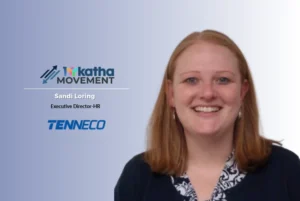
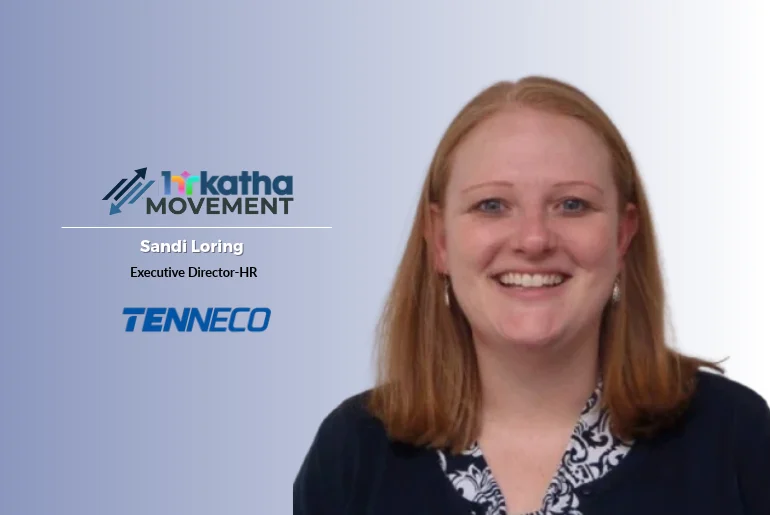
Sandi Loring, a seasoned human resources professional with nearly three decades of experience across the automotive and industrial sectors, has been appointed to the esteemed position of Executive Director-Human Resources at Tenneco. This significant promotion, effective after over five and a half years with the global motor vehicle manufacturing company, underscores Tenneco’s strategic commitment to nurturing internal talent and leveraging deep operational HR expertise to navigate the complex challenges of a rapidly evolving industry. Loring’s ascent within the company has been remarkably swift, reflecting her profound impact and the critical value she brings to the organization’s human capital strategy.
A Rapid Ascent Within Tenneco
Loring’s journey with Tenneco began in 2021 when she joined as a Senior Human Resources Manager, based out of Michigan in the United States. Her capabilities and strategic insights quickly became apparent, leading to an accelerated trajectory within the company. Within a mere three months of her initial appointment, she was elevated to Human Resources Director-Powertrain, a testament to her immediate impact and leadership potential within a critical division. This role placed her at the forefront of talent management for one of Tenneco’s core business units, requiring a nuanced understanding of engineering, manufacturing, and global workforce dynamics. Less than five years into this demanding role, her contributions were further recognized with a promotion to Senior Director-HR, expanding her purview and strategic influence across broader organizational functions. Her latest promotion to Executive Director-Human Resources solidifies her position as a pivotal leader in shaping Tenneco’s global HR strategy.
This rapid advancement highlights Tenneco’s proactive approach to identifying and developing high-potential leaders from within its ranks. In an industry characterized by constant technological innovation and fierce competition for skilled talent, the ability to quickly recognize and empower effective HR leadership is a significant competitive advantage. Loring’s progression is not merely a personal achievement but a reflection of Tenneco’s organizational agility and its investment in human capital as a strategic differentiator.
A Foundational Career Forged in Automotive HR Excellence
Loring’s extensive and varied career laid a robust foundation for her current leadership role. A Science graduate from Oakland University, her professional journey commenced in 1996 with General Motors as a Programme Coordinator. This initial role, while not directly within HR, provided invaluable exposure to the operational intricacies and project management demands of a major automotive manufacturer, offering a holistic perspective on the business ecosystem.
Three years later, in 1999, she transitioned into human resources, joining Cooper Standard Automotive as an HR Generalist. This move marked a definitive pivot towards her passion for people and organizational development. Cooper Standard, a leading global supplier of systems and components for the automotive industry, provided a rich environment for Loring to hone her fundamental HR skills. As an HR Generalist, she would have been responsible for a broad spectrum of HR functions, including recruitment, employee relations, compensation, benefits administration, and compliance, serving as a vital link between management and employees.
Her dedication and expertise at Cooper Standard were consistently recognized. Almost a decade into her tenure, she was deservedly elevated to Human Resources Manager. This promotion reflected her growing leadership capabilities and her ability to manage more complex HR challenges. By the time she departed Cooper Standard Automotive in 2012, after 13 years with the company, she had ascended to the critical role of Human Resources Manager for a non-union manufacturing facility, overseeing approximately 650 employees. This experience was particularly formative, providing her with hands-on exposure to managing a large, diverse workforce in a manufacturing environment without the complexities of union negotiations, allowing her to focus intensively on employee engagement, performance management, talent development, and maintaining a positive workplace culture within operational constraints.
Following her impactful tenure at Cooper Standard, Loring moved to Federal-Mogul in 2012, another prominent global supplier of powertrain and automotive safety components, where she served as an HR Manager. For the next eight and a half years, she played a crucial role in managing human resources for technical centers spread across seven locations, collectively employing 350 individuals. This experience added another critical dimension to her profile: managing highly skilled, often specialized, technical workforces across geographically dispersed sites. This demanded a sophisticated understanding of talent acquisition for engineering and R&D roles, intellectual property protection, cross-cultural communication, and fostering innovation within a technical environment. Her time at Federal-Mogul further solidified her reputation as a versatile and adaptable HR leader capable of supporting diverse business functions before she ultimately joined Tenneco in 2021.
The Evolving Landscape of Human Resources in Global Manufacturing
Sandi Loring’s elevation reflects a broader, significant trend within manufacturing and industrial organizations globally. The role of Human Resources has dramatically evolved from a primarily administrative and compliance-focused function to a strategic business partner, integral to achieving organizational objectives and driving competitive advantage. This transformation is particularly pronounced in sectors like automotive manufacturing, which are grappling with unprecedented change.
The automotive industry, including its extensive supply chain, is undergoing a profound paradigm shift driven by several converging forces:
- Electrification (EV Transition): The global pivot towards electric vehicles necessitates a radical re-skilling of the workforce, from engineers and designers to manufacturing technicians. Traditional internal combustion engine expertise must be augmented or replaced with knowledge of battery technology, electric powertrains, and software integration. HR departments are at the forefront of identifying these new skill requirements, developing robust training programs, and managing the transition for existing employees.
- Automation and Industry 4.0: The increasing adoption of robotics, artificial intelligence, and advanced analytics in manufacturing processes requires a workforce capable of interacting with and managing these sophisticated technologies. This creates a demand for new roles while potentially displacing others, making workforce planning and talent redeployment critical HR functions.
- Global Supply Chain Volatility: Recent years have highlighted the fragility of global supply chains. HR plays a role in building resilient workforces, managing talent across diverse geographies, and adapting to rapid changes in production demands and material availability.
- Talent Shortages and the Skills Gap: Manufacturing industries worldwide face significant challenges in attracting and retaining skilled labor, particularly in specialized technical and engineering roles. The aging workforce in many developed economies exacerbates this issue. Strategic HR is essential for developing innovative recruitment strategies, fostering strong employer brands, and creating pathways for internal talent development.
- Diversity, Equity, and Inclusion (DEI): There is a growing recognition that diverse teams drive innovation and better business outcomes. HR leaders are tasked with embedding DEI principles into every aspect of talent management, from recruitment to leadership development, ensuring inclusive cultures that attract and retain a broad range of talent.
- Employee Experience and Engagement: In a competitive labor market, employee satisfaction and engagement are paramount. HR is increasingly focused on creating positive work environments, fostering strong organizational cultures, and developing programs that enhance employee well-being and productivity.
In this dynamic environment, HR leaders with deep operational and plant-level experience, like Loring, are increasingly being entrusted with enterprise-wide responsibilities. Their firsthand understanding of manufacturing floor realities, labor relations, safety protocols, and the practical implications of HR policies on production and quality is invaluable. They can bridge the gap between corporate strategy and ground-level execution, ensuring that HR initiatives are not just theoretically sound but practically implementable and effective.
Tenneco’s Strategic Vision and Loring’s New Mandate
Tenneco, a leading global supplier of automotive products for original equipment manufacturers and the aftermarket, operates in a highly competitive and rapidly transforming industry. With a global footprint and a diverse portfolio spanning powertrain, clean air, and ride performance technologies, the company faces the aforementioned industry challenges head-on. A strong, strategically aligned human resources function is not merely supportive but foundational to Tenneco’s continued success and ability to innovate.
In her elevated role as Executive Director-Human Resources, Loring will serve as an HR business leader for multiple corporate functions above the plant level. This implies a strategic partnership with various senior leadership teams across the organization, including finance, legal, IT, engineering, and global operations. Her mandate will involve:
- Strategic Workforce Planning: Aligning human capital strategies with Tenneco’s long-term business objectives, anticipating future talent needs, and developing proactive plans for recruitment, development, and retention.
- Organizational Effectiveness and Change Management: Leading initiatives to enhance organizational design, streamline processes, and effectively manage the human aspects of significant organizational changes, such as mergers, acquisitions, or technological transformations.
- Leadership Development and Succession Planning: Designing and implementing robust programs to identify, develop, and retain future leaders across all levels of the corporate functions, ensuring a strong pipeline for critical roles.
- Talent Acquisition and Management: Overseeing global talent acquisition strategies for corporate roles, ensuring Tenneco attracts top-tier talent in specialized fields, and developing comprehensive talent management frameworks.
- Compensation and Benefits Strategy: Collaborating on the design and implementation of competitive compensation and benefits programs that attract, motivate, and retain corporate talent while aligning with global market trends and Tenneco’s financial objectives.
- Employee Engagement and Culture: Fostering a high-performance culture within corporate functions, promoting employee engagement, and ensuring that Tenneco’s values are embedded in daily operations.
- Diversity, Equity, and Inclusion (DEI): Championing DEI initiatives within the corporate functions, ensuring equitable opportunities, and fostering an inclusive environment where all employees can thrive.
- HR Technology and Analytics: Leveraging HR technology and data analytics to provide actionable insights, improve HR efficiency, and support data-driven decision-making for corporate functions.
The emphasis on "above the plant" functions signifies a crucial shift towards integrating HR more deeply into the strategic corporate core, ensuring that human capital considerations are at the forefront of executive decision-making, not merely reactive responses to operational needs.
Implications for Tenneco and the Broader Industry
Loring’s appointment underscores Tenneco’s belief in developing leaders from within, a critical strategy for fostering institutional knowledge, continuity, and a strong organizational culture. It also reinforces the principle that HR must remain closely aligned with business objectives at every level of the organization. Her blend of workforce, manufacturing, and corporate HR expertise is particularly invaluable in a sector grappling with unprecedented talent shortages, rapid skills transformation, and continuous organizational change.
For Tenneco, this leadership choice signals a proactive approach to managing its most valuable asset: its people. By placing an executive with Loring’s diverse background in such a pivotal role, Tenneco is poised to:
- Enhance Talent Strategy: Develop more agile and responsive talent acquisition and development programs that directly address the evolving needs of the automotive industry.
- Strengthen Organizational Culture: Foster a more cohesive and engaged workforce by translating strategic HR initiatives into tangible improvements in employee experience and productivity.
- Improve Business Performance: Ensure that HR functions are not just supporting but actively contributing to Tenneco’s financial and operational goals through strategic workforce management.
- Navigate Industry Shifts: Better prepare the workforce for the demands of electrification, automation, and global market dynamics, ensuring Tenneco remains competitive and innovative.
From an industry perspective, Loring’s promotion serves as a model for how leading manufacturing firms are redefining HR leadership. It emphasizes that a successful HR executive in today’s complex industrial landscape requires not just theoretical knowledge but also practical, hands-on experience across various operational environments. The ability to understand the shop floor as well as the boardroom allows for the creation of truly effective and impactful HR strategies.
Leadership Style and Professional Acumen
Known to be a likeable person with a profound passion for HR, Sandi Loring’s leadership style is likely characterized by strong interpersonal skills, empathy, and a collaborative approach. Her ability to build rapport and foster positive relationships would have been instrumental in her rapid ascent and her effectiveness in managing diverse workforces across various locations and functions. A "passion for HR" translates into a genuine commitment to employee well-being, professional development, and creating an inclusive, productive work environment. This intrinsic motivation is critical for driving engagement and successfully implementing complex HR initiatives. Her long-standing career in the demanding automotive sector also suggests resilience, adaptability, and a results-oriented mindset. These qualities will continue to make her an invaluable asset to Tenneco, particularly as the company navigates future challenges and opportunities.
In conclusion, Sandi Loring’s promotion to Executive Director-Human Resources at Tenneco is a strategic move that reflects both her exceptional career trajectory and the evolving demands placed upon human resources in the modern global manufacturing landscape. Her extensive experience, from plant-level operations to corporate technical centers, positions her uniquely to drive Tenneco’s talent agenda, ensuring the company is well-equipped with the human capital necessary to achieve its strategic objectives and thrive in the automotive industry’s transformative era.