The landscape of human resources is undergoing a seismic shift, moving away from reliance on intuition and towards data-driven strategies. A recent analysis reveals a stark reality: a staggering 71% of senior HR leaders admit to making critical people decisions based on gut instinct rather than concrete talent data. This pervasive reliance on intuition is often a symptom of fragmented data systems, where vital information about employee engagement, performance, development, and recognition is scattered across disparate platforms, owned by different departments. The arduous process of consolidating this information can consume weeks, even months, leaving a void that instinct readily fills. However, a growing movement advocates for leveraging existing data to make confident, informed, and defensible people decisions, a principle recently highlighted at the Gartner HR Symposium.
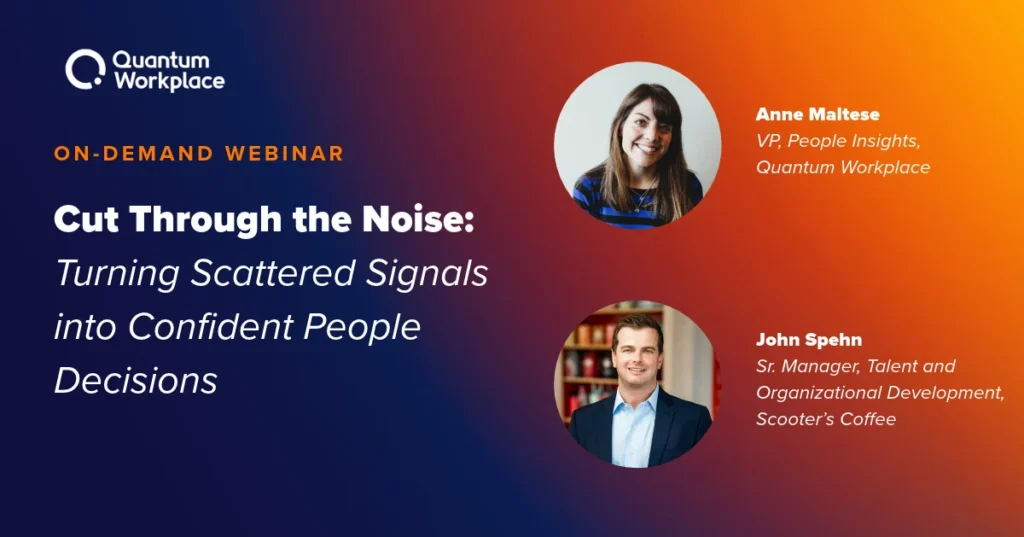
Anne Maltese, a proponent of this data-centric approach, shared her insights on stage at the Gartner HR Symposium, alongside John Spehn, Sr. Manager of Talent and Organizational Development at Scooter’s Coffee. Their joint presentation underscored a fundamental truth: the power to make superior people decisions lies not in collecting more data, but in effectively connecting and interpreting the information already available. When signals from engagement surveys, performance reviews, development plans, and recognition programs are brought together, HR decision-making processes become demonstrably faster, clearer, and more robust. This article delves into the practical implications of this shift, exploring how interconnected data transforms HR strategies and examining the transformative journey of Scooter’s Coffee in harnessing this power.
The Hidden Costs of Disconnected Data in HR
The fragmentation of HR data creates a ripple effect, imposing tangible costs on organizations. These costs manifest in several critical areas, significantly hindering efficient and effective people management.
-
Inertia and Delay: The most immediate consequence of disconnected data is the sheer time it takes to access and synthesize insights. Manual report pulling and merging, a common practice, can stretch into weeks. Research indicates that approximately one in four leaders report such delays in accessing connected talent insights, leading to missed opportunities and delayed strategic actions. This protracted process can stifle agility, especially in fast-paced environments.
-
Lack of Context and Actionability: Even when data is eventually gathered, its disconnected nature often strips it of crucial context. HR professionals may possess raw numbers but lack the narrative or the ‘why’ behind them. This deficiency severely limits the ability to derive actionable insights. A study by HR.com found that only 40% of HR leaders feel they can glean actionable intelligence from their talent data, highlighting a significant gap between data availability and its practical application.
-
Reactive Problem-Solving: When data is siloed, organizations often find themselves reacting to problems only after they have escalated. This reactive stance is not only less effective but also more costly. The administrative burden associated with manually piecing together information leaves HR leaders feeling overwhelmed, with 73% reporting their work as burdensome and administrative, according to SHRM. This prevents them from engaging in proactive, strategic initiatives.
-
Subjectivity and Bias: The void left by absent data is frequently filled by assumptions and subjective interpretations. When concrete evidence is elusive, gut instinct and personal biases can inadvertently influence critical decisions. This is evidenced by the statistic that 71% of senior HR leaders rely on intuition over data, a practice that can lead to inequitable outcomes and missed potential. The absence of connected data creates an environment where subjective perceptions can overshadow objective reality.
It is crucial to understand that these challenges do not stem from a lack of effort or capability within HR departments. Rather, they are a direct consequence of the technological and organizational infrastructures that fail to facilitate a holistic view of employee data. While advancements in Artificial Intelligence are increasingly adept at data aggregation and summarization, the ultimate interpretation, judgment, and strategic application of that data remain firmly within the human domain.
A Tale of Two Decisions: The Power of Connected Signals
To illustrate the profound impact of connected data, consider a hypothetical scenario: the sudden resignation of a Vice President of Customer Success. The HR department is tasked with recommending a successor to the C-suite and the board. Two candidates, David and Maria, are on the shortlist, both identified as high performers with strong potential for growth based on traditional talent reviews.
Decision One: Relying Solely on Traditional Talent Review and Employee Records
David has consistently occupied the "top right" quadrant of the talent review grid for years, signifying his high performance and readiness for advancement. His employee record reinforces this assessment: a long tenure with the company, coupled with successful completion of the leadership development program. He possesses an intimate understanding of the business, its clientele, and operational processes.
Maria, also in the "top right" quadrant, is similarly recognized as a high performer with growth potential. However, her tenure is shorter, and she has not completed a formal leadership development program. Based on these traditional metrics, David appears to be the more secure and defensible choice. He is promoted.
A year later, the consequences of this decision become apparent. Engagement scores within David’s team plummet. Communication falters, leading to increased customer complaints. Turnover on his team triples, and a key high-performer departs. Furthermore, other executives begin to circumvent David’s leadership, signaling a loss of confidence. This outcome highlights the limitations of a decision based on incomplete information.
Decision Two: Incorporating Connected Signals
Now, let’s re-evaluate the same candidates, but with the added layer of peer feedback and recognition data. This expanded dataset paints a different, more nuanced picture.
| Signal | David | Maria |
|---|---|---|
| Talent Review | Top right, ready for growth | Top right, ready for growth |
| Peer Feedback | Brilliant at his craft, but hard to collaborate with. He loops people in late. | Makes everyone around her better. She is the go-to problem solver. |
| Recognition | Receives plenty because he hits goals. Rarely recognizes others. | Receives it, and also gives it when she sees strong impact. |
This expanded data provides predictive insights into potential team dynamics. David’s pattern suggests colleagues might feel excluded or that their contributions are not adequately acknowledged, potentially leading to disengagement. Maria’s feedback, conversely, indicates a collaborative and supportive leadership style that fosters team growth and problem-solving. Her recognition patterns suggest she is adept at acknowledging and amplifying the contributions of others, a key trait for building a cohesive and motivated team.
Furthermore, existing engagement and retention data within the company might reveal that teams with individuals exhibiting Maria’s peer feedback and recognition patterns demonstrate higher engagement and lower turnover. This information, while not explicitly stated in the original records, is likely embedded within existing, albeit disconnected, data sources.
This connected view confirms David’s strength as an individual contributor but suggests that a role requiring extensive people leadership might not align with his current developmental readiness or interpersonal style. Maria, on the other hand, is already demonstrating leadership qualities through her interactions and influence, even without the formal title or extensive tenure.
With this richer dataset, the decision becomes clearer. Maria is promoted, and the resulting positive impact on team engagement, customer satisfaction, and retention can be directly attributed to the more informed, data-backed decision. This scenario underscores that the necessary data often exists within an organization; it simply needs to be connected and analyzed to reveal its full potential.
Scooter’s Coffee: A Case Study in Data-Driven Transformation
Scooter’s Coffee, a rapidly expanding drive-thru beverage chain with a presence in over 35 states and aspirations to reach 1,000 stores, faced the ubiquitous challenge of maintaining a strong people-centric culture amidst significant growth. Founded on the values of integrity, love, humility, and courage, the company recognized the need for data to guide its people strategies as its workforce became geographically dispersed. Partnering with Quantum Workplace, Scooter’s Coffee embarked on a journey to connect its data and drive actionable insights.

Step One: Fostering Connection Amidst Rapid Expansion
The core value of "love" at Scooter’s Coffee, easily practiced in a centralized environment, became more challenging to uphold across numerous stores and distribution centers. To bridge this gap, the company integrated recognition programs directly tied to its company values. This initiative provided employees with a visible and consistent mechanism to express and acknowledge these values through various channels, including town halls, team huddles, and internal communication platforms. This facilitated a sense of shared purpose and reinforced the company culture despite geographical distances.
Step Two: Enhancing Clarity in Employee Performance
Rapid business growth often leads to shifting priorities, which can create ambiguity for employees regarding what actions and outcomes are most critical. To address this, Scooter’s Coffee implemented several key changes to its performance management process:
- Forward-Looking Goal Setting: The process was reframed to focus on future objectives and aspirations rather than solely reviewing past performance. This approach fosters a sense of direction and empowers employees to actively contribute to the company’s evolving goals.
- Alignment with Business Objectives: Performance metrics were explicitly linked to overarching business goals, ensuring that individual efforts directly contributed to the company’s strategic direction. This fostered a clearer understanding of how each role impacted the larger organization.
- Simplified Feedback Mechanisms: The company streamlined its feedback processes, making them more frequent and less burdensome. This ensured continuous dialogue and provided timely guidance, reducing the reliance on a single, annual review.
This revised process shifted the emphasis from retrospective evaluation to proactive development, ensuring that employees were aligned with current business needs and understood their role in achieving them.
Step Three: Building a Comprehensive Talent Picture
This phase marked a significant pivot towards leveraging connected data. For the first time, insights from three distinct sources were brought together:
- Engagement Surveys: These provided a pulse on employee sentiment, indicating who saw a long-term future with Scooter’s Coffee.
- Talent Reviews: These captured leadership perceptions regarding employee readiness for growth and advancement.
- Retention Risk Assessments: These highlighted individuals who exhibited a higher likelihood of departing the organization.
By overlaying these datasets, the team at Scooter’s Coffee gained a more nuanced understanding of its "stretch and grow" group – the future leaders of the company. This integrated view revealed development opportunities that these individuals might not have recognized on their own and exposed a misalignment between the development team’s resource allocation and the actual needs of this critical talent pool. Further qualitative data from individual contributors in this group indicated that development programs were often geared towards existing leaders, with limited options for those looking to advance from individual contributor roles.
The data pointed towards two key areas for strategic investment:
- Targeted Development Programs: The insights gathered enabled Scooter’s Coffee to design and implement development initiatives specifically tailored to the needs of high-potential individual contributors, providing them with the skills and experiences necessary for future leadership roles.
- Enhanced Coaching and Mentorship: The data also highlighted the need for more robust coaching and mentorship opportunities, ensuring that emerging talent received the guidance and support required to navigate their career paths within the organization.
The impact of these targeted investments was evident in the 2026 engagement survey. Key metrics showed significant improvements: "Opportunities for advancement" increased by 17%, "Opportunities to learn new skills" rose by 12%, and more than half of participants in the "Elevate" development program were subsequently promoted.
Step Four: Rebuilding Trust Through Data-Informed Initiatives
In 2025, Scooter’s Coffee underwent a significant organizational restructure, which unfortunately led to a decline in trust in senior leadership. Survey data indicated a drop of over 12% in items related to senior leaders acting with integrity and valuing people.
The HR team meticulously analyzed survey results, cross-referencing them with qualitative comments, retention risk data, talent reviews, and exit survey feedback. A clear pattern emerged: the "stretch and grow" group, comprising the company’s most valuable future leaders, expressed significant concerns regarding leadership integrity and perceived a high risk of departure (over 61% signaled high flight risk).
In response to this data, leadership launched three targeted initiatives:
- Enhanced Communication Channels: Increased transparency and frequency of communication from senior leadership were implemented to address concerns and provide clarity on the company’s direction and decisions.
- Leadership Accountability Programs: New programs were introduced to hold senior leaders accountable for demonstrating company values and fostering an environment of trust and respect.
- Employee Listening Tours: Senior leaders actively engaged with employees across various levels and locations to solicit feedback, address concerns directly, and rebuild rapport.
Within a year, these initiatives yielded tangible results. Trust in the support center saw a significant rebound, with several trust-related measures increasing by double digits. Engagement scores rose by 10 points, and intent to stay saw an impressive increase of 17 points, demonstrating the positive impact of data-driven trust-building efforts.
John Spehn emphasized that this transformation was not instantaneous but a continuous process. He shared several key takeaways for other organizations:
- Focus on Decisions, Not Just Data: Begin by identifying the critical people decisions that need to be made. This clarity will guide which data signals are most relevant and actionable.
- Prioritize Quality Over Quantity: The goal is not to amass more data, but to effectively connect and analyze existing data to generate meaningful insights that drive action.
- Embrace Simplicity and Continuous Listening: Streamlining processes, as exemplified by Scooter’s Coffee replacing lengthy annual reviews with concise feedback mechanisms, can yield better results. Consistent employee feedback is paramount.
Charting a Course for Confident People Decisions
Making confident, data-driven people decisions does not necessitate a complete overhaul of existing systems or the acquisition of new, expensive dashboards. Instead, it involves a strategic approach to leveraging the data already at hand. The following five steps can serve as a starting point for organizations seeking to enhance their decision-making capabilities:
- Identify Key Decisions: Pinpoint the most critical people-related decisions that the organization needs to make, such as hiring, promotions, talent development, or retention strategies.
- Map Existing Data Sources: Inventory all available data related to engagement, performance, development, and recognition, even if stored in separate systems.
- Define Desired Outcomes: Clearly articulate what success looks like for each key decision. This will help in identifying the relevant data signals and metrics.
- Establish Connection Points: Explore methods and tools that can bridge the gaps between disparate data sources, allowing for a unified view.
- Regularly Analyze and Act: Implement a cadence for reviewing connected data, deriving insights, and translating them into concrete actions and strategies.
Quantum Workplace’s platform is built upon this foundational principle, aiming to unify engagement, performance, development, and recognition signals into a cohesive view. Their "Insights Hub" is designed to surface deeper narratives within people data, while "Retention Radar" integrates talent reviews, succession planning, and performance metrics to identify top talent at risk.
Ultimately, the power to make better people decisions lies not in accumulating more data, but in enabling the data an organization already possesses to work in concert. By connecting these signals, HR professionals can achieve clarity in their decision-making, confidently articulate their rationale, and drive more impactful outcomes for their organizations.
Organizations seeking to deepen their understanding of this transformative approach can access a free eBook, "Connecting Your Talent Data for Stronger People Decisions." This resource offers practical guidance on identifying which signals to connect, integrating people data with business data, and translating insights into actionable strategies.