
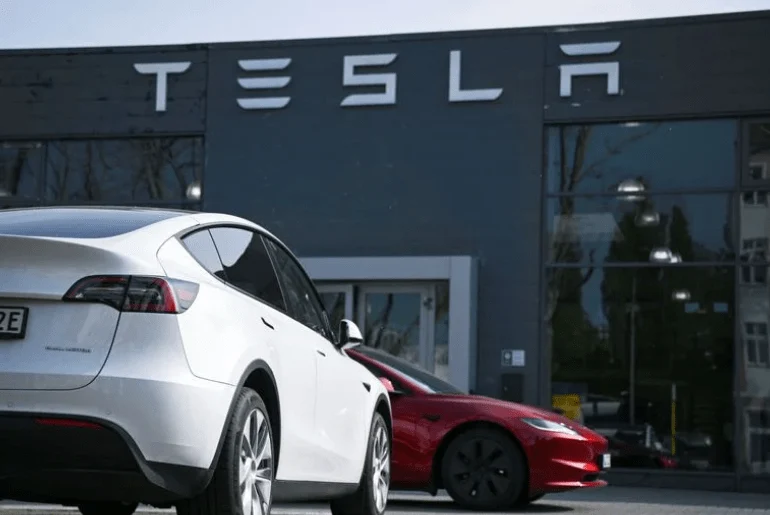
Tesla, the electric vehicle and clean energy giant, has introduced a significant new policy placing a weekly cap of $200 on employee spending for artificial intelligence (AI) tools. Effective July 6, 2024, this move signals a notable shift in the company’s approach to AI adoption, transitioning from a period of widespread encouragement to one of stringent cost control and strategic prioritization. Any expenditure exceeding this $200 limit will necessitate explicit management approval, according to an internal memorandum circulated within the company. This pivot comes in response to reports of some software engineers incurring AI usage costs amounting to thousands of dollars weekly, largely driven by intensive token consumption.
The new directive, however, includes a crucial exemption: beta versions of AI products developed by xAI, Elon Musk’s separate artificial intelligence company, will not be subject to the spending cap. This exemption grants xAI’s offerings a distinct cost advantage over competing AI platforms widely utilized within Tesla, raising questions about internal strategic alignment and potential competitive dynamics. This policy change unfolds against a backdrop of increasing scrutiny over AI operational expenditures across the technology sector and Tesla’s broader financial and strategic challenges, including ambitious AI-driven initiatives in autonomous driving, robotaxis, and humanoid robotics.
The Policy Shift: From Unfettered Experimentation to Controlled Expenditure
For several months leading up to this announcement, Tesla had actively fostered a culture of widespread AI adoption among its employees across various functions. Internal initiatives reportedly included tracking and ranking employees based on their AI token consumption, explicitly designed to accelerate the integration and utilization of AI tools within daily workflows. This period of encouragement aimed to harness the transformative potential of generative AI, empowering engineers and other staff to leverage these advanced capabilities for enhanced productivity, innovation, and problem-solving. The company’s philosophy appeared to be one of "fail fast, learn faster," allowing extensive experimentation with cutting-edge AI models.
The abrupt introduction of a spending limit marks a clear departure from this open-ended strategy. The internal memo highlighted that the primary catalyst for the new cap was the escalating financial outlay associated with AI tool usage. Generative AI models, particularly large language models (LLMs), operate on a token-based pricing structure, where users are charged per input token (words or sub-word units sent to the model) and per output token (words or sub-word units generated by the model). For engineers engaged in complex coding tasks, extensive data analysis, or iterative design processes, the rapid generation and processing of tokens can quickly accumulate substantial costs. Reports of individual software engineers generating weekly bills in the thousands of dollars underscore the financial implications of unbridled AI access. A $200 weekly cap translates to approximately $800 per month, or $9,600 annually per employee, a figure that represents a significant reduction from the previously reported expenditure levels for heavy users.
Understanding the Escalating Costs of Generative AI
The exponential growth in generative AI capabilities has been mirrored by a corresponding surge in operational costs. Training and running these sophisticated models require immense computational power, leading to significant expenses related to cloud infrastructure, specialized hardware (like NVIDIA GPUs), and, crucially, API access fees for commercial models. While the upfront investment in AI research and development is substantial, the ongoing "inference costs"—the costs associated with running a trained model to generate outputs—are proving to be a persistent financial drain for enterprises.
According to a 2023 report by Gartner, IT spending on AI is projected to reach $200 billion globally by 2025, with a significant portion allocated to software and services. The widespread adoption of generative AI tools like OpenAI’s ChatGPT, Anthropic’s Claude, Google’s Gemini, and others has popularized token-based pricing models. For instance, advanced models like OpenAI’s GPT-4 Turbo or Anthropic’s Claude 3 Opus can cost several cents per 1,000 input or output tokens. While seemingly small, these costs aggregate rapidly. A single complex query involving large documents or extensive codebases, especially when iterated multiple times for refinement, can consume hundreds of thousands or even millions of tokens. For a team of hundreds or thousands of engineers, each frequently interacting with these powerful models, the cumulative weekly expenditure can easily run into the millions of dollars across an organization. This makes proactive cost management an imperative for companies embracing AI at scale.
Elon Musk’s xAI and the Strategic Exemption
A critical element of Tesla’s new policy is the explicit exemption granted to beta versions of AI products developed by xAI, Elon Musk’s independent AI venture. Founded in July 2023, xAI was established by Musk with the stated goal of "understanding the true nature of the universe" and developing "AI that is maximally curious and maximally truthful." Its flagship product, Grok, has been integrated into Musk’s social media platform, X (formerly Twitter). The close ties between Musk, Tesla, and xAI create a unique ecosystem where xAI’s internal development directly benefits from preferential treatment within Tesla’s operational framework.
The exemption for xAI tools within Tesla effectively provides xAI with an internal testing ground and a captive user base, allowing its products to be utilized without incurring the external costs associated with third-party models. This strategic advantage could accelerate the refinement and integration of xAI’s technologies into Tesla’s broader AI initiatives, such as its Full Self-Driving (FSD) system, Optimus humanoid robot, and potential robotaxi network. It aligns with Musk’s broader vision of creating an interconnected suite of AI-powered technologies across his various companies. Analysts suggest this move could also be a strategic effort to foster internal reliance on xAI’s evolving capabilities, potentially reducing Tesla’s future dependence on external AI vendors and consolidating AI development efforts under Musk’s direct influence. This could also be seen as a form of internal "incubation" for xAI, leveraging Tesla’s engineering talent and infrastructure without direct financial cost to xAI itself for internal usage.
User Preference vs. Corporate Mandate: The Case of Anthropic’s Claude
Despite the strategic exemption for xAI products and the financial incentive to utilize them, reports suggest that many Tesla engineers continue to express a preference for Anthropic’s Claude for their day-to-day work. This indicates that factors such as user experience, model performance, specific capabilities, or perceived reliability may outweigh cost incentives and internal strategic pushes.
Anthropic’s Claude, particularly its latest iterations like Claude 3 Opus, has garnered significant praise for its strong reasoning capabilities, extensive context window (allowing it to process very long documents or conversations), and its commitment to "Constitutional AI" for safety and helpfulness. For complex engineering tasks, code generation, debugging, or technical documentation, the nuances of an AI model’s performance can be critical. If engineers find Claude to be more effective, accurate, or simply easier to integrate into their existing workflows, they may be willing to navigate the approval process for spending beyond the cap, or allocate their $200 weekly budget strategically to continue using their preferred tools. This scenario highlights a common tension in large organizations: the balance between corporate mandates for cost efficiency or strategic alignment, and the practical needs and preferences of the end-users who rely on these tools for productivity.
Broader Industry Trends in AI Cost Management
Tesla’s decision is not an isolated incident but rather reflective of a broader trend emerging among large technology companies grappling with the rapidly escalating expenses associated with generative AI. As organizations worldwide expand their adoption of AI, the visibility of token-based pricing has forced a reckoning with usage costs. Companies like Google, Microsoft, and Meta, while investing heavily in their own AI models, are also implementing internal governance frameworks, cost allocation mechanisms, and preferred vendor lists to manage their AI expenditures.
Many enterprises are exploring strategies such as:
- Internal Chargeback Systems: Allocating AI usage costs directly to specific departments or projects to foster accountability.
- Tiered Access: Providing different levels of AI tool access based on roles or project needs, with higher-tier access requiring special approval.
- Optimization of Prompts and Workflows: Training employees to write more efficient prompts to minimize token usage and developing internal tools to automate repetitive AI tasks.
- Hybrid AI Strategies: Utilizing a combination of commercial API-based models for complex tasks and deploying smaller, open-source models (or internally developed models) for more routine or cost-sensitive operations.
- FinOps for AI: Applying financial operations principles to AI spending, continuously monitoring, analyzing, and optimizing AI resource consumption.
This shift signifies a maturation in the enterprise adoption of AI. Initial enthusiasm for experimentation is giving way to a more pragmatic approach focused on return on investment, efficiency, and sustainable scaling.
Tesla’s Financial Landscape and Strategic Imperatives
The introduction of the AI spending cap also needs to be viewed within the context of Tesla’s broader business challenges and strategic imperatives. While Tesla remains a dominant force in the EV market, it has faced increasing competition, pricing pressures, and investor scrutiny regarding its growth trajectory. Recent financial reports have shown a deceleration in sales growth and thinner profit margins, prompting a renewed focus on cost efficiencies across all operations.
Investor attention remains heavily concentrated on Tesla’s ambitious AI-driven initiatives, which are seen as critical future revenue streams and differentiators. These include:
- Full Self-Driving (FSD): Tesla’s highly anticipated autonomous driving technology, which has seen continuous development and deployment challenges.
- Robotaxis: The vision of a fully autonomous ride-hailing network, a cornerstone of Musk’s long-term strategy.
- Optimus Humanoid Robot: The development of a general-purpose humanoid robot designed to automate repetitive tasks in factories and eventually in homes.
These projects are incredibly AI-intensive, requiring vast computational resources for model training, simulation, and data processing. By reining in "uncontrolled" AI spending on general-purpose tools, Tesla might be aiming to redirect resources and focus its internal AI talent more squarely on these mission-critical, proprietary initiatives. The policy could be interpreted as an attempt to consolidate resources and align internal AI efforts more closely with the company’s core strategic goals and financial health.
Implications for Innovation, Competition, and Future AI Governance
Tesla’s new AI spending cap carries several significant implications for internal innovation, the competitive landscape of AI tools, and broader AI governance within enterprises:
- Impact on Internal Innovation: While intended to control costs, strict spending caps could potentially stifle bottom-up innovation and experimentation if engineers feel overly constrained. It might force them to be more judicious and efficient in their AI usage, but could also limit exploratory use cases that might lead to unexpected breakthroughs.
- Competitive Advantage for xAI: The exemption unequivocally positions xAI’s tools as the preferred internal option. This could accelerate xAI’s development cycle, as Tesla engineers provide a ready-made feedback loop and use case environment. However, it also raises questions about whether this creates a less competitive internal environment, potentially leading to suboptimal tool choices if xAI’s offerings are not yet superior to third-party alternatives.
- Challenges for Third-Party AI Providers: For companies like Anthropic, OpenAI, and Google, this policy represents a potential reduction in enterprise usage within a key client. They will need to demonstrate exceptional value, unique capabilities, or superior cost-effectiveness to justify their continued use by Tesla engineers who must seek approval for spending.
- Precedent for AI Governance: Tesla’s move sets a precedent for how large enterprises manage AI costs and strategic alignment. It underscores the growing need for comprehensive AI governance frameworks that balance innovation, security, ethics, and financial sustainability. Other companies may follow suit, leading to more widespread adoption of similar spending caps or tiered access models.
- Talent Retention and Morale: Highly skilled AI engineers often value access to the best available tools. If limitations on preferred AI models hinder their productivity or creative freedom, it could subtly impact morale or even talent retention, especially in a competitive job market for AI specialists.
In conclusion, Tesla’s implementation of a weekly $200 cap on employee AI tool spending signifies a pivotal moment in its AI strategy. It reflects a pragmatic response to escalating operational costs, a strategic push to integrate and prioritize Elon Musk’s xAI offerings, and an alignment with broader industry trends toward more disciplined AI governance. While the long-term impact on internal innovation and the competitive dynamics of AI tools within Tesla remains to be fully seen, this policy undoubtedly marks a shift from unbridled exploration to a more controlled and strategically focused approach to artificial intelligence. The move underscores the growing financial complexities and strategic considerations that accompany the widespread adoption of advanced AI technologies in the modern enterprise.








