
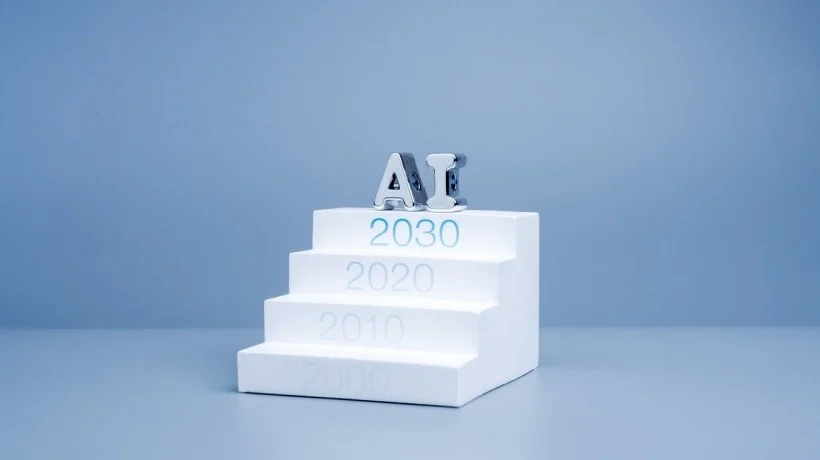
The global landscape of education and corporate training is undergoing a seismic shift as Artificial Intelligence moves from a supplementary tool to the foundational architecture of learning systems. By 2030, the market for AI in education is projected to reach $32.27 billion, representing a massive leap from its $5.88 billion valuation in 2024. This nearly six-fold increase signifies more than just market growth; it marks a total structural transformation in how knowledge is designed, delivered, and measured across the globe. As compute power scales and algorithmic sophistication reaches new heights, the traditional Learning Management System (LMS) is being replaced by autonomous environments that prioritize hyper-personalization and real-time skill acquisition.
The Technological Foundation: From Compute to Curriculum
To understand the trajectory of eLearning, one must first examine the raw infrastructure powering these changes. According to the Epoch AI 2025 research report, commissioned in part to analyze the future of frontier models, the investment required for training the next generation of AI will exceed $100 billion per model by the end of the decade. These models are expected to utilize thousands of times more computational power than the current GPT-4 architecture, consuming gigawatts of electricity and processing datasets of unprecedented scale.
For Learning and Development (L&D) professionals, this massive investment in infrastructure translates into a direct leap in functional capability. The "base models" of 2030 will not merely process text; they will possess deep reasoning capabilities across scientific, technical, and creative domains. This allows for the creation of learning platforms that do not just host content but understand it at an expert level. The shift from "software that stores videos" to "intelligence that teaches concepts" is the defining characteristic of this era.
A Chronology of the AI Learning Revolution
The path to 2030 can be viewed through a series of developmental milestones that have redefined the relationship between the learner and the machine.
- 2020–2023: The Generative Spark. The introduction of Large Language Models (LLMs) allowed for the first wave of automated content drafting, basic quiz generation, and experimental chatbots.
- 2024–2026: The Integration Phase. AI began to be embedded directly into existing LMS frameworks. Features like automated transcription, translation, and basic "nudge" analytics became standard.
- 2027–2028: The Rise of Autonomous Tutors. AI assistants transitioned from reactive bots to proactive pedagogical agents, capable of identifying a learner’s cognitive friction points before the learner even realizes they are struggling.
- 2029–2030: The Era of Hyper-Personalization. Learning paths became fully fluid, with content being generated and retired in real-time based on live performance data and shifting industry requirements.
The Evolution of the AI Tutor: From Chatbot to Domain Expert
Current AI tutors often function as sophisticated FAQ engines, providing pre-programmed or retrieved answers to student queries. However, by 2030, the AI tutor will evolve into a legitimate colleague and mentor. Benchmarks indicate that AI is on track to provide domain-expert assistance comparable to high-level coding assistants used by software engineers today.
In a corporate or academic setting, this means the AI will be capable of reviewing complex literature, synthesizing multi-disciplinary concepts, and adapting its teaching style to the specific psychological profile of the student. If a learner excels with visual metaphors but struggles with abstract mathematics, the AI will reconstruct the curriculum on the fly to lead with visual stimuli. This moves the needle from "one-size-fits-all" to "one-size-fits-one," delivered at a global scale that was previously impossible with human instructors alone.
Hyper-Personalization as the New Institutional Standard
In the current eLearning environment, personalization is often limited to branching scenarios—where a learner chooses Path A or Path B. By 2030, personalization will be the core foundation of the learning experience rather than a modular feature. Advanced predictive analytics will monitor a learner’s behavior with granular precision: noting where they pause in a video, how many times they revisit a specific paragraph, and even the time of day when their retention is highest.
This data allows the system to engage in "continuous reconstruction." A learning path will no longer be a static map; it will be a living organism that grows and pivots based on behavioral signals. This level of sophistication ensures that learners remain in the "flow state"—the optimal balance between challenge and skill—minimizing burnout and maximizing the return on time invested in training.
The Industrialization of Content: From Production to Curation
One of the most disruptive shifts for L&D teams will be the total automation of content production. Traditionally, creating a high-quality eLearning course required months of storyboarding, scripting, filming, and voice-over work. By 2030, manually authored courses will be viewed as historical artifacts, similar to hand-coded HTML websites from the 1990s.
AI-powered tools are already demonstrating the ability to generate lesson plans and multimedia resources from natural language descriptions. By the end of the decade, an Instructional Designer will no longer spend their hours writing scripts; they will act as "Learning Architects" or "Content Curators." Their role will involve:
- Defining the strategic learning objectives aligned with business goals.
- Verifying the accuracy and ethical alignment of AI-generated materials.
- Designing the high-level human-to-human interaction components of a program.
This shift allows a single professional to produce ten times the output of a traditional team, effectively ending the era of "content bottlenecks" where training departments could not keep pace with the speed of business change.
The Collapse of the Skills Half-Life and the Reskilling Mandate
The acceleration of AI capability creates a secondary challenge: the rapid obsolescence of human skills. McKinsey and Deloitte have projected that at least 60% of the global workforce will require significant reskilling as AI reshapes their job functions. The "half-life" of a learned skill—the time it takes for that skill to lose half its value—is shrinking.
In this environment, traditional scheduled training blocks are no longer viable. If an organization waits six months to develop a training program for a new technology, the technology may have already evolved by the time the course is launched. The 2030 model favors "just-in-time" learning, where AI delivers micro-learning modules directly into the workflow of the employee. Learning will no longer be an "event" that happens outside of work; it will be a continuous layer of the work experience itself.
AI as the Learning Analytics Engine and the ROI of Education
Historically, L&D departments have struggled to prove their value to the C-suite, often relying on "vanity metrics" such as course completion rates or average quiz scores. These metrics measure participation, not proficiency or business impact.
By 2030, AI will serve as a sophisticated analytics engine that connects learning data directly to business performance. Using xAPI (Experience API) and integrated Learning Record Stores (LRS), AI will correlate an employee’s training progress with their actual output—whether that is sales figures, code quality, or customer satisfaction scores. For the first time, organizations will be able to see the direct ROI of their educational investments. This evidence-based approach will transform L&D from a perceived cost center into a measurable driver of organizational growth.
The Deployment Gap: Navigating the Readiness Divide
While the technical capability of AI is advancing rapidly, its actual deployment remains uneven. Experts warn of a "deployment gap" between organizations that are ready to absorb these tools and those that are not. Software engineering and digital marketing are already seeing high rates of AI integration because their feedback loops are fast and their outputs are digital. In contrast, highly regulated industries like healthcare or heavy manufacturing may see a slower adoption rate due to compliance and safety requirements.
For a corporate L&D team to bridge this gap, they must begin building the necessary data infrastructure today. This includes moving away from outdated SCORM standards toward more flexible data protocols, establishing granular competency frameworks, and fostering a culture of "AI fluency" among the staff.
The Redefinition of the L&D Professional
The rise of AI does not portend the end of the human L&D professional, but it does demand a complete redesign of their skill stack. The professionals who will thrive in 2030 are those who can navigate the intersection of learning science and data science. The emerging "2030 Skill Stack" for L&D includes:
- AI Orchestration: The ability to manage and prompt multiple AI systems to produce cohesive learning ecosystems.
- Data Literacy: The capability to interpret complex AI analytics and translate them into actionable business strategies.
- Human-Centric Design: Focusing on the "soft skills" that AI cannot yet replicate—empathy, leadership, and ethical judgment.
- Agile Change Management: Guiding a workforce through the psychological and operational shifts required by constant technological evolution.
Conclusion: The Mandate for Immediate Action
The transition toward an AI-backed eLearning future is not a distant possibility but an unfolding reality. With the global market set to exceed $32 billion by 2030, the disparity between AI-ready organizations and those trailing behind will become a defining competitive factor.
The organizations that will lead the next decade are those treating AI not as a "future trend" but as an immediate infrastructure challenge. By building robust data foundations, adopting modular content architectures, and reskilling their own L&D teams, these leaders are ensuring they can provide the hyper-personalized, expert-level training that the modern economy demands. The question for institutional leaders is no longer whether to adapt to the AI-driven model, but how quickly they can dismantle their legacy systems to make room for the future of intelligence. The window for foundational preparation is closing; the time to architect the 2030 learning environment is now.






