The landscape of modern employment is undergoing a significant, unexpected shift, as companies that aggressively replaced human workers with artificial intelligence (AI) are now finding themselves in the unusual position of rehiring those same individuals. This phenomenon, dubbed "AI rebounding," is not merely a course correction but a costly lesson for organizations, as employees returning to their former roles are increasingly demanding substantial pay raises, guarantees of job security, and full transparency regarding AI’s integration into their positions. This trend, gaining momentum in 2026, signals a critical reassessment of AI’s capabilities and limitations within the workforce.
According to a comprehensive survey conducted by Propeller Insights for SHL, a global leader in talent assessment, over half of more than 2,000 employed adults across the U.S. and the U.K. have either directly experienced, known someone affected by, or heard about AI rebounding. The data highlights a pronounced impact in the United States, where nearly one in five workers reported firsthand experience with this boomerang effect, compared to 13% in the U.K. These findings underscore a growing recognition that the initial rush to automate may have overlooked crucial human elements essential for business operations.
Lucy Beaumont, Global Senior Vice President of Product and Design at SHL, articulated the core issue, stating, "Organizations are making fast, sometimes myopic, decisions about their people based on an incomplete picture of what their employees can do with or without AI. AI rebounding is what happens when a company automates a role before it has genuinely assessed the human capability inside it." Her assessment points to a strategic misstep where the allure of technological efficiency overshadowed a deeper understanding of human capital.
Adding further weight to these observations, Gartner, a leading research and advisory company, predicts a substantial future for this trend. Their analysis forecasts that by 2029, a notable 30% of employees initially terminated or replaced by AI will be rehired. Crucially, Gartner also anticipates that these rehires will often come at a higher cost to the employers, exacerbating the financial implications of their initial automation strategies. This confluence of data from SHL and Gartner paints a clear picture of a complex and evolving employment dynamic, where the promise of AI-driven efficiency is being tempered by the indispensable value of human expertise.
The Rise of AI and Initial Workforce Disruption
The early to mid-2020s were characterized by an unprecedented wave of enthusiasm for artificial intelligence. Businesses across various sectors, from manufacturing to customer service and financial analysis, saw AI as a panacea for increasing efficiency, reducing operational costs, and gaining a competitive edge. The narrative was clear: AI would automate routine, repetitive tasks, freeing human workers for more complex, creative, or strategic endeavors, or in some cases, rendering their roles obsolete.
This period witnessed significant investment in AI technologies, with companies eager to deploy machine learning algorithms, robotic process automation (RPA), and advanced analytics platforms. The promise of AI-driven chatbots handling customer inquiries, automated data processing systems, and intelligent robots on assembly lines led to widespread workforce restructuring. Many organizations, driven by a desire for swift digital transformation and cost-cutting, implemented AI solutions with an aggressive timeline, often without a thorough understanding of the nuances involved in human-centric roles.
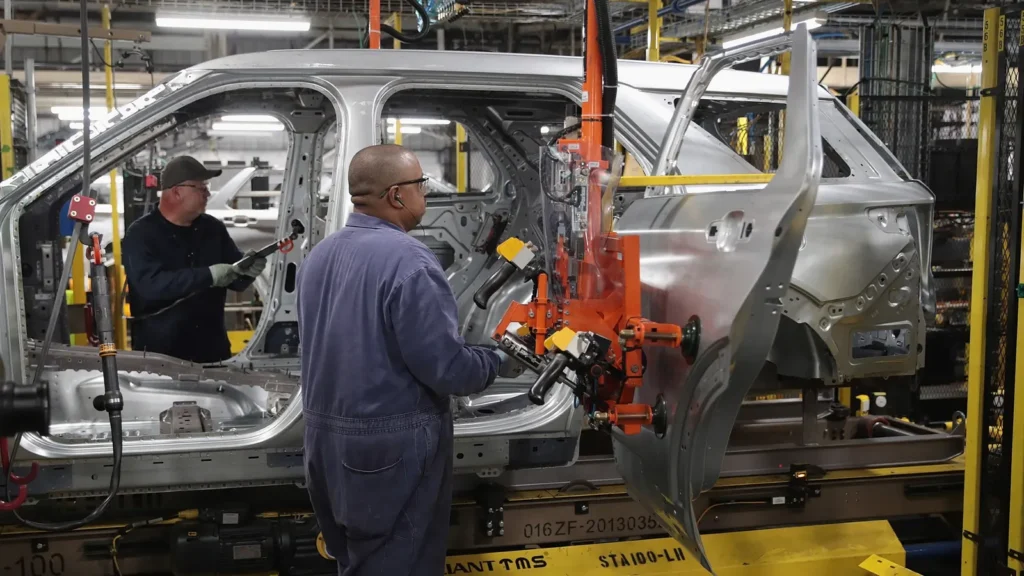
Sectors particularly impacted included customer service, where chatbots and virtual assistants were deployed to handle initial inquiries and routine support; data entry and administrative tasks, which were targeted for RPA; and certain manufacturing processes, where advanced robotics aimed to replace manual labor. While these deployments initially showed promise in terms of speed and raw processing power, they frequently overlooked the qualitative aspects of human interaction, problem-solving, and adaptability. This era of rapid AI adoption, while hailed as a technological leap, often resulted in significant employee displacement, fostering a sense of insecurity among the workforce.

The "Boomerang" Effect: Details and Data
The current "AI rebounding" phenomenon serves as a stark reminder that technology, while powerful, is not a silver bullet. The SHL report’s detailed findings illuminate the specifics of this boomerang effect. Beyond the overall statistics, the survey revealed that the industries most prone to AI rebounding often involved roles requiring a blend of technical skill, critical thinking, and interpersonal communication. For instance, while AI could automate certain aspects of data analysis or technical support, the ability to interpret complex client needs, troubleshoot novel problems, or provide empathetic customer service proved challenging for purely AI-driven systems.
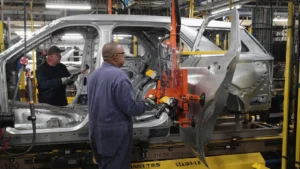
The examples cited in the original reporting, such as Amazon, Ford, and Klarna, are illustrative. These major companies, known for their innovative approaches, likely encountered scenarios where their AI implementations did not achieve the expected outcomes. In customer service, for example, while AI can efficiently answer frequently asked questions, it often struggles with nuanced emotional context, complex problem resolution, or dealing with frustrated customers who prefer human interaction. This can lead to decreased customer satisfaction, brand erosion, and ultimately, a negative impact on business performance. For manufacturing, while robots excel at repetitive tasks, human adaptability, fine motor skills for intricate assembly, and the ability to diagnose unexpected equipment failures proved harder to fully replicate or manage with AI alone.
The financial implications of this rebound are substantial. The initial investment in AI infrastructure, software, and training is often considerable. When these systems fail to deliver, or when their limitations necessitate human intervention, companies face the double burden of sunk costs in AI and the renewed expense of rehiring and potentially retraining human workers. This economic inefficiency highlights the need for more rigorous cost-benefit analyses and pilot programs before large-scale workforce transformations.
The Cost of Miscalculation: Employer Perspectives
For employers, the decision to rehire previously displaced workers represents a critical re-evaluation of their AI strategies. The reasons for AI’s failure to fully deliver are multifaceted. One primary factor is the inherent difficulty of replicating complex human cognitive functions and emotional intelligence. While AI excels at processing vast amounts of data and executing predefined tasks, it often falters when faced with ambiguity, requiring creative problem-solving, or navigating interpersonal dynamics. Roles that demand empathy, ethical judgment, negotiation skills, or nuanced understanding of human behavior proved particularly resistant to full automation.
Another significant challenge has been the "last mile" problem. AI can automate the initial stages of many processes, but the final, often critical, steps frequently require human oversight, refinement, or approval. This includes tasks such as quality control, strategic decision-making based on AI-generated insights, or handling exceptions that fall outside programmed parameters. Companies discovered that replacing humans entirely often led to bottlenecks, errors, or a decrease in overall service quality.
Furthermore, the implementation and ongoing maintenance of sophisticated AI systems proved to be more complex and costly than initially anticipated. Data quality issues, the need for continuous training and recalibration of AI models, and the integration of AI with legacy systems often presented unforeseen hurdles. The total cost of ownership for AI, when factoring in development, deployment, maintenance, and the potential negative impact on customer satisfaction or brand reputation, sometimes outweighed the projected savings from reduced labor costs. This realization has forced companies to reconsider a purely substitutive approach to AI and instead explore models of human-AI collaboration.
Employee Demands and Shifting Power Dynamics

The "AI rebounding" phenomenon has fundamentally altered the power dynamics between employers and employees. Workers, having experienced the insecurity of AI-driven displacement, are now returning with a newfound leverage and clear demands. The SHL report quantifies these demands: a striking 51% of workers would require a "substantial" raise to consider returning to a role they were previously displaced from by AI. This reflects not only a desire for fair compensation but also a demand for recognition of their inherent value, which AI could not replicate.
Beyond financial compensation, job security has become a paramount concern for 42% of returning workers. The experience of being replaced by a machine has undoubtedly eroded trust, making employees wary of future technological shifts. They seek guarantees that their roles will not be subject to arbitrary automation again, underscoring the need for clear communication and long-term commitment from employers.
Crucially, 40% of workers are demanding "full transparency" about how AI will be used in their positions. This demand goes beyond mere awareness; it signifies a desire for clarity on the scope of AI’s involvement, its limitations, and how human roles will complement, rather than be overshadowed by, technology. This reflects a shift towards employees wanting to understand and participate in the evolving nature of their work in an AI-integrated environment.
This empowered stance by the workforce is a direct consequence of employers’ miscalculations. Workers who were once seen as replaceable are now recognized as indispensable for tasks requiring judgment, creativity, and human interaction. This newfound leverage provides an opportunity for employees to negotiate better terms, advocating for not just higher pay but also for more stable and ethically transparent working conditions.
Expert Analysis and Recommendations
The implications of AI rebounding extend beyond individual companies, prompting broader discussions among HR experts, labor economists, and technology analysts. Lucy Beaumont’s "wake-up call" underscores the urgency for organizations to refine their approach to workforce planning and talent management in the age of AI.
HR professionals are now advising companies to adopt a more holistic view of their workforce, focusing on skills rather than just roles. This involves conducting thorough human capability assessments before considering automation. Instead of asking "Can AI do this job?", the question should be "How can AI augment human capabilities to enhance this job?". This shift promotes a human-in-the-loop approach, where AI assists rather than replaces, allowing humans to focus on higher-value tasks that require uniquely human attributes.
Labor economists are closely monitoring the economic ramifications. The increased labor costs associated with rehiring at higher wages could impact profitability, potentially leading to price increases for consumers or a reallocation of resources away from other investments. This phenomenon highlights the intricate balance between technological advancement and labor market stability. It also suggests that the initial projections of massive cost savings from AI might have been overly optimistic, at least in the short to medium term.
Technology analysts are emphasizing the need for a more pragmatic and ethical approach to AI deployment. The focus is shifting from "AI for AI’s sake" to value-driven AI solutions that genuinely solve business problems and enhance human potential. This includes ensuring AI systems are transparent, fair, and accountable, mitigating biases, and designing interfaces that facilitate seamless human-AI collaboration. The ethical implications of job displacement, the psychological impact on workers, and the societal responsibility of companies deploying AI are now front and center in these discussions.

A Chronology of AI in the Modern Workplace (Leading to 2026)
To understand the current state of AI rebounding, it is helpful to trace a plausible chronology of AI’s integration into the workplace:
- Early 2020s (2020-2022): The Hype Cycle Begins. Initial widespread enthusiasm for AI and automation technologies. Companies invest heavily in pilot programs and proof-of-concept projects, driven by promises of unprecedented efficiency and cost reduction. Early successes in narrow, repetitive tasks fuel optimism.
- Mid-2020s (2023-2025): Aggressive Adoption and Workforce Restructuring. Buoyed by initial pilots, many organizations scale up AI implementation rapidly. This period sees significant workforce displacement and layoffs in sectors deemed ripe for automation, such as customer service, data processing, and certain manufacturing roles. The focus is on replacing human labor with AI to achieve maximum cost savings. This phase often overlooks the nuances of human-centric work and the complexities of AI integration.
- Late 2020s (2025-2026): Realization of Limitations and the Trough of Disillusionment. Companies begin to experience the downsides of aggressive AI deployment. Issues arise such as decreased customer satisfaction due to lack of human empathy, inability of AI to handle complex or novel problems, high maintenance costs for AI systems, data quality challenges, and unexpected ethical dilemmas. The "AI Hype Cycle" enters its "Trough of Disillusionment." Examples like Amazon, Ford, and Klarna begin to emerge, where AI bets did not pan out as planned.
- 2026 Onward: The Emergence of "AI Rebounding." The recognition of AI’s limitations leads companies to re-evaluate their strategies. The value of human judgment, adaptability, and emotional intelligence becomes apparent. Organizations begin to rehire workers previously displaced by AI, often at a higher cost and with new demands from employees regarding job security and transparency. The focus shifts from pure replacement to exploring human-AI collaboration models, acknowledging the complementary strengths of both.
Broader Impact and Future Outlook
The phenomenon of AI rebounding represents a pivotal moment in the evolution of work. It compels organizations to adopt a more nuanced and responsible approach to technological integration, moving beyond simplistic automation goals. The long-term implications for the workforce and corporate strategy are profound.
Firstly, it underscores the critical importance of robust workforce planning. Companies must invest in comprehensive skills assessments, identify unique human capabilities that AI cannot replicate, and strategically plan for human-AI collaboration rather than pure substitution. This requires foresight, continuous learning, and adaptability from both employers and employees.
Secondly, it highlights the need for continuous investment in upskilling and reskilling programs. As AI continues to evolve, the nature of work will inevitably change. Employees need opportunities to acquire new skills that enable them to work effectively alongside AI, managing, supervising, and leveraging its capabilities for higher-value tasks.
Thirdly, the ethical dimension of AI deployment will become even more prominent. Companies will face increased scrutiny regarding how they manage job displacement, ensure fair labor practices, and maintain transparency about AI’s role in the workplace. Building trust with employees and the public will be crucial for sustainable technological adoption.
Finally, AI rebounding signals a maturing understanding of artificial intelligence. It is not an omnipotent force capable of replacing all human endeavor but a powerful tool that, when integrated thoughtfully and ethically, can augment human potential. The future of work will likely involve a dynamic interplay between human intelligence and artificial intelligence, where collaboration, adaptability, and continuous learning will be key to navigating an ever-changing landscape. As Lucy Beaumont aptly stated, "AI rebounding should be a wake-up call," prompting a more considered and human-centric approach to technological advancement in the workplace.