The artificial intelligence industry is currently captivated by the impending public offerings of two of its most prominent players: OpenAI and Anthropic. These companies, led by their respective visionary CEOs, represent the vanguard of a rapidly evolving technological frontier. As details surrounding their initial public offerings (IPOs) emerge, the market is abuzz with speculation about how these tech giants will differentiate themselves and compete for dominance. This intense focus on the core AI models, however, may be overlooking a crucial element of the enterprise AI revolution. While the race for superior AI models intensifies, a compelling argument can be made that Microsoft, through its strategic integration and comprehensive platform approach, is poised to become the ultimate beneficiary of this AI transformation.
The enterprise market for artificial intelligence is multifaceted, broadly segmenting into three interconnected layers: the foundational AI models, the user-facing application experiences, and the expansive technological ecosystems that support them. Each of these layers presents unique challenges and opportunities, and understanding their interplay is key to predicting the future landscape of AI adoption.
The Foundation: Differentiating AI Models for Specific Applications
At the base of the AI pyramid lie the models themselves, the complex algorithms trained on vast datasets to perform specific tasks. The current challenge lies in determining which applications are best served by which model. This is a dynamic and evolving field, with AI labs continually optimizing their algorithms and training methodologies to cater to diverse needs.
The initial belief that a single, all-encompassing AI model would suffice has largely given way to the understanding that specialization is paramount. For instance, coding and analytical tasks might leverage Anthropic’s Claude, while narrative and document generation could be the domain of OpenAI’s models. Google’s Gemini might find its niche in complex analysis and scientific research, and applications involving robotics and physical movement could be powered by models like Grok. The question of where foundational world models, such as those being developed by Nvidia, will fit into this ecosystem remains a significant area of exploration.

The process of training these sophisticated models extends far beyond mere computational power. It involves meticulous data collection, precise labeling, and continuous refinement to address the inherent limitations of any single model. A pharmaceutical company, for example, would require a model specifically trained on biological data, understanding proteins and advanced genetics, to achieve optimal results. This necessitates a departure from the notion of a generalized AI solution towards domain-specific intelligence.
While Anthropic has set a notable pace in code generation, a foundational aspect of many AI applications, the broader question of strategic focus persists. Will OpenAI truly delve into healthcare-specific AI? Will Google make significant inroads into biology? Which model will be optimized for the physical world, encompassing robotics, manufacturing, and transportation? Nvidia and potentially Grok are strong contenders in this space.
Consequently, business buyers will likely require a portfolio of AI models, rather than a singular solution. Claims of AI systems capable of "doing everything" are becoming increasingly untenable in a market that values specialized expertise. This trend is exemplified by platforms like AI Galileo, which has demonstrated remarkable intelligence by focusing laser-like on HR, job markets, skills, and management topics, effectively transforming into a consultancy for human capital challenges.
The Interface: Crafting the User Experience (The AI Harness)
Beyond the foundational models lies the crucial layer of the "surface," or application experience, that users interact with. This encompasses the desktop environments, toolsets, integration capabilities, and development tools that make AI accessible and practical. These are not merely models; they are robust applications where user experience, personalization, memory capacity, and seamless integration with external data systems are paramount. This surrounding layer of software is often referred to as the "AI Harness."
The significance of user experience cannot be overstated. If Apple’s Siri were to achieve true intelligence and ease of use, it could rapidly capture a billion users. The underlying model would be secondary to the seamless interaction and utility it provides. Microsoft’s historic success in the PC market offers a compelling parallel. By both licensing and innovating graphical interfaces and relentlessly focusing on the application experience of products like Excel, PowerPoint, and Outlook, Microsoft ultimately triumphed over earlier competitors. The enduring loyalty of over 450 million paying users attests to the power of a superior application suite.
For business developers and IT professionals, the need for a comprehensive AI solution is equally pressing. This involves:
- Seamless Integration: The ability to connect AI tools with existing enterprise resource planning (ERP) systems like SAP, Oracle, and Workday, as well as customer relationship management (CRM) platforms such as Salesforce, and financial software like QuickBooks and Hubspot.
- Developer Tools: Providing robust APIs, SDKs, and low-code/no-code platforms that empower developers to build custom AI-powered applications.
- IT Management: Offering centralized control, security, and governance for AI deployments, ensuring compliance and efficient resource allocation.
- User-Friendly Interfaces: Designing intuitive and accessible interfaces that enable employees across all departments to leverage AI capabilities effectively.
Therefore, even if a business finds a particular AI model like Claude or Gemini appealing, its successful integration into the corporate workflow depends on a host of supporting technologies that transform the raw model into a complete solution. The concept of an "AI Harness" highlights the critical need for a well-designed application layer that abstracts the complexity of the underlying models and delivers tangible value to end-users.
The Ecosystem: Building a Network of Innovation and Support
The third pillar of enterprise AI is the ecosystem – the network of applications, integrations, tools, and third-party support that surrounds an AI platform. Businesses increasingly seek AI platforms that offer a rich ecosystem, fostering innovation and providing flexibility.
When developing platforms like AI Galileo, the immediate feedback from customers often revolves around integration needs. The desire to connect AI tools with existing policy databases, leadership models, and compliance training underscores the demand for a connected and extensible AI environment. This necessitates a proactive approach to building solutions that bridge the gap between core AI capabilities and an organization’s unique data landscape.
In the enterprise sector, where significant AI-driven profits are anticipated, vendors must cultivate robust partner ecosystems. These partners play a vital role in extending the functionality of AI platforms and creating revenue streams by building specialized applications and services.
Discussions with HR and IT leaders consistently reveal a dual focus: the immediate need for user-friendly, packaged AI tools for current employees, coupled with a more strategic imperative for a platform that facilitates the development, procurement, and management of agentic applications. This approach aims to complement and, in many cases, eventually replace existing enterprise systems, while avoiding vendor lock-in in a nascent and rapidly evolving market.
In this new era, the focus has shifted from the AI "engine" to the "surface" – the application experience.
The Surface vs. The Model: A Paradigm Shift
The terminology in the AI space has evolved, with a growing emphasis on "AI surfaces" rather than solely "models." A surface refers to the application experience, the tangible interface through which users interact with AI, rather than the underlying large language model (LLM). This means the application built on top of AI is becoming as critical as the AI itself. The true value is derived from the synergistic combination of the surface and the model, creating a cohesive and effective user experience.
In the corporate world, the surface encompasses the tools, speed of response, user interface, availability of historical data, and the effectiveness of the semantic connectivity layer. A robust connection between an AI and an HR system or email client, for instance, should yield valuable insights, not just random data.
A practical illustration of this challenge was experienced when attempting to integrate Claude with HubSpot. Despite promotion by both companies, the integration faltered when a query for "largest clients and their 10 most recent marketing interactions" was posed. The system struggled to retrieve data and ultimately timed out. This failure was attributed to the "context layer" of the surface, not the underlying Claude model itself.
The critical question for companies like Anthropic and OpenAI is how they will address these "surface" challenges. They cannot achieve this alone and are reliant on third parties like ServiceNow, Microsoft, or Accenture to build these essential integrations. If these integration partners deliver subpar experiences, the overall platform suffers, hindering adoption.
Enter Microsoft: Dominance Through Integration and Ecosystem
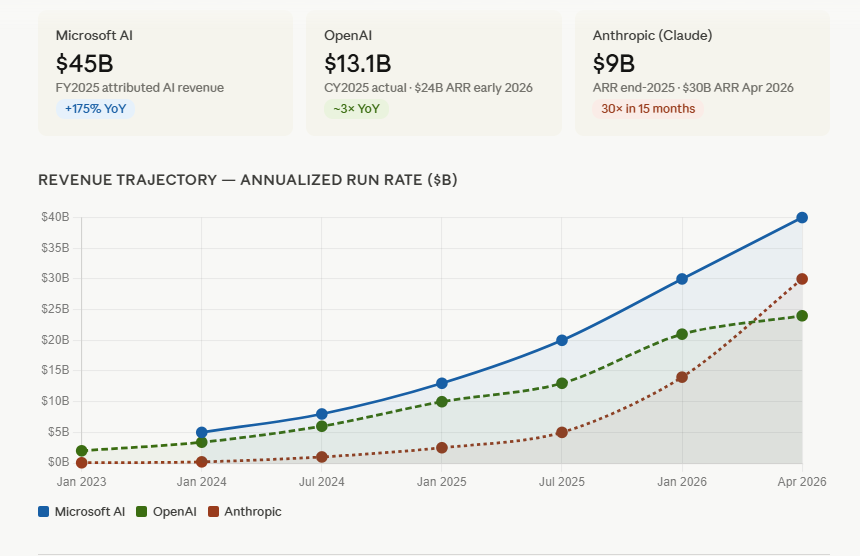
Amidst this evolving landscape, Microsoft is emerging as a formidable contender, potentially eclipsing the direct competition between OpenAI and Anthropic. While OpenAI and Anthropic are reportedly generating substantial revenue, with figures around $30 billion each speculated, a closer look at their revenue streams reveals a key differentiator. Approximately 70% of OpenAI’s revenue is derived from consumer subscriptions, while Anthropic’s revenue is largely driven by selling AI compute to other providers.
The calculation for OpenAI’s estimated $30 billion in revenue suggests a model where 25% of an estimated 500-600 million users pay $20 per month. Anthropic’s $30 billion projection implies that 300-500 large enterprises are each generating around $500 million in revenue from its services.
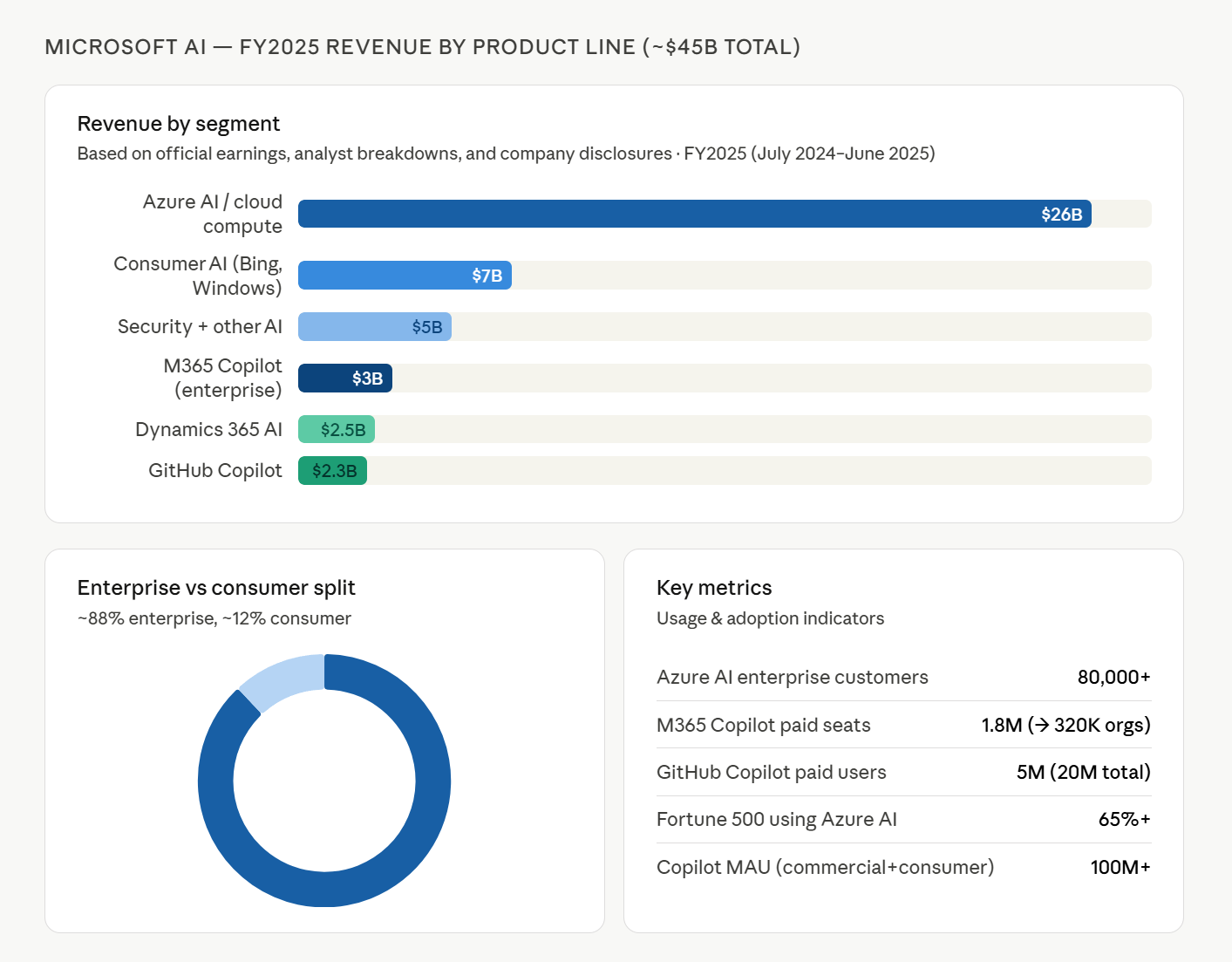
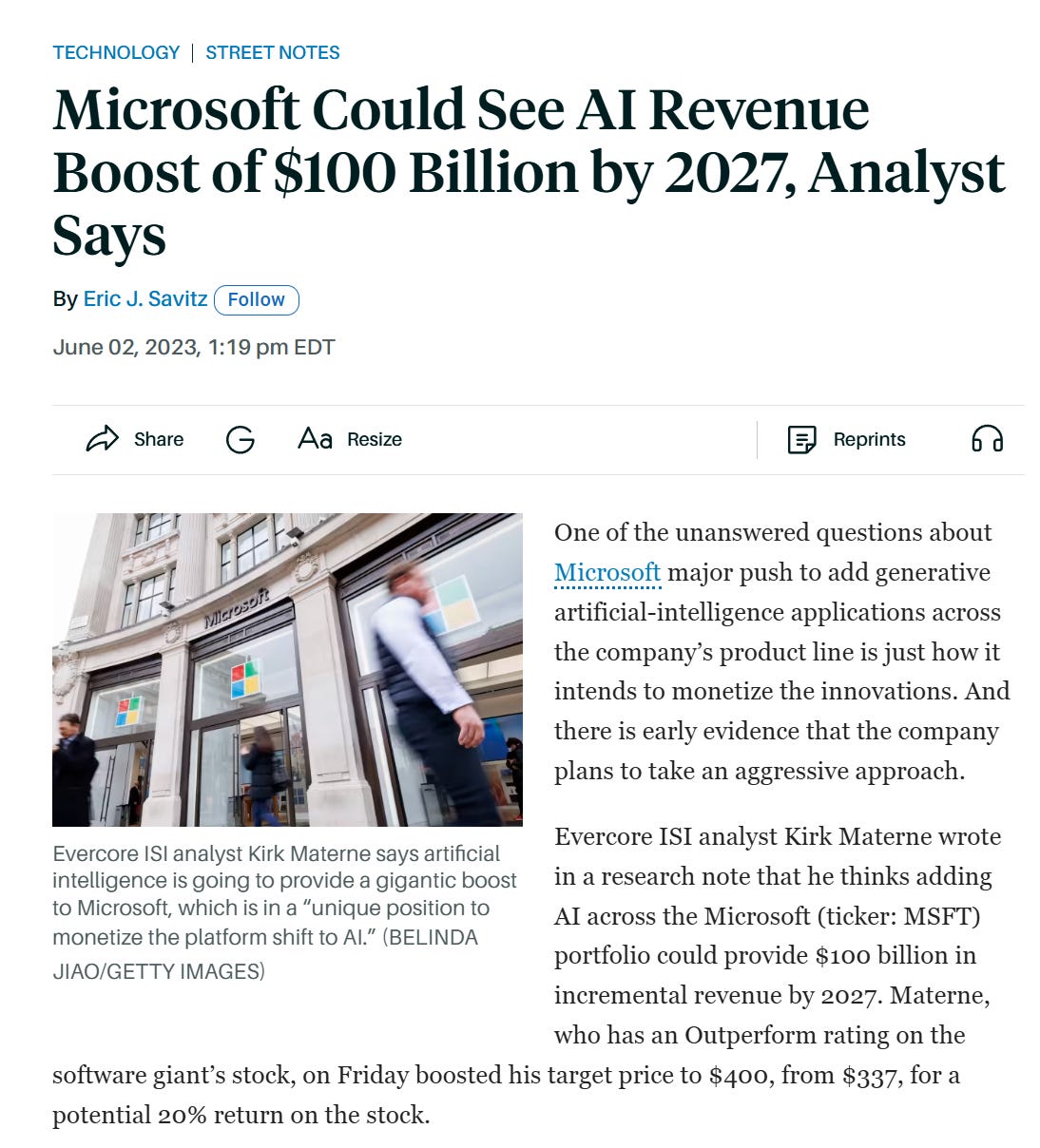
However, the revenue generated from the crucial "surface" layer – the application experience and integration – appears to be where Microsoft is making significant strides. Microsoft’s own projections indicate over $100 billion in new AI revenue over the next three years, with some analysts suggesting this target could be reached even sooner.
Microsoft Copilot: Evolving from Pieces to a Unified Platform
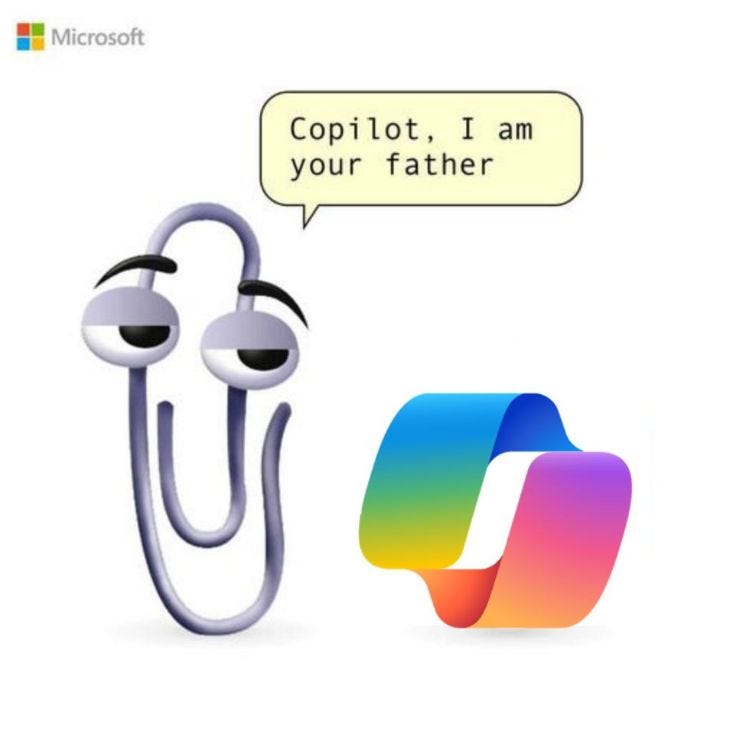
Microsoft’s journey with Copilot has been marked by rapid evolution. Initially, the company’s AI strategy was heavily influenced by its partnership with OpenAI, licensing ChatGPT for its Bing search engine. This quickly evolved into the broader Microsoft Copilot vision, which, in its early stages, felt akin to an intelligent, albeit more sophisticated, version of the much-maligned "Clippy" assistant.
The initial Copilot offerings were largely integrated as "plugins" for individual Microsoft products, such as M365 applications, Dynamics, and GitHub. However, Microsoft’s product teams ambitiously began building numerous "surfaces" atop OpenAI’s models. This led to the launch of Copilot Studio, Agent 365, Work IQ, and a plethora of other Copilot-powered features, creating a somewhat fragmented but rapidly expanding ecosystem.
Crucially, Microsoft invested heavily in its M365 Graph Connectors to ingest corporate data into Copilot and developed fine-tuning capabilities to personalize AI intelligence. This flurry of innovation, while impressive, sometimes felt disjointed.
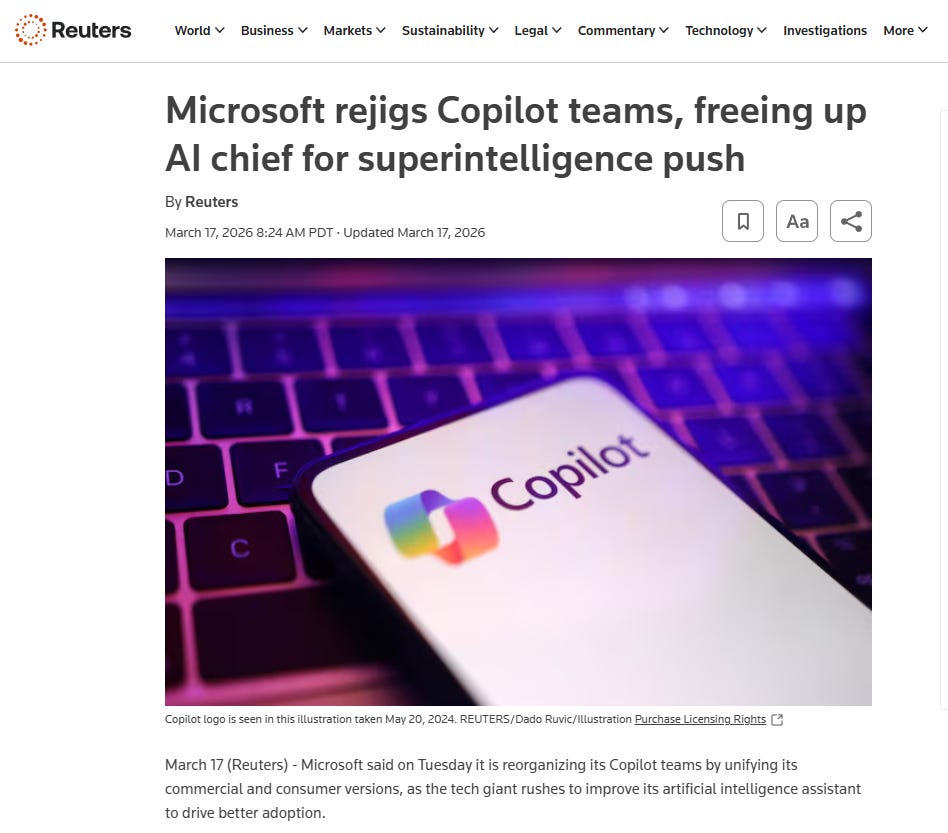
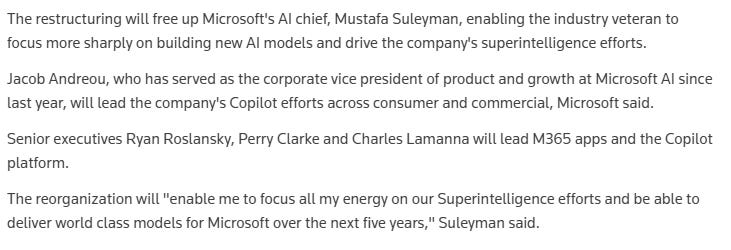
The turning point appears to have arrived with a strategic reorganization. Recognizing the potential for user confusion, Satya Nadella, CEO of Microsoft, consolidated the disparate Copilot product teams into a single, unified product organization. This move, announced in March 2026, aims to streamline development and foster a more cohesive strategy.
This organizational shift has been accompanied by a leadership realignment. The Copilot product is now spearheaded by a dedicated team, including Jacob Andreou (leading Copilot growth), Ryan Roslansky (leading LinkedIn, a key component of the M365 ecosystem), Perry Clarke (leading Copilot Core), and Charles Lamanna (leading Agents and Apps). This leadership structure allows for a more holistic approach to agent enablement and corporate user value, moving beyond single-application functionality. This integration strategy mirrors Nvidia’s success in engineering a unified approach across its hardware and software stack.
The implications of this integrated strategy are profound:
- Unified AI Experience: Microsoft is moving towards a singular "surface" for both corporate and consumer AI interactions, simplifying adoption and management.
- In-House Model Development: With a consolidated product organization, Microsoft’s AI engineering group can now more effectively focus on developing its own proprietary AI models, enhancing its competitive edge.
- Strategic Partnerships: The open platform approach allows for deeper integration with a wider array of third-party applications and services, solidifying Microsoft’s position as a central hub for enterprise AI.
- Enhanced Data Utilization: The focus on M365 Graph Connectors and fine-tuning ensures that Copilot can leverage an organization’s proprietary data for more personalized and contextually relevant insights.
Why Microsoft is Gaining Ground
Several factors contribute to Microsoft’s escalating influence in the enterprise AI market:
- Integrated Enterprise Solutions: The corporate market demands comprehensive toolsets that encompass desktop applications, development environments, IT management capabilities for AI agents, and seamless connectivity to legacy systems. Microsoft, through its extensive product portfolio and strategic partnerships, is uniquely positioned to deliver this integrated experience. Initiatives like Work IQ and the ongoing development of Agent 365 and Copilot Studio are testaments to this commitment.
- Developer Ecosystem Expansion: The vast application development world is eagerly awaiting more integrated tools. This presents an opportunity for ERP, financial, productivity, and analytics vendors to build APIs that connect with the "Copilot-land" ecosystem. While navigating the various integration points (Teams, Graph, WorkIQ, Fabric) can be complex, the pathways are becoming increasingly clear.
- End-User Familiarity and Accessibility: The current Copilot experience is steadily improving, and the company’s commitment to top-tier UI design suggests a future where AI applications are seamlessly integrated into the familiar Microsoft desktop environment. While the current interface may appear somewhat disjointed, this is likely a temporary phase, with significant beautification and refinement expected over time.
- Robust Partner Network: As Microsoft’s Copilot platform opens up through APIs, its extensive partner network is poised for significant growth. Corporate cloud vendors, many of whom are concerned about being supplanted by AI agents, are increasingly looking for opportunities to integrate their offerings into the Microsoft ecosystem.
Microsoft’s Value Proposition: Beyond the Model
Microsoft’s strategic advantages extend beyond simply offering powerful AI models. The company is building significant value through its platform and ecosystem:
- Deep Research Capabilities: Features like the "Researcher" button, which can analyze data within the Microsoft Graph (including calendars and other personal information), offer deep insights and contextual advice. As this functionality evolves with enhanced memory and context, it promises to provide invaluable assistance to individuals and leaders.
- Intelligent Routing: New Microsoft Agents are designed to compare queries against multiple AI models, optimizing for the most effective and cost-efficient execution. Over time, these agents will likely deconstruct complex AI tasks, distributing them across specialized agents for maximum efficiency.
- Agentic Interfaces for Core Applications: The new Copilot enables users to interact with complex documents within Microsoft applications like Excel, PowerPoint, and Word. Users can ask questions, modify tables, run reports, and create graphs directly within the Copilot interface, with changes reflected in the document. This "in-app" integration is expanding across the Microsoft suite and will continue to become more sophisticated.
- Intelligent Context Layer in Work IQ: The upcoming release of Work IQ APIs will empower companies to import and build proprietary "context" into Copilot. This transforms Copilot into a true agent for specific business functions, such as HR, finance, and sales, enabling highly tailored and intelligent operations. This layered approach to AI contextualization is a critical differentiator for enterprise adoption.
The integration of platforms like Galileo through Microsoft’s Graph connector and as a fine-tuned model exemplifies this strategy. This allows employees to access specialized AI expertise for leadership, management, and HR challenges, positioning Galileo as a world-class advisor within the broader Microsoft ecosystem.
The ongoing evolution of the AI landscape, with its intense focus on foundational models, often overshadows the critical importance of user experience, integration, and ecosystem development. While OpenAI and Anthropic continue their pursuit of AI superiority, Microsoft’s strategic focus on building a comprehensive, integrated, and extensible AI platform positions it as a potentially dominant force in the enterprise AI market. The company’s ability to seamlessly weave advanced AI models into the fabric of its existing product suite, coupled with its vast ecosystem and developer network, suggests a future where Microsoft plays a central role in shaping how businesses leverage the transformative power of artificial intelligence.