The Enduring Challenge of Interview Logistics in Talent Acquisition
For hiring managers and recruitment teams globally, the scenario is regrettably familiar: a meticulously prepared interview invitation is dispatched to a promising candidate, carefully aligned with internal team schedules. Yet, mere hours before the scheduled interaction, an email arrives bearing the customary apology and request to reschedule. This initiates a laborious, multi-step coordination dance involving numerous email exchanges, meticulous calendar cross-referencing, and intricate alignment with multiple interviewers, often delaying the process by several days. Beyond the operational inefficiencies, this protracted back-and-forth can inadvertently undermine a company’s carefully cultivated image as a modern, agile, and people-centric organization, potentially causing top-tier candidates to question their initial positive impressions.
Historically, interview scheduling has been a largely manual, labor-intensive process, evolving from direct phone calls and postal correspondence in earlier decades to email-based coordination in the late 20th century. While the advent of digital calendars and basic scheduling tools offered initial relief, many systems retained fundamental limitations. Recruiters would often manually check interviewer availability, propose times, and then wait for candidate responses, a process prone to delays and miscommunications. The rise of globalized hiring, the increasing prevalence of remote work models, and the sheer volume of applications submitted to popular roles have all amplified the complexities of time zone differences, diverse personal schedules, and the need for rapid communication. What should be a straightforward logistical step has frequently transformed into a significant bottleneck, with the lack of real-time, bidirectional flexibility consistently identified as a primary driver of candidate frustration and operational strain within talent acquisition departments. This systemic inefficiency not only consumes valuable recruiter bandwidth but also risks alienating promising candidates who are evaluating multiple opportunities in a competitive market.
Startling Statistics Underpinning the Problem
The scale of this issue is more significant than many in the human resources sector realize. Industry data reveals a surprising statistic: on average, only about 50% of initial interview requests successfully culminate in a booked meeting. This means that if a company extends interview invitations to 40 candidates from a pool of 200 applications, approximately 20 of those potential conversations—half of the initial opportunities—are lost before they even commence. This represents a substantial drain on resources, time, and potential talent, directly impacting an organization’s ability to fill critical roles efficiently.
Further analysis of over 10,000 candidate interactions highlights a critical systemic flaw inherent in many traditional and even early-stage digital scheduling platforms: a significant portion of candidates received multiple, often redundant, scheduling requests while progressing through the same stage of the hiring process. This was rarely attributable to recruiter oversight but rather to the inherent inflexibility of existing scheduling workflows. When a candidate needed to reschedule an interview, the prevailing system often necessitated the generation of an entirely new scheduling link, effectively forcing both parties to restart the coordination process from scratch. This rigid, unidirectional communication flow creates friction at a pivotal moment in the candidate journey, consumes invaluable recruiter time in logistical coordination, and, critically, leads to the premature loss of promising candidates who simply disengage rather than endure the cumbersome process. This inefficiency impacts not only the individual candidate experience but also broader hiring metrics such as time-to-fill and recruiter productivity.
Several authoritative industry reports corroborate the detrimental impact of poor scheduling practices. A 2023 survey by the Talent Board, for instance, indicated that a convoluted or unresponsive scheduling process is a leading cause of candidate drop-off, with nearly 60% of candidates reporting a negative experience due to scheduling issues. Furthermore, research consistently published by platforms like Glassdoor shows that a positive candidate experience, encompassing everything from initial application to seamless interview scheduling, significantly influences a candidate’s perception of a company and their likelihood of accepting an eventual offer. The administrative burden on recruiters is also quantifiable; a study by Workable estimated that recruiters spend, on average, 1-2 hours per week solely on interview scheduling logistics, a figure that escalates dramatically for high-volume hiring teams. These lost opportunities and inefficiencies translate directly into higher time-to-fill metrics, increased recruitment costs, and potentially compromised talent acquisition outcomes, underscoring the urgent need for systemic improvements.
A New Paradigm: Candidate-Centric Autonomy in Recruitment
Central to the philosophy of modern talent acquisition is the principle of respect and autonomy, concepts that extend far beyond the offer letter and into the earliest stages of interaction. Extensive research across diverse industries consistently underscores that the most effective candidate experiences are those built on mutual respect and empowering candidates with a sense of control over their journey. When prospective employees are afforded the flexibility to manage their own schedules, mirroring the professional courtesy extended for any other business meeting, they feel inherently trusted and valued. Conversely, forcing candidates into rigid, one-way communication flows—where they must wait for responses, navigate complex systems, or justify changes—inadvertently conveys an impression of being merely "processed" rather than genuinely "partnered with."
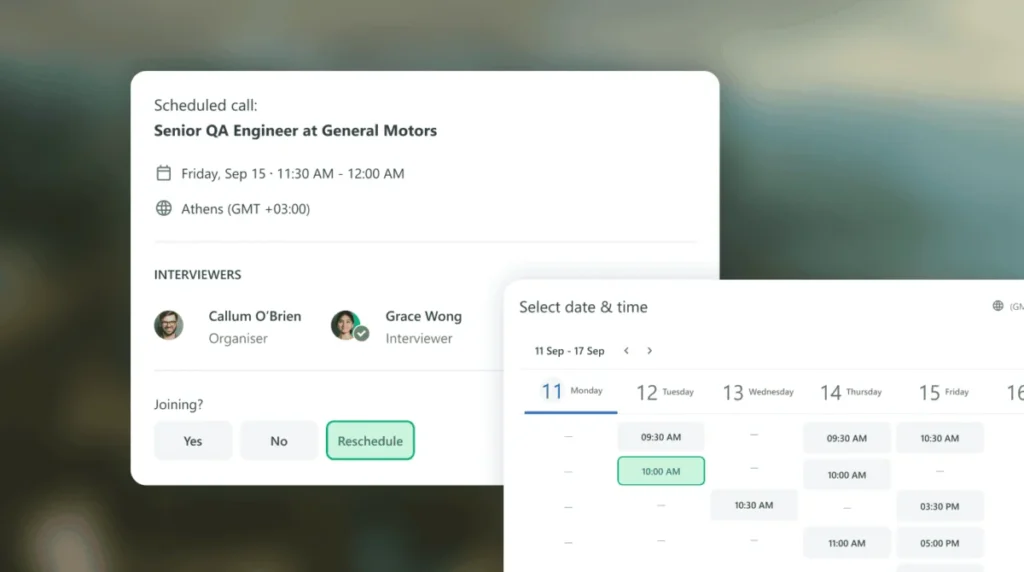
This understanding has driven the development of the latest scheduling improvements, which fundamentally reimagine the interview coordination process. The headline feature, candidate self-rescheduling, represents a significant leap forward in empowering candidates and aligning the recruitment process with contemporary expectations of professionalism and efficiency. By putting control directly into the hands of the candidate, companies can demonstrate a tangible commitment to a people-first approach from the very first interaction.
How Candidate Self-Rescheduling Works in Practice
The core innovation allows candidates to reschedule their interviews with a single click, directly from their original invitation. This functionality eliminates the cumbersome cycle of email threads, the uncertainty of waiting for a response, and the apprehension of potentially inconveniencing hiring teams. Instead, candidates are presented with the same dynamic range of available slots initially provided, allowing them to instantly select a new time that aligns with their personal schedule. This real-time interaction ensures immediate confirmation, fostering a sense of efficiency and respect for the candidate’s time, thereby reducing anxiety and improving the overall candidate perception of the hiring organization.
Crucially, this enhanced autonomy is balanced by robust "guardrails" designed to protect both the candidate experience and the operational efficiency of the hiring team. These protective measures are configurable by the hiring organization and typically include:
- Minimum Notice Periods: Configurable settings ensure that reschedules can only occur within a reasonable timeframe (e.g., 24 or 48 hours) before the original interview slot, preventing last-minute changes that disrupt interviewer schedules and internal planning.
- Rescheduling Limits: Companies can set limits on the number of times a candidate can self-reschedule for a particular interview stage, preventing excessive changes and ensuring candidate commitment to the process.
- Automatic Notifications: Any candidate-initiated reschedule automatically triggers instant notifications to all involved interviewers, ensuring their calendars are updated in real-time and minimizing confusion or missed appointments.
- Preventing Double-Booking: The system intelligently manages interviewer availability, ensuring that new slots offered to candidates do not conflict with existing internal meetings or other interviews already booked for the hiring team.
- Maintaining Interview Integrity: While rescheduling, candidates cannot alter critical parameters such as the interview panel, duration, or type, ensuring the core interview structure and assessment criteria remain consistent.
Beyond Self-Rescheduling: A Suite of Enhancements
While candidate self-rescheduling is the flagship feature, this comprehensive update package addresses several other long-standing pain points, reflecting extensive feedback from hiring teams. Although specific details of all eight improvements were not exhaustively outlined in the initial announcement, typical enhancements in such a robust suite of scheduling tools often include:
- Automated Interview Reminders: Configurable email and SMS reminders for both candidates and interviewers, significantly reducing no-shows and improving punctuality.
- Enhanced Time Zone Detection: More accurate automatic detection and display of interview times in the candidate’s local time zone, eliminating common misunderstandings and scheduling errors.
- Dynamic Interviewer Availability Pools: Improved algorithms for suggesting available slots based on a pool of qualified interviewers, rather than just one, maximizing flexibility and minimizing bottlenecks.
- Integrated Feedback Collection Prompts: Seamless prompts for interviewers to submit feedback immediately after an interview, improving the timeliness and quality of evaluation data.
- Customizable Communication Templates: Greater flexibility in tailoring automated emails and messages to align perfectly with specific employer branding guidelines and recruitment messaging.
- Bulk Scheduling Capabilities: Tools for efficiently scheduling multiple candidates for recurring interview slots or group interviews, crucial for high-volume hiring.
- Advanced Analytics and Reporting: Dashboards offering granular insights into scheduling efficiency, candidate show rates, and time-to-fill by stage, enabling data-driven process optimization.
- Deeper ATS/CRM Integrations: Further seamless integration with existing Applicant Tracking Systems (ATS) and Candidate Relationship Management (CRM) platforms to ensure data consistency and reduce manual data entry, fostering a unified recruitment ecosystem.
These improvements collectively aim to create a more cohesive, intelligent, and less burdensome scheduling environment for all parties involved, allowing recruitment teams to operate with greater agility and strategic focus.
Statements from Key Stakeholders
"This isn’t just a convenience upgrade; it’s a strategic realignment of how we perceive and engage with talent," stated Sarah Jenkins, Product Lead for Talent Solutions at the company developing these features, in a recent briefing. "We recognized that the traditional model inadvertently created barriers for top talent. By empowering candidates with self-rescheduling, we’re not just saving recruiters time; we’re sending a powerful message about trust and respect from the very first interaction. It’s about shifting from a transactional process to a truly collaborative one, reflecting the modern employer-employee dynamic."
Emily Rodriguez, Head of Talent Acquisition at a large tech firm that participated in early testing, echoed this sentiment in an internal memo. "Before this update, my team spent countless hours on rescheduling alone. It was administrative overhead that took away from strategic candidate engagement. Now, our recruiters can focus on building relationships and evaluating talent, not playing calendar ping-pong. The impact on our team’s morale and efficiency has been immediate and profound, allowing them to allocate more time to high-value activities."
A recent candidate, Mark Chen, who utilized the new self-rescheduling feature for an interview with a financial services company, shared a positive anecdotal experience. "I had a sudden, unavoidable conflict come up before a crucial interview. In the past, I’d dread sending that email, wondering if I’d messed up my chances or inconvenienced someone. With this new system, I just clicked a link, picked a new time that worked, and got an instant confirmation. It felt incredibly professional and made me feel valued, like they understood life happens and trusted me to manage my schedule."
Industry analyst Dr. Anya Sharma, specializing in HR technology trends, commented on the broader implications: "The move towards candidate self-service in recruitment reflects a maturing HR technology landscape. Companies are realizing that the candidate experience is a critical component of employer branding and directly impacts talent acquisition success in a highly competitive market. Solutions that reduce friction and empower candidates are no longer ‘nice-to-haves’ but essential competitive differentiators for attracting and retaining top talent."
Broader Impact and Strategic Implications for Business
These scheduling enhancements transcend mere convenience, fundamentally reshaping the power dynamics within the recruitment ecosystem and delivering tangible strategic advantages.
For Candidates: The change signifies a paradigm shift towards treating candidates as the valued professionals they are. It affords them the autonomy to manage their schedules with dignity, communicate changes transparently, and experience prospective employers as flexible, respectful, and modern from their initial engagement. This positive first impression can significantly influence their perception of the company’s culture, their enthusiasm for the role, and their overall assessment of the employer’s value proposition. A seamless experience at the outset sets a positive tone for the entire employee lifecycle.
For Hiring Teams: The operational benefits are substantial and immediate. Recruiters and hiring managers will experience a dramatic reduction in administrative overhead. The days of email ping-pong, manual calendar updates, and time-consuming investigations into why a promising candidate "ghosted" an interview are becoming relics of the past. This frees up valuable recruiter time, allowing them to focus on higher-value activities such as strategic sourcing, proactive candidate nurturing, and in-depth talent assessment, rather than arduous logistical coordination. The efficiency gains translate directly into increased productivity and reduced stress for talent acquisition professionals.
For Hiring Metrics and Business Outcomes: The improvements directly translate into measurable business impact across several key performance indicators. Companies can anticipate faster time-to-fill rates, as delays due to scheduling friction are minimized. Higher interview show rates will reduce wasted interviewer time and increase conversion efficiency at each stage of the funnel. Crucially, enhanced candidate satisfaction scores contribute to a stronger employer brand, which in turn attracts more high-quality applicants, can lead to improved offer acceptance rates, and potentially even long-term employee retention, as the positive initial experience sets a precedent for the entire employee journey. These tangible improvements directly impact the bottom line by reducing recruitment costs and accelerating the integration of new talent into the workforce.
Why This Matters in Today’s Competitive Talent Landscape
The traditional recruiting model, often characterized by an imbalance of power, saw companies dictating the terms of engagement, including when and how interviews occurred. Candidates were largely expected to conform their schedules to fit the company’s demands, with little flexibility. However, the contemporary talent market operates under significantly different rules. Top-tier candidates are not passively seeking employment; they are actively evaluating opportunities, often juggling multiple offers, and exercising their options with discerning criteria. Every interaction, from the initial job posting to the final interview, profoundly shapes their perception of a company’s culture, values, and operational efficiency. In a world where employer reputation is paramount, every touchpoint is a chance to either reinforce or undermine a company’s brand.
In this competitive environment, providing candidates with the autonomy to manage their interview schedules sends an unequivocal message: their time is respected, their professionalism is trusted, and they are viewed as valued partners from the very first interaction. This ethos extends beyond mere transactional efficiency; it embodies a commitment to a people-first approach that resonates deeply with modern professionals, particularly those in high-demand fields. It demonstrates that a company understands and adapts to the realities of its candidates’ lives