The human resources profession, long characterized by a persistent identity crisis, stands on the precipice of a monumental transformation. For decades, HR has grappled with its dual nature: is it a strategic partner, instrumental in driving organizational value and fostering human capital growth, or is it a more administrative function, primarily tasked with enforcing rules, policies, and legal compliance? This dichotomy, often symbolized by the informal and somewhat cynical “Don’t Trust HR” meme, has defined the profession. However, a seismic shift, catalyzed by the rapid advancement of Artificial Intelligence, is set to redefine HR’s role, ushering in an era of unprecedented efficiency and strategic impact, beginning in earnest in 2026. This transformation promises to liberate HR from the shackles of administrative overhead, propelling it toward a sophisticated, integrated, and truly “full-stack” model.
The Evolving Landscape of Human Resources: A History of Complexity
The human resources domain is not a monolithic entity. Globally, it encompasses a vast ecosystem of over 40 million professionals and hundreds of specialized job titles. Over the past half-century, the complexity and scope of HR responsibilities have expanded exponentially. This growth has been driven by a confluence of emerging business paradigms, evolving societal norms, and increasingly intricate legal frameworks.
The profession’s journey began with foundational administrative tasks such as payroll processing, recruitment, and basic work administration. As organizations matured and business strategies evolved, HR’s remit broadened significantly. The 1960s and 1970s saw the integration of disciplines like industrial psychology, career management, and sophisticated succession planning methodologies, including forced ranking and nine-box grids. This era laid the groundwork for a more analytical approach to talent management.
The subsequent decades witnessed the incorporation of new imperatives, including employee well-being initiatives, the management of hybrid and remote workforces, Diversity, Equity, and Inclusion (DEI) strategies, productivity enhancement, culture cultivation, and the optimization of management spans and leadership development. The advent of artificial intelligence has introduced an entirely new set of complexities, necessitating a focus on concepts such as talent density, fluid organizational and job design, "jobless" work models, and radically different approaches to pay equity and performance management.
Consider the emergence of the "superworker" concept, where a single individual possesses the multifaceted capabilities to develop applications, analyze complex data sets, and potentially exert significant influence over business processes. This raises profound questions about compensation structures, potentially leading to a landscape where exceptionally talented individuals command compensation packages on par with those of industry titans.

The persistent nature of these evolving disciplines means that older functions do not simply disappear. Instead, HR departments often accumulate layers of specialists, each dedicated to a specific domain, contributing to the overall complexity of managing over a hundred distinct areas of expertise.
Furthermore, the operational structure of organizations adds another layer of complexity. Larger enterprises frequently adopt a federated HR model. This model typically involves a central HR function overseeing overarching strategy and policy, complemented by localized teams operating within specific geographic regions or business units. These regional teams are often spearheaded by HR Business Partners, whose roles can vary dramatically from highly strategic advisors to purely administrative enforcers. A critical responsibility of these localized teams is the adaptation of global policies to meet the unique requirements of regional labor markets, legal landscapes, and cultural nuances. The process of hiring a software engineer in Singapore, for instance, involves a vastly different set of considerations compared to recruiting an engineer in Germany, underscoring the need for localized expertise.
For the past two decades, Human Capital Management (HCM) systems from leading vendors like Workday, Oracle, and SAP have served as the primary technological infrastructure for managing this growing complexity. While these systems are undoubtedly sophisticated, their primary function has largely been that of "business workflow and record-keeping systems" rather than comprehensive solutions to human-centric challenges. They excel at tracking employee data, managing payroll, and facilitating routine processes, but they still necessitate a substantial human workforce to fine-tune, administer, and oversee their operations.
The AI Catalyst: Transforming Record-Keeping into Agentic Action
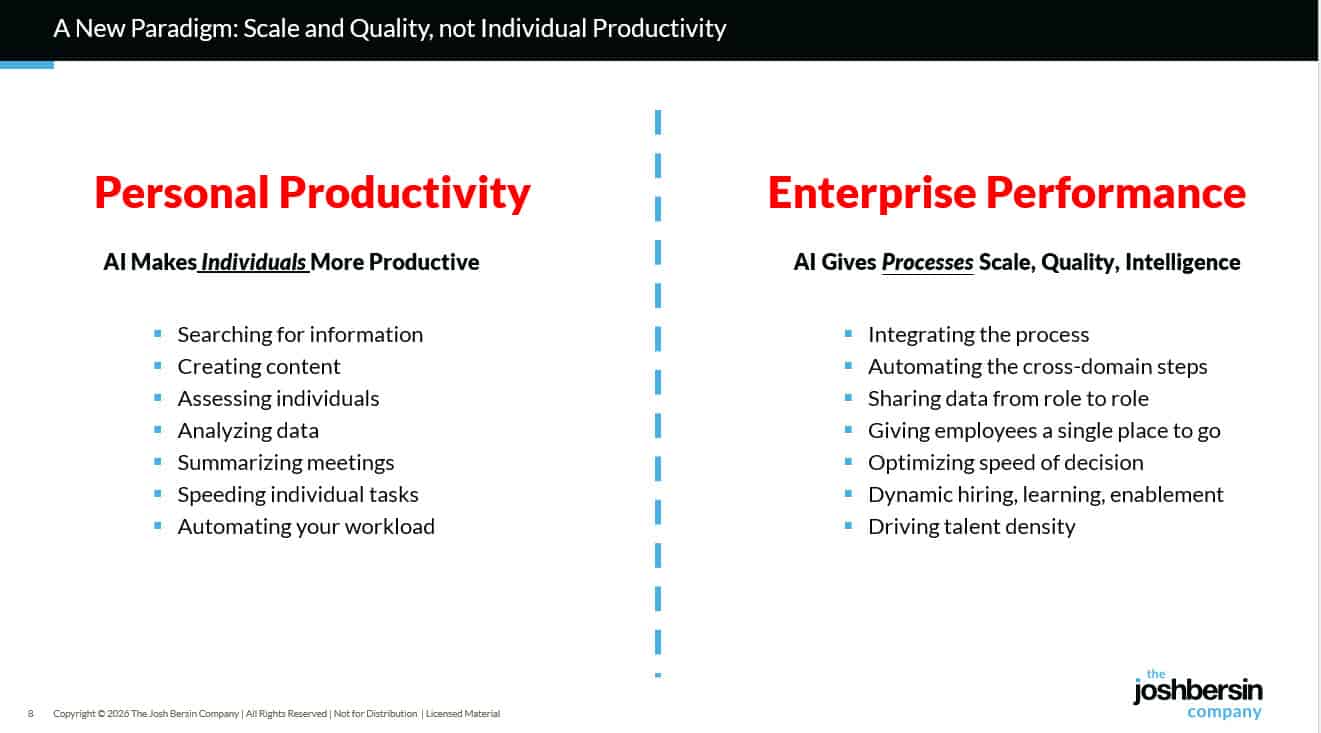
The year 2026 is emerging as a pivotal turning point, largely propelled by the widespread adoption of enterprise AI. The paradigm shift lies in viewing AI not merely as a tool to augment individual productivity, but as a transformative force capable of redesigning entire business processes. This leads to the conceptualization and implementation of "Superagents"— sophisticated AI systems designed to create scale, foster autonomy, and drive significant operational efficiencies across entire functions.
The analogy of the autonomous vehicle offers a compelling illustration of this transition. Instead of incrementally adding features to enhance the driver’s capabilities—such as power steering, advanced braking systems, lane departure warnings, or automatic parking—the development of autonomous vehicles consolidates these independent functions into a cohesive Superagent. This Superagent prioritizes the optimization of the passengers’ mobility, rather than solely focusing on easing the driver’s workload. In essence, the driver’s role is fundamentally altered or, in some cases, rendered obsolete, leading to demonstrably safer and more efficient transportation. This disruption also paves the way for entirely new business models, such as pay-per-mile services, that were previously unimaginable.
A similar transformation is now unfolding within HR and other business functions. The evolution has moved from individual assistants to autonomous agents (tools designed to enhance individual productivity) and now to Superagents capable of managing entire processes. While this evolution will not occur instantaneously, its acceleration is undeniable.

Early examples of these Superagents are already demonstrating significant potential. Leading insurance, airline, and pharmaceutical companies are collaborating on Superagent applications for global onboarding, highly targeted talent acquisition, and specialized sales training. These agentic solutions are designed to streamline and automate numerous HR tasks, ultimately providing organizations with greater scalability and improved outcomes.
The Inevitable Shift: Automation and the Future of HR Roles
Analysis, including data from tools like Galileo, an AI agent specifically designed for HR, reveals a striking reality: a substantial portion of existing HR "jobs" are susceptible to automation. Task-level data for over 250 HR roles indicates that between 30% and 40% of current HR positions could be automated with relatively low effort. These roles, often characterized by tactical, administrative duties such as interview scheduling, recruitment coordination, or helpdesk support, represent the operational inefficiencies that have historically burdened HR departments.
The individuals currently occupying these roles are poised to transition into new responsibilities. These may include building and managing AI agents, engaging more deeply with candidates, or providing consultative support to business units. This shift does not necessarily imply a contraction of the HR profession as a whole. In fact, HR job postings have seen a significant increase of 60% over the past five years, outpacing many other professions. What is set to change dramatically is the composition and skill set required within the HR workforce. The trend points towards a reduction in routine HR tasks, the creation of new AI-centric roles, and a general evolution of HR professionals into more "full-stack" practitioners, capable of handling a broader and more strategic range of responsibilities. Furthermore, this evolution is anticipated to lead to an increase in HR professional salaries, reflecting the enhanced value and specialized skills required.
Key Areas Poised for Automation
Through a comprehensive analysis, such as the Systemic HR AI Blueprint, several key areas within HR have been identified as prime candidates for AI-driven automation. These typically fall into distinct categories:
- Recruitment and Talent Acquisition: Automating candidate sourcing, initial screening, interview scheduling, and offer management.
- Onboarding and Offboarding: Streamlining the administrative processes associated with bringing new employees into the organization and managing their departure.
- Payroll and Benefits Administration: Automating complex calculations, compliance checks, and employee inquiries related to compensation and benefits.
- Performance Management: Facilitating data collection, feedback mechanisms, and performance review processes.
- Learning and Development: Personalizing learning pathways, tracking progress, and managing training administration.
- Employee Relations and Compliance: Automating policy dissemination, responding to common inquiries, and initial case management.
The Ascendancy of "Full-Stack" HR
The ultimate objective of this widespread automation is not merely cost reduction, but the generation of tangible business value. By automating these processes, organizations can achieve greater scalability, enhance accuracy, and improve the overall experience for both employees and managers. HR teams can accelerate hiring cycles, implement more strategic recruitment approaches, and mitigate the disruptive "hire/fire" cycles that have become increasingly prevalent. Furthermore, real-time training for managers and employees, coupled with the proactive identification of management issues, high turnover areas, and potential risks, will become significantly more efficient and predictable.
For HR professionals, this liberation from administrative tasks allows them to focus on what is termed "Full-Stack HR"—strategic initiatives that directly contribute to the organization’s bottom line. This evolution involves a deeper integration of HR functions with the business units they serve. Instead of being bogged down by data entry or policy enforcement, HR business teams can dedicate their efforts to:
- Strategic Workforce Planning: Aligning talent strategies with long-term business objectives.
- Talent Development and Succession: Cultivating a robust pipeline of future leaders and critical talent.
- Organizational Design and Effectiveness: Optimizing structures and processes to enhance productivity and agility.
- Employee Experience and Engagement: Creating environments that foster high performance and commitment.
- Change Management and Culture: Guiding the organization through transformations and shaping a positive work environment.
- Data Analytics and Insights: Leveraging data to inform strategic decisions and measure HR impact.
Redefining HR Benchmarks: The Shifting Employee-to-HR Ratio
A long-standing metric in HR has been the ratio of employees to HR staff, historically benchmarked at approximately 100:1. As AI assumes responsibility for tactical and administrative work, this ratio is projected to undergo a significant recalibration, potentially reaching 200:1, 300:1, or even 400:1. While this implies a reduced need for personnel dedicated to administrative functions, it does not necessarily foretell a drastic reduction in the overall size of HR departments, given the anticipated creation of new roles. The core implication is a profound shift in the value proposition of HR. As automation becomes more pervasive, HR professionals with advanced skills and strategic acumen are likely to command higher compensation.
Consider the direct impact on business outcomes: a retail or food service company that leverages AI to expedite hiring and scheduling can directly increase revenue by more effectively meeting customer demand, a strategy demonstrably proven by companies like Chipotle. In manufacturing sectors, organizations like Boeing can boost production by accelerating training, fostering a stronger culture of safety, and enabling more agile talent mobility—areas where advanced HR strategies, augmented by AI, can yield substantial benefits.
The Imperative of Data Quality and Trust in the AI Era
A critical consideration in this AI-driven transformation is the paramount importance of data quality, accuracy, and trustworthiness. In a manual HR system, occasional human errors in recruitment or payroll processes might have limited impact. However, in an automated system operating at scale, a single error in a recruiting algorithm or a payroll rule could instantaneously affect thousands of employees.
Consequently, many of the emerging roles within HR will focus on managing the integrity and quality of these AI systems. HR professionals will be responsible for ensuring that the AI agents deployed are powered by data that is accurate, up-to-date, and complete. Moreover, HR now bears the responsibility for addressing issues of AI bias and fostering trust in AI-driven decision-making. Recent legal challenges against HR technology vendors, such as those involving Workday and Eightfold, highlight the critical need for explainable and high-trust AI systems. This responsibility now squarely falls within the purview of HR departments.
Embracing the Transformation: A Call to Action
The profound transformation of the HR profession is not a distant prospect; it is unfolding now. For HR professionals and leaders, this is a critical juncture to engage with these emerging technologies and evolving strategies. Educational resources and programs, such as those offered by Galileo, are becoming essential for navigating this new landscape. Organizations seeking to accelerate their HR transformation and prepare for the future of Enterprise AI should actively seek guidance and explore advanced training opportunities. The coming years will undoubtedly witness a dramatic reimagining of the HR function, moving it from a support role to a central pillar of organizational strategy and value creation.