For decades, the Human Resources (HR) profession has grappled with an inherent duality: is it a strategic engine driving organizational value and fostering human capital growth, or is it primarily an administrative function, tasked with enforcing policies and regulations? This enduring tension has often positioned HR as either an inspiring partner or, in some perceptions, the "company police." The former role demands sophisticated human-centric skills, while the latter is increasingly amenable to automation. This dichotomy has been deeply ingrained in the profession’s identity, even spawning cultural touchstones like the "Don’t Trust HR" meme, which aimed to highlight perceived adversarial dynamics.
However, the landscape of HR is on the precipice of a monumental transformation. Beginning in 2026, a profound, AI-driven reinvention is set to resolve this long-standing conflict. This evolution promises to liberate HR from the constraints of administrative overhead, propelling it towards a more strategic, integrated, and "full-stack" operational model. This shift is not merely incremental; it represents a fundamental redefinition of how human capital is managed, leveraged, and optimized within organizations worldwide.
The Expanding Scope of HR: A Profession Growing in Complexity
The global HR profession is an enormous ecosystem, encompassing over 40 million professionals across a multitude of specialized roles. Over the past half-century, the complexity and scope of HR responsibilities have expanded exponentially. This growth has been driven by evolving business models, shifting societal norms, and increasingly stringent legal and regulatory frameworks.
Early HR functions were largely centered on foundational administrative tasks such as payroll processing, recruitment, and general employee administration. As organizations matured and business strategies diversified, HR’s mandate broadened. The mid-20th century saw the integration of disciplines like industrial psychology, leading to advancements in training methodologies, job design, and performance management systems. By the 1960s and 70s, HR was actively involved in areas like career development, succession planning, and the implementation of assessment tools like forced ranking and nine-box grids.
The subsequent decades witnessed an even more rapid acceleration of HR’s responsibilities. Emerging concerns around employee well-being, the complexities of hybrid and remote work arrangements, the critical imperative of Diversity, Equity, and Inclusion (DEI), and the nuanced management of organizational culture and leadership development became central to HR’s purview. More recently, the advent of artificial intelligence has introduced new paradigms, including concepts like "talent density," flexible organizational structures, and novel approaches to pay equity and performance management. The rise of highly skilled individuals capable of performing multiple complex functions, often referred to as "superworkers," presents HR with the challenge of adapting compensation and career pathing to match such exceptional contributions.

Crucially, as new disciplines have been integrated into the HR domain, the older ones have rarely been discarded. This cumulative effect has resulted in HR departments often functioning as collections of specialists, each overseeing one of the over 100 distinct areas of expertise within the field.
The operational structure of organizations further amplifies this complexity. Larger enterprises typically adopt a federated HR model, comprising a central strategic team and distributed local teams catering to specific geographic regions or business units. These local teams are frequently guided by HR Business Partners, whose roles can range from deeply strategic to predominantly administrative. A critical aspect of their work involves adapting global policies to meet unique regional requirements, considering local labor markets, cultural nuances, and legal frameworks – a task that can vary dramatically, for instance, when comparing the recruitment of an engineer in Singapore versus Germany.
The Technological Foundation and its Limitations
For the past two decades, Human Capital Management (HCM) systems from major vendors like Workday, Oracle, and SAP have served as the primary technological backbone for managing this escalating complexity. While these platforms are sophisticated, their predominant function has been to act as robust "business workflow and record-keeping systems." They excel at tracking employee data, managing payroll, and facilitating standardized processes. However, they have largely fallen short of providing true solutions to complex human capital challenges, still necessitating a substantial human workforce to tune, administer, and manage their intricate operations.
The AI Catalyst: From Record-Keeping to Agentic Action
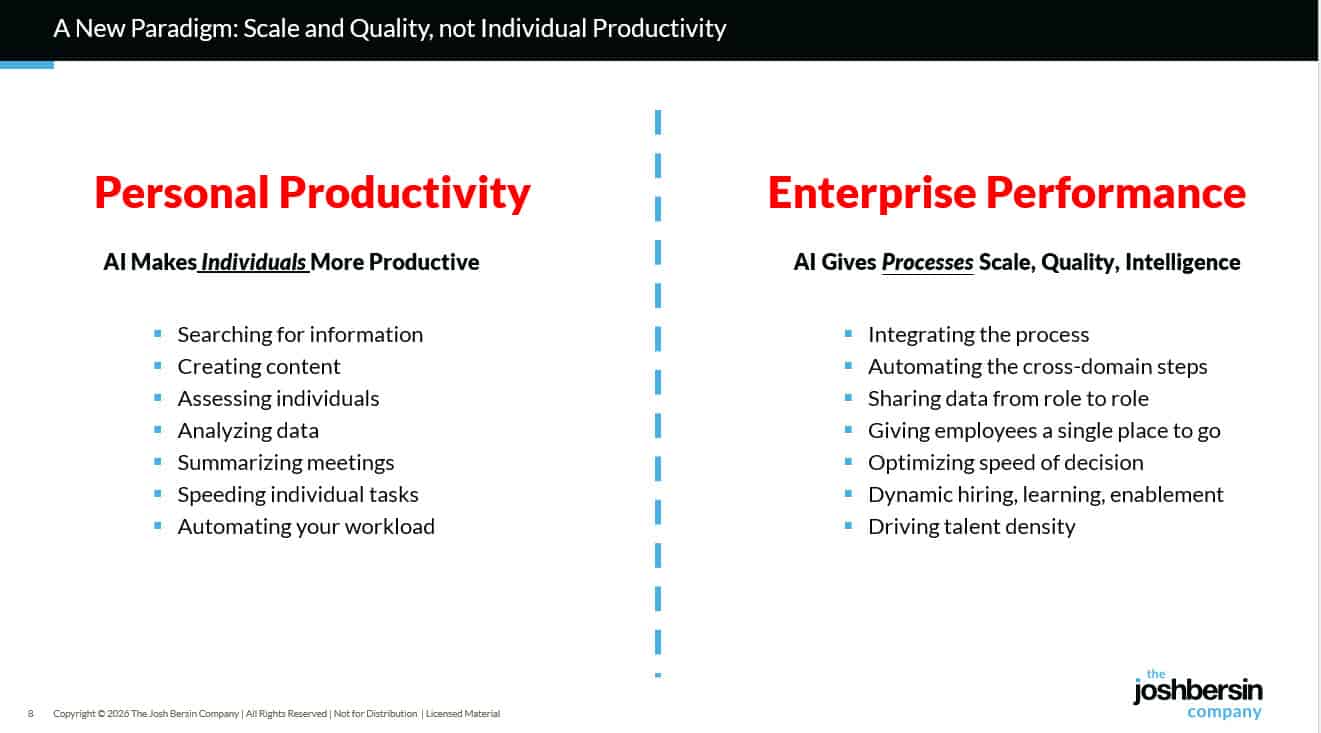
The year 2026 marks a significant inflection point, propelled by the widespread adoption of enterprise artificial intelligence. This is not merely about enhancing individual productivity; it’s about fundamentally redesigning entire business processes and creating "Superagents" capable of delivering unprecedented scale and autonomy.
The analogy of the autonomous vehicle offers a compelling illustration. Instead of incrementally adding features to assist the human driver (power steering, collision detection, automatic parking), the development of autonomous vehicles has focused on aggregating these capabilities into a cohesive "Superagent." This agent prioritizes the outcome – the safe and efficient mobility of passengers – rather than augmenting the driver’s tasks. In essence, the driver’s role diminishes or transforms, leading to significantly enhanced safety and paving the way for entirely new business models, such as pay-per-mile transportation services.
Similarly, in the realm of HR and other business functions, a parallel evolution is occurring. The progression has moved from human assistants to individual automation tools ("agents"), and now towards comprehensive "Superagents" designed to manage entire processes end-to-end. While this transition will not be instantaneous, its pace is accelerating rapidly.

Early implementations of these advanced AI agents are already demonstrating tangible results. Companies are deploying Superagents for critical functions such as global onboarding, highly targeted talent acquisition, and personalized sales training programs. These agentic applications are not only streamlining operations but also replacing a significant portion of traditional HR tasks, thereby increasing organizational scale and delivering superior outcomes.
The Forecast for HR Roles: Automation and Evolution
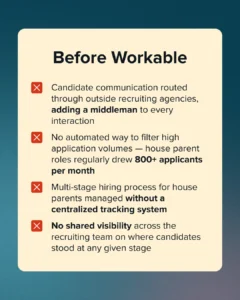
Analysis conducted by Galileo, an AI agent specializing in HR, reveals that a substantial portion of existing HR roles, estimated between 30% and 40%, are highly susceptible to automation with relatively low implementation effort. These roles, often characterized by tactical and administrative duties such as interview scheduling, recruitment coordination, and helpdesk support, represent the operational overhead that has historically constrained HR’s strategic capacity.
The individuals currently performing these tasks are poised to transition into new responsibilities. This may include the development and management of AI agents, more direct engagement with candidates and employees, or consultative roles within business units. While the nature of these roles will change, the overall demand for HR professionals is not projected to diminish. In fact, HR job postings have seen a remarkable 60% increase over the past five years, outpacing many other professions. The critical change will be in the composition of the HR workforce. Routine administrative tasks will decline, new AI-centric roles will emerge, and a majority of HR professionals will adopt a more integrated, "full-stack" approach to their work. This transformation is also anticipated to lead to an increase in HR professional salaries, reflecting the elevated strategic value and specialized skill sets required.
Key Areas Primed for AI-Driven Automation
The "Systemic HR AI Blueprint" has identified several key areas within HR that present significant opportunities for automation and AI integration. These typically fall into distinct categories:
- Talent Acquisition: Automating candidate sourcing, screening, interview scheduling, and initial assessment processes.
- Onboarding and Offboarding: Streamlining the administrative and logistical aspects of bringing new employees into the organization and managing departures.
- Payroll and Benefits Administration: Enhancing the accuracy and efficiency of payroll processing, benefits enrollment, and compliance management.
- Performance Management and Development: Leveraging AI for real-time feedback, personalized learning recommendations, and data-driven performance insights.
- Employee Relations and Support: Providing AI-powered chatbots and self-service portals for common employee inquiries and issue resolution.
- HR Analytics and Reporting: Automating the generation of complex HR reports, identifying trends, and providing predictive insights for strategic decision-making.
The Ascendancy of "Full-Stack" HR
The ultimate objective of this pervasive automation is not merely cost reduction, but a substantial enhancement of business value. By automating these processes, organizations can achieve greater scalability, improved accuracy, and a more seamless experience for both employees and managers. This enables HR teams to accelerate strategic hiring, mitigate cyclical hiring and firing patterns, deliver real-time training, and proactively identify management challenges, areas of high turnover, and organizational risks with increased speed and predictability.
For HR professionals, this shift liberates them to focus on what is increasingly being termed "Full-Stack HR." This involves engaging in strategic initiatives that directly contribute to the organization’s bottom line. Instead of being bogged down by data entry or policy enforcement, HR teams can dedicate their expertise to:
- Strategic Workforce Planning: Aligning talent strategies with long-term business objectives.
- Organizational Design and Development: Creating agile and effective structures that support innovation and growth.
- Talent Management and Development: Cultivating high-potential employees and fostering a culture of continuous learning.
- Employee Experience and Engagement: Designing initiatives that enhance employee satisfaction, productivity, and retention.
- Change Management and Transformation: Leading and supporting organizational change initiatives.
- DEI Strategy and Implementation: Driving meaningful progress in diversity, equity, and inclusion.
This reorientation moves HR closer to the business units it serves, transforming it from a support function into an integrated strategic partner.
Impact on HR Benchmarks and Organizational Value
A traditional HR benchmark has been the employee-to-HR staff ratio, historically hovering around 100:1. As AI assumes responsibility for tactical tasks, this ratio is expected to shift significantly, potentially reaching 200:1, 300:1, or even 400:1. While this suggests a reduction in the need for purely administrative roles, it does not necessarily imply a drastic shrinkage of the HR department as a whole, given the creation of new AI-focused positions.
The true value proposition lies in the enhanced impact HR can have. For instance, a retail or food service company that leverages AI for faster hiring and scheduling can directly increase revenue by more effectively meeting customer demand, as demonstrated by companies like Chipotle. Similarly, manufacturing giants like Boeing can boost production by optimizing training, reinforcing safety cultures, and enabling more agile talent mobility, areas where advanced HR technologies can provide critical support.
The Imperative of Data Quality and Trust
As HR operations increasingly operate at the speed of AI, the paramount importance of data accuracy, explainability, and trust cannot be overstated. In manual systems, occasional human errors might have limited impact. However, in AI-driven systems operating at scale, a single flaw in a recruiting algorithm or payroll rule could instantaneously affect thousands of employees.
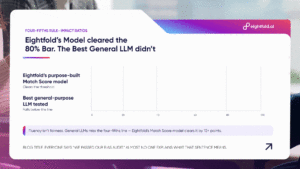
A significant portion of new HR roles will be dedicated to managing the quality and integrity of these AI systems. HR professionals will be responsible for ensuring that AI agents are powered by data that is accurate, current, and complete. Furthermore, HR will increasingly shoulder the responsibility for addressing AI bias and building trust in AI-driven decisions. Recent lawsuits filed against HR technology vendors, such as those involving Workday and Eightfold, underscore the critical need for explainable and high-trust AI systems. This emerging challenge places a significant new responsibility on the HR function.
Embracing the Transformation
The AI-driven transformation of HR is not a future prospect; it is a present reality. HR professionals and leaders are urged to actively engage with these changes. Resources like Galileo are emerging to provide the necessary education and tools to navigate this evolving landscape. Organizations seeking to undertake this HR transformation can benefit from expert guidance and specialized AI-driven certificate programs designed for the modern HR professional. The imperative is clear: embrace the evolution, adapt to the new paradigms, and position HR as a pivotal driver of strategic success in the age of artificial intelligence.