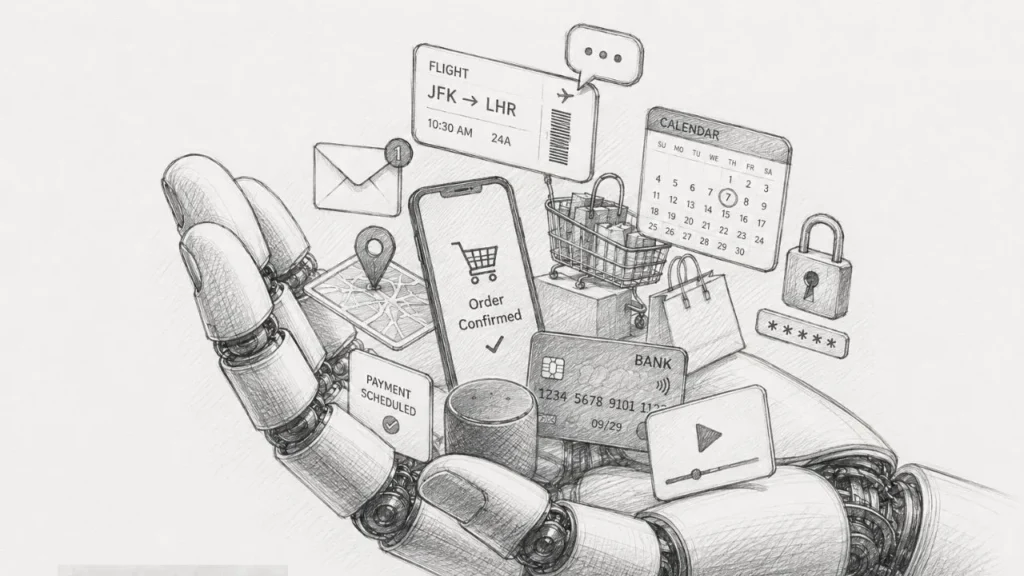
The era of passive Artificial Intelligence is rapidly receding, far outpacing the expectations of many business leaders. Consumers are no longer content with merely querying chatbots for recipes, travel itineraries, or customer service resolutions. A significant shift is underway, with individuals increasingly delegating tasks to software, entrusting AI systems to act on their behalf. This burgeoning trend elevates autonomous AI to the next critical business differentiator, as companies that successfully earn consumer permission to act proactively will command a significantly closer proximity to decision-making processes, financial transactions, daily schedules, and the intricate routines of modern life.
This evolution is underscored by compelling data. EY’s 2026 AI Sentiment Report, a comprehensive survey spanning 23 global markets, revealed that a substantial 84% of respondents had utilized AI within the preceding six months. More remarkably, 16% of those surveyed had already engaged with AI systems capable of operating without direct human intervention. These figures emphatically dismantle any lingering notion that autonomous AI remains a theoretical concept confined to distant boardroom discussions. Instead, they signal the tangible emergence of a "delegation economy," where the pivotal question for leaders is whether they will treat AI autonomy as a mere feature to be implemented or as a profound relationship to be cultivated and earned.
Delegation: A Quietly Accelerating Norm
The most impactful AI adoption narrative is not one of dramatic disruption, but rather of gradual, ordinary integration. Individuals are steadily building comfort with AI through low-stakes interactions. These range from sophisticated route planning and personalized recommendations to the seamless orchestration of travel arrangements and efficient customer support. This growing familiarity is subtly preparing them to cede more consequential tasks to AI. The EY report further illuminated this trend, indicating that 10% of respondents had authorized AI agents to make product purchases on their behalf, while an additional 11% had permitted AI to manage the refilling of virtual shopping carts or to execute routine banking transactions.
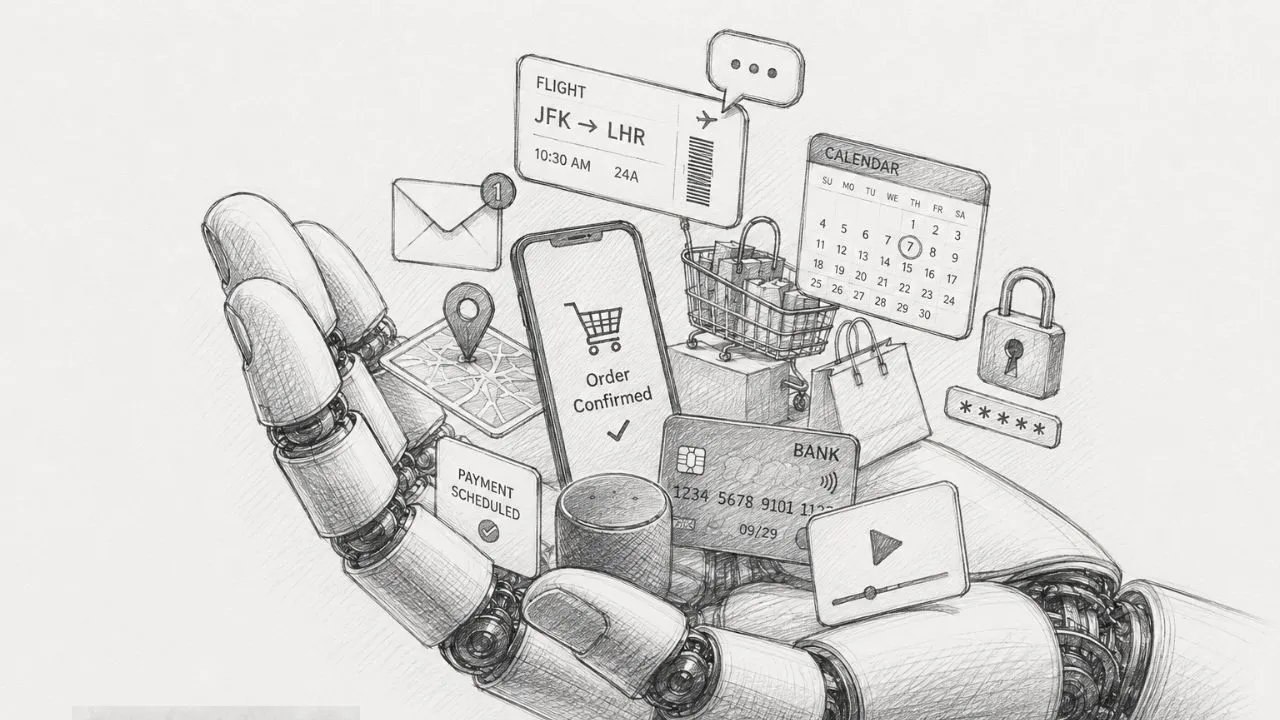
This pervasive delegation at the individual level explains why the adoption of agentic AI, or AI that can take action, is of paramount importance beyond the technology sector. A parallel 2025 global survey conducted by McKinsey & Company found that a significant 88% of organizations were consistently employing AI across at least one business function. Even more telling, 23% of these organizations were actively in the process of scaling an agentic AI system within their enterprise. This dual trend—consumers delegating at the periphery of their daily lives and businesses experimenting with AI within their operational workflows—is rapidly converging.
The geographic distribution of early AI adoption further illuminates potential future trajectories. EY identified "Pioneer" markets, including India, mainland China, Brazil, Mexico, Saudi Arabia, the UAE, Hong Kong SAR, and South Korea. In these regions, a remarkable 94% of respondents reported AI usage, with nearly a quarter having already experienced autonomous AI. This pattern suggests that the adoption of autonomous AI will not be uniform; rather, it will accelerate most rapidly in environments characterized by deeply ingrained digital habits, robust mobile commerce ecosystems, and a pre-existing comfort with platform-mediated services.
For corporate executives, the implication is stark. Despite public expressions of concern regarding AI, consumers readily embrace its utility when it demonstrably saves time, reduces friction, or effectively resolves tedious tasks. This suggests that AI adoption is less a function of complete confidence and more a progression driven by tangible usefulness.
The Trust Deficit: Use Outpaces Confidence
A significant paradox is emerging: individuals are delegating authority to AI systems before achieving a comprehensive level of trust in their operation. The EY report highlighted this dichotomy, with 66% of respondents expressing concerns about AI systems being susceptible to hacking or data breaches. Similarly, 66% maintained that human oversight remains indispensable, and a substantial 73% feared an inability to reliably distinguish between authentic content and AI-generated material. These sentiments serve as a crucial warning regarding the responsible introduction of AI autonomy.

The global public mood mirrors this caution. Consumer trust in AI remains fragile. A Pew Research Center analysis, encompassing 25 countries in late 2025, indicated that a median of 34% of adults felt more concerned than excited about the increasing use of AI, contrasting with only 16% who expressed greater excitement. Stanford’s 2025 AI Index further corroborated this trend, noting a decline in global confidence regarding AI companies’ protection of personal data, dropping from 50% in 2023 to 47% in 2024.
The trust challenge becomes significantly more acute as AI transitions from providing advice to executing actions. A chatbot offering a suboptimal restaurant recommendation might be an annoyance. However, an AI agent that erroneously purchases an incorrect product, mishandles sensitive personal data, or inadvertently follows malicious instructions represents a fundamentally different and more severe category of risk.
The recent release of agent capabilities by leading AI developers, such as OpenAI’s ChatGPT agents, vividly illustrates this dual nature. These advancements promise tools capable of navigating websites, generating complex spreadsheets, and completing multi-step work processes. Simultaneously, they introduce the inherent risk that agents operating with live data can be manipulated through sophisticated techniques like prompt injection or other adversarial tactics.
This evolving landscape elevates AI security risk to a critical board-level concern. IBM’s 2025 Cost of a Data Breach Report ominously warns that AI is currently outpacing security and governance measures, with a staggering 63% of organizations admitting to a lack of AI governance policies designed to manage AI or prevent the proliferation of "shadow AI"—unauthorized or unmanaged AI applications. The expansion of autonomous AI inherently broadens the attack surface, as these agents possess the capability to connect, click, retrieve information, make decisions, and in some instances, execute financial transactions.

Governance as a Product Imperative
The companies poised to lead in the autonomous AI race will not be those that simply proclaim "fully automated." Instead, success will belong to those that prioritize making AI control visible, comprehensible, and, crucially, reversible. Integrating human oversight as an inherent aspect of the user experience is paramount. Frameworks like the National Institute of Standards and Technology (NIST) AI Risk Management Framework, including its Generative AI Profile, provide organizations with a practical lexicon for identifying, assessing, managing, and governing AI risks before they manifest as reputational damage or business failures.
This shift towards structured governance is also evident in regulatory and standards development. The discourse surrounding AI governance has moved beyond voluntary principles to encompass enforceable expectations. The European Union’s AI Act, which entered into force in 2024, exemplifies this trend by aiming to foster responsible AI development and deployment. Similarly, the ISO/IEC 42001 standard offers organizations a robust management system framework for establishing, maintaining, and continuously improving responsible AI practices.
However, effective governance cannot be siloed within legal, risk management, or compliance departments. The development of autonomous systems necessitates product-level design choices. These include determining when an agent should request explicit user permission, defining the boundaries of its independent actions, establishing clear methods for explaining its operations, implementing straightforward processes for revoking access, ensuring stringent protection of sensitive data, and developing mechanisms for correcting failures. These deliberate design choices will ultimately dictate whether customers perceive AI autonomy as a source of convenience or as an unwelcome loss of control.
Consequently, responsible AI leadership is no longer a peripheral concern but a strategic imperative central to growth discussions. McKinsey’s research indicates that high-performing AI adopters are more inclined to redesign workflows, clearly delineate when AI model outputs require human validation, and secure explicit commitment from senior leadership. In essence, true value emerges not from superficial AI integration into existing processes, but from a fundamental rebuilding of work around clearly defined accountability.

The Road Ahead: Building Trust Through Action
Autonomous AI is rapidly transitioning from a novel technology to a foundational element of digital infrastructure. Its influence will permeate how individuals shop, manage their finances, schedule their lives, travel, acquire knowledge, and perform their work. The permission to act on a person’s behalf, however, is inherently more intimate than the permission to simply answer a question. It necessitates a significantly higher standard of trust and reliability.
The emerging "AI trust gap" is not a rationale for delaying progress indefinitely. Instead, it serves as a critical impetus to "build better." Companies should operate under the assumption that consumers will adopt useful autonomous AI tools even before fully trusting them. Therefore, every delegated action must be meticulously designed to incrementally earn and solidify user confidence.
Ultimately, trust in autonomous AI will not be cultivated through grand pronouncements about its future potential. It will be accumulated through a series of secure, transparent, and well-governed moments. These are the instances where the AI system performs its intended function correctly, the human user retains meaningful control, and the tangible value delivered is unequivocally evident. This continuous cycle of demonstrated competence and user empowerment will be the bedrock upon which the future of autonomous AI is built.